Video Ancient food found at biblical Shiloh near site tied to Ark of the Covenant Researchers say the archaeological find, which includes hundreds of burned olive pits, could help date the Tel Shiloh site and offers a rare glimpse into life at the ancient settlement where the Bible says the Ark of the Covenant was kept for centuries.
Archaeologists in Egypt have uncovered an ancient settlement dating back to the Second Intermediate Period, an era that has long figured in scholarly debates over the historical setting of the biblical Exodus.
The settlement was found at the Tell el-Koua site in the Wadi Tumilat region, an ancient corridor linking the eastern Nile Delta with Egypt's eastern frontier.
The Egyptian Ministry of Tourism and Antiquities announced the discovery in late June.
ARCHAEOLOGISTS MAKE UNUSUAL FIND NEAR SITE WHERE ARK OF THE COVENANT WAS ONCE KEPT
It includes 15th Dynasty tombs and evidence that the site remained occupied into the 18th Dynasty, spanning the transition from Hyksos rule to the New Kingdom.
The Hyksos were rulers who controlled much of northern Egypt about 3,600 years ago before being driven out by the Egyptians.
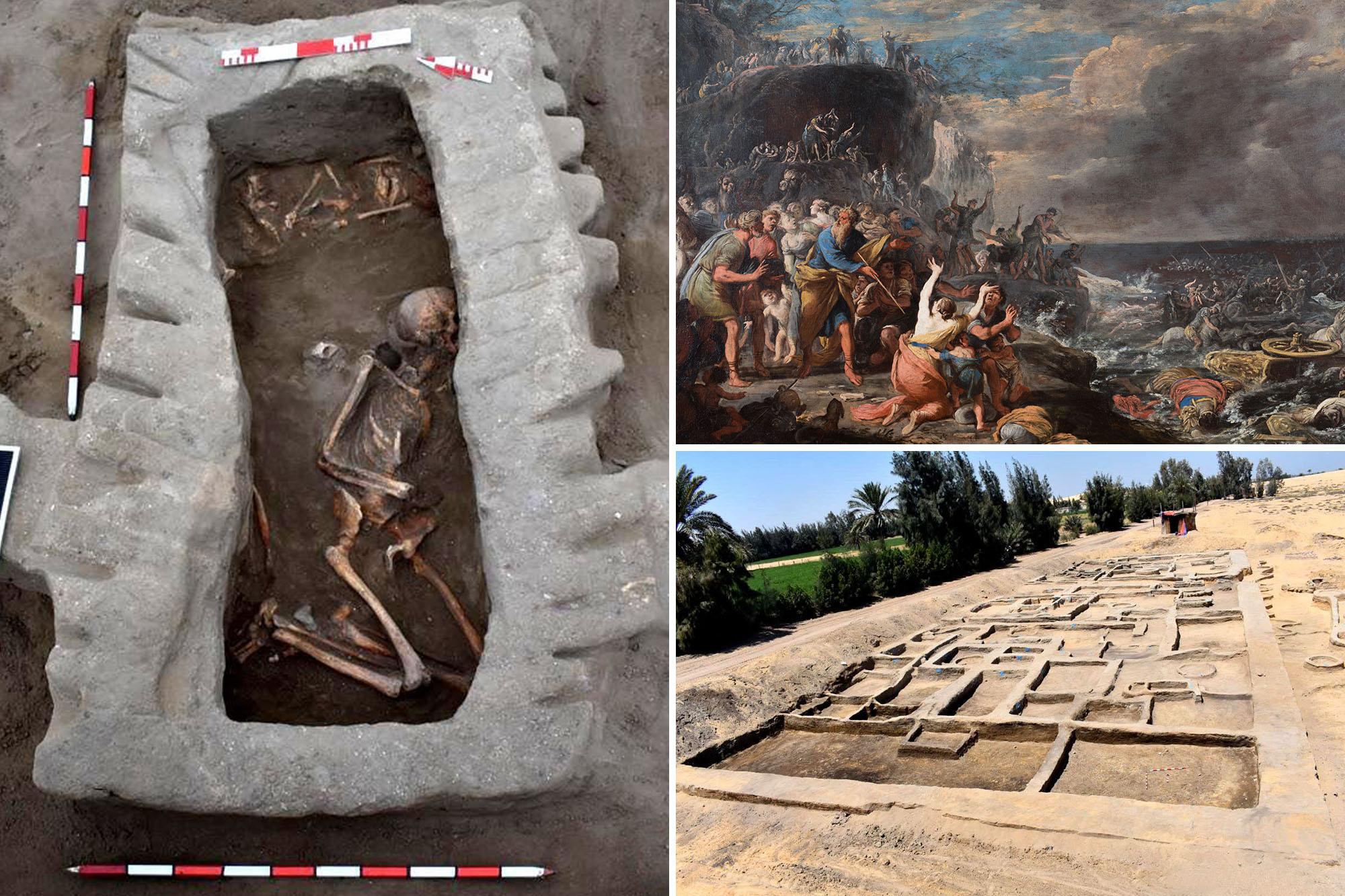
Archaeologists uncovered an ancient settlement dating to Egypt's Second Intermediate Period, an era some biblical scholars have suggested may provide historical context for the Exodus account. (Fine Art Images/Heritage Images via Getty Images; Egyptian Ministry of Tourism and Antiquities via Facebook)
While biblical scholars remain divided over when — or even whether — the Exodus occurred as described in the Bible, some have suggested the Hyksos period may provide historical context for the biblical account.
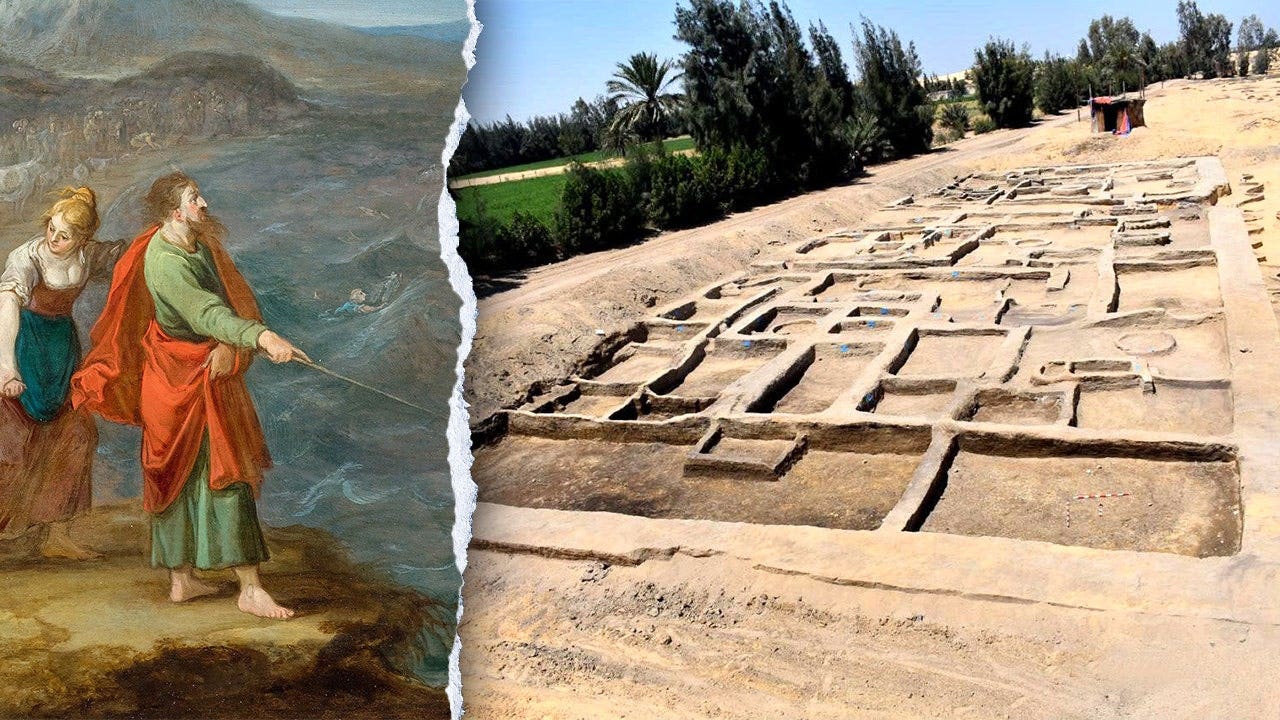
At the site, archaeologists uncovered 10 mudbrick tombs, the remains of homes, ovens used for production, grain storage silos and a walled neighborhood dating to the Second Intermediate Period.
HIDDEN UNDERGROUND CHAMBER REVEALED BENEATH HOME OF LEGENDARY ROMAN EMPEROR
Archaeologists also recovered scarab amulets, bronze tools, pottery, alabaster cosmetic containers and human remains, along with animal bones believed to be linked to daily meals and funeral offerings.
The Egyptian Ministry of Tourism and Antiquities announced the discovery on June 29 following excavations at the Tell el-Koua archaeological site. (Egyptian Ministry of Tourism and Antiquities via Facebook)
Excavators also uncovered a roughly 98-by-197-foot residential complex still containing the remains of large halls and rooms, along with kilns and grain storage silos just east of the settlement.
CLICK HERE TO SIGN UP FOR OUR LIFESTYLE NEWSLETTER
"For the first time at the site, archaeologists discovered human burials outside the mudbrick tombs, including some in a crouched position — an unusual burial practice that will require further study," the translated statement said.
The discovery includes 15th Dynasty tombs and artifacts that archaeologists say help illuminate daily life in Ancient Egypt thousands of years ago. (Egyptian Ministry of Tourism and Antiquities via Facebook)
"Analysis of the pottery assemblage also indicates intensive daily use of the site, with tableware dominating the collection, followed by cooking vessels."
TEST YOURSELF WITH OUR LATEST LIFESTYLE QUIZ
Minister of Tourism and Antiquities Sherif Fathy said the discovery suggests the site functioned as an integrated community with residential areas, storage facilities, production areas and burial grounds.
CLICK HERE FOR MORE LIFESTYLE NEWS
Fathy also "praised the efforts of Egyptian and foreign archaeological missions to uncover more of Ancient Egypt's secrets," the statement added.
The discovery dates to a period that has long figured in scholarly debates over whether the biblical Exodus occurred and, if so, when it may have taken place. (Fine Art Images/Heritage Images via Getty Images)
The discovery follows another major archaeological find from Egypt's Second Intermediate Period in 2025.
CLICK HERE TO DOWNLOAD THE FOX NEWS APP
Last year, archaeologists in Egypt uncovered a rare 3,600-year-old pharaoh's tomb buried 23 feet beneath the desert near Abydos.
Andrea Margolis is a lifestyle reporter for Fox News Digital and Fox Business. Readers can follow her on X at @andreamargs or send story tips to andrea.margolis@fox.com.