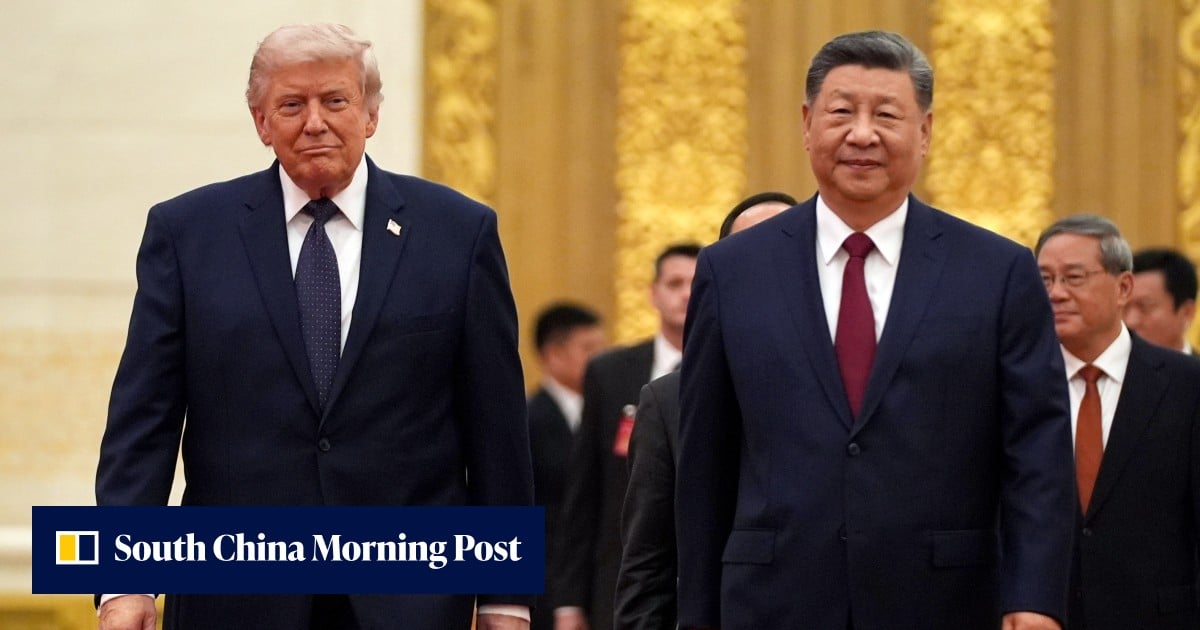
At 12:01 Friday morning, new American tariffs took effect on sixty trading partners — fifty-nine countries plus the European Union. Ten percent for Canada, Mexico, India, the U.K. and thirteen others. Twelve and a half for China, Taiwan, Australia and the EU.
Those sixty account for more than 99 percent of U.S. imports.
The legal basis is the interesting part, and almost nobody is talking about it.
What actually happened here
In February, the Supreme Court struck down the reciprocal tariffs the administration had imposed under the International Emergency Economic Powers Act, holding that it exceeded its authority.
Within hours, the President said other alternatives would replace what the court rejected. A temporary 10 percent global tariff went up. It expired at midnight Thursday.
What replaced it comes from Section 301 of the Trade Act of 1974, on a finding that those sixty partners failed to prohibit and enforce against imports produced with forced labor.
Different statute. Different justification. Roughly the same wall.
Take the substance seriously first
Forced labor in global supply chains is not invented. It is documented, extensively, and the United States has both a moral and a legal interest in not importing goods made by coerced people.
If this were a genuine enforcement action — targeted at specific sectors, specific supply chains, with findings a company could contest and remedy — I would support it without reservation.
But the EU's foreign policy chief pointed at the obvious problem: compare European labor law to American labor law and tell her which jurisdiction has the enforcement gap. Norway. New Zealand. Japan. Israel. Switzerland. Canada. These are the sixty.
A forced-labor finding that lands on essentially every trading partner at two flat rates is not a finding. It's a rate schedule with a rationale attached.
Why that matters more than the tariff
I don't have a settled view on whether 10 percent tariffs are good policy. Reasonable people disagree, the pass-through to consumer prices here looks modest since these largely mirror the expired duties, and CNN's read is that this round alone won't move prices much.
What I have a view on is the pattern.
A court told the executive branch it lacked authority. The executive branch found a different statute and did substantially the same thing. If that works, judicial review of trade authority becomes advisory — you don't win, you just make them refile.
That principle has no party. It will be available to the next administration, aimed at whatever they want, justified by whatever statute fits.
What to watch
USTR has further investigations open, including one into whether sixteen partners are overproducing and damaging U.S. industry. Those tariffs would stack on top of these.
Fitch's Olu Sonola put the marker down: if the next round pushes rates back toward 2025 levels, the hit to growth and inflation stops being dismissable.
There are political reasons to hold off until after November. There were political reasons to move now, too — and the administration moved.
The wall is being rebuilt. The only question left is what statute holds up the next section.
Add your perspective
Right: the court constrained one authority, not the tariff power itself, and using Section 301 as written is lawful governance. Left: this is open defiance of a Supreme Court ruling dressed in a human-rights costume. Center if you support the forced-labor goal but think a two-tier rate on 99 percent of imports isn't how you pursue it.