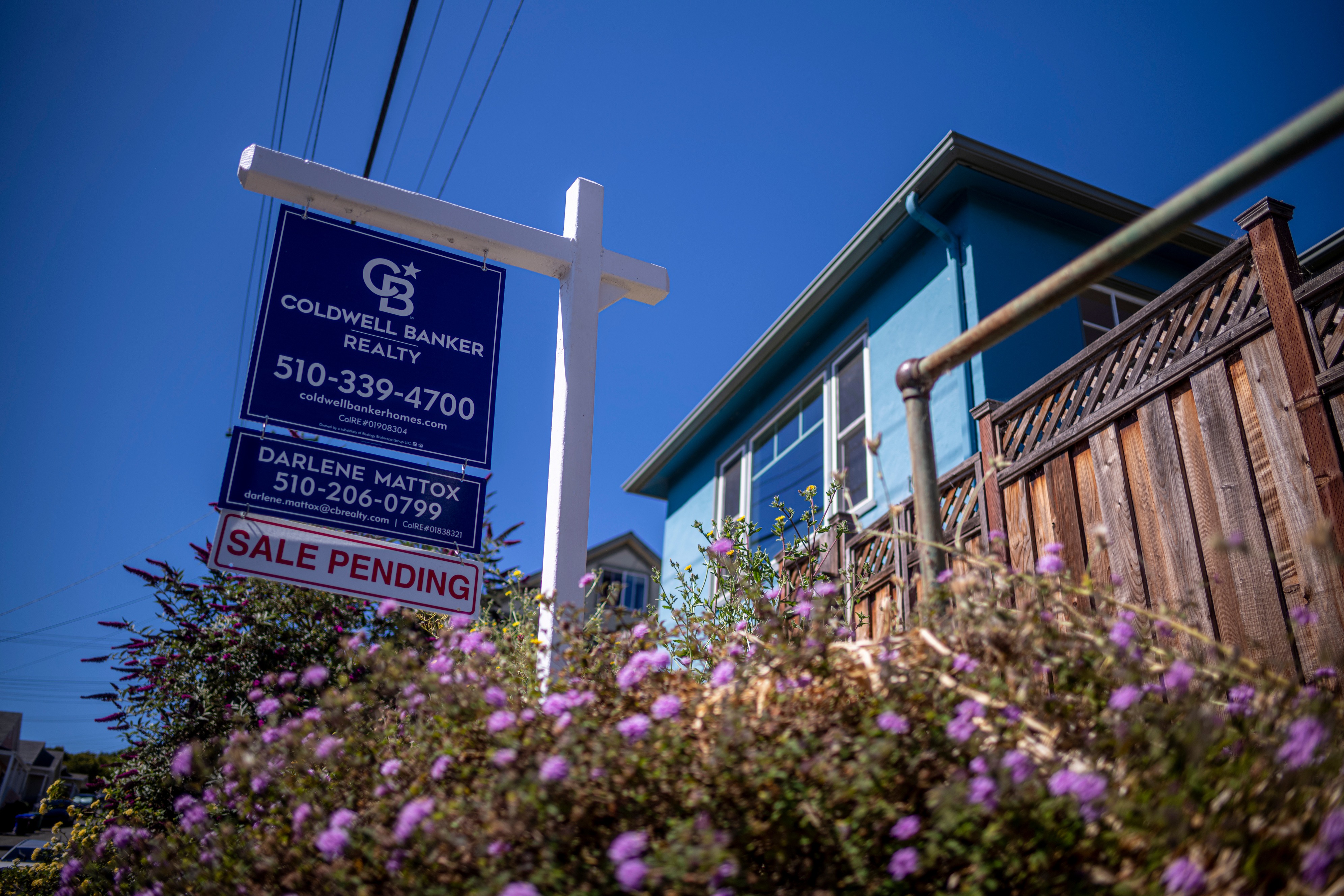
Housing affordability isn't just a policy issue or talking point for me -- it's personal, Senator Tim Scott writes. Bloomberg via Getty Images Like most Americans today, my mother saved and planned for years before she was able to own her first home.
At age 38, after working long hours for decades, she finally achieved that monumental milestone for our family.
I know what it’s like for families to stretch every dollar so that one day they can make that American dream of owning a home come true.
Housing affordability isn’t just a policy issue or talking point for me — it’s personal.
And addressing today’s affordability crisis requires leaders who understand the struggle of being one unexpected bill away from falling behind.
Those of us who’ve lived that struggle know how important it is to preserve the fundamental dream of homeownership in America, regardless of ZIP code or income level.
President Donald Trump, Senate Majority Leader John Thune and Republicans across the country share my commitment to housing affordability and homeownership.
We are laser-focused on helping families, workers and small businesses stay afloat and achieve that dream.
That’s why in 2024, when I was ranking member of the Senate Banking Committee, I introduced the original ROAD to Housing Act.
Since then, I’ve worked with my colleagues on a broad bipartisan, bicameral package that helps make the dreams of homeownership a reality for all Americans.
This week, the US Senate will be voting on the bill.
It tackles housing affordability by unlocking private investment, cutting red tape, embracing modern manufactured and modular housing and trusting local leaders to drive solutions that work for their communities.
It also includes a provision to enact the president’s recent initiative to limit large institutional investors’ distortion of local housing markets.
After all, as Trump said in his State of the Union address last week, “We want homes for people, not for corporations.”
To include as many good ideas as possible, we’ve added provisions from the House of Representatives’ Housing for the 21st Century Act, creating a comprehensive package that reflects the priorities of both chambers.
The bill aims to unlock private capital to expand housing supply.
Government cannot subsidize or build its way out of this problem, and it shouldn’t try.
But government can encourage private investment — and when that happens, communities grow in ways that make sense locally, without a one-size-fits-all approach from the federal government that wastes taxpayer dollars.
The ROAD to Housing Act also cuts the red tape that drives up housing costs.
Federal rules make building in America slower and more expensive than it should be; outdated and duplicative requirements add unnecessary costs that are passed down to families.
Streamlining and removing those archaic rules will speed overall construction time, making homes more affordable.
My bill embraces modern manufactured and modular housing as an affordable path to homeownership, especially for first-time homebuyers and working families, removing onerous rules that no longer suit today’s methods and materials.
I know that in my home state of South Carolina, what works in Charleston won’t necessarily work in Columbia or Rock Hill.
Washington shouldn’t pretend to have all the answers. Communities know their needs best, and they should have the flexibility to meet them.
The ROAD to Housing Act passed the Senate Banking Committee unanimously, 24-0, and has strong bipartisan support across the Senate, giving it a clear pathway forward.
After Senate approval, the combined package will return to the House for final consideration before heading to President Trump for his signature.
Recently, I met with local leaders in Beaufort, SC, for the ribbon-cutting of a workforce housing project that will bring hundreds of new homes to the market.
Standing by their side, it was clear what makes the difference: When the federal government gets out of the way, and communities are empowered to build, families win.
That South Carolina project shouldn’t be the exception; it should be the rule.
Housing affordability is a national challenge hitting cities, rural towns and suburbs alike.
It’s one of the biggest drivers of higher costs for families that are already stretched thin.
Dreams are put on hold, and Americans can’t build a future.
Passing the ROAD to Housing Act will help Americans buy homes in the communities they love, and will provide real opportunities for struggling parents like my mom who did everything for our family.
That’s why it must make it to the president’s desk without delay.
Tim Scott represents South Carolina in the US Senate.