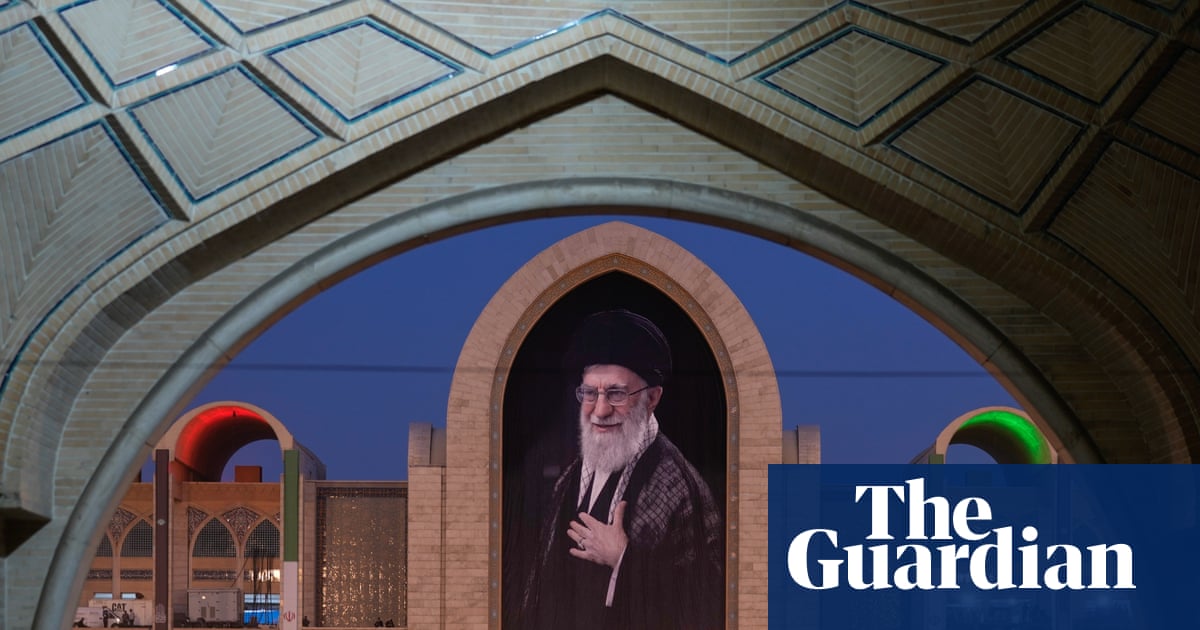
Mourners gather beneath a portrait of the late Ayatollah Ali Khamenei during the funeral ceremonies in Tehran. Photograph: Altaf Qadri/APView image in fullscreenMourners gather beneath a portrait of the late Ayatollah Ali Khamenei during the funeral ceremonies in Tehran. Photograph: Altaf Qadri/APIran’s supreme leader absent from funeral of father Ali KhameneiThree sons of killed ayatollah were seen beside coffin during ceremonies drawing huge crowds in Tehran
Three sons of the former Iranian leader Ayatollah Ali Khamenei prayed beside his coffin and those of four other family members on Sunday, but Mojtaba, the son who has succeeded him as Iran’s supreme leader, did not make an appearance.
State TV showed Mostafa, Meysam and Masoud Khamenei praying behind the coffins laid out in the vast courtyard of Tehran’s Imam Khomeini Mosalla, a sprawling religious complex. In a show of public devotion to the theocratic state and revolutionary zeal, the country is staging a week of mass funeral processions for Khamenei, including taking his remains to Shia religious sites in neighbouring Iraq.
After a day lying in state indoors for senior Iranian leaders and foreign officials to visit, Khamenei’s coffin was displayed outdoors on Saturday under glass, along with those of his daughter, son-in-law, daughter-in-law and 14-month-old granddaughter.
View image in fullscreenThe coffins of the late Ayatollah Ali Khamenei and members of his family are displayed at the Imam Khomeini Mosalla in Tehran on Sunday. Photograph: Altaf Qadri/APThere has still been no public sighting or image released of Mojtaba, said to have been injured in the attack that killed his father and family members on 28 February, when Israel and the US bombed Iranian targets at the start of the war. Mojtaba Khamenei’s face was disfigured and he suffered a significant injury to one or both legs, people close to his inner circle told Reuters.
Read moreA ceasefire has suspended the four-month-old war under an agreement with Washington that Iran’s authorities say will ultimately bring huge economic benefits, in line with what they describe as a victory over a superpower. The US president, Donald Trump, told the Axios news website that peace talks had been paused for a week owing to the events surrounding the funeral.
On Sunday, the Iranian president, Masoud Pezeshkian, and Iran’s parliament speaker, Mohammad Bagher Qalibaf, prayed behind the coffins. Masoud Khamenei was seen crying and wiping his tears with a keffiyeh – the chequered scarf that is a symbol in Iran of militant revolutionary ideals and solidarity with Palestinians – as an imam recited funeral prayers.
View image in fullscreenIranian officials attend the state ceremony for Ali Khamenei, who was killed in attacks launched by the US and Israel in February. Photograph: Anadolu/Getty ImagesCrowds of Iranians, many weeping and some beating their chests, have thronged the Mosalla, including overnight. The Iranian metro railway network said it had clocked 7m trips from late on Saturday to Sunday morning as people flocked to the centre.
After what authorities are billing as a massive procession in central Tehran on Monday, the remains will be taken to the seminary city of Qom, the centre of Iran’s Shia hierarchy, for ceremonies on Tuesday.
View image in fullscreenMourners pay their respects to the late ayatollah at the Imam Khomeini Mosalla. Photograph: Alkis Konstantinidis/ReutersFrom there the body will be flown to Iraq for ceremonies in the Shia holy shrine cities of Najaf and Karbala on Wednesday. It will return to Iran on Thursday for another procession in Mashhad, to be buried near the tomb of another of the medieval Shia imams.
Authorities plan to mobilise millions of people for big processions over the coming days, offering transport, food and lodging.