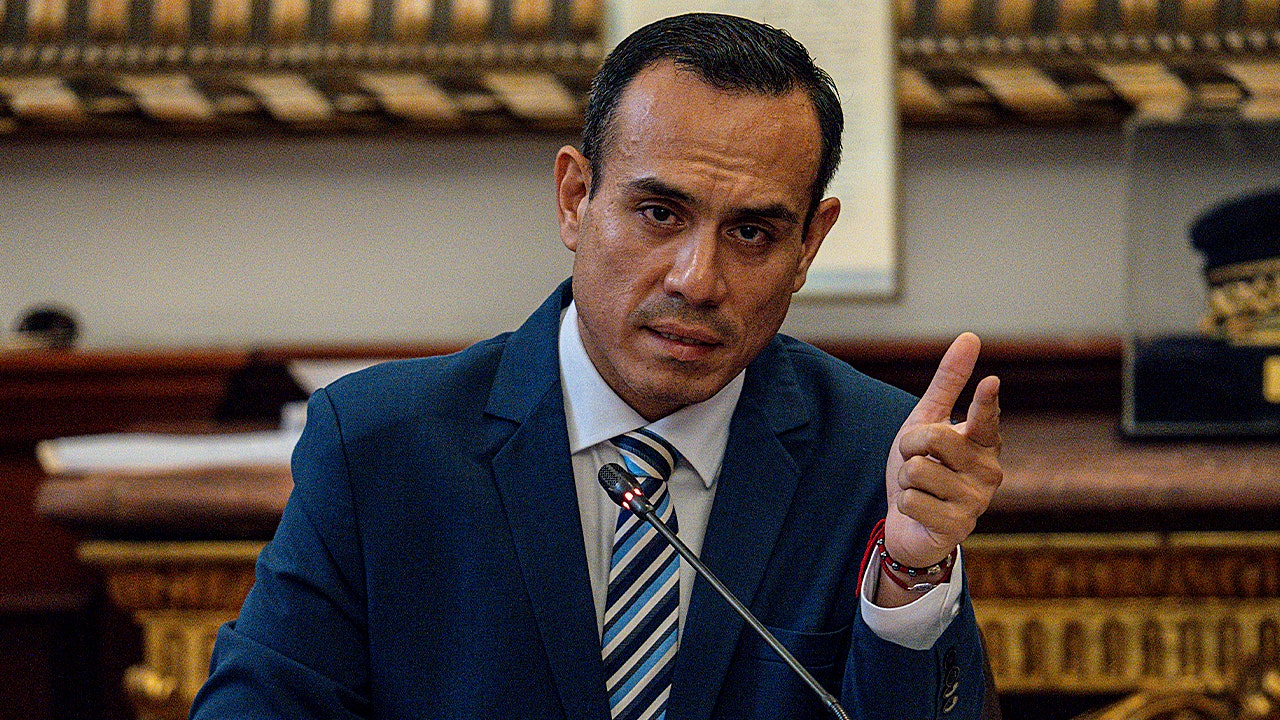
Video Trump congratulates Colombia presidential candidate Trump congratulated Abelardo De La Espriella, known by many as 'El Tigre,' following an initial ballot count. While not officially called, the narrow lead signals a potential rightward shift for Colombia. (Reuters.)
Latin America has moved right. Not in one election, not in one country, and not as a passing mood. The region’s political map has been reordered. Argentina, Chile, Paraguay, Peru, Colombia, Honduras, El Salvador, Ecuador, and the Dominican Republic are now governed by right-wing, center-right, or security-first governments broadly aligned with Washington’s new strategic posture.
Only Mexico, Brazil, Uruguay, and a handful of others remain, for now, outside this broader shift. Cuba and Nicaragua remain closed authoritarian cases. Venezuela, after the rupture of the old Chavista order, now stands as the clearest warning of what happens when left-wing regimes lose both legitimacy and protection.
That is the new hemisphere. The pink tide has receded. In its place is a harder, more security-driven right. And the latest proof is not just that the right is winning. It is why it is winning.
TRUMP ADMIN BACKS BOLIVIA STATE OF EMERGENCY AS LEFTIST EX-LEADER'S LOYALISTS FRACTURE NATION
The decisive change came after the U.S. moved from pressure to force in Latin America’s strategic environment, then widened that pressure through Cuba and the Iran war. Washington showed that hostile regimes could be squeezed, destabilized, or removed; that fuel, sanctions, and military leverage could be used together; and that the hemisphere would now be treated less like a diplomatic afterthought and more like a security perimeter.
Argentina President Javier Milei speaks during a ceremony to commemorate Holocaust and Heroism Day, in Buenos Aires, Argentina, Wednesday, May 8, 2024. (AP Photo/Natacha Pisarenko)
That changed the political calculus across the region.
This was not a single event. It was a sequence. Maduro’s fall changed the psychological ceiling on what Washington would do. Cuba’s fuel crisis turned leftist scarcity into a living warning. The Iran war pushed energy prices, shipping risk, and domestic fuel politics into the center of elections from Chile to Colombia. Together, those shocks rewrote the incentives for leaders, voters, business elites, and security forces.
TRUMP ADMIN ANNOUNCES EXPANSION OF VISA RESTRICTION POLICY IN WESTERN HEMISPHERE
A voter may forgive weak growth for a time. He does not easily forgive a state that cannot protect his family, his shop, his commute, his border, or his future. Once people conclude that the state is absent, weak, or captured, they stop voting for ideals and start voting for force.
That is the real story of Latin America’s new right. It is not a conventional conservative wave. It is a revolt against vulnerability.
El Salvador President Nayib Bukele joined the annual National Prayer Breakfast in Washington, D.C., on Thursday, warning attendees that violent gang members in his country have a documented history of worshiping Satan. (Alex Pena/Anadolu via Getty Images)
The new right understands this better than the old right ever did. It does not campaign only on markets, tax cuts, and anti-socialism. It campaigns on punishment. It says the state has been humiliated by gangs, cartels, corrupt elites, failed parties, and weak executives, and must be made visible again.
TRUMP SAYS COLOMBIA'S 'EL TIGRE' WILL BE A 'GREAT PRESIDENT' AS SOCIALIST OPPONENT LAUNCHES LEGAL CHALLENGE
Not through another reform committee. Through force.
That is why Bukele-style politics has become the hemisphere’s most important export. Bukele did not invent hardline security politics. He made it modern, visual, and electorally overwhelming. Emergency powers, mass arrests, military presence, mega-prisons: all became a spectacle of the state overpowering the gangs.
The method is dangerous. The appeal is obvious. In societies exhausted by extortion, violence, and impunity, visible force can be sold as competence. Bukele’s real export is not a policy manual. It is a visual grammar of power. He showed that security can become a governing brand, and that voters abandoned by institutions may reward the leader who looks willing to break them.
Colombia and Peru show how far that grammar has traveled. In Colombia, Abelardo de la Espriella’s rise was fed by legislative gridlock, failed peace policy, rural violence, corruption allegations, and the assassination of a major conservative figure. His appeal was not nuance. It was ruthlessness. He sounded like a man willing to act where institutions had stalled.
But his rise was also accelerated by the regional context. A few months earlier, he was still a political outsider. Then Washington demonstrated in the region that anti-U.S. regimes could be squeezed hard, that Maduro was no longer protected, and that Latin America would now sit inside a more aggressive American security frame. De la Espriella’s hardline, Trumpaligned message fit that new order perfectly.
In Peru, Keiko Fujimori’s victory came in a country discredited by political churn, dysfunction, recurring crises, crime, and instability. Her advantage was not ideological freshness. It was a familiar security-first brand in a system voters no longer trusted. She was not riding a wave of enthusiasm. She was riding a wave of exhaustion. That distinction matters.
Costa Rica’s presidential candidate Laura Fernandez of the Sovereign People Party gestures to supporters during her victory speech after the presidential election results at the Aurola Hotel in San Jose, Feb. 1, 2026. (Marvin Recinos/AFP via Getty Images)
Neither Colombia nor Peru delivered a landslide. Both delivered razor-thin right-wing victories in divided societies that had lost confidence in the old political class. Those results
do not suggest consensus. They suggest institutional fracture. They suggest voters were reaching for order because the alternative looked like drift.
Donald Trump did not create that demand. Crime did. Weak growth did. Failed institutions did. The exhaustion of the pink tide did.
Trump did something else. He gave the shift geopolitical structure.
Washington is no longer treating Latin America as a development challenge or diplomatic afterthought. It is treating the hemisphere as a security zone. Cartels, migration, Chinese infrastructure, ports, energy, critical minerals, and hostile authoritarian regimes are no longer separate files. They are one contest over power in America’s own neighborhood.
That changes the calculation. Alignment with Washington now signals access, backing, seriousness, and protection. It tells investors a government wants order. It tells security forces they may have U.S. support. It tells voters their country is not drifting toward Havana, Caracas, or Beijing. And after the Iran war, it tells them that energy shocks, shipping disruptions, and strategic instability will be managed by governments that sit close to the American center of power.
Trump’s maximum-pressure posture toward hostile regimes makes alignment with Washington more valuable and isolation more costly. It also makes the right look like the only camp with a realistic external backstop. If you are a governor, a general, a banker, or a voter trying to decide who can protect your country from the next shock, that matters.
For the United States, the stakes are plain. A more U.S.-aligned Latin America could improve counternarcotics cooperation, reduce migration pressure, complicate Chinese influence, and restore American leverage in a region
Washington neglected for too long. But a hemisphere of pro-American strongmen is not the same as a hemisphere of strong democratic partners.
There is a difference between rebuilding the state and performing power. A serious government strengthens police, courts, prosecutors, prisons, borders, and ports. It makes law
credible beyond one leader. It may produce fear. It may even produce temporary order. But it leaves behind weak institutions and a leader too large for the system around him.
CLICK HERE TO DOWNLOAD THE FOX NEWS APP
That is the test of Latin America’s new right. It has understood the public’s demand for order, the collapse of patience with the old left, and the value of Washington at a moment when America is again treating the hemisphere as strategically vital.
Tanvi Ratna is a policy analyst and engineer with a decade of experience in statecraft at the intersection of geopolitics, economics, and technology. She has worked on Capitol Hill, at EY, at CoinDesk and others, shaping policy across sectors from manufacturing to AI. Follow her takes on statecraft on X and Substack.