Add The California Post on Google Cross-country flights could soon be cut in half after the Federal Aviation Administration (FAA) moved Thursday to scrap its 1973 ban on overland supersonic travel and replace it with new noise limits.
The change could slash flights between Los Angeles and New York from about six hours to roughly three. Supersonic jets travel faster than Mach 1 — more than 770 mph — while today’s commercial airliners typically cruise between 550 and 600 mph.
The FAA plans to propose separate takeoff and landing noise standards later this year, with the new rules expected to be finalized by mid-2027.
FAA Administrator Bryan Bedford said advances in aerospace engineering, new materials and aircraft design could make disruptive sonic booms a thing of the past.
“This means we can ultimately repeal the ban from the 1970s on supersonic flight over U.S. territory while minimizing noise impacts to residents in communities along the route and near airports,” Bedford said.
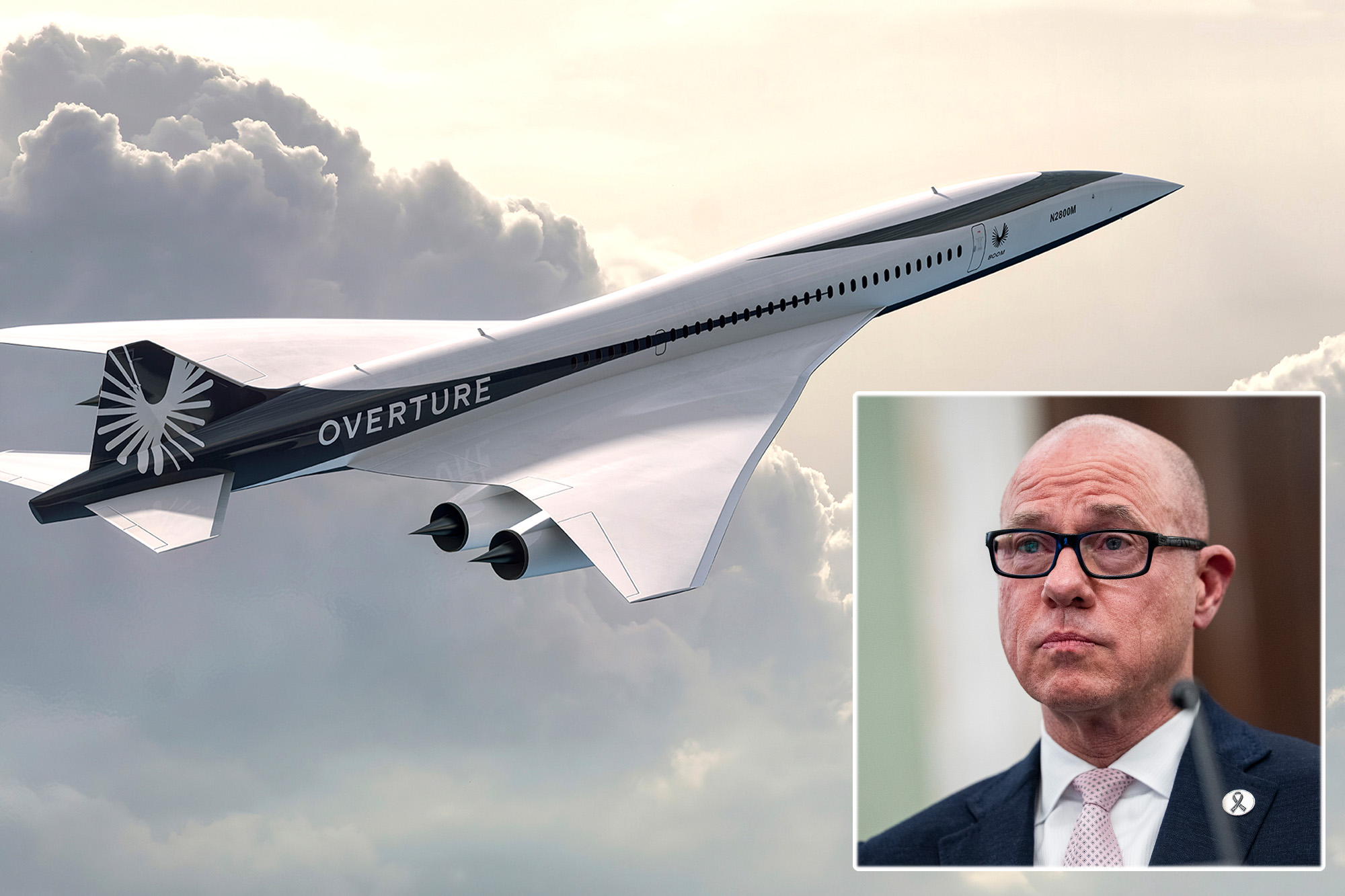
Boom Supersonic is one of the many US companies working on creating supersonic planes.
The Colorado-based developer says on its website that they have orders from United Airlines, American Airlines and Japan Airlines for supersonic planes that will carry 60-80 passengers. Atlanta’s Spike Aerospace is leveling up the luxury game and crafting a sleek supersonic private jet built for speed and high-end travel.
The latest FAA announcement follows President Donald Trump’s executive order from June 2025, in which he said that the ban on supersonic flights is “weakening our global competitiveness.”
“Advances in aerospace engineering, materials science, and noise reduction now make supersonic flight not just possible, but safe, sustainable, and commercially viable,” read the June 2025 order.
In the ’60s, the Oklahoma City experiments resulted in shattered window glass, cracked walls cracked, and the public went berserk. In 1973, the FAA drew a hard line in the clouds to protect people from the ear-splitting sonic booms that rocked the nation.