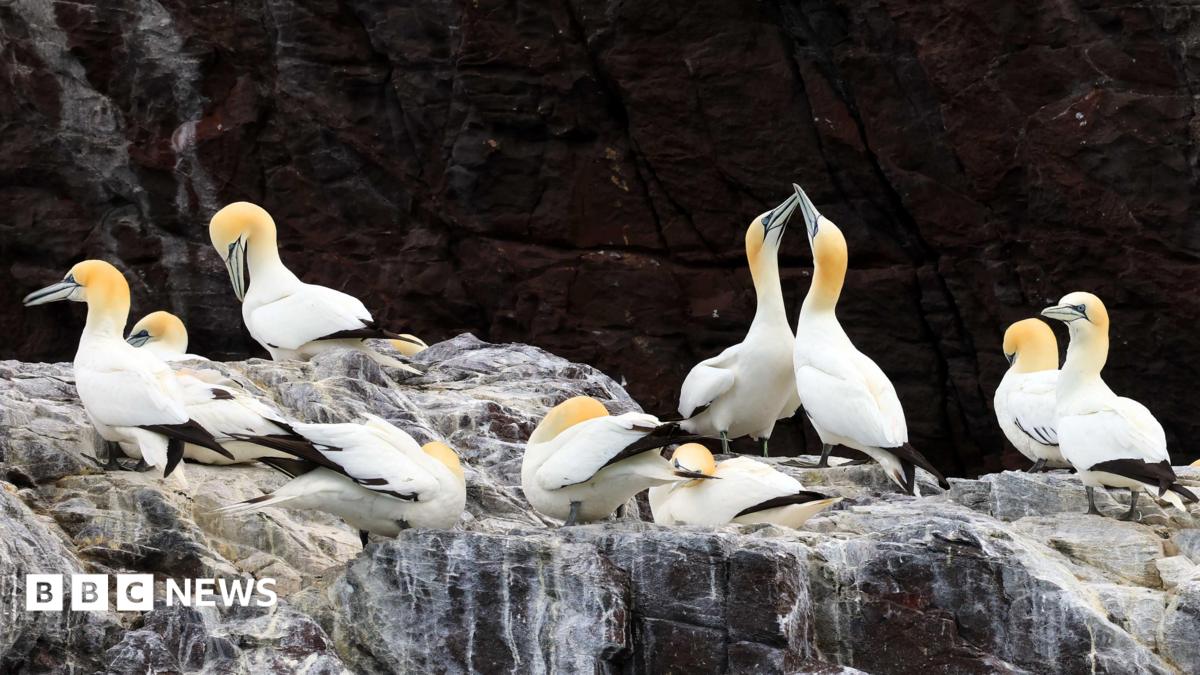
Image source, PA MediaImage caption, Gannets on Bass Rock were first exposed to H5N1 bird flu in 2022
Gannet populations at two of the world's largest colonies are not expected to recover from the impact of 2022's bird flu outbreak for almost two decades.
A new study from the RSPB said seabirds on Bass Rock, off Scotland's east coast, and Grassholm, off the Pembrokeshire coast in Wales, had suffered an "unprecedented deadly blow" during the outbreak.
It led to a fourfold increase in adult gannet deaths, resulting in a 26% decrease in the size of Bass Rock's colony and a 38% fall at Grassholm.
While the outbreak was already known to have killed tens of thousands of birds, the study warned that the colonies would not fully recover from the impact until 2041 at the earliest.
The H5N1 bird flu virus was first identified in poultry in Asia in 1996 before spreading to wild bird populations around the world.
It was first confirmed in gannets at Bass Rock on 4 June 2022, and at Grassholm the following month.
The researchers warned that as adult breeding birds drive population growth in colonies, the spike in deaths will have a long-term impact.
They recommended that the global conservation status of Northern gannets - which is currently "least concern" on the IUCN Red List of threatened species - should be revised in light of the devastation the outbreak has caused.
Image caption, Northern gannets use Bass Rock as a breeding colony during the summer months
Bass Rock is home to the world's largest colony of northern gannets and was recently bought by the conservation charity RSPB Scotland.
The island, three miles off the coast of North Berwick, had been owned by the Hamilton-Dalrymple family for 320 years.
Recent surveys have highlighted the dire situation facing the UK's seabirds, with the status of many breeding populations continuing to deteriorate.
RSPB buys Bass Rock after 300 years in private hands
"While we can't prevent diseases like bird flu, with long-term monitoring at key colonies and across wider populations we can better understand the impacts.
"With that knowledge we are in a far better position to address the many other pressures facing seabirds and halt the devastating declines of recent years."