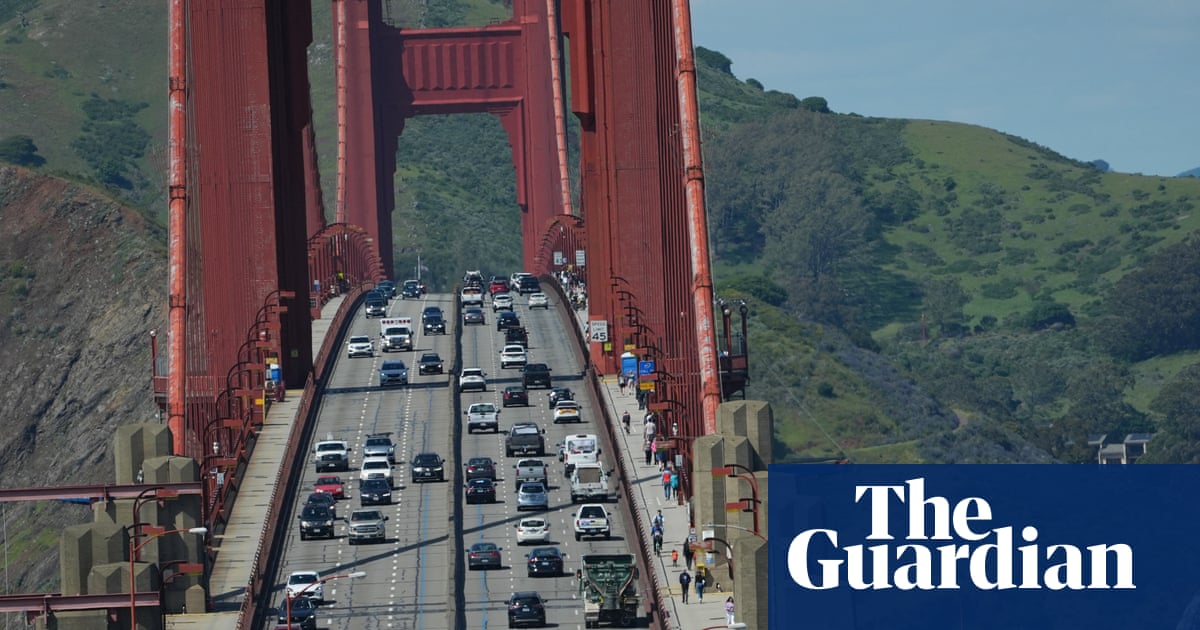
The Golden Gate Bridge after it was blocked by protesters in April 2024. Photograph: Paul Kuroda/AFP/Getty ImagesView image in fullscreenThe Golden Gate Bridge after it was blocked by protesters in April 2024. Photograph: Paul Kuroda/AFP/Getty ImagesPro-Palestine protesters who blocked Golden Gate Bridge convicted of misdemeanor chargesSan Francisco jury fails to reach verdict on more serious felony conspiracy charge over April 2024 demonstration
Seven protesters who blocked traffic on the Golden Gate Bridge during a 2024 anti-war demonstration have been found guilty of misdemeanor charges in a case that became yet another flashpoint over how governments and major institutions respond to pro-Palestinian protests in the Trump era.
The jury, which deliberated for a total of seven days, was deadlocked on the most serious charge: felony conspiracy. If convicted of that charge, the defendants would have faced a potential sentence of 15 years in prison.
The jury also could not reach a verdict on a misdemeanor trespassing charge. It’s unclear whether there will be a retrial for the deadlocked charges.
But the seven protesters were each convicted of six misdemeanors, including false imprisonment and obstruction of thoroughfare. One defendant, Sara Cantor, was convicted of an additional misdemeanor charge of refusing to disperse.
The protesters will be sentenced on 21 August. Six of the protesters face a maximum sentence of five years in county jail; Cantor faces five and a half years.
“Today remains a victory,” public defender Nuha Abusamra, who represents one of the defendants, said following the verdict, according to KQED. “We do not fight solely to win. We fight for the resistance.”
During the trial, which took place in a San Francisco superior courtroom, jurors were presented dueling portrayals of the protest. The assistant district attorney Angela Roze argued that the April 2024 demonstration blocked traffic for more than four hours, trapping motorists on the Golden Gate Bridge in an effort that resulted in a conspiracy and false imprisonment, the San Francisco Chronicle reported at the time.
Read moreThe seven co-defendants who went to trial faced charges of felony conspiracy and misdemeanors for false imprisonment, unlawful assembly, obstructing a roadway and trespassing.
“The demonstration on the Golden Gate Bridge caused a level of safety risk, including extreme threats to the health and welfare of those trapped, that we as a society cannot ignore or allow,” the San Francisco district attorney, Brooke Jenkins, said in a 2024 statement when her office brought charges four months after the incident.
Defense attorneys, meanwhile, have maintained that protesters were acting out of a moral obligation to stop genocide and were doing what they could to halt Israeli strikes on Gaza – including participation in a nationwide tax day protest of US financial and military aid to Israel.
The defendants turned to the bridge-blocking protest, they said, only after more traditional methods, such as calling their congressional representative and writing letters, went nowhere.
Dubbed the “Golden Gate 26” for the number of protesters arrested from the incident, charges against 19 arrestees were later dropped or deferred, meaning prosecution is put off and later dismissed if the accused complies with certain conditions, such as probation.
Rachel Lederman, a senior attorney with the Partnership for Civil Justice Fund, a civil rights legal group that is supporting the defendants, said she was “flabbergasted” that prosecutors did not reduce the most serious felony charges to misdemeanors after it dismissed charges against 19 of the original co-defendants.
“It’s just outrageous and unprecedented that these seven people are continuing to be prosecuted for felony conspiracy for doing a fairly routine – for the Bay Area – civil disobedience action,” Lederman said at the outset of the trial.
The Golden Gate Bridge transit authority made the unusual move of demanding restitution for toll revenue lost during the shutdown. Critics of the prosecution said the authority had never before requested restitution from a traffic-blocking protest on the bridge and cited it as another example of how protesters were being targeted for their pro-Palestinian views.
The San Francisco public defender’s office, which represents two of the defendants, had publicly called out Jenkins’ office for soliciting people via social media to seek restitution for the protest.
The restitution claims were resolved before trial with individual defendants paying three- and low-four-figure sums.
Since the late 1980s, the 4,200ft-long bridge that connects northern San Francisco and Marin county has been the site of multiple protests for causes such as the Aids epidemic, environmentalism and the Black Lives Matter movement.