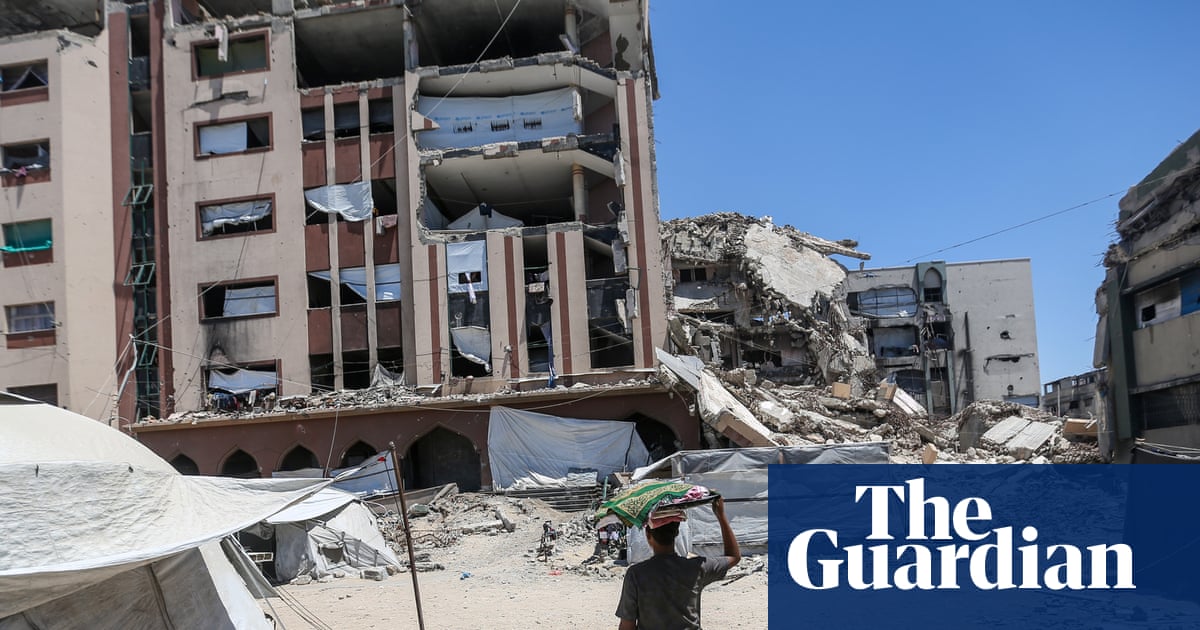
General destruction on 29 June, 2026 in Gaza City, Gaza. An Australian national is named in a submission made to the Australian federal police detailing alleged war crimes committed by the IDF. Photograph: Ahmad Hasaballah/Getty ImagesView image in fullscreenGeneral destruction on 29 June, 2026 in Gaza City, Gaza. An Australian national is named in a submission made to the Australian federal police detailing alleged war crimes committed by the IDF. Photograph: Ahmad Hasaballah/Getty ImagesAFP assessing allegation of Gaza war crimes committed by Australian citizen serving in IDFClaims against Israel Defense Forces battalion include deliberate targeting and destruction of residential buildings in 2023 and 2024 without military justification
Get our breaking news email, free app or daily news podcast
Australian federal police investigators are assessing a brief detailing alleged war crimes committed by an Australian citizen serving in the Israel Defense Forces in Gaza.
A 61-page brief has been handed to the AFP by the Australian Centre for International Justice detailing alleged war crimes committed by an IDF battalion in Gaza across 2023 and 2024.
The allegations include the deliberate targeting and destruction of residential buildings without military justification, a war crime under Australian law.
The brief draws on witness testimony, forensic evidence from Gaza, verified satellite imagery and social media posts. It also cites information from reports from battalion soldiers, video evidence posted online from Gaza – including by the alleged Australian offender – and public statements from IDF commanders.
The Australian national is named in the submission; it includes details of his service history in the IDF, his whereabouts and alleged actions during operations in 2023 and 2024, and public statements made by him during actions in Gaza.
The ACIJ’s submission states: “The pattern of conduct of the Israeli military highlighted in this complaint establishes a prima facie case that the attacks against civilian property were widespread and systematic, perpetrated in a coordinated and organised manner.”
Read moreThe brief focuses on the destruction of a residential building in a suburb of Gaza. The building was taken over by the IDF and used as an operations base, before it was laced with explosives and destroyed.
The brief details the demolition of the building by the battalion towards the end of its deployment, as well as evidence they claim places the alleged Australian perpetrator at and near the building at the time of its destruction.
“Noting my command’s responsibility for the investigation of war crimes, crimes against humanity, and genocide I appreciate the time taken in bringing this matter to our attention,” Gale wrote.
“Your letter has been referred to investigators, who will review the material and issues raised.”
In internal government documents circulated between the AFP and the Attorney-General’s Department in 2025 – released this year under freedom of information laws – federal police said they were aware of the allegations made against Australians serving in the IDF.
“The AFP is aware of allegations of the commission of war crimes by Australian citizens,” a briefing note prepared ahead of Senate estimates says.
“The AFP works closely with foreign law enforcement agencies and international bodies to support investigations into allegations of Commonwealth offences occurring in foreign jurisdictions.”
Read moreThe ACIJ brief submitted to the AFP alleges three breaches of the Commonwealth Criminal Code: that the Australian citizen, serving in the IDF, engaged in “conduct constituting the war crime of destruction and appropriation of property … [and] an attack against a civilian object”, each of which carries a maximum penalty of 15 years in prison.
The brief also alleges a crime against humanity of an “inhumane act”, “committed intentionally … as part of a widespread or systematic attack directed against a civilian population”. That offence carries a potential prison sentence of 25 years.
“It is submitted that the alleged perpetrator … both appropriated and destroyed the concerned civilian property,” the submission states, arguing that the company held collective responsibility for its actions.
The submission argues the appropriation of the building and its ultimate destruction had no military imperative or operational necessity, but rather was “undertaken unlawfully and wantonly”.
It states the context of widespread demolition of homes in Gaza – the UN estimates 92% of residential buildings in the Strip have been damaged or destroyed – is indicative of a deliberate, reckless destruction.
“The evidence indicates large-scale destruction of civilian property carried out deliberately … after effective control had been established, potentially for reasons of convenience, reprisal, or punishment.”
A UN commission of inquiry found “Israeli forces have systematically destroyed civilian objects across Gaza”, with the IDF “de facto awarding itself blanket permission to target civilian locations widely in the Gaza Strip”.
The federal government has been shown estimates that up to 1,000 Australian citizens may have served in the IDF since the 7 October 2023 attacks by Hamas.
It is not illegal for an Australian citizen to fight for a foreign military. It is, however, illegal to fight for a foreign non-state actor. Hamas is proscribed as a terrorist organisation by the Australian government: fighting for Hamas is a criminal offence under Australian law.
The federal government has confirmed at least three Australian citizens have been intercepted at the border, believed to have been travelling overseas to serve with the IDF. It is understood those citizens weren’t stopped from leaving Australia but were subject to more detailed questioning about their travel plans during immigration screening.
The Australian federal police declined to answer specific questions on its investigation, including whether it had spoken to the Australian citizen alleged to have committed the offences.
A spokesperson told the Guardian: “it is an offence for Australians to engage in hostile activities overseas, unless serving in or with the armed forces of a foreign country. This discourages Australians from fighting in overseas conflicts and endangering their lives and the lives of others.”
The spokesperson said the AFP advises to ensure their conduct does not constitute a criminal offence, but said “the AFP does not proactively monitor Australian citizens who lawfully serve with a foreign military service”.
Israeli authorities have issued guidelines to IDF soldiers on how to evade arrest overseas and to mask their identities while on deployment.
The IDF’s Military Advocate General’s Corps has also established an office to provide legal support to soldiers who are interrogated or detained abroad.
Officials from the Department of Foreign Affairs and Trade were questioned on Australians serving in the Israeli military in the latest round of Senate estimates.
“The government’s position, in terms of Australian citizens with the Israeli defence force, is that the government encourages all Australians who seek to serve with the armed forces of a foreign country to carefully consider their legal obligations and ensure that their conduct does not constitute a criminal offence,” acting deputy secretary Dr Fiona Webster told estimates.
The ACIJ is an independent legal centre that works to develop Australia’s capacity to investigate and prosecute international crimes. It is involved in a major federal court challenge supporting Palestinian groups seeking to compel the Australian defence minister to release documents regarding arms export permits to Israel.
The Guardian has put questions to the IDF and the Israeli embassy in Canberra.