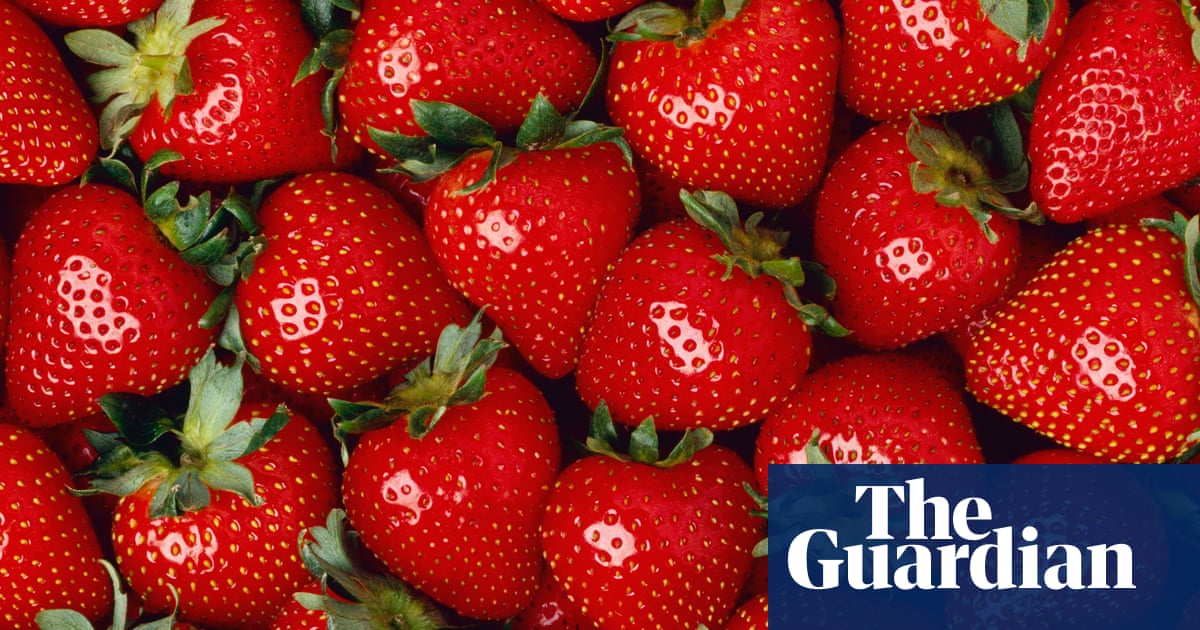
The weather has been ideal for strawberries, raspberries, gooseberries, redcurrants, and unusual breeds such as honeyberries. Photograph: Universal Images Group/Getty ImagesView image in fullscreenThe weather has been ideal for strawberries, raspberries, gooseberries, redcurrants, and unusual breeds such as honeyberries. Photograph: Universal Images Group/Getty ImagesJune’s sunshine adds extra sweetness to bumper summer for UK strawberriesWeather this year has encouraged smaller but earlier cropping of sweet and bountiful fruit in gardens, RHS says
If your bowl of strawberries and cream tastes particularly sweet this year, you’re not mistaken.
It is a bumper summer for strawberries, with the recent weather conditions making them more abundant and delicious than ever, according to the Royal Horticultural Society (RHS).
Sales of strawberries are up 240% for 9cm pots and the weather has encouraged smaller but earlier, sweeter and more bountiful cropping in gardens.
The weather has been ideal for garden strawberries, according to the RHS. The sweet fruit flowers before leafing, but over a long period, which meant they were protected them from the late frost in May while still getting the best of June’s sun. The result has been extra sweetness and earlier ripening. The same has been true for raspberries, gooseberries, redcurrants and whitecurrants – with blackberries and blueberries to follow later in the summer.
Gardeners have also been experimenting with unusual breeds of berries to make the most of the sun, the RHS said. Honeyberries have been particularly popular – the elongated blue fruits are said to taste like a mix of blackberries and blueberries.
Guy Barter, the chief horticulturist adviser for the RHS, said: “With a changing climate gardeners are more confident in the potential of a strong crop and seeking out more unusual varieties including wineberries, honeyberries and pinkcurrants.”
Wineberry is increasingly common in gardens. An Asian breed of raspberry, it has shiny orange-red berries with a sherbet taste. Translucent pinkcurrants, the colour of rose quartz, are also selling well, according to the RHS. All of the sales of fruit plants are up 25% on last year.
The gardens owned by the RHS are starting to heave with fruit, including figs. In 2024, the fig plantation at RHS Garden Wisley in Surrey was moved outdoors after a period under glass and since conditions in the 1980s killed it off. It is now bearing fruit.
Grapes should ripen earlier than usual, the charity added, because of June’s weather. This is good news as the later grapes are harvested, the more at risk they are from the wet and cold of autumn.
Berries will also be the star of the show at the RHS Badminton flower show, which begins next week. Delicate, wild strawberries will peek out of the greenery at the Ruskin Mill Trust’s artisan woodland craft garden. The Simon Deeves-designed a celebration of compost and community garden will also feature wild strawberries.
Wild strawberry is a native British plant, while the garden strawberry is a hybrid of two American varieties. The wild berries are small and intensely sweet, and were once the only type eaten in Britain. The Tudors and Stuarts gathered them from the wild and planted them in their gardens.
Though delicious, they were not a commercially viable crop. In 1822, the RHS launched what was effectively it first citizen science project to find all the varieties of strawberries grown in its members’ gardens in an effort to discover the plumpest, juiciest variety, which helped growers come up with the descendants of the fruit we enjoy today.
Botanically, the strawberry is not a berry, but an aggregate accessory fruit.