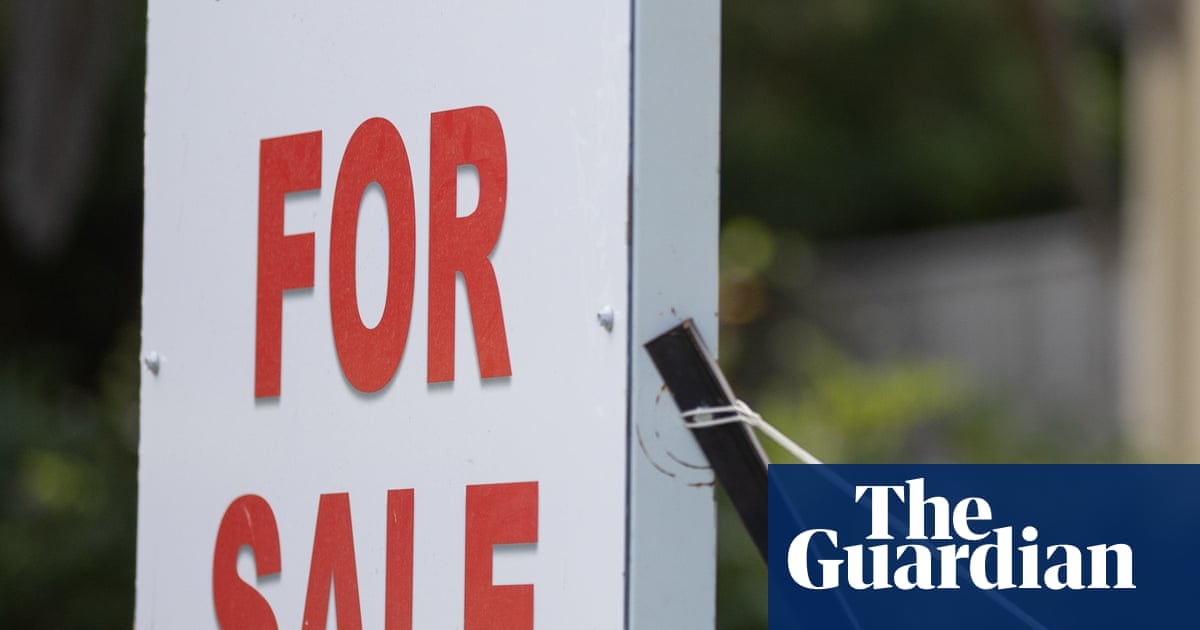
Buyers are ‘more concerned about getting into the market right now’ than they are about rising interest rates, an expert says. Photograph: Russell Freeman/AAPView image in fullscreenBuyers are ‘more concerned about getting into the market right now’ than they are about rising interest rates, an expert says. Photograph: Russell Freeman/AAPDesperate first home buyers are fuelling price ‘up-crash’ at lower end of market, experts sayBiggest house price increases in February come in smaller capital cities as buyers undeterred by interest rate hikes
Follow our Australia news live blog for latest updates
Get our breaking news email, free app or daily news podcast
Hot competition for cheaper Australian homes has powered a relentless “up-crash” in prices despite rising interest rates, economists warn.
Desperate first home buyers have bid up the price of affordable properties as they face off against investors, who have borrowed big despite government warnings they could lose tax discounts and deductions.
Inner-city one-bedroom units in Brisbane have risen close to $20,000 each week, making sales prices from as recent as January irrelevant, according to Lauren Jones, a buyer’s agent.
One open home, held the weekend after the Reserve Bank hiked interest rates, was flooded with 55 first home buyers, investors and downsizers, Jones said.
“Nothing’s changed since then,” she said. “People are more concerned about getting into the market right now than rate rises.”
That two-bedroom apartment in Taringa, in Brisbane’s inner west, sold for $870,000. Jones’s buyer had expected it would be within their $800,000 budget but is now looking at one-bedroom units instead.
National property prices rose 0.8% in February, as they did in January, taking the median price up more than $7,300 to nearly $923,000, according to Cotality data released on Monday.
The biggest increases came in more affordable and undersupplied markets. Perth’s prices rose 2.3% or an effective $22,500, while Brisbane, Adelaide and Hobart each saw prices rise more than 1%.
Sydney and Melbourne prices held steady, with prices weighed down by a rising number of new home listings, while the rate rise hit the top of the market. The highest-priced quarter of homes in Sydney fell 0.9%.
Read moreStrong competition for cheaper homes offset the drop at the top, with the cheapest quarter of Sydney homes rising 0.8% in price through the month, Cotality’s research director, Tim Lawless, said.
“There is a lot of competition for lower-priced properties,” Lawless said.
“First home buyers, investors and subsequent buyers are all competing across this sector of the market.”
Buyers were not deterred by a rate hike which added more than $130 to the monthly repayments on a typical $900,000 mortgage, nor by the government’s confirmation it could cut landlords’ capital gains tax discounts and negative gearing deductions.
Loans to property investors surged nearly 8% over the year for the month prior, faster than the 6% pickup for owner-occupied housing, according to data released by the Reserve Bank on Friday.
The total value of home loans hit a new record of $2.44tn, with Macquarie and Commonwealth banks both writing over $2.7bn in new loans in January.
Banks’ aggressive competition for new customers, especially investors, has dragged down mortgage rates, powering an explosion in loans that has caught the RBA by surprise.
Read moreThe RBA has to keep interest rates higher to achieve a given rate of lending growth than it did before the pandemic, because mortgage rates have fallen compared to the cash rate, according to RBA research released last week.
Markets predict a rate rise is likely to come in May and will certainly hit by August.
Economists nonetheless expect home prices to keep a steady pace of growth, while households’ expectations for real estate prices are at record highs, according to Westpac.
It would take “significant” additional rate rises for house prices to fall, the AMP chief economist, Shane Oliver, said.
The “up-crash” in home prices was still being supported by last year’s rate cuts, the 5% deposit scheme and a “bubble-like Fomo [fear of missing out] sentiment”, a UBS economist, George Tharenou, said.
“Price growth has been much stronger than almost anyone expected,” he said on Monday.