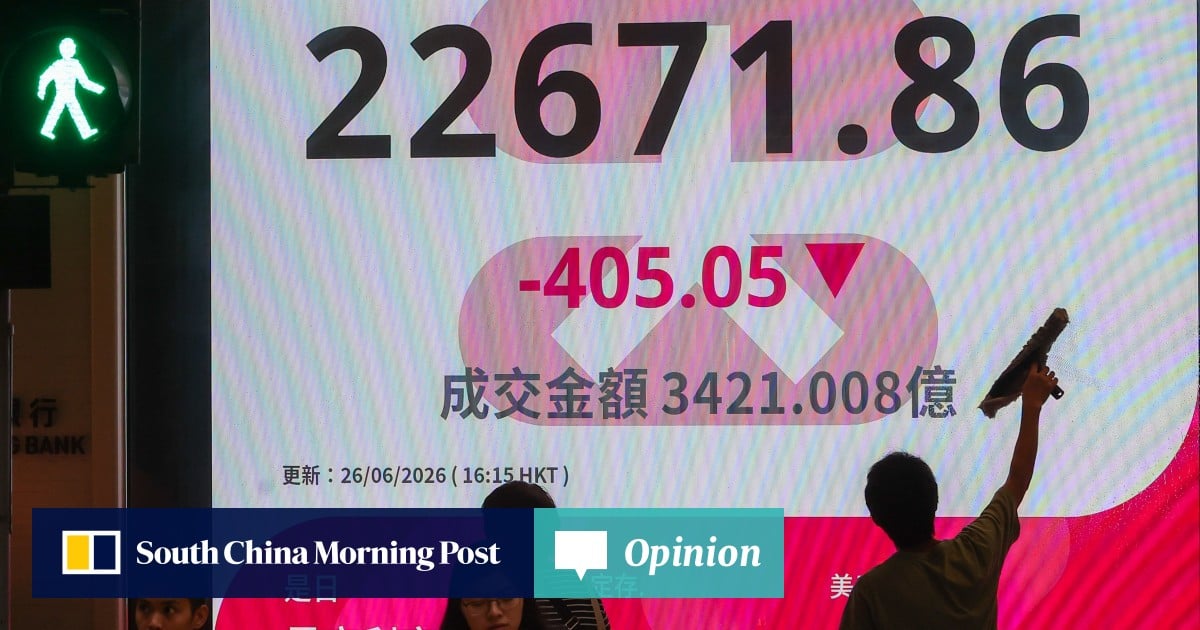
The AI trade has shown gaps in Hong Kong’s stock market, but the share sale boom suggests it is set to capitalise on Beijing’s AI ambitions
3-MIN READ3-MIN ListenNicholas SpiroNicholas Spiro is a partner at Lauressa Advisory, a specialist London-based real estate and macroeconomic advisory firm. Published: 4:30pm, 2 Jul 2026There are many disconnects in financial markets. One of them is Japan’s benchmark 10-year bond yield, which currently stands at just 2.7 per cent despite the country’s large public debt burden – more than 240 per cent of economic output.
Although Japanese bond yields have risen sharply in the past three years, the 10-year yield is slightly lower than that of Germany, whose government debt as a percentage of economic activity is around one-quarter the size of Japan’s.
Another anomaly is the outperformance of the debt of non-investment grade companies. The credit spread, or risk premium, on junk-rated bonds is close to its lowest level since 2007 despite the prospect of higher interest rates, acute geopolitical risks and rising defaults in the increasingly vulnerable private credit market.
One of the most striking peculiarities is the growing divergence within Hong Kong’s equity market. Hong Kong remains the top fundraising venue in Asia. In the second quarter of this year, proceeds from share sales – which include listings, placements and block trades – reached their highest quarterly level in five years, according to Bloomberg data.