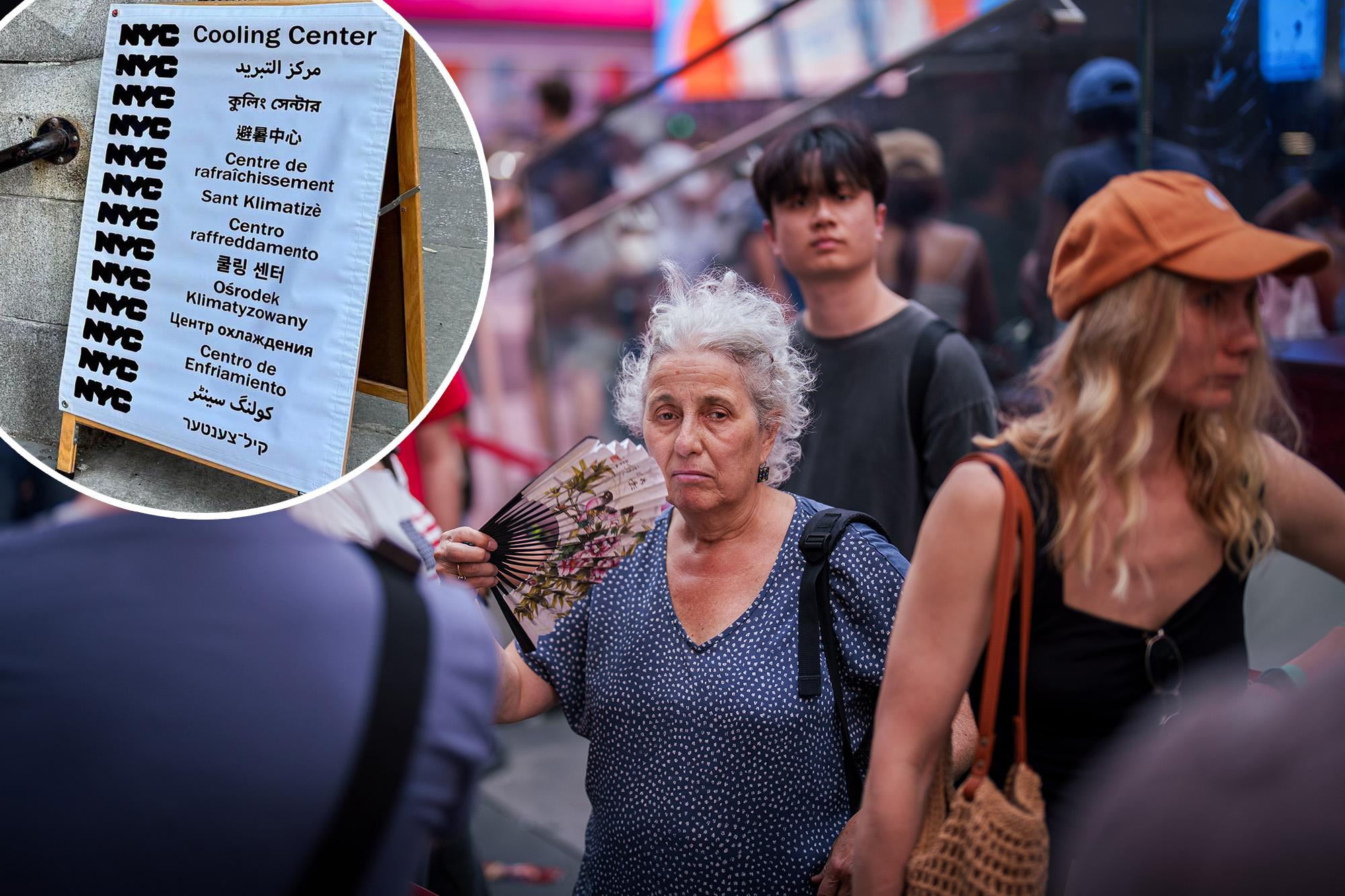
Add The New York Post on Google New Yorkers are gonna be hot to trot.
NYC is getting roasted over the next four days, with sweltering humidity that will have a 110-degree feel coming just in time for Fourth of July weekend.
Amidst a World Cup knockout match at MetLife Stadium, a potential Swift-Kelce nuptials at Madison Square Garden and citywide America 250 celebrations this weekend, New York Gov. Kathy Hochul announced a warning to people to stay safe in the heat.
A possible heatwave in the New York City region is bringing dangerous “feels-like” temperatures potentially reaching 115 degrees by the July 4th weekend. FOX Weather Yesterday, Mayor Mamdani activated a coordinated Heat Emergency Plan across all five boroughs to ready New Yorkers for historically high temperatures, which includes activating hundreds of cooling centers and cool options.
Never-before-used Cooling Outreach On-Location (COOL) vans will be throughout the City providing wellness checks, medical care, water and supplies of electrolytes and sunscreen. They will also be dispatched to perform in-home wellness checks on older adults.
The Department of Health and Mental Hygiene (DOHMH) will operate Health Action Centers and Overdose Prevention Centers as cooling centers. There will also be pop-up cooling stations through partnerships and community organizations. Street laborers will be provided with cooling towels.
2,200 LinkNYC Kiosks will have real-time walking directions updated to the nearest cooling centers on the streets.
Cooling centers will be available at public hospitals, libraries, older adult centers and other public locations. The Javits Center and NYCEM Headquarters will be converted to cooling centers from 11 a.m. to 11 p.m.
Last Summer, former mayor Eric Adams urged New Yorkers to take precautions and use cooling centers, as it’s common for some New Yorkers to not have air conditioning in their homes or apartments.
There were more than 50 cooling centers opened throughout the five boroughs last summer, and people weighed in on the best centers that were available to them last year.
One woman told AmNews last summer that cooling centers in the New York Public Library are best in summer for sending emails, printing documents and phone charging.
There are also cooling centers open to “older adults only” located at senior centers or luncheon clubs throughout the city, specifically for adults vulnerable to high temperatures, especially those with chronic conditions or taking medication that makes them susceptible to heat-related health problems.
One senior center is the Star Senior Center in Washington Heights. Caseworker Marlene Diaz said the center expanded its hours last summer for accessibility for older adults. They also provide transportation and spread the word through WhatsApp groups, Facebook, and fliers.
According to Dr. Michelle E. Morse, the former acting commissioner of the NYDH, the easiest way to find a center near you is to call 311. They will provide you with the closest cooling centers to your location.
The NYPL website lists their cooling center locations. And more information about cooling centers can be found on the DOH website.
The New York City Emergency Management map of all cooling centers and updates it each time the City declares a heat emergency, but this program receives no funding. Organizations and businesses volunteer their spaces during heatwaves, according to the New York City Independent Budget Office.
New Yorkers took to Coney Island to cool down yesterday before the heat wave. Getty Images The City has been using cooling centers since the late 1990s. Given funding constraints, sites that are already open, staffed and familiar to the surrounding community are used.
Since heat emergencies are announced with little warning, the City must also choose sites that can be available on short notice, so finding spaces willing to host cooling centers and have enough space is difficult and finding identifying new locations for centers is also a challenge.
Because these sites rely on pre-existing public spaces or local businesses, they are rarely designed to accommodate large-scale emergency influxes. Smaller centers can run out of seating, face staffing shortages or run out of resources.
Last summer, roughly 110,000 lost power for about four hours from June 22-25. While many larger official shelters utilize backup generators, smaller volunteer spaces may lose power.
Accessibility and opening hours are the main hindering factors in accessing cooling centers and their facilities, but utilizing online resources can help beat the heat.