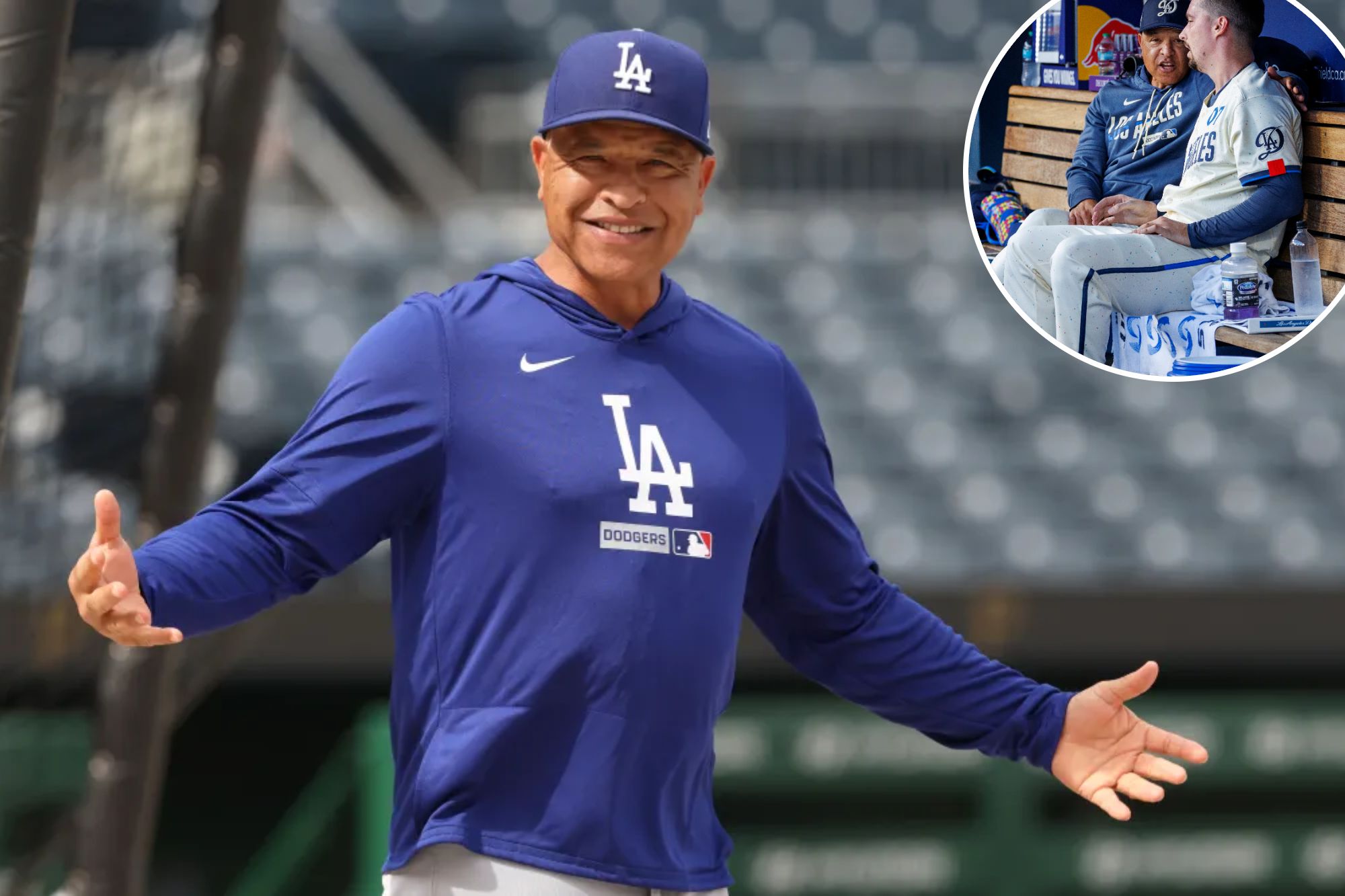
Add The California Post on Google SACRAMENTO –– When the doors of history swung open two Octobers ago, it was manager Dave Roberts who helped the Dodgers find their calm.
It didn’t matter that his job was seemingly on the line. That his legacy was in danger of tarnish. Or that his star-studded club was in danger of a third-straight early elimination from the playoffs, facing a two-games-to-one deficit against the rival Padres in the 2024 National League Division Series.
In Roberts’ march to 1,000 career wins –– which he clinched Tuesday, reaching the mark faster than any MLB manager previously in history –– few moments had been more pivotal or important in his tenure.
“He kept the composure,” veteran infielder Miguel Rojas recalled this week, “knowing that we were against the wall, but that we still had an opportunity to get out of there with a win and have an opportunity to win the World Series.”
Indeed, as Dodgers players reflected on what has made Roberts the right man to guide the club during the franchise’s run of unprecedented, dynasty-cementing success over the last decade, his calming and copacetic nature was the first thing they cited.
“To manage so many personalities, injuries, guys coming up, guys coming down, it’s a lot,” shortstop Mookie Betts said. “He definitely welcomes the personalities, but makes sure the egos kind of stay in [check].”
That’s easier said than done with as many superstar players as the Dodgers have had in the clubhouse over the years. Rarely can such a vast collection of big names get along so well, for so long.
“We’re talking about really big pieces of this game, and faces of the franchise,” Rojas said. “And how good his relationships are with every one of those players, that’s what makes me feel like he’s a remarkable manager.”
Rojas has studied Roberts’ approach particularly close the last couple years, as he has neared retirement and begun eying a potential future in coaching himself.
“I totally understand why managers sometimes get in confrontations with players, because not everybody can be happy at the same time,” Rojas said. “But this is one of the caes where, the last two years especially, you don’t see people talking here, or having discomfort because of their playing time, or [thinking], ‘I should be in there.’ It’s really rare, to see a clubhouse like this, where everybody’s happy and comfortable. And one of the reasons why is because of Doc being so good managing personalities and people.”
As the first superstar addition the Dodgers made en route to their stretch of three World Series titles over the last six years, he arrived in 2020 with immense expectations in unfamiliar surroundings.
For him, Roberts has become a source of confidence and comfort, acting more like a father figure than an authoritative presence.
“I see him more as like a baseball dad, to be honest,” Betts said. “He’s always there … He’s so much more than just a manager.”
Betts pointed to Roberts’ mostly hands-off approach, and how “when we’re not playing well, he kinda just lets us do our thing –– until he feels the need to step in.”
“And when he does step in, his voice is definitely heard,” Betts added. “Again, it’s not like a coach-to-player thing. It’s more like a dad-to-son type thing. So I think it resonates a lot more. I think we all appreciate it.”
Late that season, Roberts called a clubhouse meeting after a season-ending injury to Tyler Glasnow, rallying the group at a time their World Series chances seemed to be dwindling.
Then came that crucial elimination game against the Padres, when the Dodgers were without both Rojas and Freddie Freeman because of injuries, and forced to go with a bullpen game because of key absences in their rotation.
“He had to trust his gut,” Rojas said, “to start the players that he felt like were going to help in a game that we had to win.”
That meant inserting Kiké Hernández into the lineup for the first time that postseason, rearranging his infield to compensate for the losses of Rojas and Freeman, and then executing eight different pitching decisions that ultimately resulted in an 8-0 shutout of the Padres at Petco Park –– a win that propelled the Dodgers to another victory in their do-or-die Game 5 of that series, and eventually the first of their back-to-back championships the last two years.
“Being right next to him [that night], how well he managed that game,” Rojas said, “that’s one of my favorite [memories of him].”
Roberts called such plaudits from his players “the biggest compliment” he could receive, while stealing a line he recently heard from Chargers head coach Jim Harbaugh about wanting “to be every player’s best coach.”
“That really landed with me, in this sense: If Miggy or Freddie or Mookie can talk about the culture and how I’ve impacted their lives, that’s the win,” Roberts said. “I’m not chasing wins. I’m chasing having great relationships with my players. So, yeah, the result, the fallout is a lot of wins. But when he said that to me, I thought that’s a good goal for all coaches or teachers –– to be the best in front of the people you’re in front of. If you can make that your goal, that makes you better.”
In Roberts’ case, it has brought him three World Series titles, a future Hall of Fame managerial resume, and 1,000 career wins.
“At the end of the day, it’s about the environment that we have in this clubhouse,” Rojas said. “That’s what separates Doc from the rest of the managers that I’ve had.”