Jean‐Luc Ponty
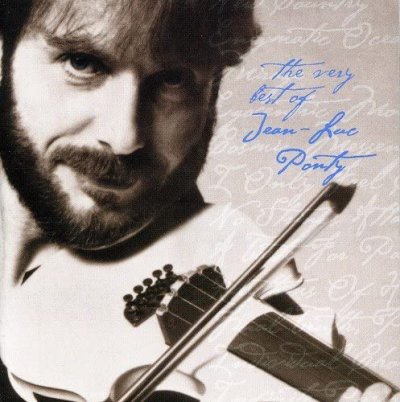
Jean-Luc Ponty (born 29 September 1942) is a French virtuoso violinist and jazz composer. Ponty was born into a family of classical musicians on 29 September 1942 in Avranches, France. His father taught violin, his mother taught piano. At sixteen, he was admitted to the Conservatoire National Supérieur de Musique de Paris, graduating two years later with the institution's highest award, Premier Prix.
In turn, he was immediately hired by one of the major symphony orchestras, Concerts Lamoureux, where he played for three years. While still a member of the orchestra in Paris, Ponty picked up a side gig playing clarinet (which his father had taught him) for a college jazz band that regularly performed at local parties. It proved a life-changing jumping-off point. A growing interest in the jazz sounds of Miles Davis and John Coltrane compelled him to take up the tenor saxophone.
One night after an orchestra concert, still wearing his formal tuxedo, Ponty found himself at a local club with only his violin. Within four years, he was widely accepted as the leading figure in jazz fiddle. At that time, Ponty was leading a dual musical life: rehearsing and performing with the orchestra while also playing jazz until 3 a.m. at clubs throughout Paris. The demands of this schedule eventually brought him to a crossroads.
"Naturally, I had to make a choice, so I took a chance with jazz", says Jean-Luc. Critic Joachim Berendt wrote that "Since Ponty, the jazz violin has been a different instrument", of his "style of phrasing that corresponds to early and middle John Coltrane" and his "brilliance and fire". At first, the violin proved to be a handicap; few at the time viewed the instrument as having a legitimate place in the modern jazz vocabulary. With a powerful sound that eschewed vibrato, Ponty distinguished himself with be-bop-era phrasings and a punchy style influenced more by horn players than by anything previously tried on the violin; nobody had heard anything quite like it before.
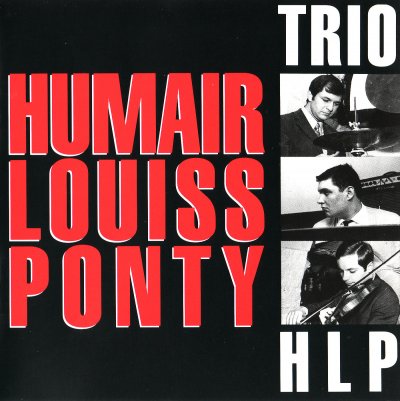
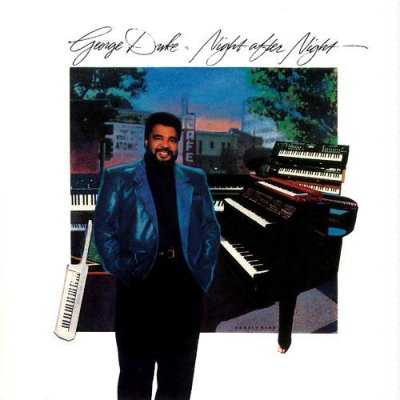
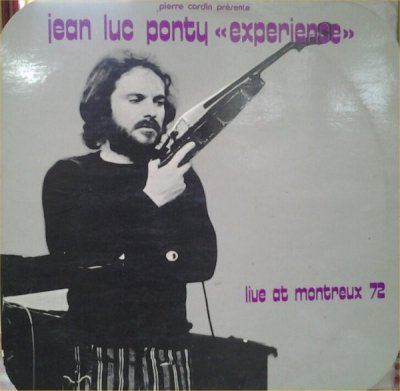
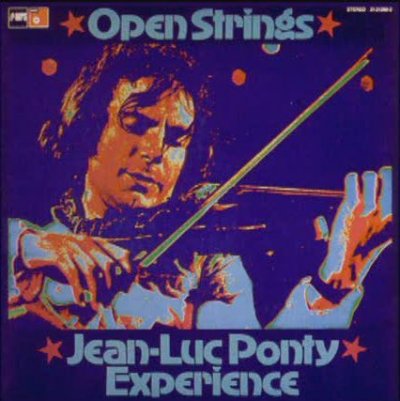
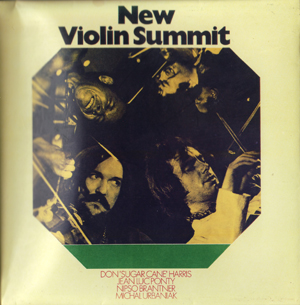
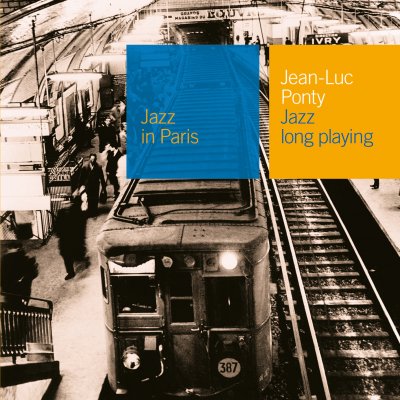
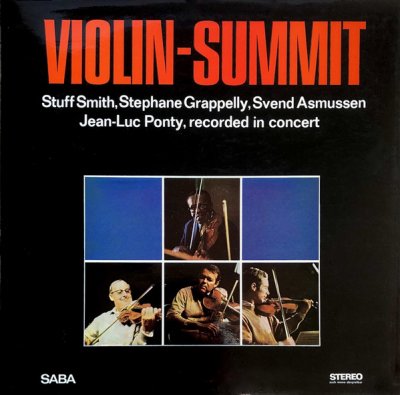
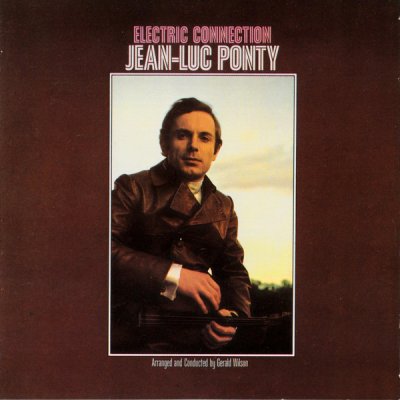
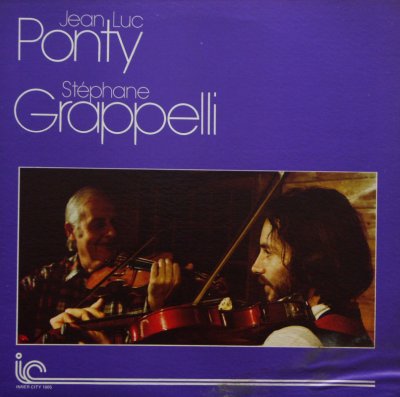
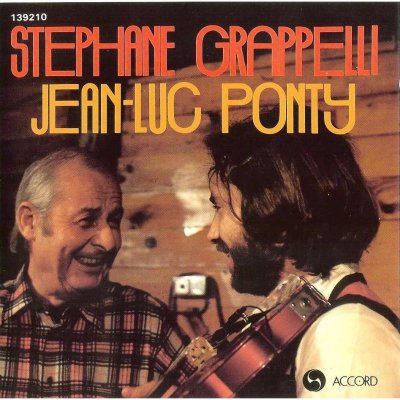
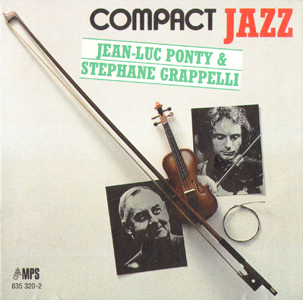
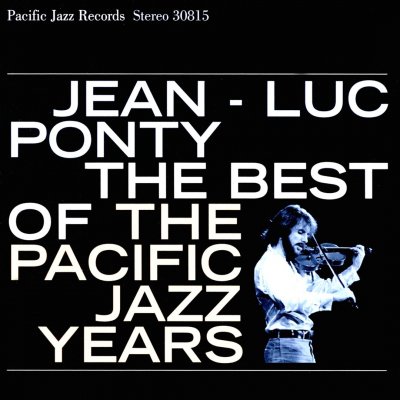
Critics said then that he was the first jazz violinist to be as exciting as a saxophonist. Ponty's notoriety grew with remarkable leaps and by 1964, at age 22, he released his debut solo album for Philips, Jazz Long Playing. A 1966 live album called Violin Summit united Ponty on stage in Basel, Switzerland with such notable string talents as Svend Asmussen, Stéphane Grappelli and Stuff Smith. John Lewis of The Modern Jazz Quartet invited Ponty to perform at the Monterey Jazz Festival in 1967, which led to a U.S. recording contract with the World Pacific label and the albums Electric Connection with the Gerald Wilson Big Band and Jean-Luc Ponty Experience with the George Duke Trio.
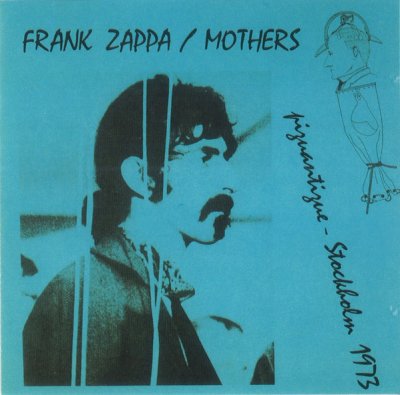
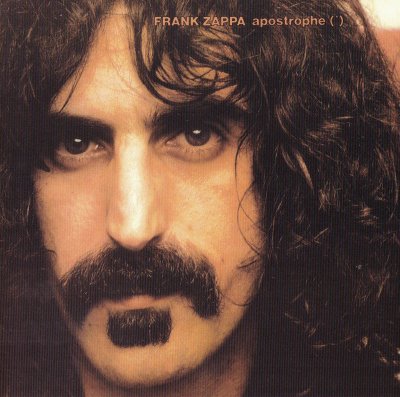
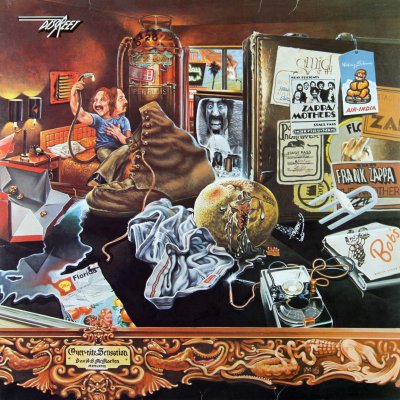
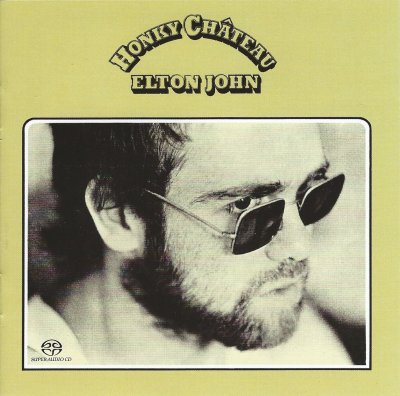
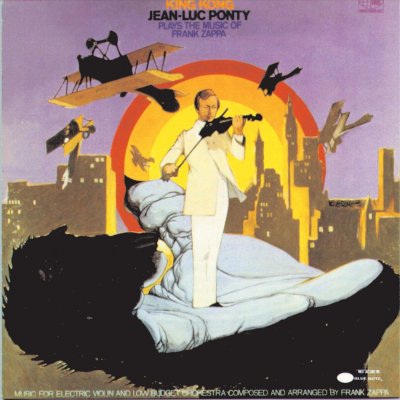
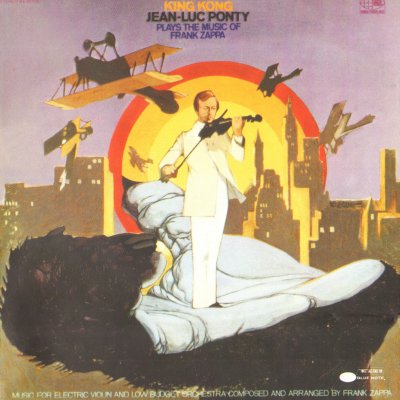
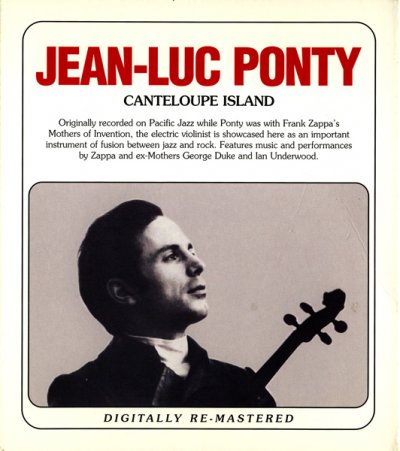
That year also brought Sunday Walk, the first collaboration between Niels-Henning Orsted Pedersen and Ponty. Through the late 60s and early 70s, Ponty achieved mounting critical praise and popularity across Europe. In 1969 Frank Zappa composed the music for Jean-Luc's solo album King Kong (World Pacific). In 1972 Elton John invited Ponty to contribute to his Honky Chateau album.
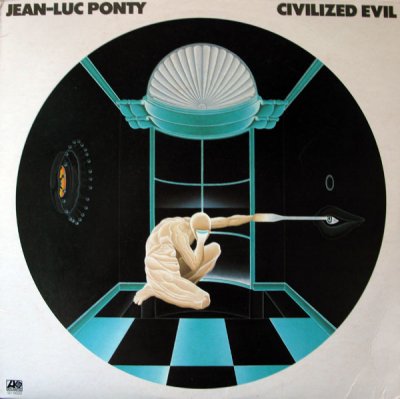
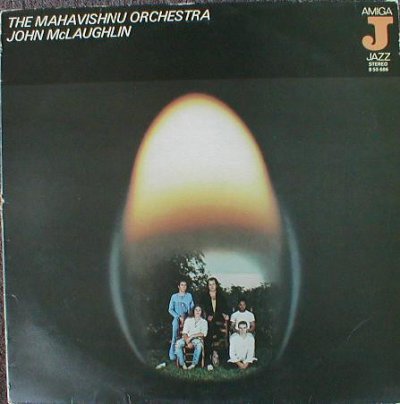
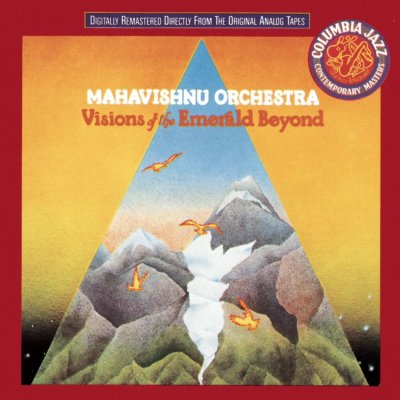
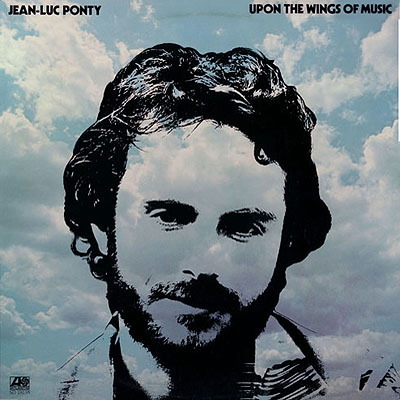
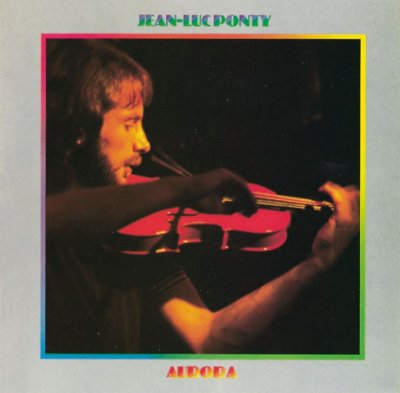
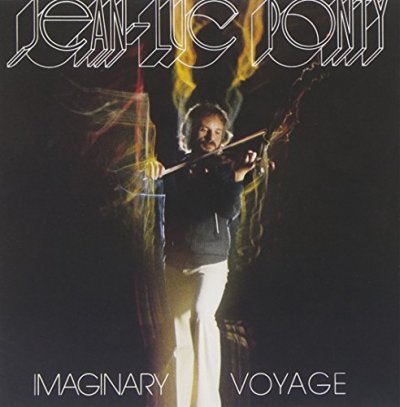
Within a year — at the urging of Frank Zappa and the Mothers of Invention who wanted him to join their tour — Ponty emigrated with his wife and two young daughters to America and made his home in Los Angeles. He continued to work on a variety of projects — including a pair of John McLaughlin Mahavishnu Orchestra albums and tours (Apocalypse and Visions of the Emerald Beyond) until 1975, when he signed on as a solo artist with Atlantic Records. For the next decade Jean-Luc toured the world repeatedly and recorded 12 consecutive albums which all reached the top 5 on the Billboard jazz charts and sold millions of copies. Early Atlantic recordings, such as 1976's Aurora and Imaginary Voyage, firmly established him as a figurehead in America's growing jazz-rock movement.
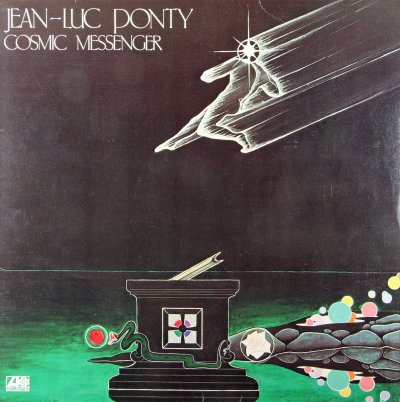
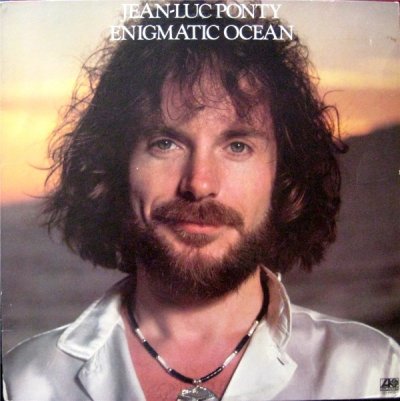
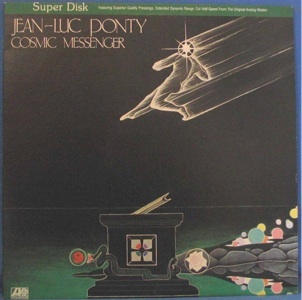
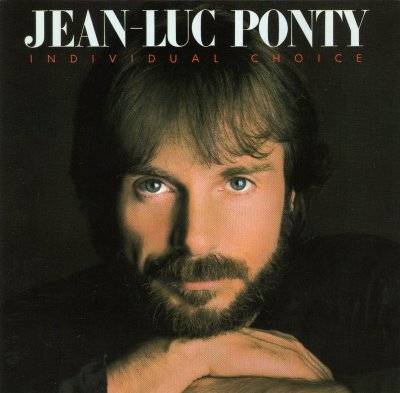
He went on to crack the top 40 in 1977 with the Enigmatic Ocean album and again in 1978 with Cosmic Messenger. In 1984 a video featuring time-lapse images was produced by Louis Schwarzberg for the song Individual Choice. Along with Herbie Hancock, Ponty became one of the first jazz musicians to have a music video. Besides recording and touring with his own group, Ponty also performed some of his compositions with the Pittsburgh New Music Ensemble, the Radio City Orchestra in New York, as well as with symphony orchestras in Montreal, Toronto, Oklahoma City and Tokyo.
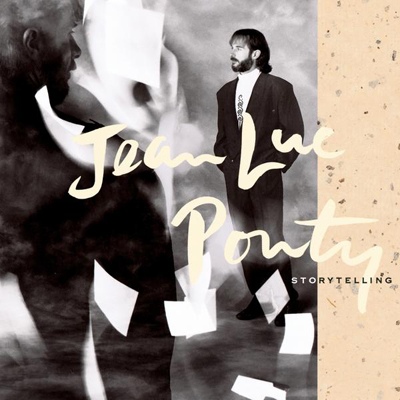
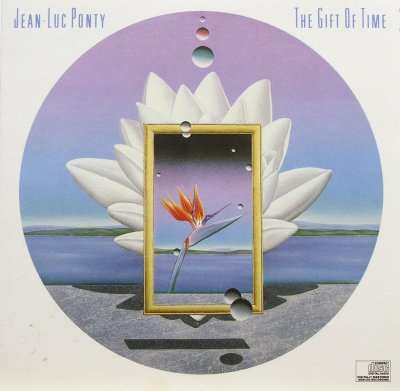
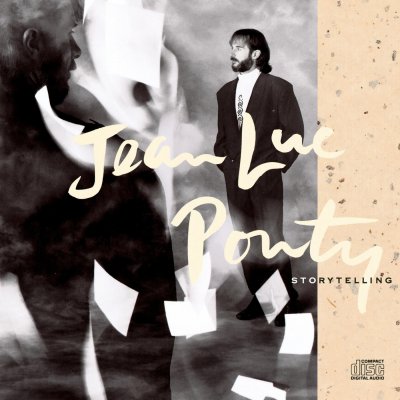
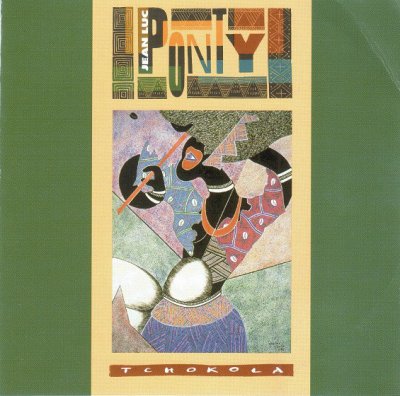
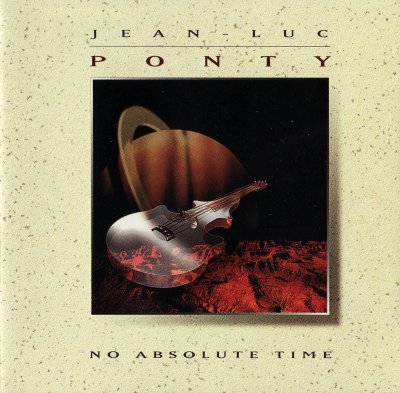
In the late 80s he recorded a pair of albums, The Gift of Time and Storytelling for Columbia. On 1991's Epic-released Tchokola, Ponty combined his acoustic and electric violins, for the first time, with the powerful polyrhythmic sounds of West Africa. He also performed for two months in the U.S. and Canada with a cast of African expatriates he had encountered on the Paris music scene. In 1993 Ponty returned to Atlantic with the album No Absolute Time.
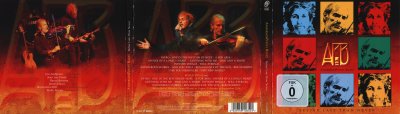
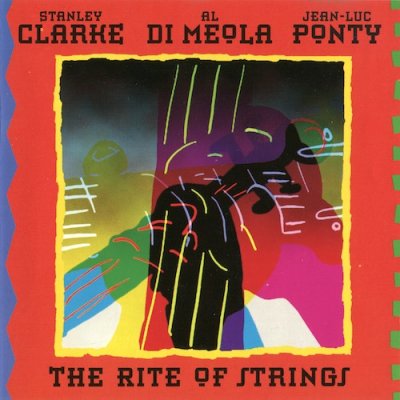
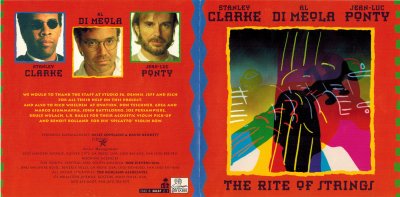
Working with American and African musicians, Jean-Luc expanded on the explorations of Tchokola with a moving and soulful result. "There is a whole scene in Paris of top-notch African musicians, " he says. "I was very curious and wanted to educate myself in these rhythms, which were totally new to my ears. " In 1995 Ponty joined guitarist Al Di Meola and bassist Stanley Clarke to record an acoustic album under the name The Rite of Strings.
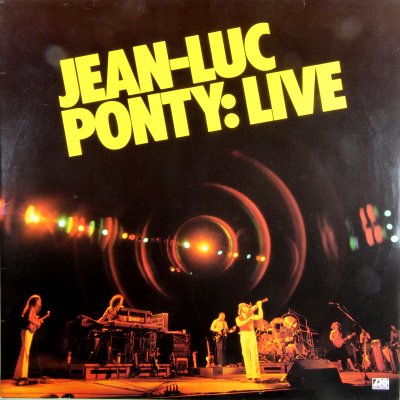
This all-star trio also undertook a six-month tour of North America, South America, and Europe that earned them intercontinental critical praise. Ponty regrouped his American band in 1996 for live performances following the release of a double CD anthology of Ponty's productions for Atlantic Records entitled Le Voyage. One of these concerts was recorded in Detroit, Michigan, in front of 6000 fans. It was released in February 1997 by Atlantic Records under the title Live at Chene Park.
In 1997 Jean-Luc Ponty put back together his group of Western and African musicians pursuing this new fusion that he started in 1991. Together they toured for 3 years from the Hawaiian Islands to Poland and in North America as well as in Europe. Ponty also performed a highly acclaimed duet with bassist Miroslav Vitous in December 1999. In January 2000 he participated in Lalo Schifrin's recording with a big band, Esperanto.
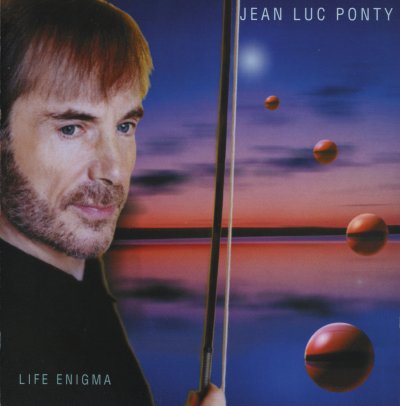
In June 2001 Ponty performed duets with Vadim Repin, the young Russian star of classical violin and also with American jazz violinist Regina Carter at the Film Music Festival in Poland. In August 2001 Jean-Luc Ponty released his studio CD Life Enigma on his own label (J.L.P. Productions, Inc.), a return to his concept from the 70s with very modern production. Ponty played all the instruments on some tracks and was joined by his band members for performances on other tracks: William Lecomte (keyboards), Guy Nsangué Akwa (bass), Thierry Arpino (drums) and Moustapha Cissé (percussion).
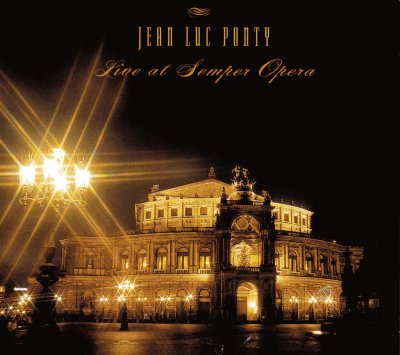
Ponty gave a successful concert with his band in his native town of Avranches (in the French province of Normandie) on September 21, 2001. He was also honored during a special ceremony at City Hall, gaining recognition from his compatriots. He then embarked on a successful concert tour in the USA in October–November 2001. In May 2001 Ponty recorded a concert with the same musicians at the opera house in Dresden, Germany.
This recording was released in July 2002 on a CD entitled Live at Semper Opera (J.L.P. Productions, Inc. – Navarre Distribution in North America and Le Chant du Monde-Harmonia Mundi in Europe). In January 2003 Jean-Luc toured India for the first time, seven shows in six major cities for the Global Music Festival organized by Indian violinist L. Subramaniam.
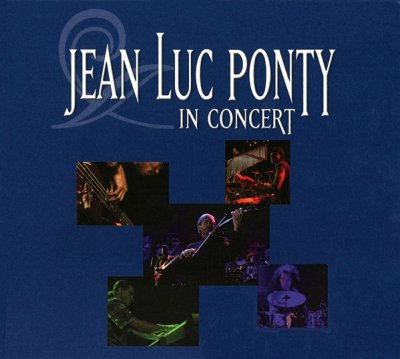
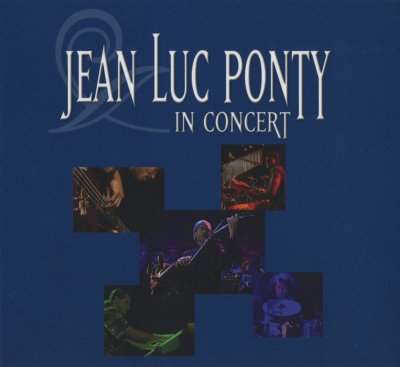
Jean-Luc brought along his bassist Guy Nsangué Akwa; both performed with Subramaniam’s band and drummer Billy Cobham who was also a guest star on that tour. Ponty also did an extensive tour across the U.S.A. in the autumn. In 2004 the PAL version of Jean-Luc Ponty’s first DVD In Concert was released in Germany (Pirate Records 202756-9), in France-Italy-Spain (Le Chant du Monde/Hamonia Mundi 974 1195). The NTSC version was also released in 2004 in North America (J.L.P.
Productions, Inc./Navarre Distribution JLP 004). It contains a live concert with his band filmed in Warsaw in 1999, mixed in 5.1 plus bonus materials, such as an 11-minute film of travels and backstage scenes. In Concert is also available on CD in some countries. Jean Luc Ponty & His Group toured in 2004 in France, Germany, Austria, Hungary, Lithuania and India, for their first concert as a whole band in Bombay.
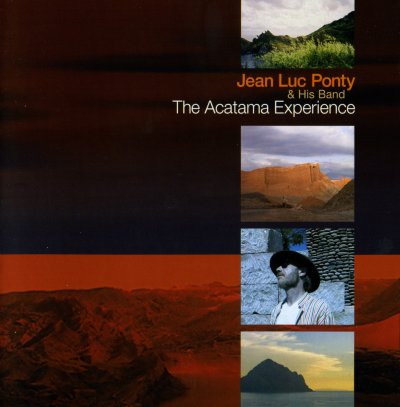
Ponty also did a reunion tour with Stanley Clarke and Al Di Meola as the Rite of Strings from June to October 2004 in the U.S.A. and Canada. In 2005 Ponty toured with a new project called Trio! in collaboration with Stanley Clarke on double bass and Béla Fleck on banjo. In 2006 Ponty reunited "Jean Luc Ponty & His Band" and toured in the USA, Chile, Venezuela, Western and Eastern Europe, Russia, The Middle East and India; they also recorded a new studio album called The Atacama Experience with guitarists Allan Holdsworth and Philip Catherine appearing on a few tracks. In April 2012 Ponty reunited with guitarist Al Di Meola and bassist Stanley Clarke for the second set of a concert at the Chatelet Theatre in Paris to celebrate five decades in music.
The first set featured Ponty with a string orchestra behind him. The concert was received very well. In September 2012 Ponty co-produced with violinist Mark Feldman the debut album of Scott Tixier by writing the liner notes for the release on Sunnyside Records Jean-Luc Ponty has been an avid user of 5-string electric violins with a lower C string since 1977. He sometimes also uses a 6-string electric violin called the Violectra, with low C and F strings (not to be confused with the violectra he played from the late 1960s to the mid-1980s which had 4 strings, but tuned an octave lower).
Ponty was among the first to combine the violin with MIDI, distortion boxes, phase shifters, and wah-wah pedals. This resulted in his signature, almost synthesizer-like sound. In 2011, Ponty was asked by Chick Corea to join the group Return to Forever for a series of concerts throughout the year. The group is labeled "Return to Forever IV," as it is the fourth incarnation of the group.
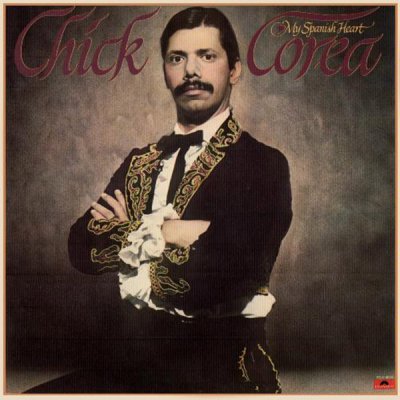
Ponty had first recorded with Corea on his 1976 solo album My Spanish Heart.
Discography


Credits
Ranked #1,687 of 14,615 producers — 755.65 career Groove across 7 records.