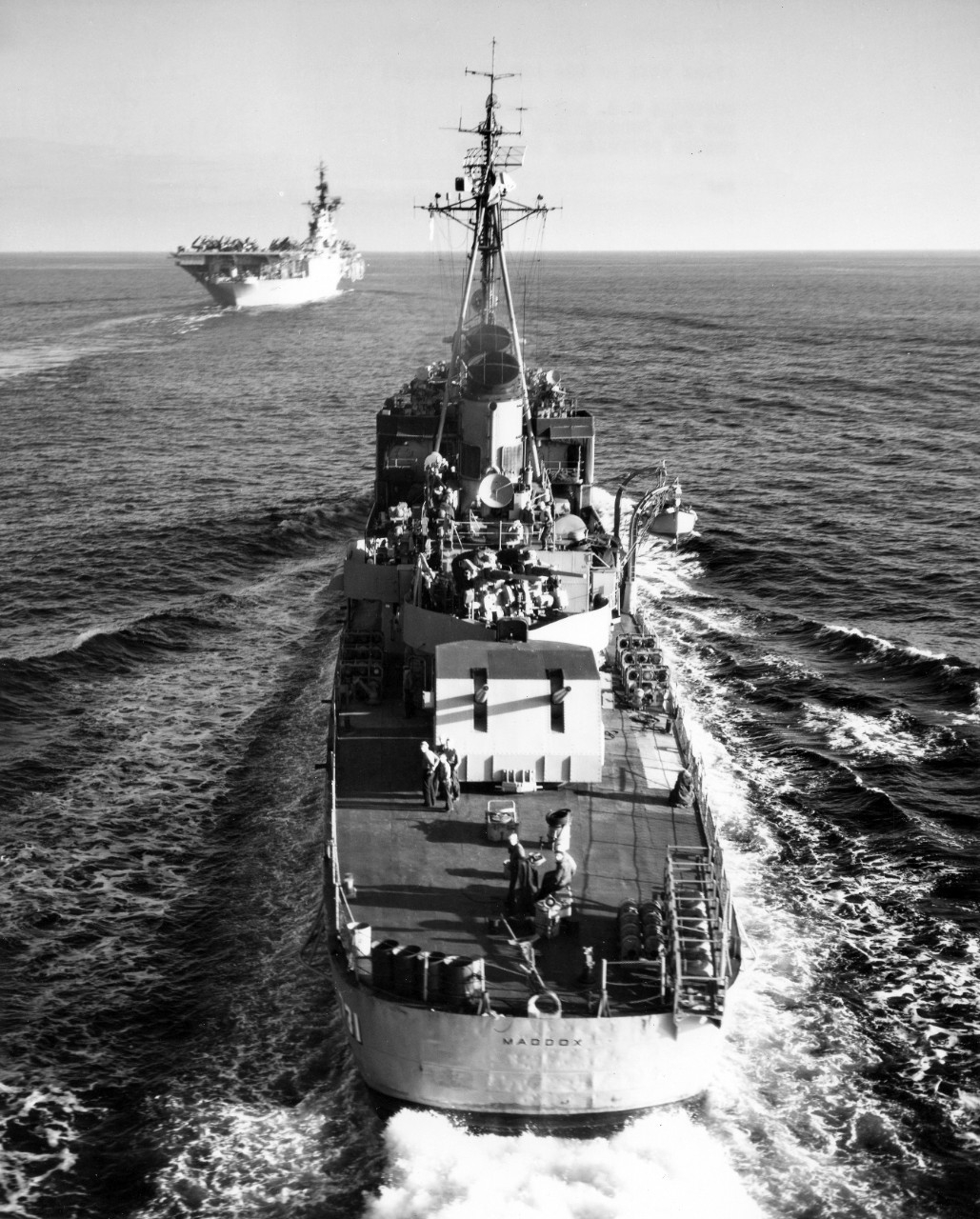
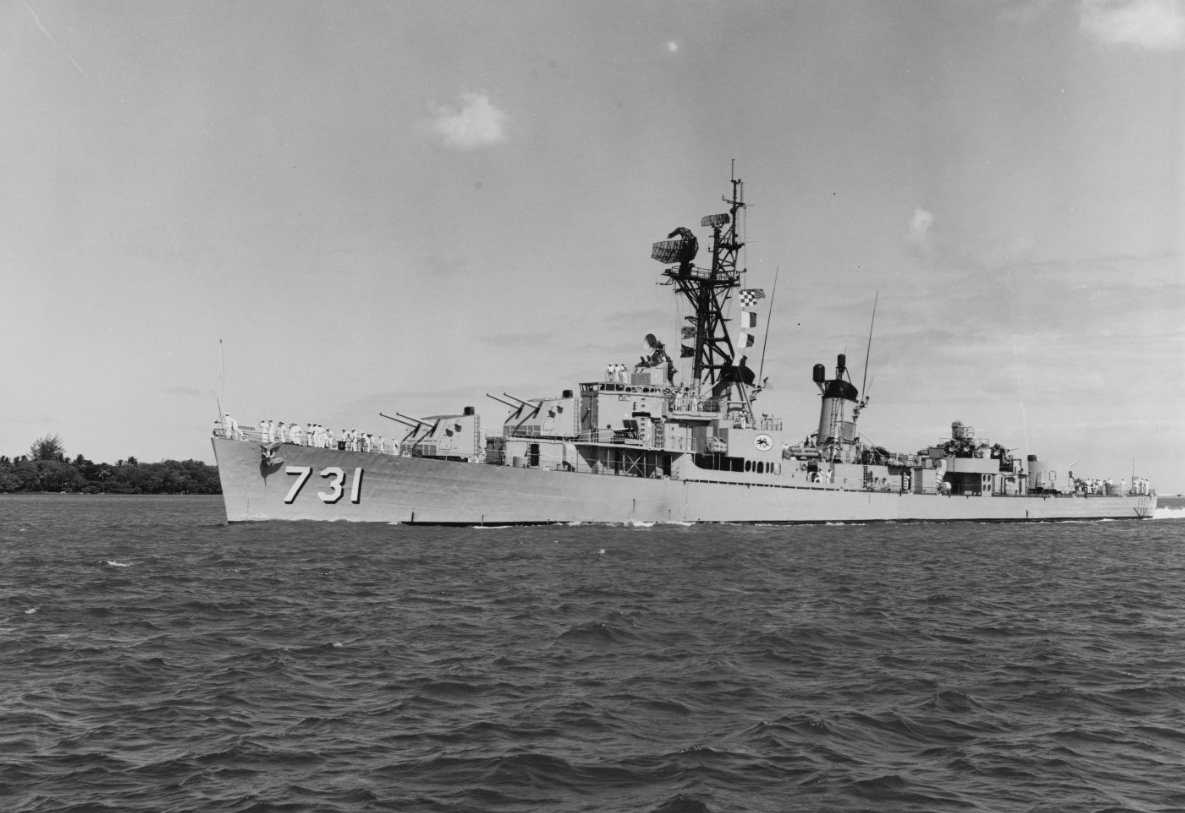
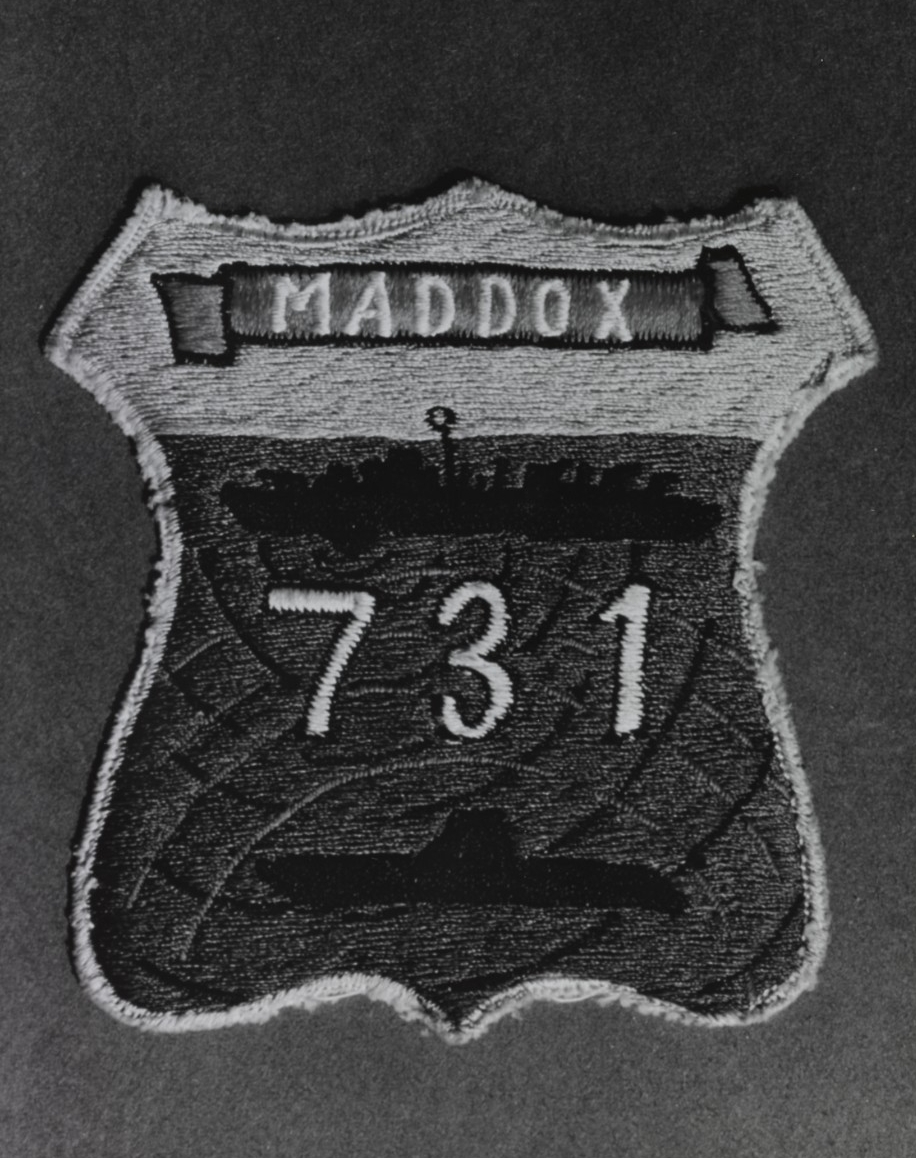
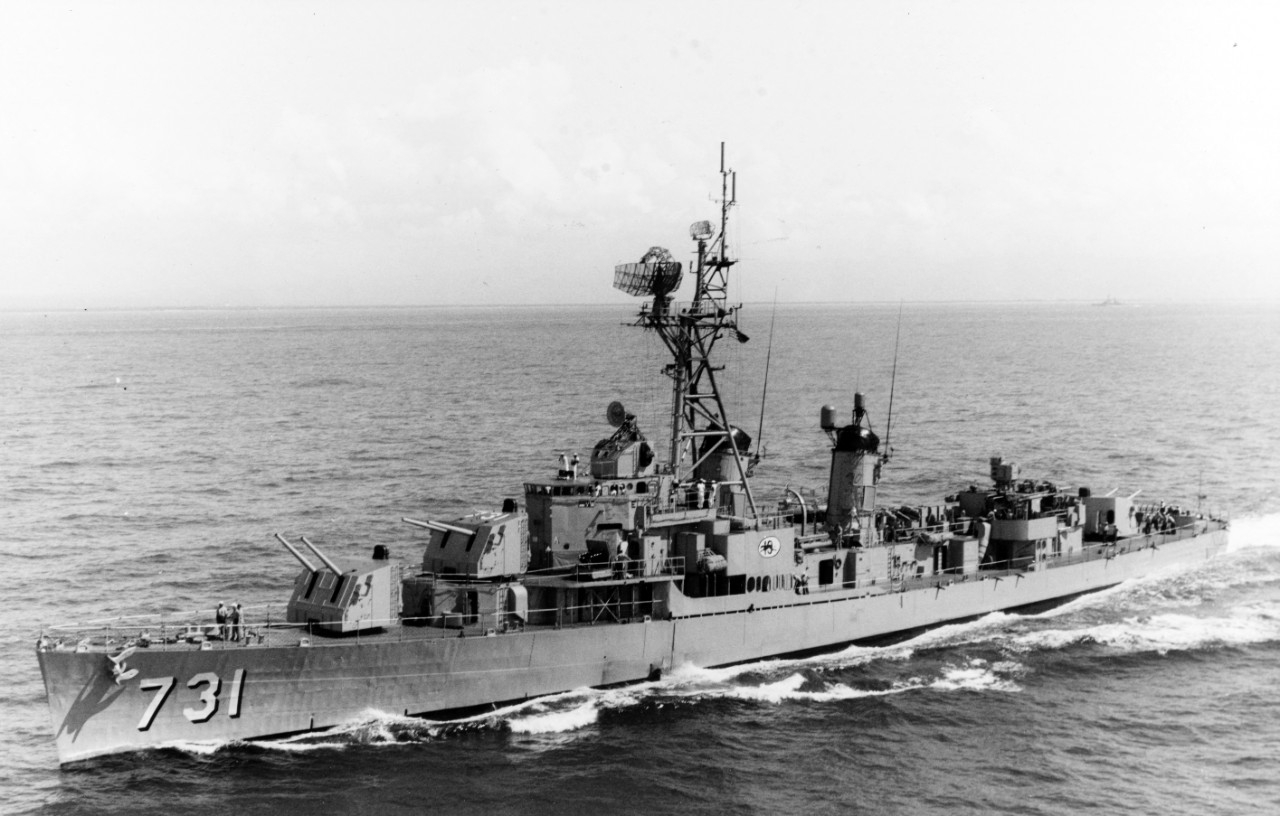
USS Maddox
Commissioned 2 June 1944 · Decommissioned 1 January 1969 · 10 battle stars
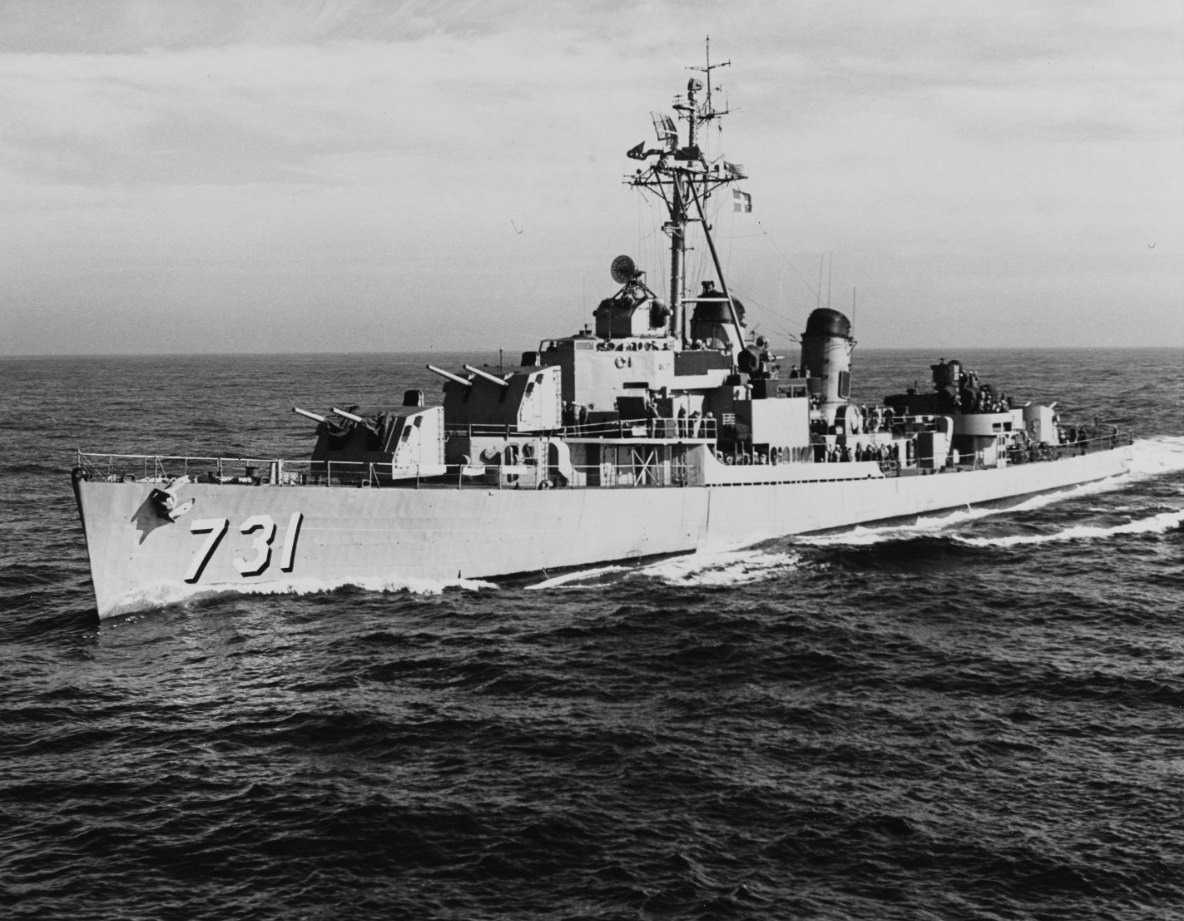
- 28 October 1943 Laid down 28 October 1943 III The third Maddox (DD‑731) was laid down 28 October 1943 by the Bath Iron Works Corp.
- 19 March 1944 Launched 19 March 1944
- 2 June 1944 Commissioned 2 June 1944 Sumner-class destroyer USS Maddox (DD-731) was commissioned on 2 June 1944 with Commander James S.
- 2 June 1944 Commissioned 2 June 1944 Wilhoit, granddaughter of Captain Maddox; and commissioned 2 June 1944, Cmdr.
- 1969 Decommissioned 1969
- Sponsored by Mrs. Harry H Maine; launched 19 March 1944; sponsored by Mrs.
- Battle stars four battle stars for the ship’s World War II service, six for the Korean War, and a Navy Unit Commendation for the Gulf of Tonkin incident
- Campaign World War II Maddox received four battle stars for the ship’s World War II service, six for the Korean War, and a Navy Unit Commendation for the Gulf of Tonkin incident.
- Decoration Navy Unit Commendation Maddox received four battle stars for the ship’s World War II service, six for the Korean War, and a Navy Unit Commendation for the Gulf of Tonkin incident.
- Battle stars four battle stars for World War II service, and six for Korean service
- Campaign World War II Maddox received four battle stars for World War II service, and six for Korean service.
- Battle stars and six for Korean service Maddox received four battle stars for World War II service, and six for Korean service.
- Built by Bath Iron Works III The third Maddox (DD‑731) was laid down 28 October 1943 by the Bath Iron Works Corp.
- Decoration Navy Unit Commendation For this action both ships were awarded the Navy Unit Commendation.
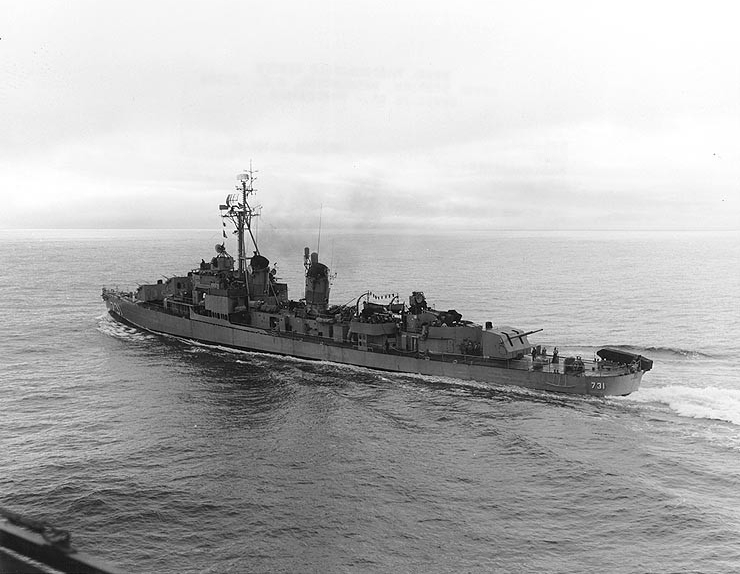
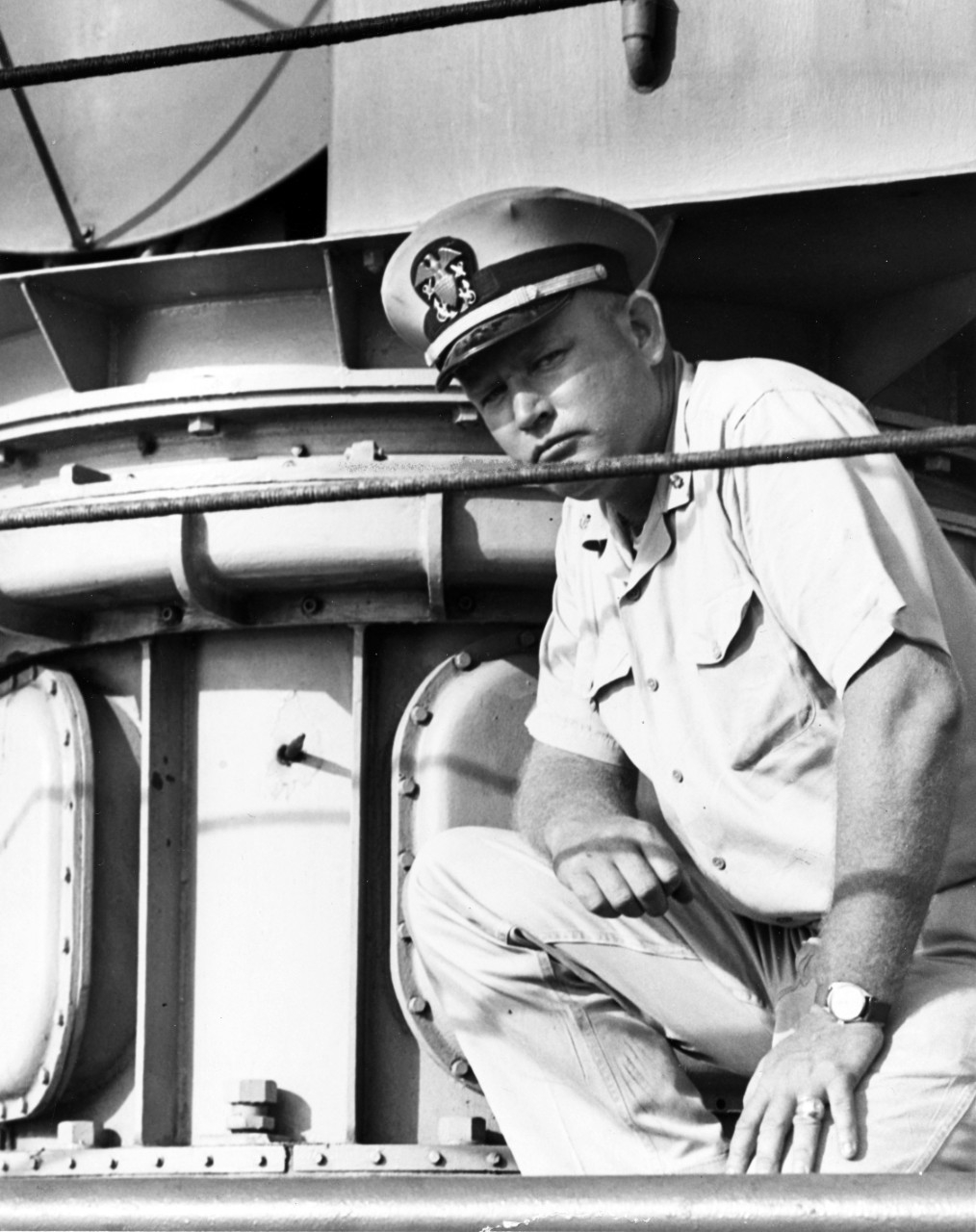
Allen M. Sumner-class destroyer USS Maddox (DD-731) was commissioned on 2 June 1944 with Commander James S. Willis in command. After shakedown off the U.S. East Coast, Maddox steamed for the Pacific, arriving at Ulithi (a tiny atoll in the western Pacific’s Caroline Islands) on 21 October. Upon arrival, the ship was assigned to Third Fleet’s Fast Carrier Task Group 38.1. As part of the task group, Maddox participated in preparation and coverage operations for the Mindoro and Luzon invasions in the Philippines. In addition, Maddox served in the southeast China Sea while carrier-based aircraft struck targets from Saigon to Formosa. On 21 January 1945, Maddox was struck by an enemy kamikaze aircraft that required the ship to head back to Ulithi for repairs. In March, the destroyer steamed off Japan where it served on picket station during airstrikes on Kyushu and southern Honshu. Later that month, the ship proceeded to Okinawa where it provided support for pre-invasion strikes. For the duration of the campaign, Maddox provided support in the form of shore bombardment and carrier screenings for the pivotal Battle of Okinawa. On 8 July, Maddox steamed to the waters off the islands of Honshu and Hokkaido where the ship provided screening, picket, and shore bombardment services for Third Fleet operations. Maddox remained off the Japanese islands until the enemy surrendered, ending World War II.
(DD‑731: dpl. 2,200; l. 376'; b. 41'4"; dr. 15'8"; s. 34 k.; cpl. 336; a. 6 5", 11 20mm., 6 dcp., 10 21" tt.; cl. Allen M. Sumner)
After the war, Maddox operated off San Diego, California, until February 1946, when it returned to Far East waters to support the movement of naval occupation forces between Shanghai, Tsingtao, and Taku in China, and the ports of Pusan and Jinsen in Korea. Maddox returned to San Diego the next month and operated off the U.S. West Coast for the next three years.
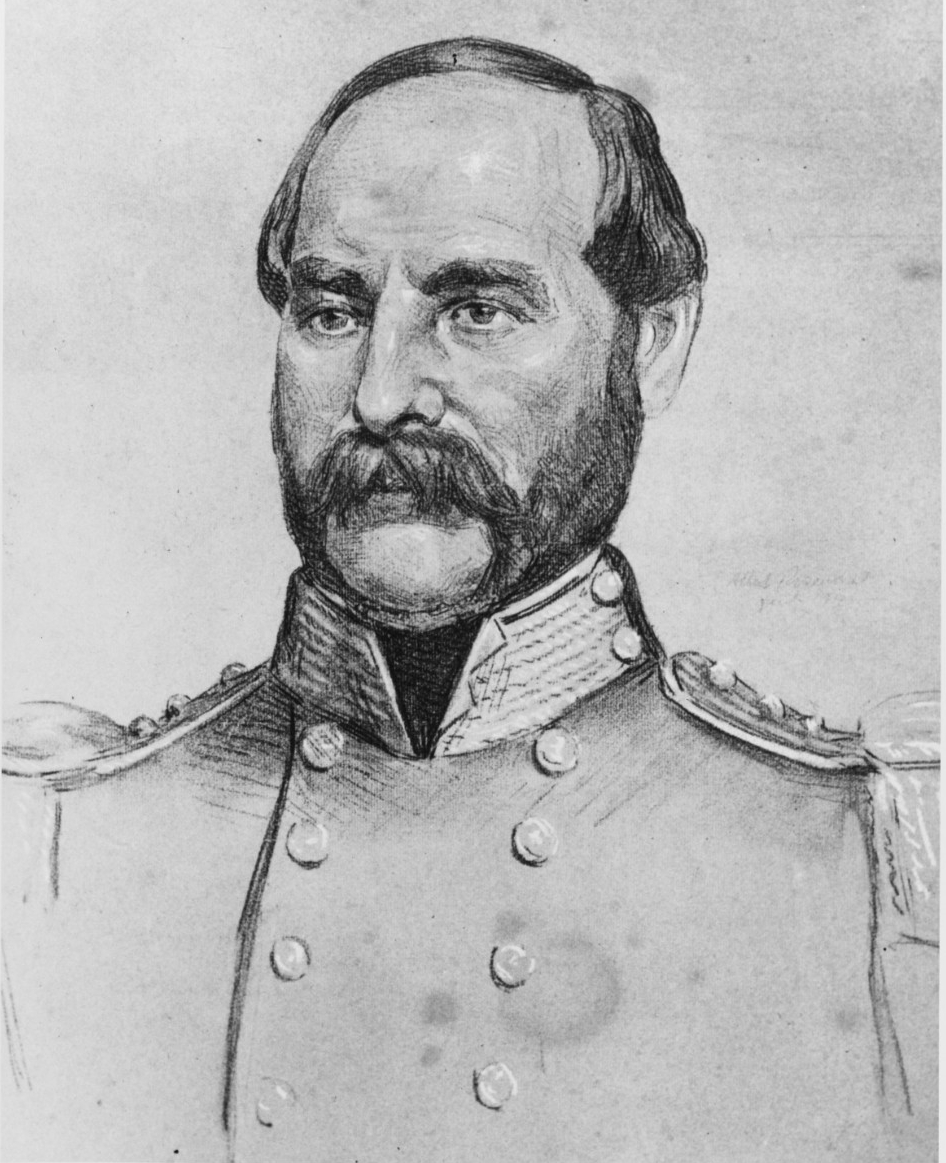
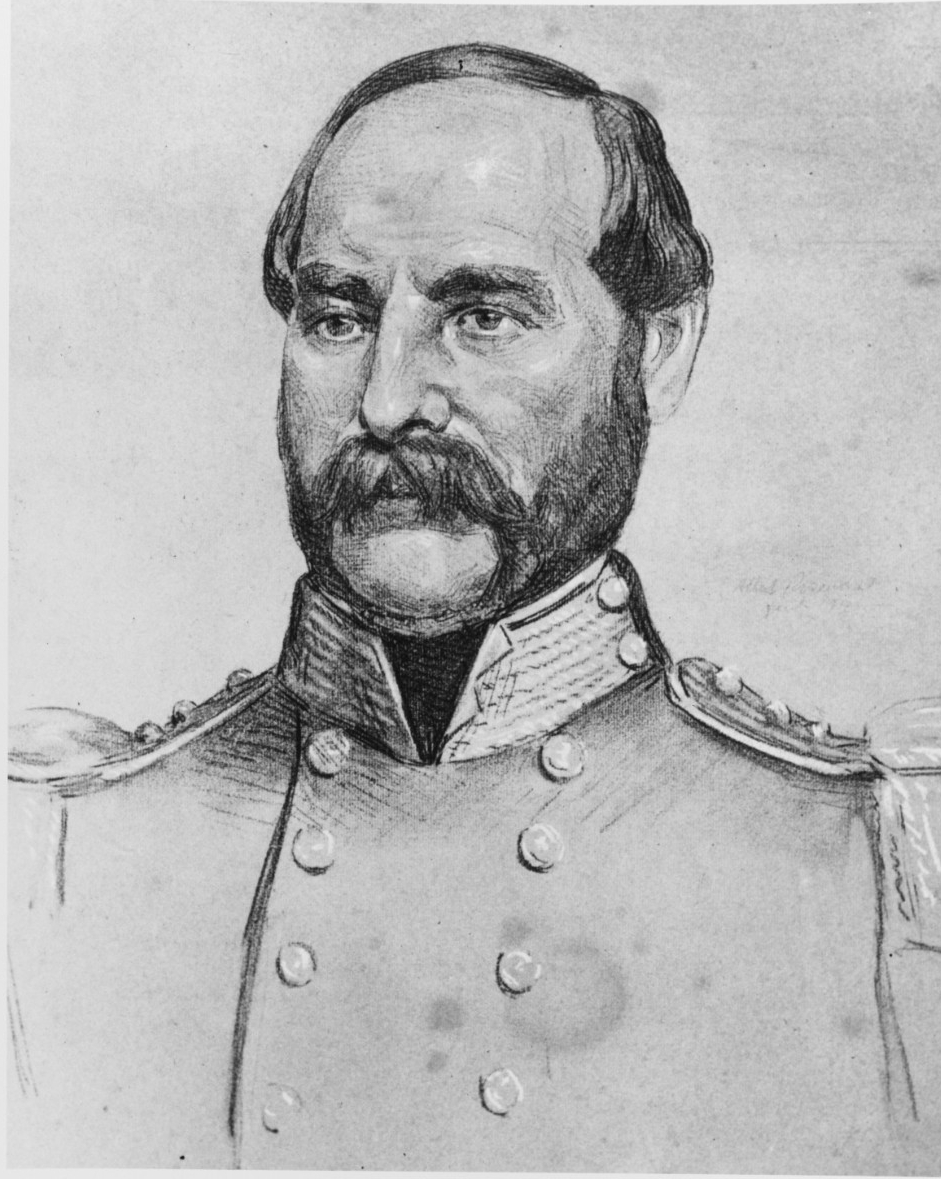
William A. T. Maddox, born in Charles County, Md., in 1814, commanded a volunteer company in the Creek and Seminole Wars in 1836, and was appointed 2d lieutenant in the Marine Corps 14 October 1837. Serving in the Mexican War, he was breveted captain for "gallant and meritorious conduct" as Military Commandant of the Middle District of California during a Mexican uprising at Monterey and during the Battle of Santa Clara, 3 January 1847. Captain Maddox retired in 1880 and died in Washington, D.C., 1 January 1889.
On 25 June 1950, the North Korean army invaded South Korea, beginning the Korean War. Maddox was already in Far East waters, arriving in Hong Kong the day before hostilities began. On 26 June, Maddox was en route to South Korea, where during the voyage, the ship acted as an aircraft guard and antisubmarine screen for aircraft carriers USS Valley Forge (CV-45) and HMS Triumph. Maddox operated off Korean waters for about a month before the ship departed the area to help form the initial Formosa (later Taiwan) Patrol Force to prevent a Communist Chinese invasion of the island. Maddox returned to Korea on 7 September and assumed coastal blockade and bombardment duties. It continued in that role, which included a diversionary bombardment of Samchok in conjunction with Operation Chromite (Inchon landings), before Maddox made way back to San Diego in January 1951. The ship remained at the southern California city for about 11 months where it underwent an extensive overhaul.
On 1 December, Maddox departed San Diego for the ship’s second Korean deployment. Through February 1952, it screened aircraft carriers and provided bombardment support for United Nations land forces. In March, Maddox left the war zone temporarily to support the Taiwan Patrol Force before returning to Korean waters the following month. For the remainder of the tour, Maddox continued to provide screening duties for carriers and participated in the siege of Wonsan. The ship returned to San Diego in June and stayed for about a month before steaming up the coast to Long Beach, California, Maddox’s new homeport.
The third Maddox (DD‑731) was laid down 28 October 1943 by the Bath Iron Works Corp., Bath. Maine; launched 19 March 1944; sponsored by Mrs. Harry H. Wilhoit, granddaughter of Captain Maddox; and commissioned 2 June 1944, Cmdr. James S. Willis in command.
After local operations and overhaul, Maddox once again steamed to Korean waters in February 1953 for the ship’s third deployment to the region. As on its previous deployments, Maddox guarded aircraft carriers, provided shore bombardments, and supported the Taiwan Patrol Force. The ship completed the deployment in August and arrived back at Long Beach at the end of the month. Although an armistice was signed in July 1953 that ceased fighting on the Korean Peninsula, Maddox continued to be a presence for years in Asian waters. In December 1954, it participated in antisubmarine warfare tactics and attack carrier exercises off Kyushu, Korea, and Luzon as well as operating with the Taiwan Patrol Force. From June 1955 through May 1962, Maddox completed six cruises to the Far East, which included combined defense exercises with the forces of other Southeast Asia Treaty Organization (SEATO) nations and training operations with South Korean, Nationalist Chinese, and Japanese Self‑Defense forces.
Following shakedown and antisubmarine exercises, Maddox departed Boston 27 August for Norfolk en route to the Pacific. Arriving at Ulithi 21 October 1944, she was assigned to Fast Carrier TG 38.1 of the 3d Fleet. As a member of this task group, Maddox took part in the preparation and the covering operations for the Mindoro and Luzon invasions, 4 November 1944 to 21 January 1945. During this period she served in the screen and on picket station in the South and East China Seas, while carrier-based planes struck air and naval bases from Saigon to Formosa. Hit by a suicide plane off Formosa on 21 January 1945, Maddox headed for Ulithi for repairs. Departing 14 March, the destroyer steamed off the Japanese home islands where she was on picket station during the airstrikes on Kyushu and southern Honshu. She proceeded to Okinawa 23 March to provide support for preinvasion strikes, remaining on duty there after the 1 April invasion date. For almost 3 months, until 13 June 1945, Maddox continued to provide support for this campaign in the form of shore bombardment and carrier screening for raids on Kyushu and Shikoku.
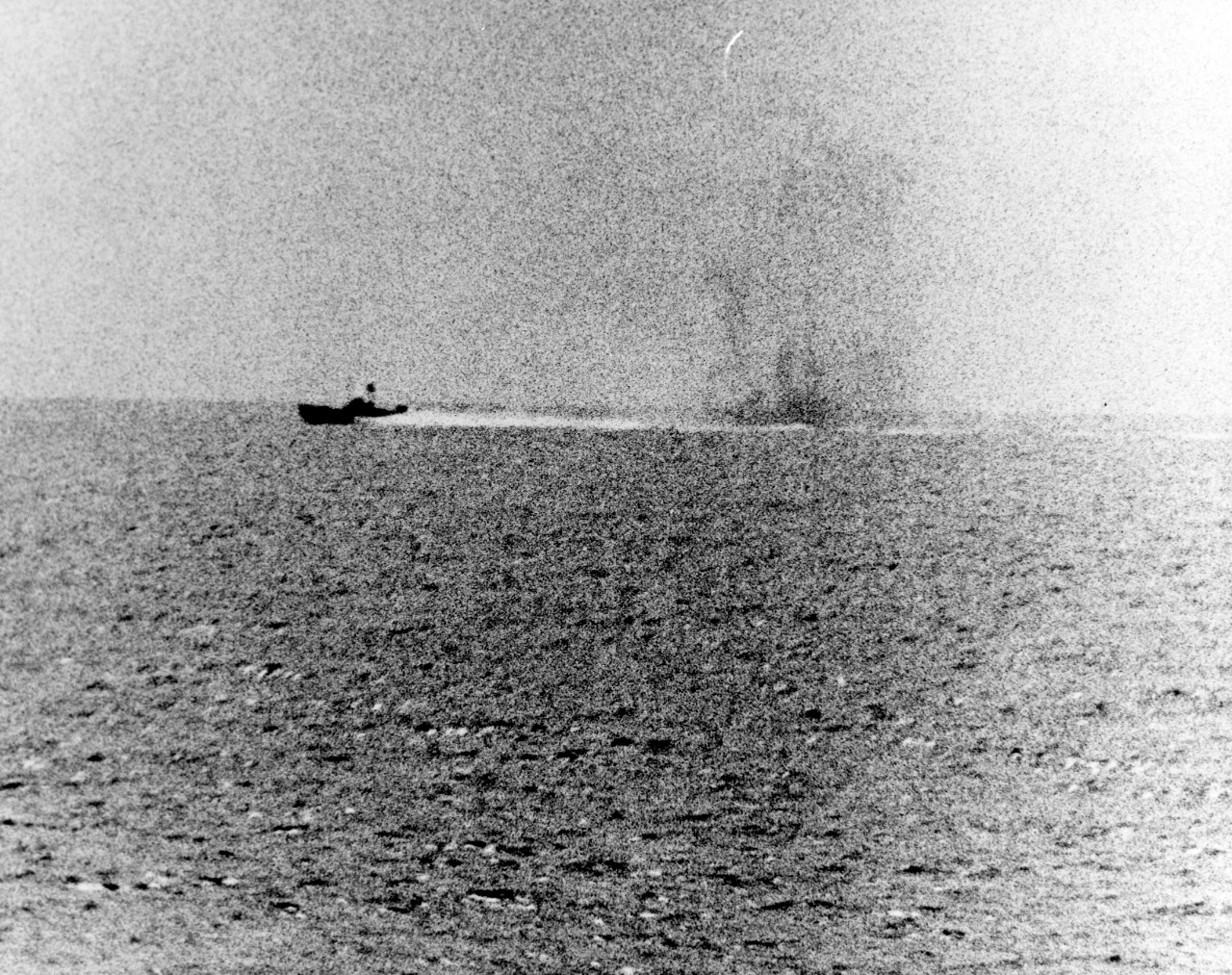
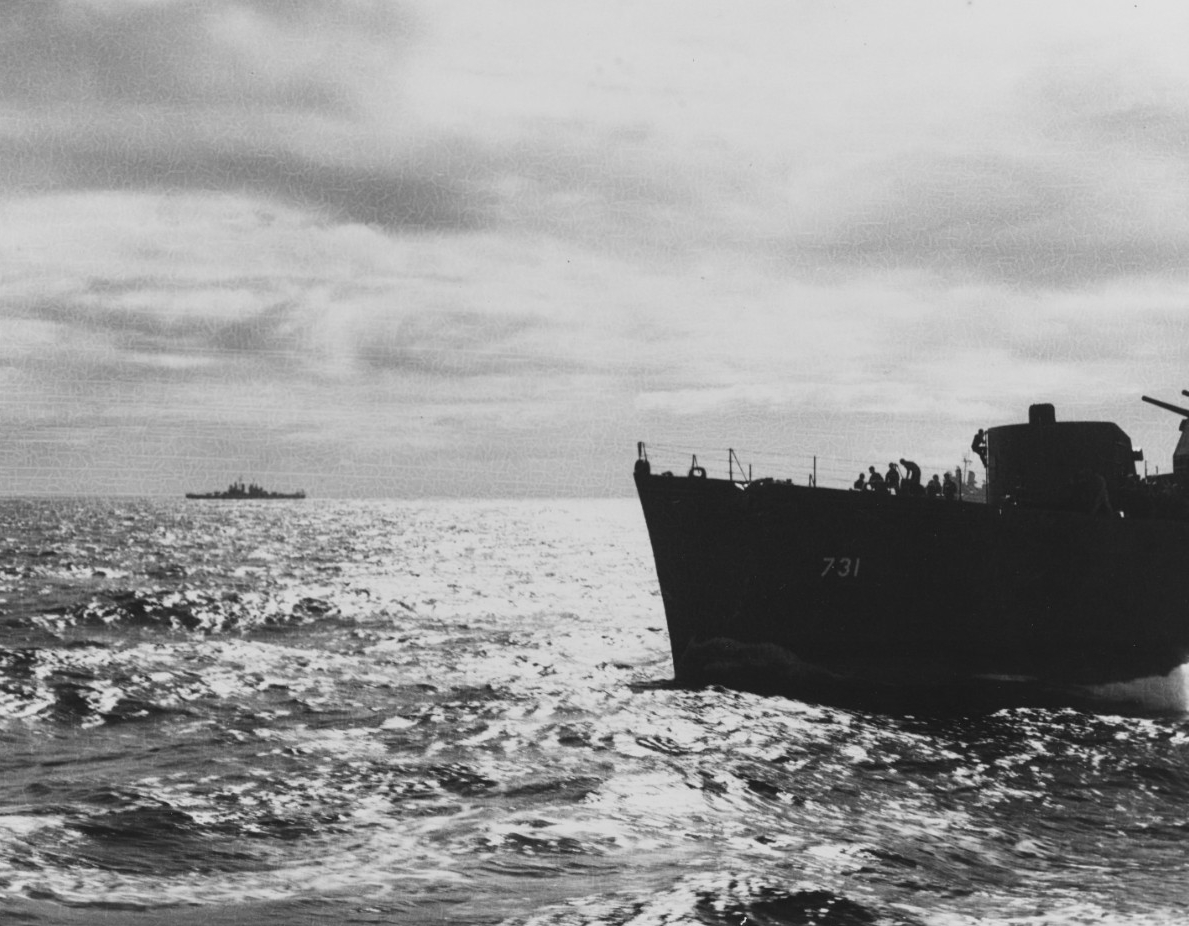
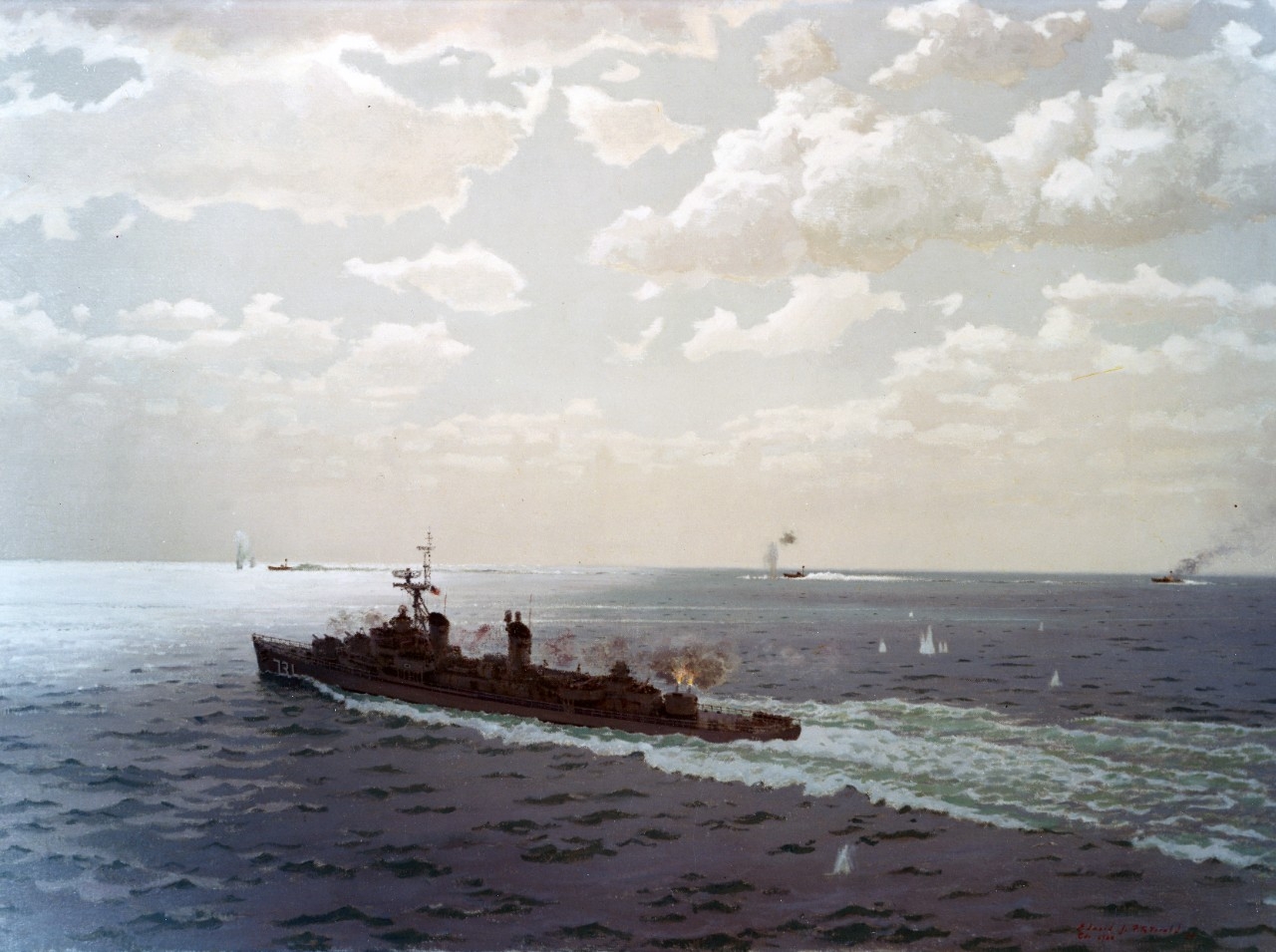
On 13 March 1964, after operating off the U.S. West Coast for about two years, Maddox departed Long Beach for a cruise with Seventh Fleet. At the beginning of the deployment, the ship steamed with fast carrier groups in the Sea of Japan and the East China Sea, before it headed south and established a patrol off the coast of South Vietnam, arriving in late May. On 31 July, Maddox began the first leg of a patrol in the Tonkin Gulf. Initially, the patrol was routine; however, it later would prove to have global repercussions. On 2 August, while cruising in international waters, three North Vietnamese motor torpedo boats attacked Maddox. During the engagement in which torpedoes were launched at Maddox, the American destroyer put two of the boats out of action with direct hits. No American crewmembers were killed or injured during the attack, and the ship did not sustain serious damage. At first, the North Vietnamese attack was assumed to be in error, but within 48 hours, it was proven to be deliberate.
On 8 July, Maddox sailed from Leyte to participate in the operations of the 3d Fleet off the islands of Honshu and Hokkaido. From 10 July until the cessation of offensive action 15 August, she provided screening, picket, and shore bombardment services.
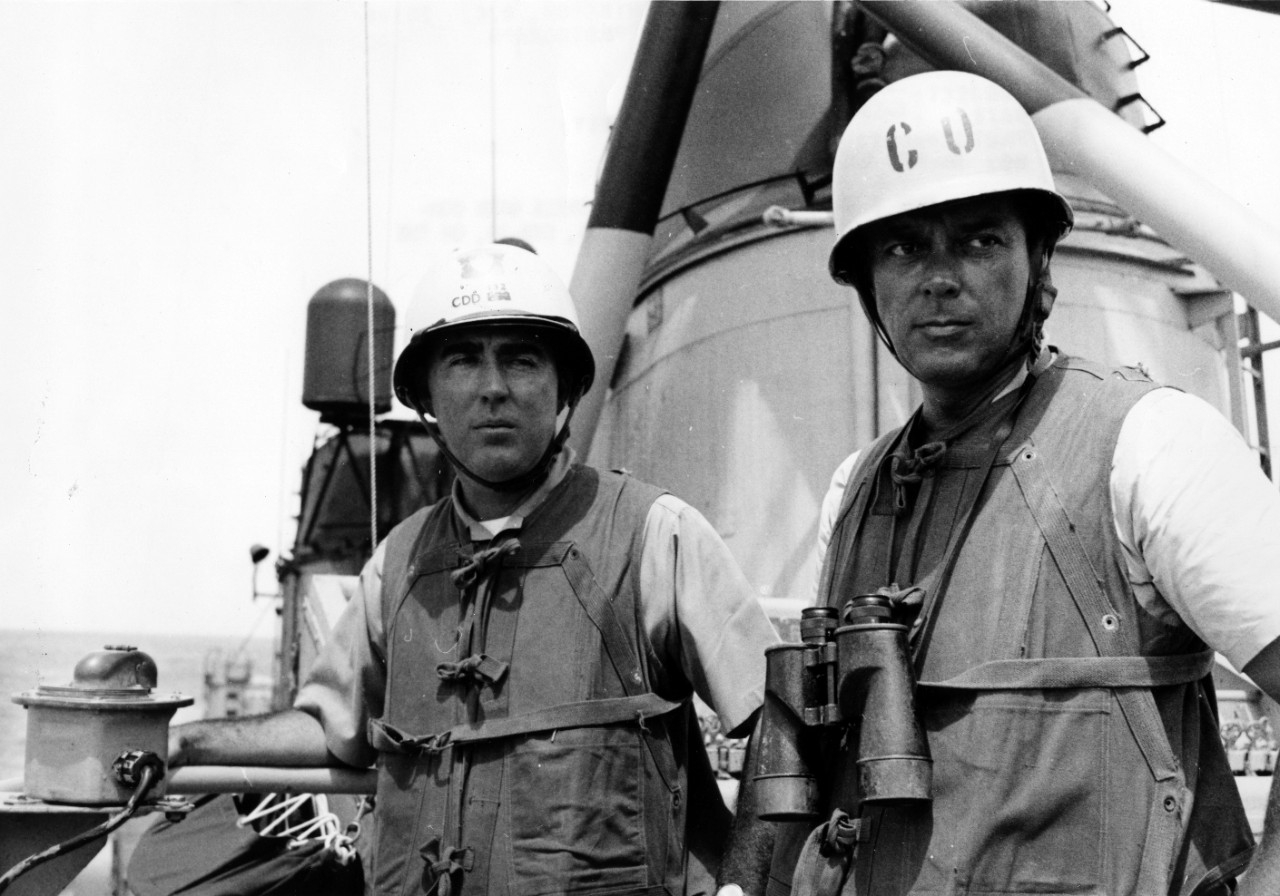
On the stormy night of 4 August, North Vietnamese patrol boats again launched an attack on Maddox, but this time the ship was accompanied by destroyer USS Turner Joy (DD-951). With fresh intelligence on North Vietnamese intent, crews on the American ships were more prepared for an attack. Early detection of their presence and skillful evasion permitted the destroyers to break contact with the first wave of attacks. However, little over an hour later, enemy torpedo boats closed in again, launching torpedoes. Maddox began firing starshells for illumination while Turner Joy opened fire on the attacking boats. USS Ticonderoga (CV-14) provided requested naval aviation support. The fighting continued for the next two-and-a-half hours before the North Vietnamese broke contact. None of the American ships were damaged during the engagements. Within a few hours, retaliation in the form of airstrikes on North Vietnamese patrol boat bases and their supporting oil storage depots commenced. The Gulf of Tonkin incident permitted President Lyndon B. Johnson and Secretary of Defense Robert McNamara, via the Tonkin Resolution, to greatly escalate U.S. military involvement in Vietnam.
Following surrender, Maddox continued to patrol off Japan until departing Tokyo Bay 20 September with military passengers for the United States. Delivering her passengers to San Francisco on 5 October, she proceeded to San Diego, arriving on the 14th. She operated there until 1 February 1946, when she returned to the Far East to support the movement of naval occupation forces between Shanghai, Tsingtao, and Taku in China, and the ports of Pusan and Jinsen in Korea.
After the incident, Maddox resumed carrier operations until departing for Long Beach on 17 September. After arriving back at homeport, the ship remained in a leave and upkeep status until mid-January 1965. After conducting a series of training exercises and repairs in preparation for the ship’s next western Pacific deployment, Maddox departed Long Beach on 10 July, and in early August, commenced operating with fast carriers in the Gulf of Tonkin. For the next four months, Maddox provided gunfire support off the coast of South Vietnam with aircraft carriers in their area of operations. By the end of November, the ship steamed for Long Beach, arriving on 16 December.
Returning to San Diego 24 March 1947, she operated for the next 3 years off the west coast, conducting reserve training cruises, serving as a training ship in antisubmarine warfare and gunnery and participating in maneuvers with the 1st Task Fleet.
In the summer of 1966, Maddox steamed to Pearl Harbor on a training cruise for midshipmen. After returning to Long Beach, the ship deployed once again with Seventh Fleet making port calls at Pearl Harbor, Midway, Guam, and Taiwan. After the stops, Maddox visited Singapore and crossed the line, reaching the equator on 8 February 1967. The ship departed Subic Bay in the Philippines for home by way of Australia, New Zealand, and Pearl Harbor. The ship arrived back at Long Beach on 7 June. Maddox made two more short deployments to the western Pacific in 1968 where it conducted a variety of routine missions. Maddox was decommissioned in early 1969.
On 1 May 1950, Maddox departed San Diego for the Far East, arriving Hong Kong 26 June, the day after the commencement of hostilities in Korea. Departing for South Korea the next day, she acted as plane guard and antisubmarine screen for Valley Forge and HMS Triumph. She operated there until August, when she departed for Formosa. On the 4th, she helped form the initial Formosa (later Taiwan) Patrol Force to prevent Communist Chinese invasion of Taiwan.
Maddox received four battle stars for the ship’s World War II service, six for the Korean War, and a Navy Unit Commendation for the Gulf of Tonkin incident.
Maddox returned to Korea 7 September and assumed coastal blockade and bombardment duties. She continued this assignment, which included a diversionary bombardment of Samchok coordinated with the Inchon landings 15 September, until departing for the United States early in January 1951. Arriving at San Diego 31 January, she served as a training ship and underwent overhaul before departing 1 December 1951 for her second Korean duty. Through February 1952, she screened carriers off the east coast of Korea and provided shore bombardment support for the U.N. land forces. During March she operated with the Taiwan Patrol Force, returning to Korea in April. From 16 April through 17 May she participated in the siege of Wonsan, following which she resumed screening duties for fast carriers.
In June Maddox returned to San Diego, arriving on the 26th, to stay only 1 month before departing for her new home port of Long Beach. After local operations and overhaul, Maddox again sailed for the Far East 2 February 1953. As on her second Korean deployment, the destroyer again guarded the fast carriers along the eastern coast of Korea; participated in shore bombardments, this time as far north as Hungham; and served, for a 2‑week period, in the Taiwan Patrol Force. Completing her 1953 Korean tour 12 August she departed for Long Beach, arriving on the 30th.
Maddox operated off the west coast until the next spring. On 4 May 1954, she sailed for duty with the 7th Fleet. On this tour, which lasted until 5 December, she took part in antisubmarine warfare tactics and attack carrier exercises off Kyushu, Korea, and Luzon as well as operating with the Taiwan Patrol Force.
Interviews with USS Maddox (DD-731) Crewmembers
From 14 June 1955 through 2 March 1962, Maddox completed 6 additional cruises to the Far East. These cruises included combined defense exercises with the forces of other SEATO nations and training operations with South Korean, Nationalist Chinese, and Japanese Self‑Defense Forces.
Video (footage recreates the ships involved in the Tonkin Gulf incident, August 1964)
Having operated off the west coast for 2 years, from March 1962, Maddox departed Long Beach 13 March 1964 for another tour with the 7th Fleet. At first steaming with fast carrier groups in the Sea of Japan and the East China Sea, she headed south 18 May and established patrol off the coast of South Vietnam.
On 31 July she commenced the first leg of a patrol in the Tonkin Gulf. Initially a routine patrol, it developed into a defensive action with global repercussions. On 2 August, Maddox, cruising in international waters, was closed in a torpedo run by three North Vietnamese torpedo boats. During the ensuing skirmish, in which torpedoes were launched at Maddox, the destroyer put two of the Communist boats out of action with direct hits.
This attack, at first assumed to have been in error, was proven deliberate within 48 hours. On the 4th, North Vietnamese patrol boats again attack Maddox, which by this time had been joined by Turner Joy. Early detection and skillful evasion permitted the destroyers to break contact with the first assault units sent against them on that date. But, little over an hour later, enemy torpedo boats closed in again, launching torpedoes. Maddox commenced firing starshells for illumination, while Turner Joy opened fire on the attacking boats. The fighting continued for 2 1⁄2 hours before being broken off by the North Vietnamese. Retaliation in the form of airstrikes on North Vietnamese patrol boat bases and their supporting oil storage depots came within a few hours. For this action both ships were awarded the Navy Unit Commendation. Following the incident, the destroyers returned to their patrol, completing it on the 8th. Maddox then resumed carrier operations until departing for Long Beach 17 September.
After arrival at Long Beach, Maddox remained in a leave and upkeep status until mid‑January 1965, then conducted training exercises and repairs in preparation for her next WestPac deployment. She departed Long Beach 10 July and commenced operating with the fast carriers in the Gulf of Tonkin in early August. For the next 4 months, Maddox alternated duty with the carriers with gunfire support missions off the coast of South Vietnam. At the end of November she sailed for home, arriving at Long Beach 16 December.
After conducting upkeep and local exercises off the California coast, summer 1966 saw her engaged in a training cruise for midshipmen which included a trip to Pearl Harbor. Maddox departed California 20 November for another deployment with the 7th Fleet, sailing by way of Pearl Harbor, Midway, Guam, and Taiwan.
After a successful tour consisting primarily of providing gunfire support, interrupted by a visit to Singapore and a crossing of the Equator on 8 February 1967, Maddox departed Subic Bay, Philippine Islands, for home by way of Australia, New Zealand, and Pearl Harbor. She arrived at Long Beach 7 June 1967 and conducted local exercises until entering Long Beach Naval Shipyard 13 October for overhaul. She remained in overhaul until February 1968; then, after refresher training off the west coast, departed for WestPac 5 July. She continued to perform the variety of missions for which destroyers have always distinguished themselves, and returned to California in December. After completion of overhaul and type training, Maddox once again deployed to the Far East in July 1968, returning in December, 1968 to her home port, Long Beach, for overhaul and upkeep. She remained there until early 1969 when she was ordered to decommission.
Maddox received four battle stars for World War II service, and six for Korean service.
Held by NeuraWeb Global Inc. and kept permanently. Her association may claim this record and maintain it.