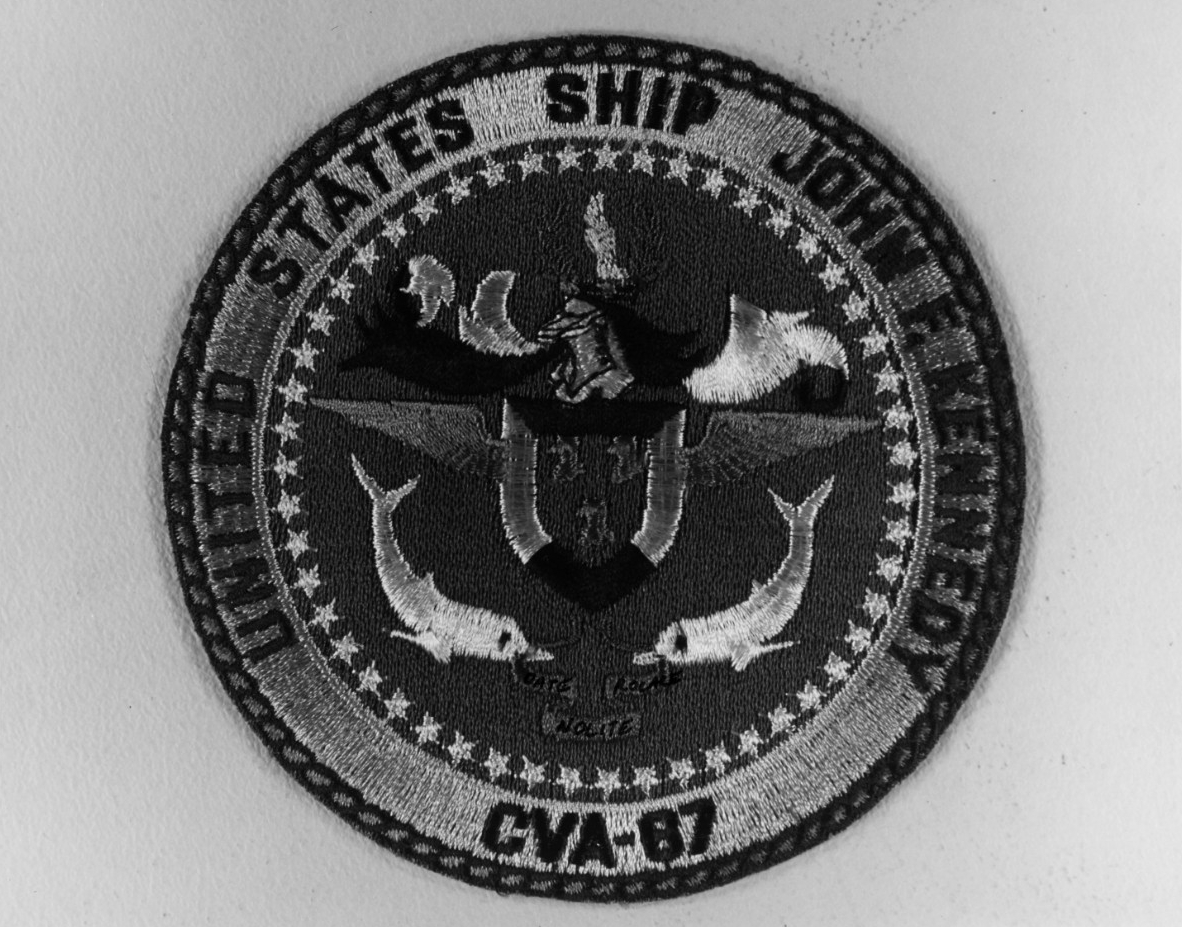
USS John F. Kennedy
Decommissioned 26 April 1990
- 22 October 1964 Laid down 22 October 1964 Kennedy (CVA-67) was laid down on 22 October 1964 at Newport News, Va.
- 27 May 1967 Launched 27 May 1967 , by the Newport News Shipbuilding & Dry Dock Company; launched on 27 May 1967; sponsored by Miss Caroline Kennedy, daughter of the late President John Fitzgerald Kennedy; and commissioned at Newport News on 7 September 1968, Captain Earl P.
- 7 September 1968 Commissioned 7 September 1968 Navy, was commissioned at the Newport News Shipbuilding and Dry Dock Company, Virginia, 7 September 1968, with Captain Earl P.
- 7 September 1968 Commissioned 7 September 1968 , by the Newport News Shipbuilding & Dry Dock Company; launched on 27 May 1967; sponsored by Miss Caroline Kennedy, daughter of the late President John Fitzgerald Kennedy; and commissioned at Newport News on 7 September 1968, Captain Earl P.
- 6 October 1973 Launched 6 October 1973 Kennedy was originally set to head for homeport after the exercise, but another crisis in the Middle East reared its head when Egyptian and Syrian forces launched a surprise attack on Israel on 6 October 1973 during “The Yom Kippur War.
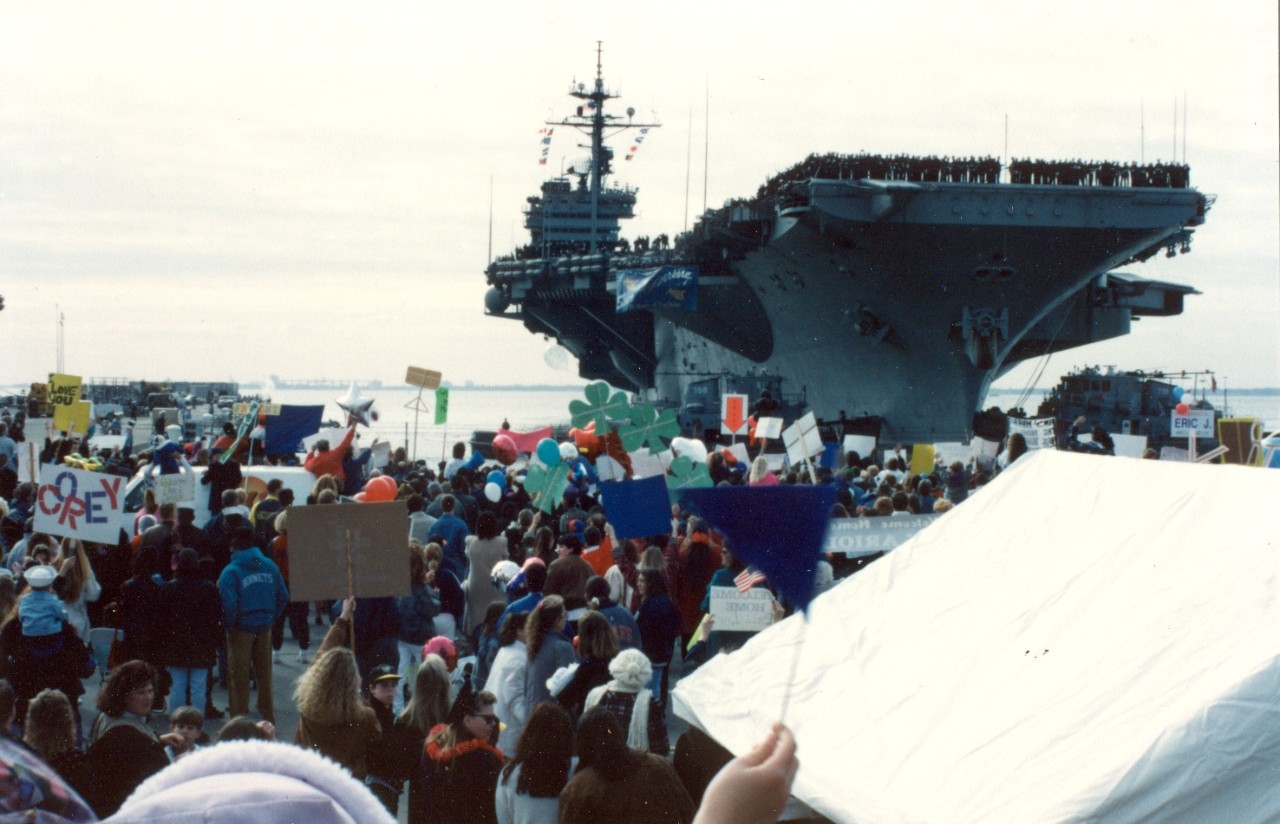
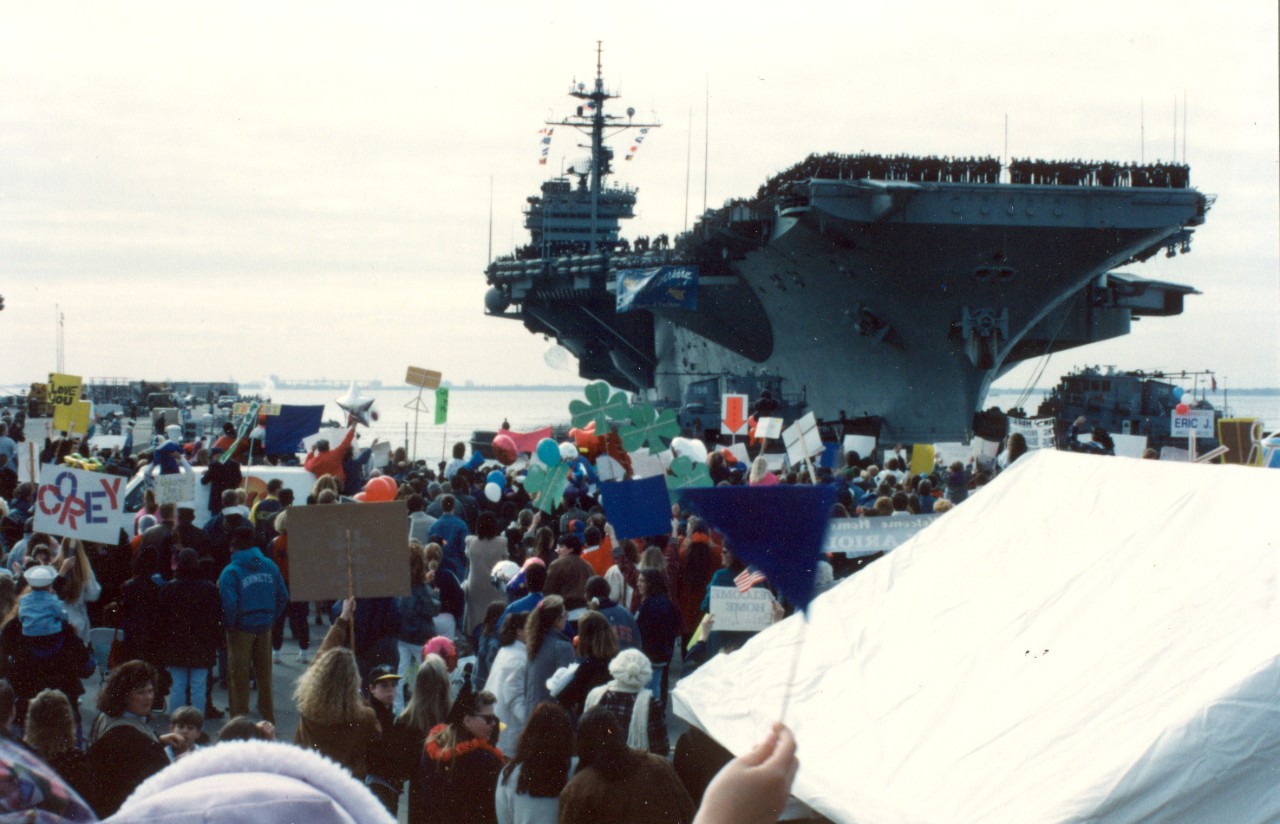
- 26 April 1990 Decommissioned 26 April 1990 At month’s end, on 30 September, she hosted Coral Sea (CV-43), on the homecoming that accompanied her last deployment (Coral Sea would be decommissioned on 26 April 1990 and would be sold for scrap three years later).
- 2007 Decommissioned 2007 Kennedy was ultimately decommissioned in 2007.
- 16 October 2009 Stricken 16 October 2009 Kennedy was stricken from the Naval Vessel Register on 16 October 2009.
- Sponsored by Miss Caroline Kennedy , by the Newport News Shipbuilding & Dry Dock Company; launched on 27 May 1967; sponsored by Miss Caroline Kennedy, daughter of the late President John Fitzgerald Kennedy; and commissioned at Newport News on 7 September 1968, Captain Earl P.
- Her fate transferred to Naval Hospital, Portsmouth, Virginia, three days later Kennedy conducted flight operations off the Virginia capes from 13-22 April 1971, one day into those evolutions (14 April), an explosion in the 02N2 plant burned Motor Machinist’s Mate 1st Class Charles Pifer, who was transferred to Naval Hospital, Portsmouth, Virginia, three days later.
- Class Kitty Hawk
- Built by Newport News, Va., by the Newport News Shipbuilding & Dry Dock Company Kennedy (CVA-67) was laid down on 22 October 1964 at Newport News, Va.
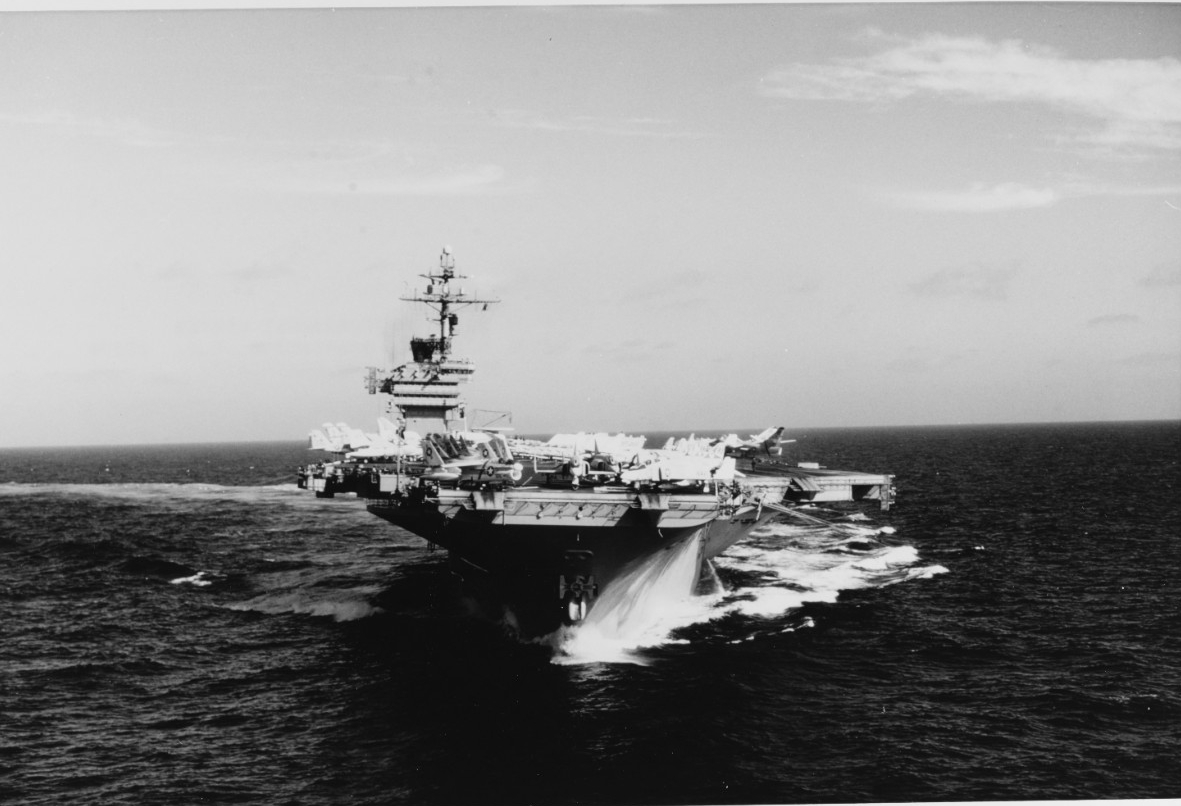
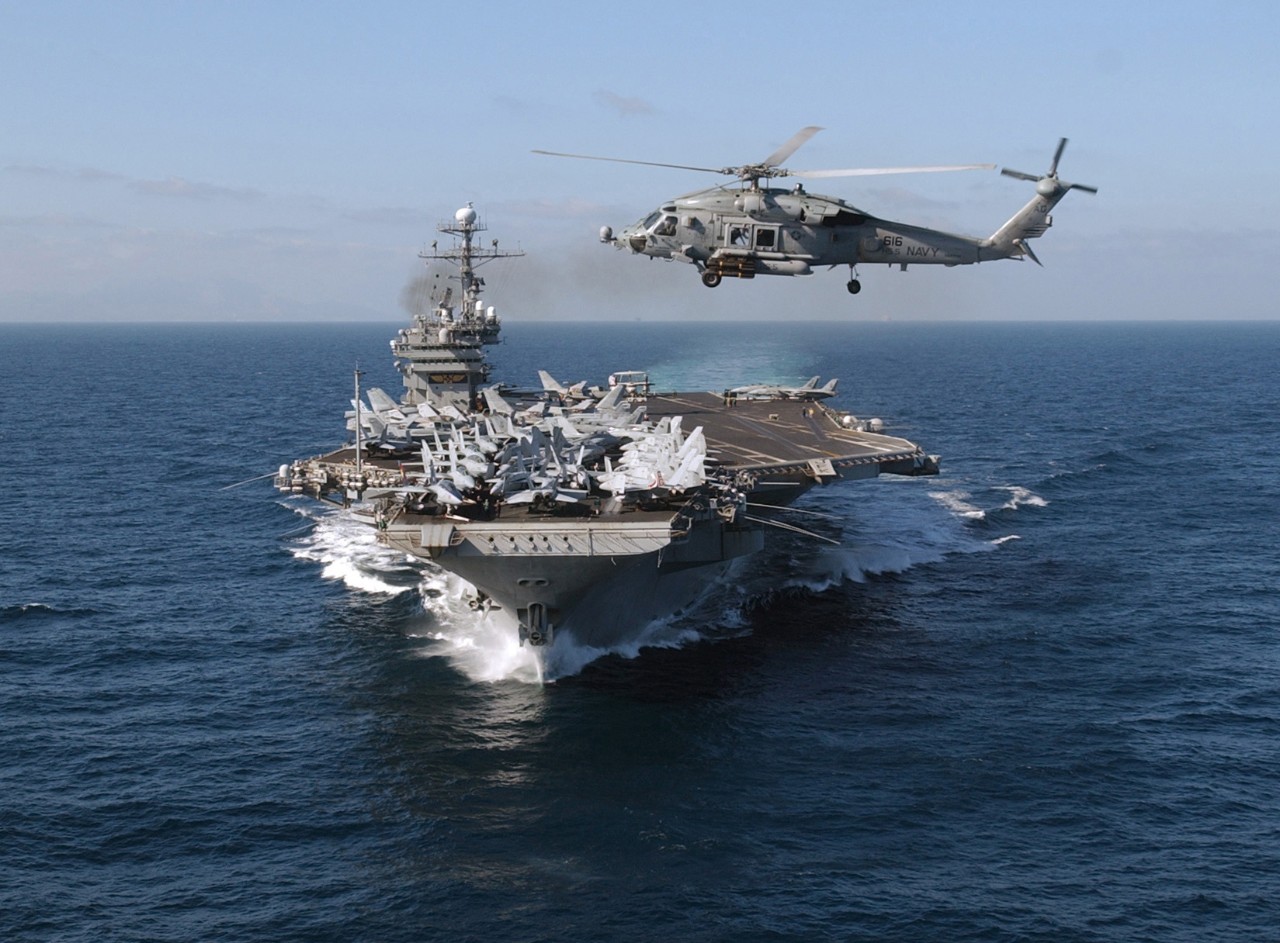
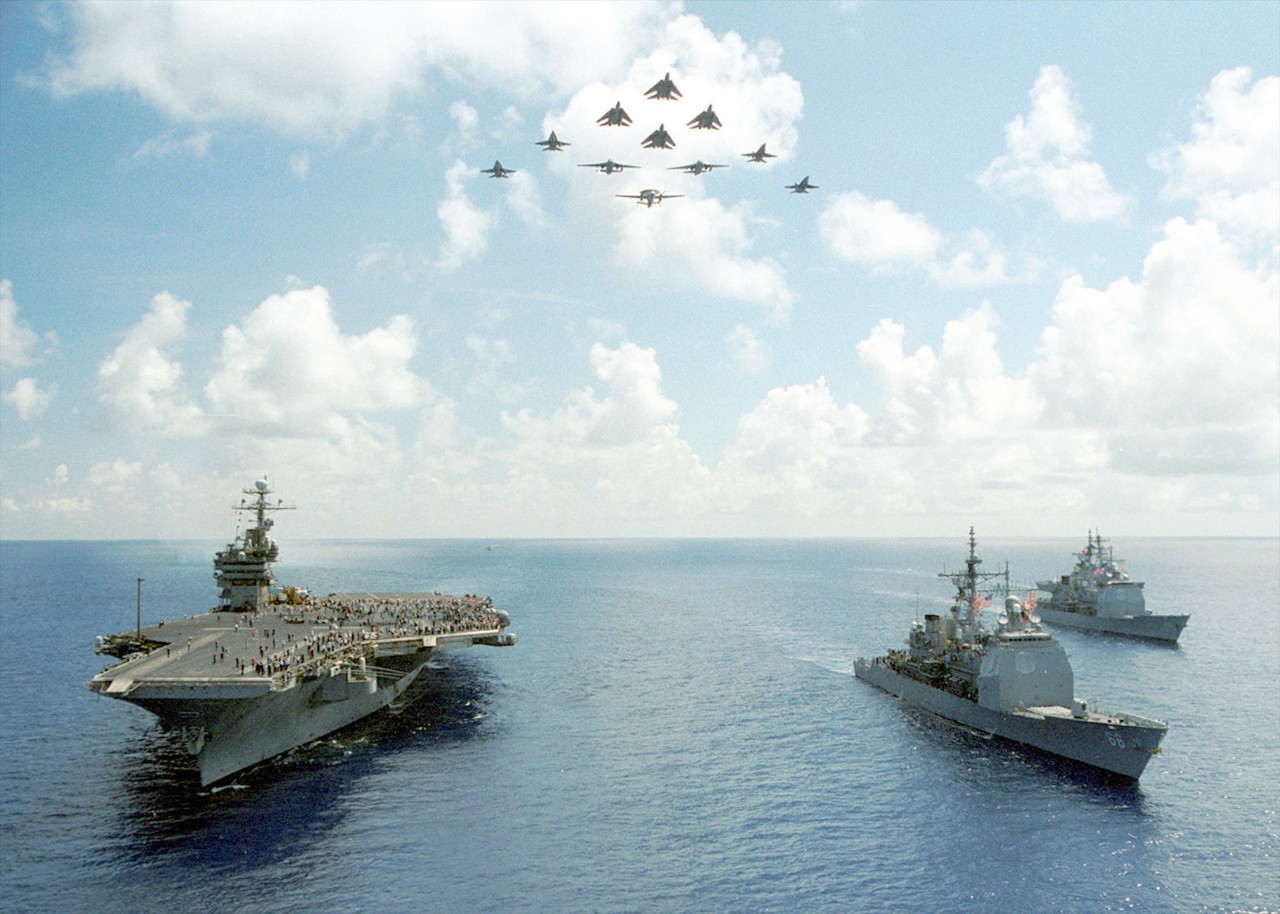
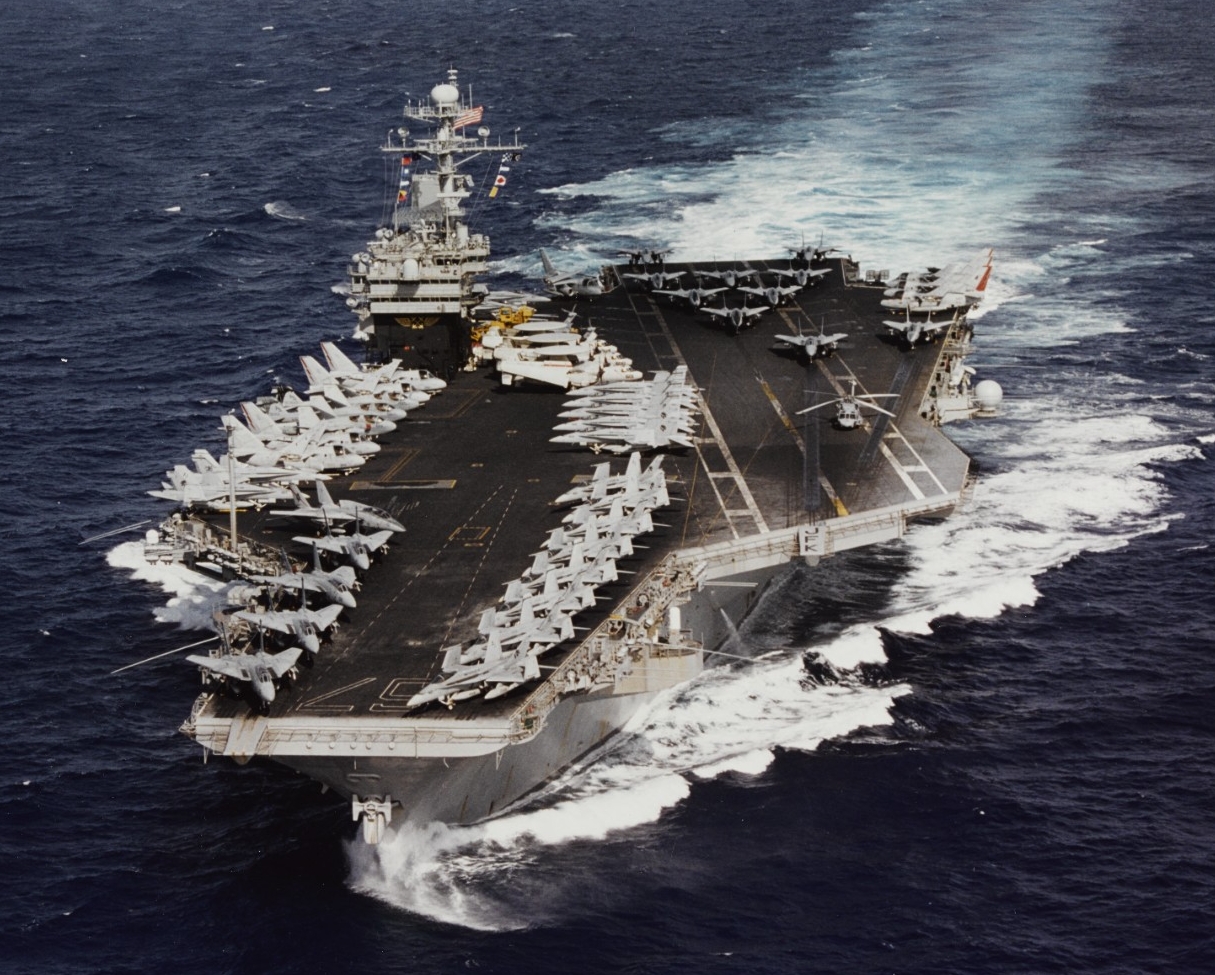
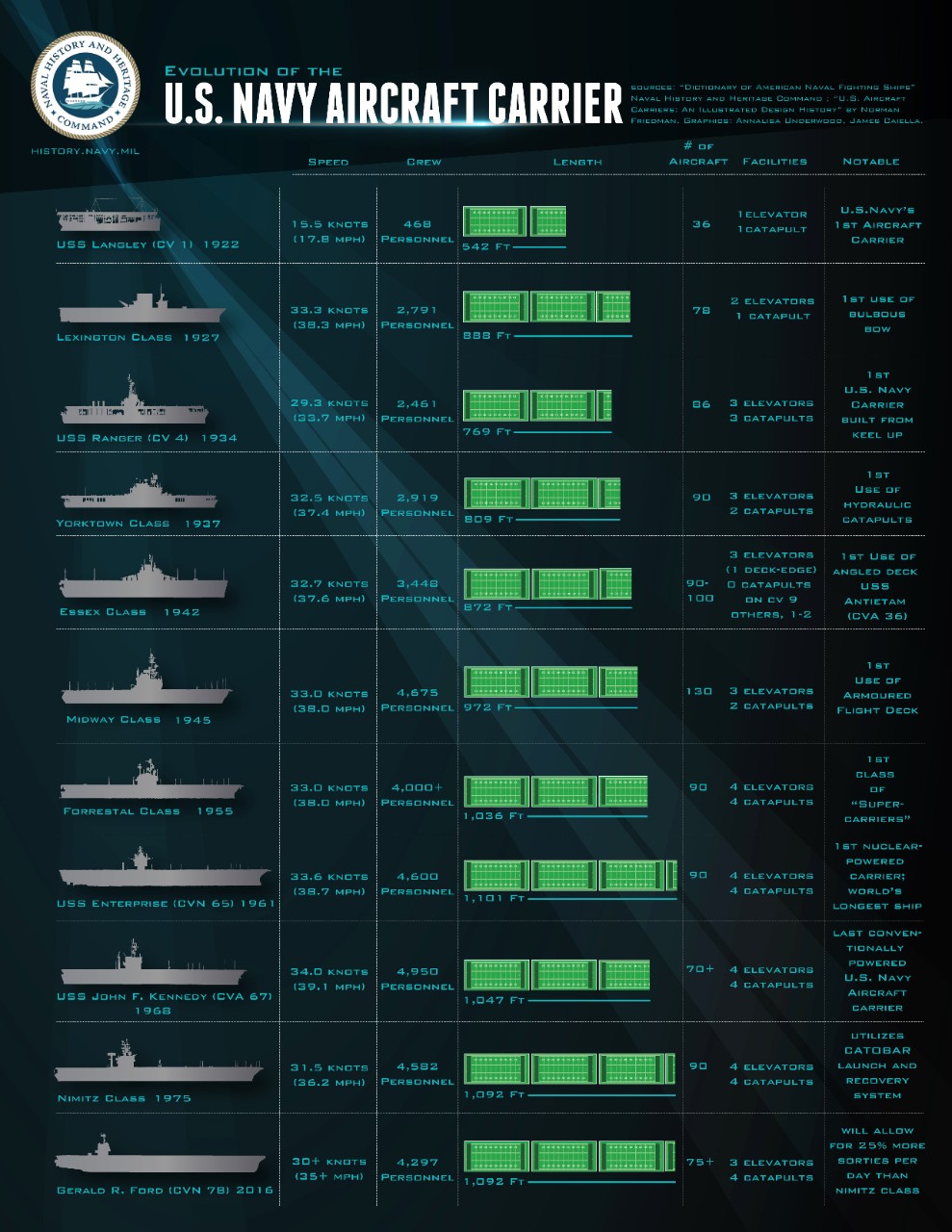
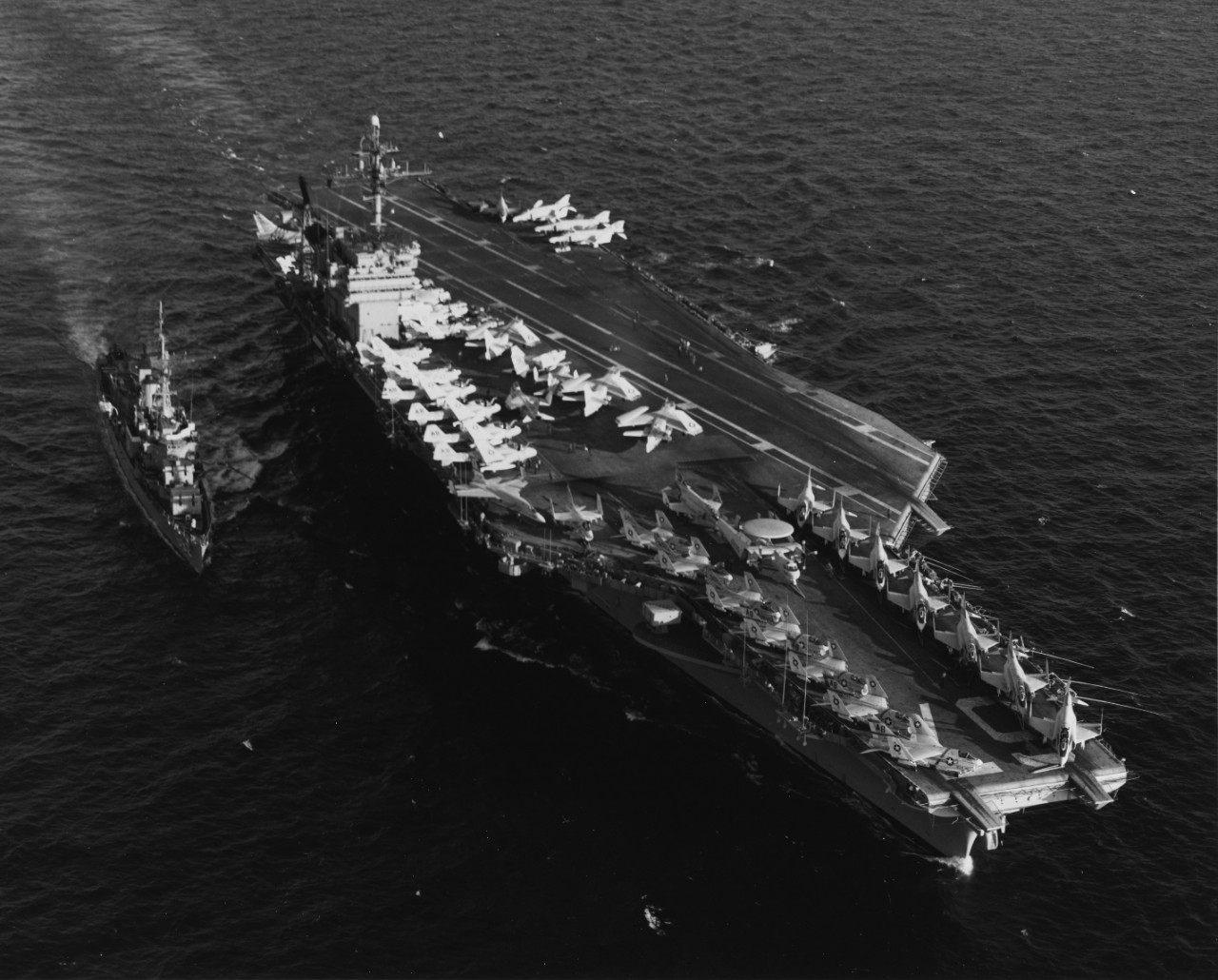
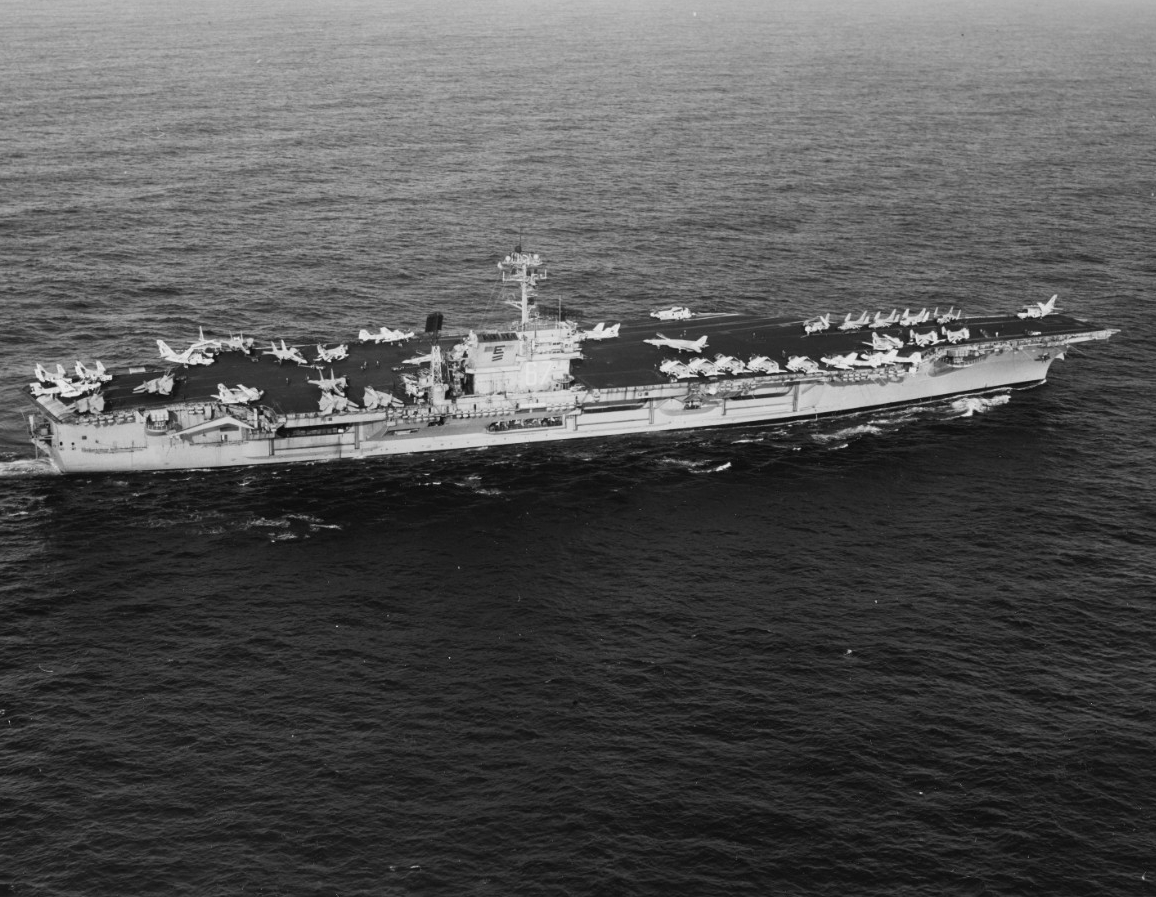
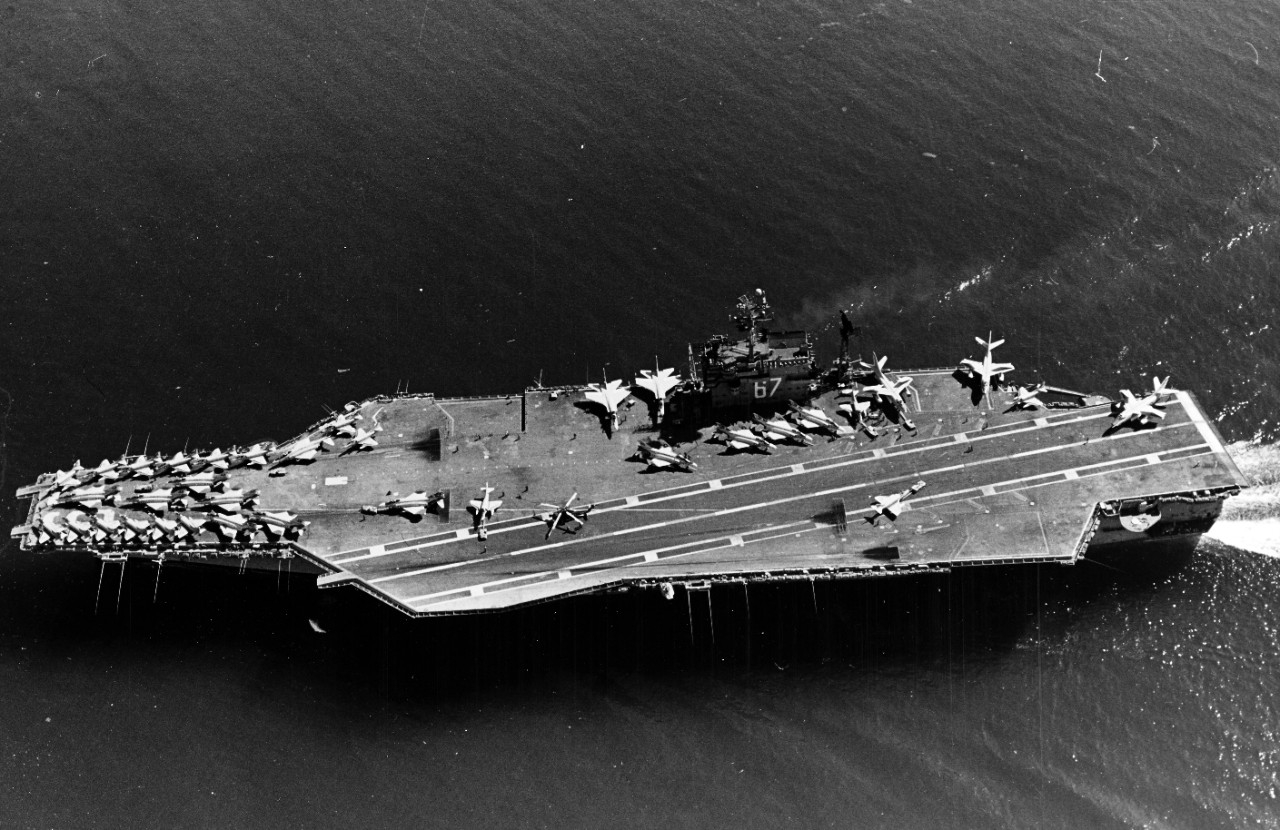
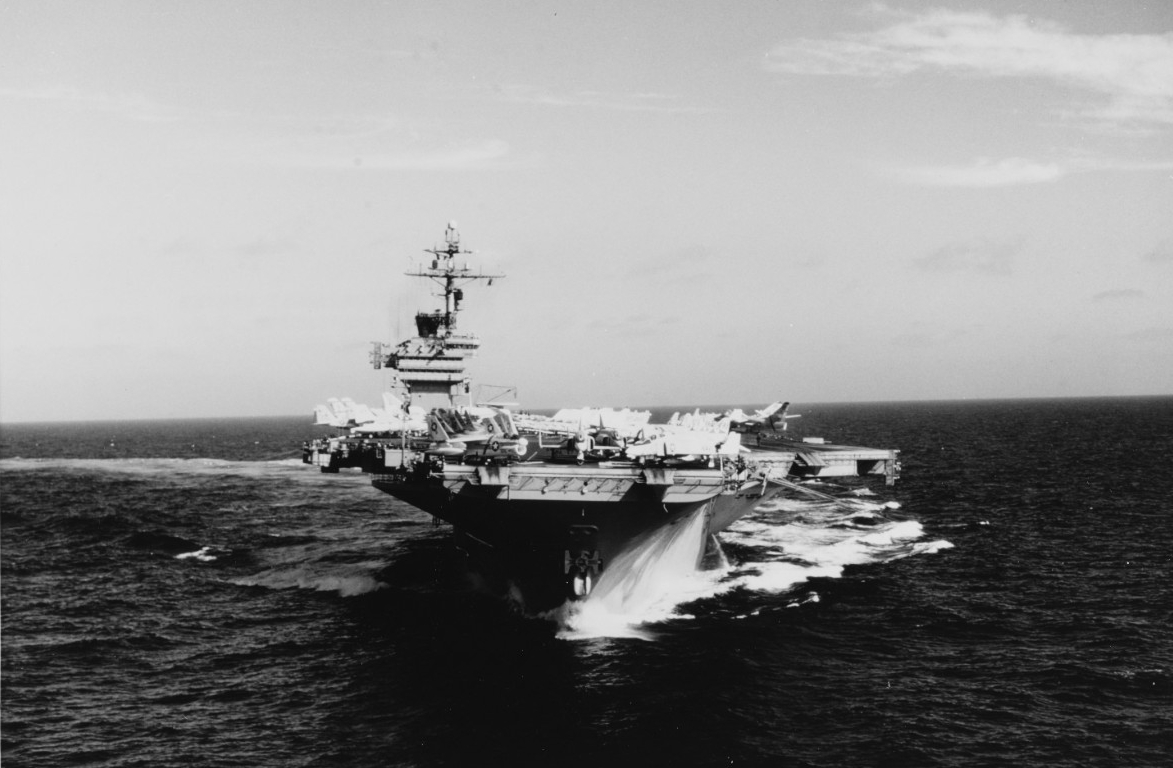
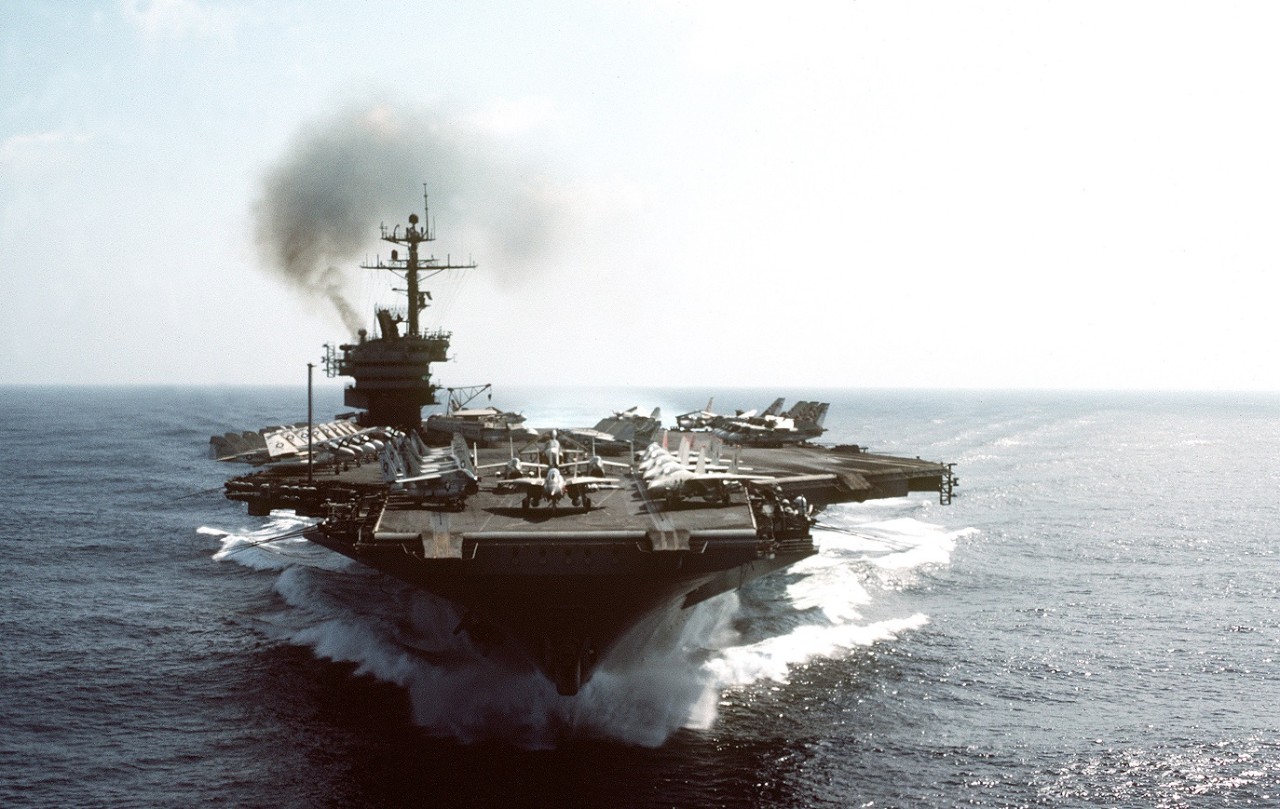
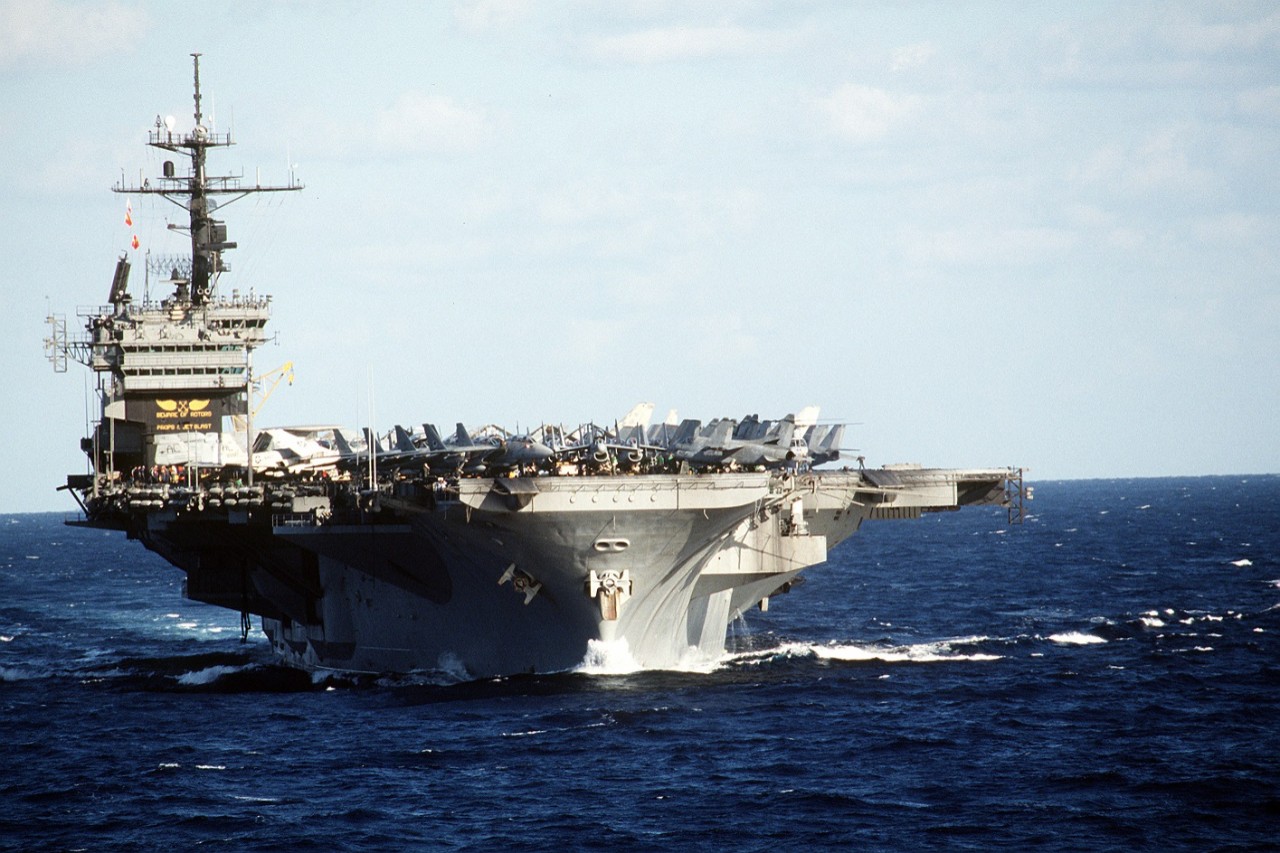
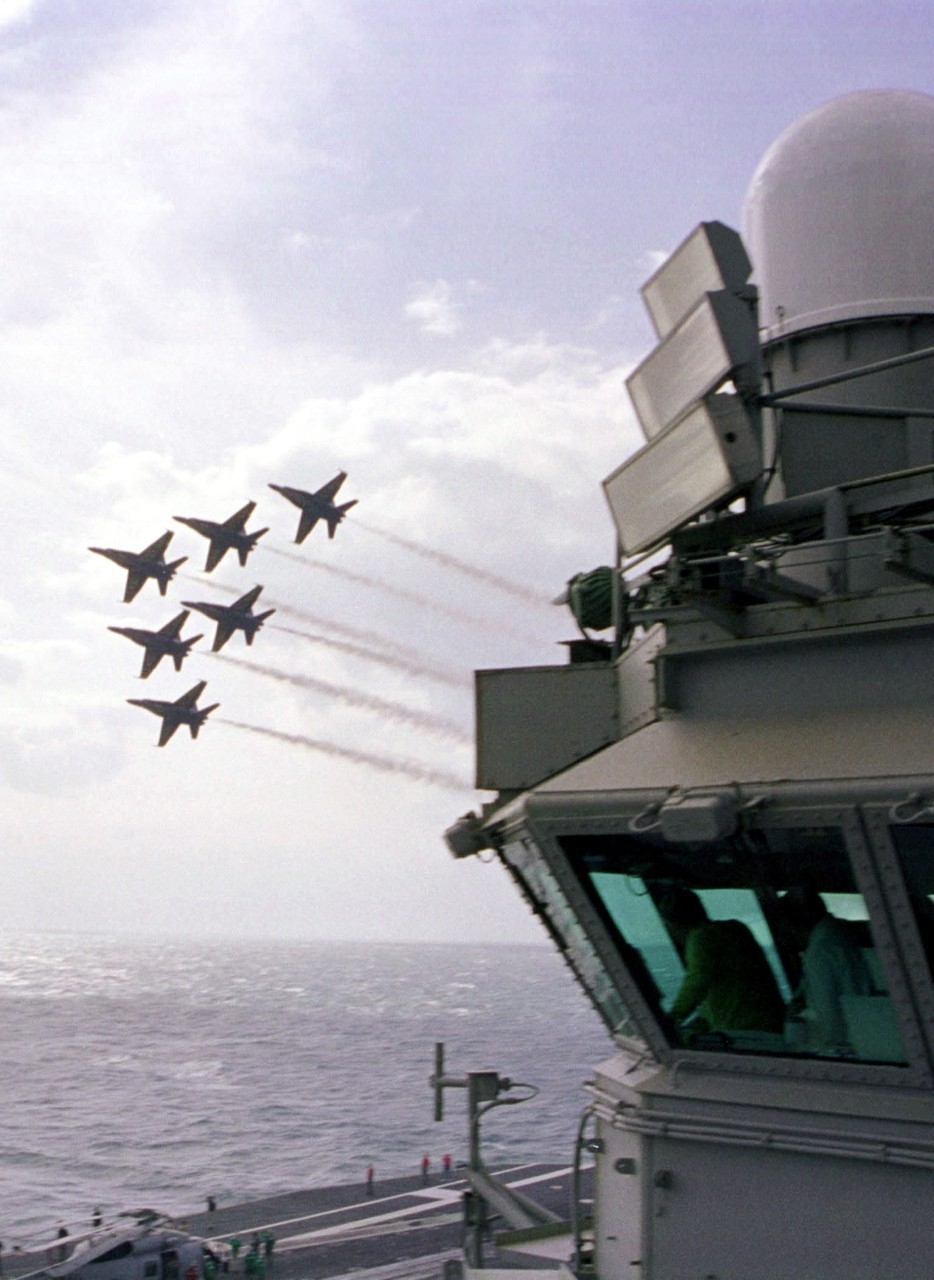
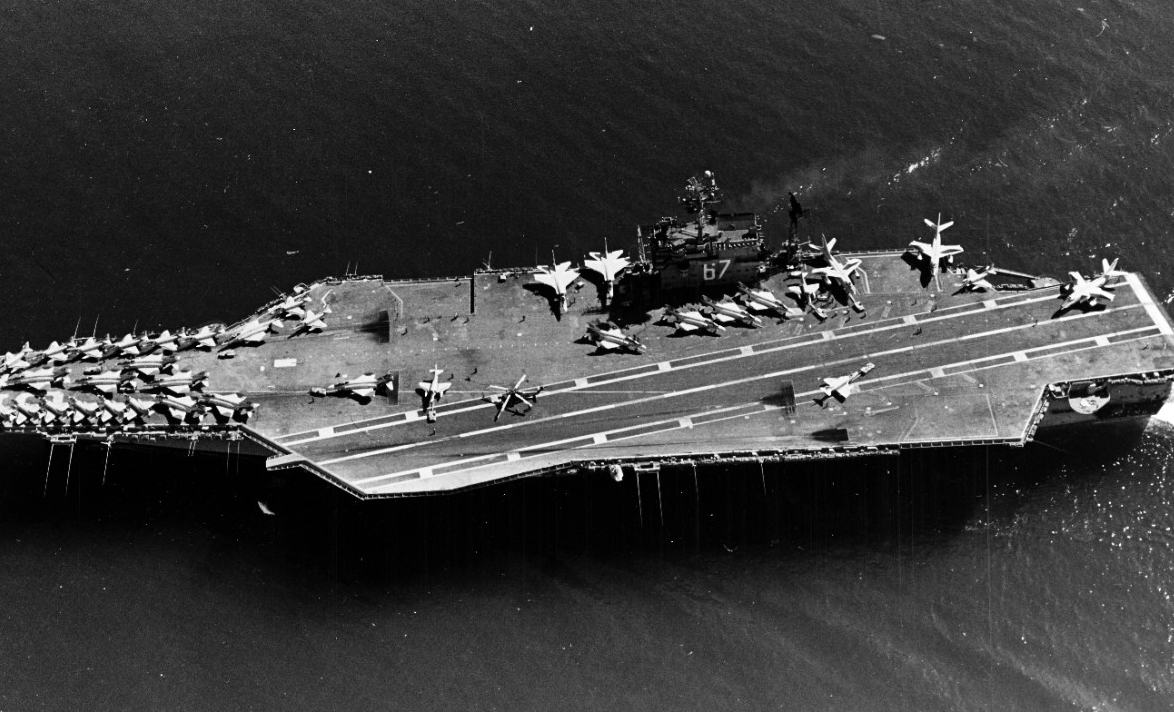
USS John F. Kennedy (CVA-67), first in class and the last conventionally-powered aircraft carrier built for the U.S. Navy, was commissioned at the Newport News Shipbuilding and Dry Dock Company, Virginia, 7 September 1968, with Captain Earl P. Yates in command. The ship was named to honor the 35th President of the United States, John F. Kennedy. After shakedown training that took her to Guantanamo Bay, Cuba, John F. Kennedy made way to Norfolk, Virginia, where she underwent extensive repairs in preparation for an extended deployment. On 5 April 1969, the aircraft carrier was underway for Mediterranean waters as flagship for Rear Admiral Leroy V. Swanson, Commander Carrier Division 2. During the deployment, John F .Kennedy participated in multiple exercises with Italian and French naval forces that were geared to counter the Soviet Union threat. She returned stateside four days before Christmas 1969. She remained at Norfolk for a majority of 1970.
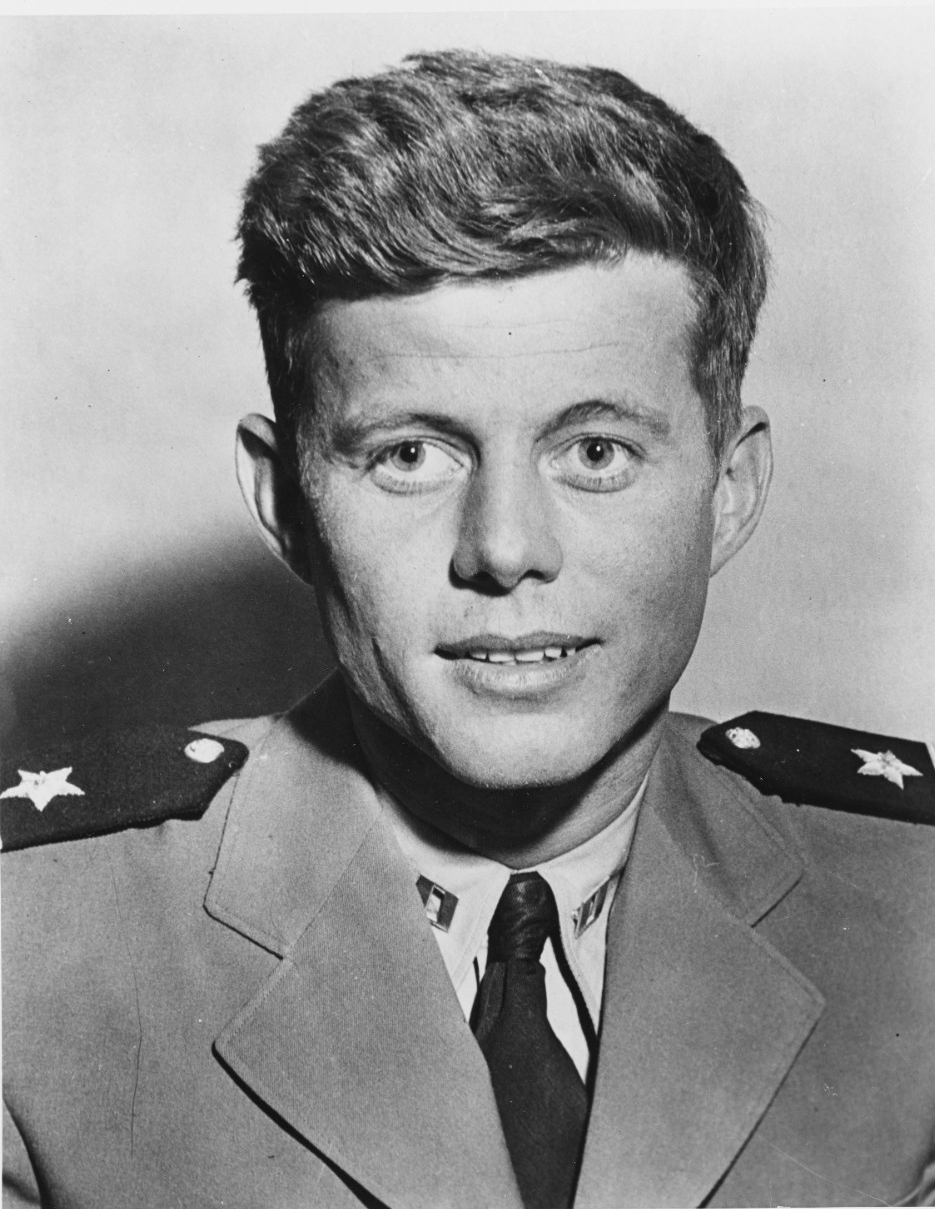
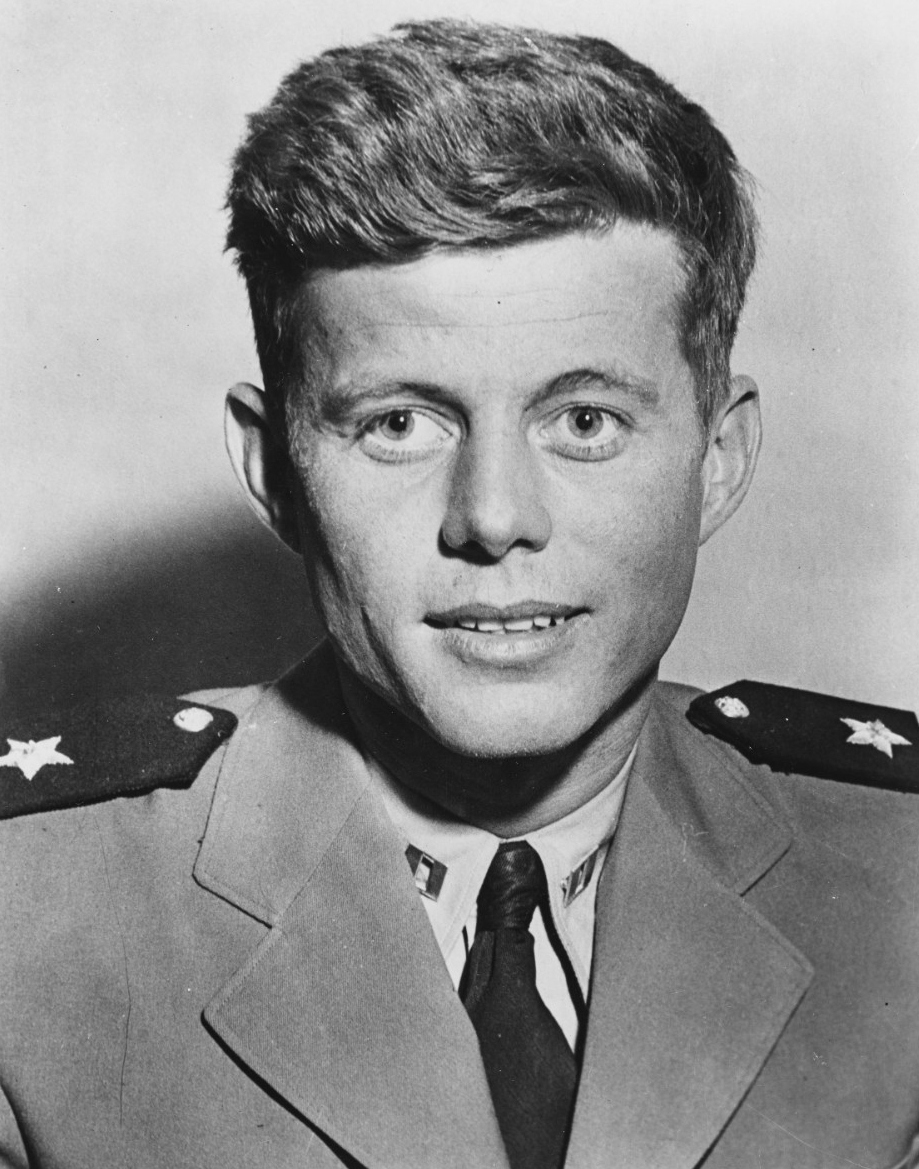
John Fitzgerald Kennedy, the 35th President of the United States, was born on 29 May 1917 in Brookline, Mass., and graduated cum laude from Harvard University in 1940. He received an ensign's commission in the U.S. Naval Reserve in October 1941. He served in Washington in the Office of Naval Intelligence (October 1941-January 1942) and under Commandant, Sixth Naval District, Charleston, S.C. (January-July 1942), before he attended the U.S. Naval Reserve Midshipman's School, Northwestern University, Chicago, Ill. (July-September 1942). Promoted to lieutenant (j.g.) on 1 October 1942, Kennedy underwent instruction at the Motor Torpedo Boat Squadrons (MTBRons) Training Center, Newport, R.I. (September-December 1942), Motor Torpedo Boat Squadron (MTBRon) 4 (December 1942-January 1943), where he was slated to command the motor torpedo boat PT-101, and then in the office of the Assistant Supervisor of Shipbuilding, Jacksonville, Florida (February 1943), in connection with fitting out MTBRon 14. Traveling to the Solomon Islands, Kennedy joined MTBRon 2, and ultimately assumed command of PT-109 on 24 April 1943, relieving Ens. Leonard J. Thom, USNR. The motor torpedo boat operated out of Tulagi, in the Solomons, and then Rendova.
During her 1970–71 deployment, John F. Kennedy visited Athens three times, Naples twice, Palma de Mallorca, Spain, and Malta twice. The underway was marked by the ship participating in multiple NATO exercises in the North Atlantic. The deployment, which was originally slated to be just two-weeks in duration, ended up as a 35,127-mile trek to the Mediterranean that had spanned six months. She returned to Norfolk on 1 March 1971. The ship spent most of the remaining year training off the Virginia Capes. On 1 October, John F. Kennedy welcomed a new commander, Captain Robert H. Gormley, and two months later relieved USS America (CVA-66) at Rota, Spain, where she rejoined Sixth Fleet. For most of the remainder of 1972, John F. Kennedy and her air wing participated in a variety of international exercises that was highlighted by NATO exercise “Strong Express” where she crossed the Arctic Circle for the first time. Upon conclusion of the exercise, John F. Kennedy proceeded back to Norfolk for overhaul arriving on 6 October 1972. The ship remained in restricted availability status for the remainder of the year.
During a patrol in Blackett Strait on the night of 1-2 August 1943, PT-109 was sunk when the Japanese destroyer Amagiri (Lt. Cmdr. Hanami Kouhei), rammed her and cut her in half. Kennedy directed the rescue efforts of the survivors of his crew, and rescued three, one of whom was the badly burned MM2c Patrick H. McMahon, whom he personally towed back to the then-still floating wreckage of the forward part of the boat. Over the ensuing days, Kennedy managed to get his crew ashore. Ultimately, aided by friendly natives and a coastwatcher, PT-109's surviving officers and men were rescued by PT-157 on 8 August 1943 and taken to Rendova.
After emerging from overhaul on 5 January 1973, John F. Kennedy was tapped to deploy to Southeast Asia, but her orders were changed to European waters in wake of the Paris Peace Accords. John F. Kennedy departed Norfolk on 16 April 1973 and dropped anchor at Rota on 25 April, relieving USS Intrepid (CVS-11). The ship spent the next five months of 1973 operating with Sixth Fleet. Her port visits included Barcelona and Palma, Formia, Italy, Augusta Bay, Gaeta, Souda Bay, Rhodes, Athens, and Livorno. On 4 October, John F. Kennedy crossed the Arctic Circle again during NATO exercise “Swift Move,” a nine-day exercise that combined the efforts of more than 20,000 personnel, 34 ships, and 250 land and sea-based aircraft from Canada, the Netherlands, Norway, Denmark, Germany, the United Kingdom, and the United States. John F. Kennedy was originally set to head for homeport after the exercise, but another crisis in the Middle East reared its head when Egyptian and Syrian forces launched a surprise attack on Israel on 6 October 1973 during “The Yom Kippur War.” Accordingly, John F. Kennedy, in company with guided missile frigate Dale (DLG-19), guided missile destroyer Richard E. Byrd (DDG-23), and destroyer Sarsfield (DD-837)—supported by the oiler Caloosahatchee (AO-98)—steamed to a holding area 100 miles west of Gibraltar, to assume an alert position to respond to the crisis. Although a cease-fire had been agreed upon, John F. Kennedy remained in the area due to continued high tensions. On 17 November, Sixth Fleet returned to “normal” alert status and the following day, John F. Kennedy received orders to head home. On 1 December, the ship arrived back at Norfolk.
Following hospitalization in the aftermath of the loss of PT-109, during which time he received promotion to lieutenant (1 October 1943), Kennedy received further instruction at the MTBRons Training Center, Newport (December 1943-March 1944), and then the Subchaser Training Center, Miami, Florida (Mar-May 1944), where he received the Navy and Marine Corps Medal for the heroism he had displayed in the rescue of survivors from his sunken PT-boat. After suffering injuries in a fall, he underwent hospitalization at the U.S. Naval Hospital, Chelsea , Mass. (May 1944-March 1945), and, ultimately, retired from active duty on 1 March 1945.
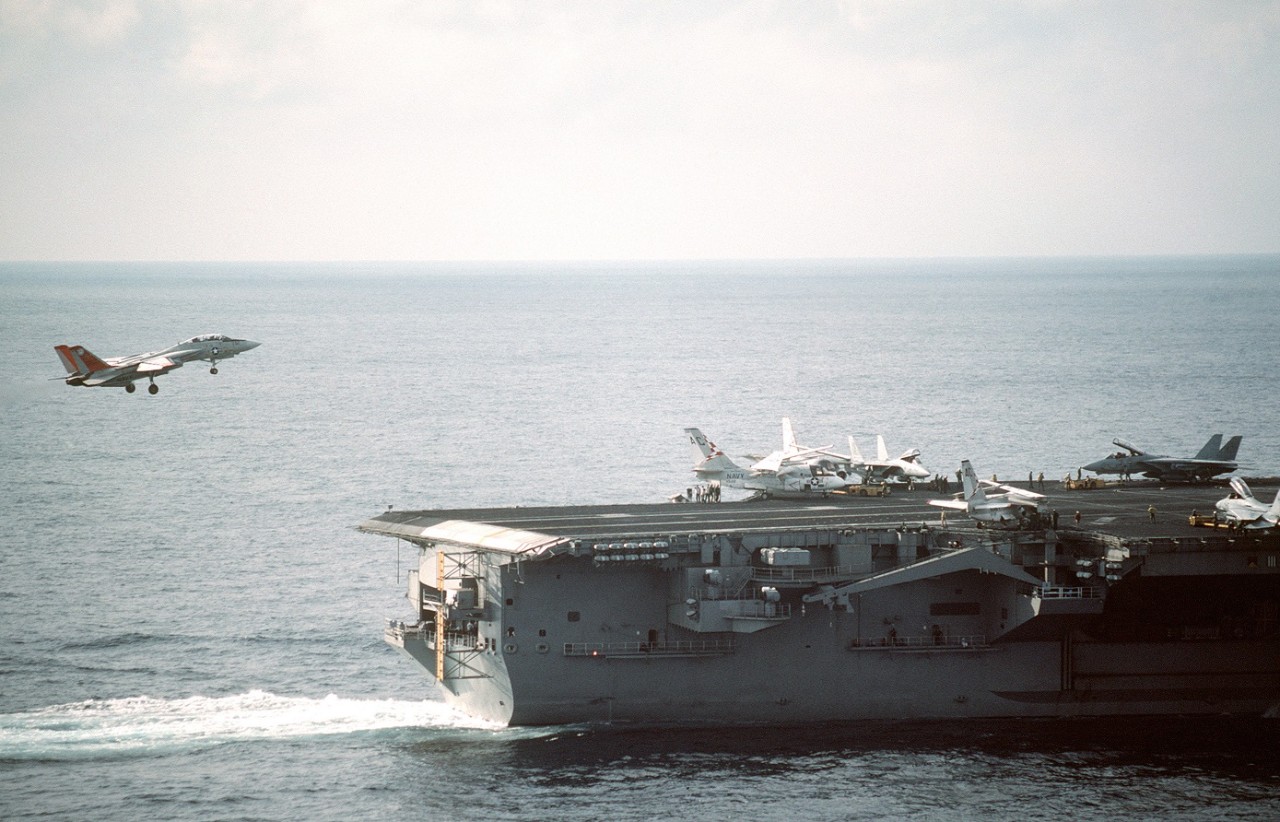
In 1974, John F. Kennedy underwent a major overhaul at Norfolk that included enhanced anti-submarine warfare capabilities and upgrades to accommodate powerful jet aircraft that operated routinely on the aircraft carrier. After the overhaul was complete, John F. Kennedy operated for the next eight years mostly off the U.S. east coast and the Mediterranean. She continued to participate in a multitude of NATO exercises. In 1982, John F. Kennedy set course for Australia, where she conducted five-weeks of exercises. Later that year, she made her first port visit to Africa anchoring at Mombasa, Kenya, on 2 May 1982.
Having assumed the family's political mantle after the end of World War II, his older brother Joseph P. Kennedy, Jr., having been killed during the war, Kennedy was elected to the 80th U.S. Congress on 5 November 1946, and was elected twice more, to the 81st and 82nd Congresses. Elected Senator on 4 November 1952, and re-elected 4 November 1958, he focused on national defense and civil rights issues. Kennedy ran for President against Republican Richard M. Nixon and won the contest, being elected to the presidency on 8 November 1960.
In June 1982, while John F. Kennedy was en route to Haifa—a northern Israeli port city—she was diverted off the coast of Lebanon to evacuate U.S. citizens in the wake of the ongoing crisis between Israeli forces and the Palestine Liberation Organization. The ship remained on station until later that month when she was relieved by aircraft carrier Dwight D. Eisenhower (CVN-69). Afterwards, she continued to operate in the Mediterranean until she steamed to Norfolk on 15 October, where she underwent overhaul that lasted until February 1983. On 23 October, tragedy struck when two truck bombs struck separate buildings housing U.S. Marines and French forces in Beirut killing nearly 300 American and French service members. It was the single deadliest day in U.S. Marine Corps history since World War II’s Battle of Iwo Jima. John F. Kennedy was subsequently diverted back to Lebanese waters. On 3 December, an F-14 reconnaissance flight from John F. Kennedy was fired upon from Syrian-controlled territory. The following day, a strike force of 28 aircraft was launched from USS Independence (CVA-62) and John F. Kennedy into the Bekaa Valley. During the engagement, two A-6 attack aircraft were shot down from intense ground fire. Lieutenant Mark Lange, pilot, was killed and Lieutenant Robert Goodman, bombardier-navigator, was taken prisoner (Goodman was held for 30 days before release). After the attack was complete, photos revealed the strike was a success. In the days following, reconnaissance flights were conducted without incident. John F. Kennedy remained on station until early the following year. After a brief NATO exercise near the Mediterranean island of Cyprus, John F. Kennedy returned to Norfolk on 2 May 1984.
In his inaugural address of 20 January 1961, Kennedy advocated that "the word go forth from this time and place to friend and foe alike, that the torch has passed to a new generation of Americans' born in this century, tempered by war, disciplined by a hard and bitter peace, proud of our ancient heritage." As President, he prepared legislation and mobilized the strength of the Federal Government to insure minorities the benefits of American society. He also sought sweeping reforms in fields of economic welfare, health, and education: "... every American has the right to a decent life for himself and a better life for his children."
After participating in the “Parade of Sail” event in Boston Harbor and a visit from Vice President George H.W. Bush on 2 September, John F. Kennedy underwent an extensive overhaul at Norfolk that lasted until 20 September 1985. For the next five years, John F. Kennedy resumed the cycle of participation in NATO exercises, cruises in the Mediterranean, and upkeep at Norfolk.
In the context of the Cold War, Kennedy wisely used sea power to meet global crises during the ideological struggle with the Soviet Union, including a "quarantine" of Cuba in the autumn of 1962 that choked off the flow of military supplies to that island and persuaded the Soviet Union to remove its offensive missiles. Speaking from the flight deck of the attack carrier Kitty Hawk (CVA-63) on 6 June 1963, he recalled the role of American sea power during that confrontation: "Events of October 1962 indicated, as they had all through history, that control of the sea means security. Control of the seas can mean peace. The United States must control the seas if it is to protect your security and those countries which stretch thousands of miles away that look to you on this ship and the sister ships of the United States Navy."
In August 1990, more than 100,000 Iraqi troops massed on the border of Kuwait. Iraq’s leader, Saddam Hussein, who was seething over Kuwait’s insistence on compensation for Iraq’s unpaid war debt from the Iran-Iraq war, its alleged overproduction of oil, and claims the Kuwaitis were slant drilling into the Rumaila oil field, ordered his troops to invade. Iraq later deposed Sheik Jabir Ahmed Sabah and established a puppet government. Five days later, President Bush ordered U.S. military aircraft and troops to Saudi Arabia as part of a multi-national force to defend the country against a possible Iraqi invasion from the Saudi border with Kuwait. On 10 August, John F. Kennedy was ordered to “load up and get underway” for Operation Desert Shield. For several months, the aircraft carrier exercised at general quarters and aircraft launched nearly every day, conducting training sorties over Saudi Arabia. John F. Kennedy continued to prepare for war with a 15 January 1991 deadline for Iraq to withdraw from Kuwait looming. However, when the deadline came and went, Hussein’s troops didn’t budge, and the following day, President Bush announced that Desert Shield was over and the liberation of Kuwait, Operation Desert Storm, had begun. On 17 January, John F. Kennedy launched her first strikes on Iraq, a half-hour after the initial wave by the U.S. Air Force. Starting on that first day of strikes, John F. Kennedy settled into a routine that lasted through the end of the conflict, engaging in a steady, but fast-paced regimen of preparing aircraft, launching them, recovering them, and repeating the process. During the conflict, the ship launched a total of 114 strikes and 2,895 combat sorties were flown for a total of 11,263 flight hours. Before heading home, John F. Kennedy made a brief port call to Hurghada, Egypt, the first-ever American warship to conduct a port visit there, then arrived back at Norfolk on 28 March.
He was dedicated to his belief "that all the world, in Eastern Europe as well as Western, in Southern Africa as well as Northern, in old nations as well as new, that people must be free to choose their own future, without discrimination or dictation, without coercion or subversion." In hopes of spreading American ideals to the developing world, Kennedy created the Peace Corps and supported reform and democratization in Latin America and Africa.
After John F. Kennedy arrived back home, she immediately commenced a post-deployment stand down, and simultaneously, entered a selected restricted availability period that lasted through 1 October 1991. For the next few years, John F. Kennedy continued the cycle of NATO exercises, deployments to the Mediterranean, and upkeep of the ship. In 1997, the ship supported operations by flying “real-world” missions over Bosnia-Herzegovina. Later, John F. Kennedy participated in Operations Enduring Freedom and Iraqi Freedom. Of note, during the OEF deployment, John F. Kennedy’s aircraft dropped more than 62 million pounds of ordnance on Taliban and al Qaeda targets and supported U.S. and Coalition forces on the ground with close air support, on occasion working with Special Forces units. During the OIF deployment, John F. Kennedy’s aircraft support were critical to the pivotal Operation Phantom Fury or more commonly known as the second Battle of Fallujah in November 2004.
As Soviet threats to Berlin flared anew in the summer of 1963, he visited West Berlin. "Freedom is indivisible," he declared there, "and when one man is enslaved, all are not free." Worries over the Soviet threat to Western Europe also encouraged Kennedy to act forcefully in Southeast Asia, and he sent thousands of advisors to advise the South Vietnamese military.
After returning home from the 2004 deployment, the ship spent several years exercising off the U.S. east coast and participating in various high-level media events. John F. Kennedy was ultimately decommissioned in 2007.
Despite a major escalation of the ballistic missile arms race with the Soviet Union that began under his administration, Kennedy did manage to use the Cuban missile crisis to tone down the rhetoric of the Cold War. The sobering experience also encouraged the nuclear powers to sign the 1963 treaty outlawing atmospheric or underwater nuclear tests, an achievement called "the first concrete limitation on the nuclear arms race since the bomb was invented."
Tragically, on 22 November 1963, as his motorcade traveled through downtown Dallas, Texas, Kennedy, as well as Texas Governor John Connally, riding in the same automobile, were felled by assassin's bullets. Police arrested Lee Harvey Oswald, who had been seen in the nearby Texas Schoolbook Depository building, later that day. While Connally survived the attack, the President was pronounced dead at Parkland Hospital in Dallas a short time later. He was interred on 25 November 1963 in Arlington [Va.]National Cemetery, the sight of his son John, Jr., saluting his slain father an indelible image as the nation mourned.
(CV-67: displacement 87,000 tons (full load); length 1,047'6"; beam 130'; extreme width 252'; draft 35'9"; speed 30+ knots; complement 4,950; armament 3 Sea Sparrow launchers; aircraft 70+; class Kitty Hawk)
Artifacts
The first John F. Kennedy (CVA-67) was laid down on 22 October 1964 at Newport News, Va., by the Newport News Shipbuilding & Dry Dock Company; launched on 27 May 1967; sponsored by Miss Caroline Kennedy, daughter of the late President John Fitzgerald Kennedy; and commissioned at Newport News on 7 September 1968, Captain Earl P. Yates in command.
Interviews with USS John F. Kennedy (CVA/CV-67) Crewmembers
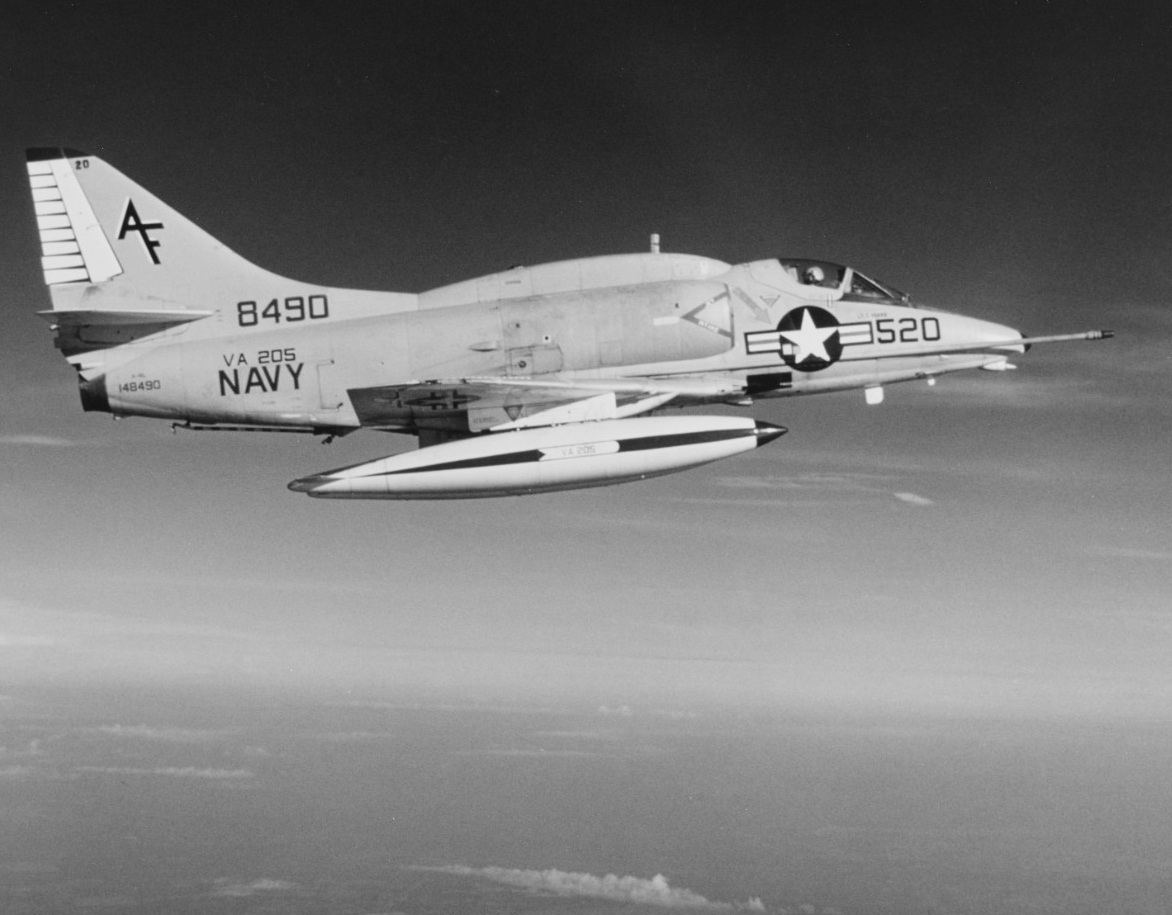
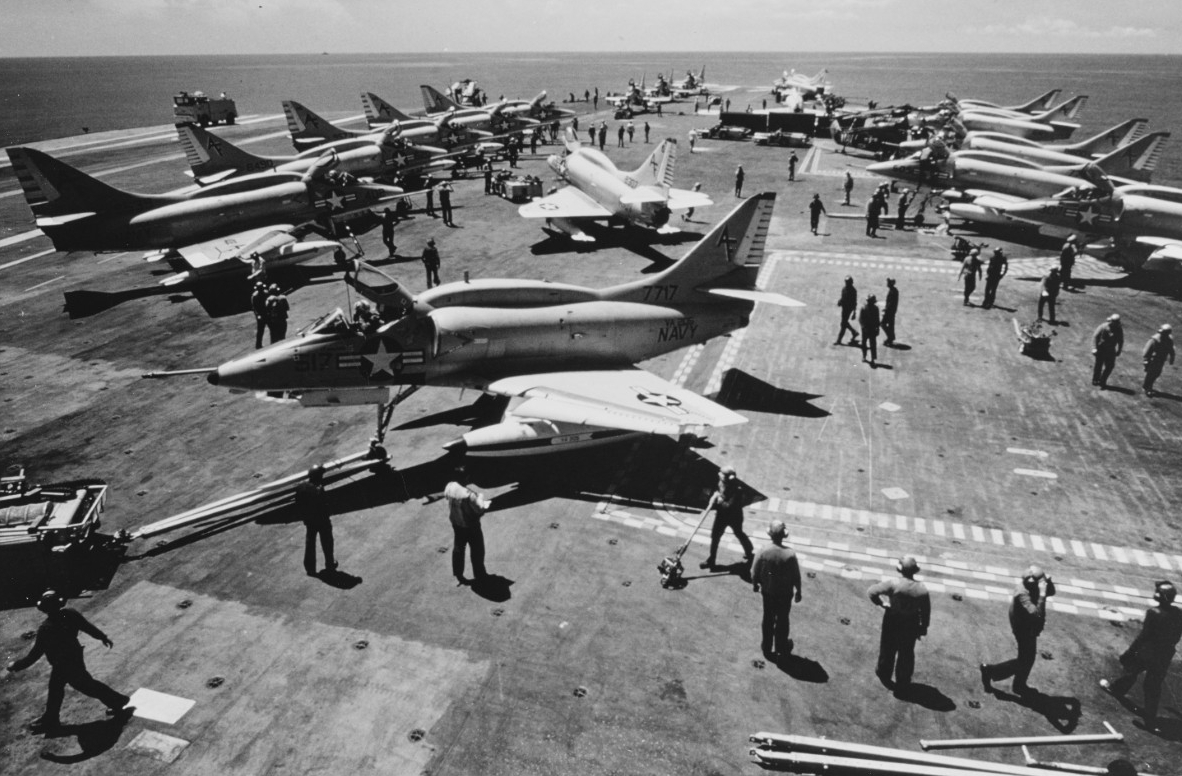
After fitting out, John F. Kennedy embarked on a "fast" cruise from 11 to 13 October 1968, and ultimately put to sea on 21 October. Pilots from the Naval Air Test Center, Patuxent River, Maryland, rode the ship to monitor her catapults and arresting gear and provided planes for her inaugural flight operations. On 22 October, Commander Harold L. Marr, Commander, Carrier Air Group (CVW) 1 accomplished the ship's first arrested landing in a Douglas A-4C Skyhawk; Lieutenant Commander Willard C. Zimmerman, also in an A-4C, the second; and John F. Kennedy's own carrier on-board delivery (COD) aircraft (Caroline II), piloted by Lieutenant Commander Martin P. O'Keefe and Lieutenant John S. Pugh, the third. Later that day, Captain Yates, flying Caroline II, made the first unassisted take-off, while an A-4C from Patuxent River made the first catapult-assisted take-off. That same day, she also carried out her first underway replenishment from the oiler Waccamaw (AO-109).
On 23 October 1968, John F. Kennedy refueled the destroyer Douglas H. Fox (DD-779) and completed a highline evolution. After completing a period of independent ship exercises, she stood in to Hampton Roads on 27 October and anchored. Soon thereafter, she shifted to Craney Island for deperming, after which time she returned to Pier 12. She then initiated final preparations for proceeding to Guantanamo Bay, Cuba, for shakedown training.
John F. Kennedy recovered Attack Squadron (VA) 81's A-4Cs while she steamed toward Guantanamo on 2 November 1968. Later that day, she attempted an underway replenishment with the ammunition ship Mazama (AE-9) but problems with the carrier's ordnance handling system hampered the transfer. The elevator and shuttle conveyors required remedial work, and those repairs, as well as 113 other minor discrepancies, were noted in an inspection immediately after John F. Kennedy's arrival at Guantanamo on 4 November. While at "Gitmo," the ship conducted almost daily general quarters and other drills and both day and night flight operations. Liberty visits to Montego Bay, Jamaica, the first on 16-17 November, and the second over the Thanksgiving weekend, punctuated the underway training.
During subsequent evolutions, on 2 December 1968, shortly after a man overboard drill, Stewardsman Jose L. Langaman apparently jumped into the water. The carrier launched a Kaman UH-2A Seasprite from Helicopter Combat Support Squadron (HC) 2, Detachment 67, immediately, flown by Lieutenant (j.g.)s Ronald L. Sitts and William D. Sokel, with Aviation Machinist's Mate (Jet Engine Mechanic) Airman Peter A. Dehey, III, and Aviation Electronics Technician Airman Svante E. Mossberg as crew. The helo approached Langaman, and prepared to effect the rescue, but a boat from the carrier, in charge of John F. Kennedy's boatswain, Chief Warrant Officer Charles I. O'Donald, recovered the messman instead. O'Donald was recommended for the Navy-Marine Corps Lifesaving Medal for his action.
From 12 to 13 December 1968, John F. Kennedy concluded her stay in Cuban waters with an operational readiness inspection (ORI). Although the ship had been able to correct only two of the aforementioned 113 discrepancies, she received an overall grade of satisfactory. The carrier departed Guantanamo on 13 December.
John F. Kennedy moored at her builders' yard on 16 December 1968 to commence a post-shakedown availability that lasted until 15 February 1969, during which time shipyard workers corrected the ship's deficiencies, most notably those that plagued her weapons handling system. On 17 February 1969, she departed to conduct air wing qualifications and check various systems in the Virginia capes operating area.
John F. Kennedy's first major accident occurred on 19 February 1969, when a North American RA-5C Vigilante from Reconnaissance Attack Squadron (RVAH) 14 plunged into the water just after launch. A Seasprite (BuNo 149748) from HC-2, Detachment 67, piloted by Lieutenants Robert E. Hofstetter and William H. Gregory, with Aviation Machinist's Mate (Jet Engine Mechanic) 3d class Dehey and Aviation Electrician's Mate 1st class Donald L. Lewis as rescue crewmen, retrieved Lieutenant (j.g.) John R. Ellis, the Vigilante's naval flight officer (NFO), but Lieutenant Commander Richard A. "Dick" Bright, the pilot, went down with the plane.
Another accident occurred the following day, 20 February 1969, when a McDonnell-Douglas F-4J Phantom II from Fighter Squadron (VF) 101 was lost while attempting to land at night. A Seasprite (BuNo 149015) (Angel 104), piloted by Lieutenant Gregory (who had been involved in the rescue the previous day) and Lieutenant (j.g.) Sokel, with Aviation Machinist's Mate (Jet Engine Mechanic) 3d class John H. Cooper and Aviation Electrician's Mate 1st class Lewis (who had also been involved in the previous day's rescue), retrieved Lieutenant (j.g.) Frank H. Lloyd, the pilot, and Lieutenant (j.g.) Robert D. Work, his radar intercept officer (RIO), who had ejected from the F-4J, accomplishing the task in total darkness, in the teeth of 35-knot winds and 8-to-10-foot seas, operations made even more difficult by the turbulence caused by the carrier upwind of the rescue site.
After conducting further qualifications, refresher operations for the air wing and extensive type training exercises on 3 March 1969, John F. Kennedy returned to Pier 12, Norfolk Naval Station, on 18 March. The vessel undertook final preparations for extended deployment, but difficulties with the ship's catapults postponed her departure to 5 April.
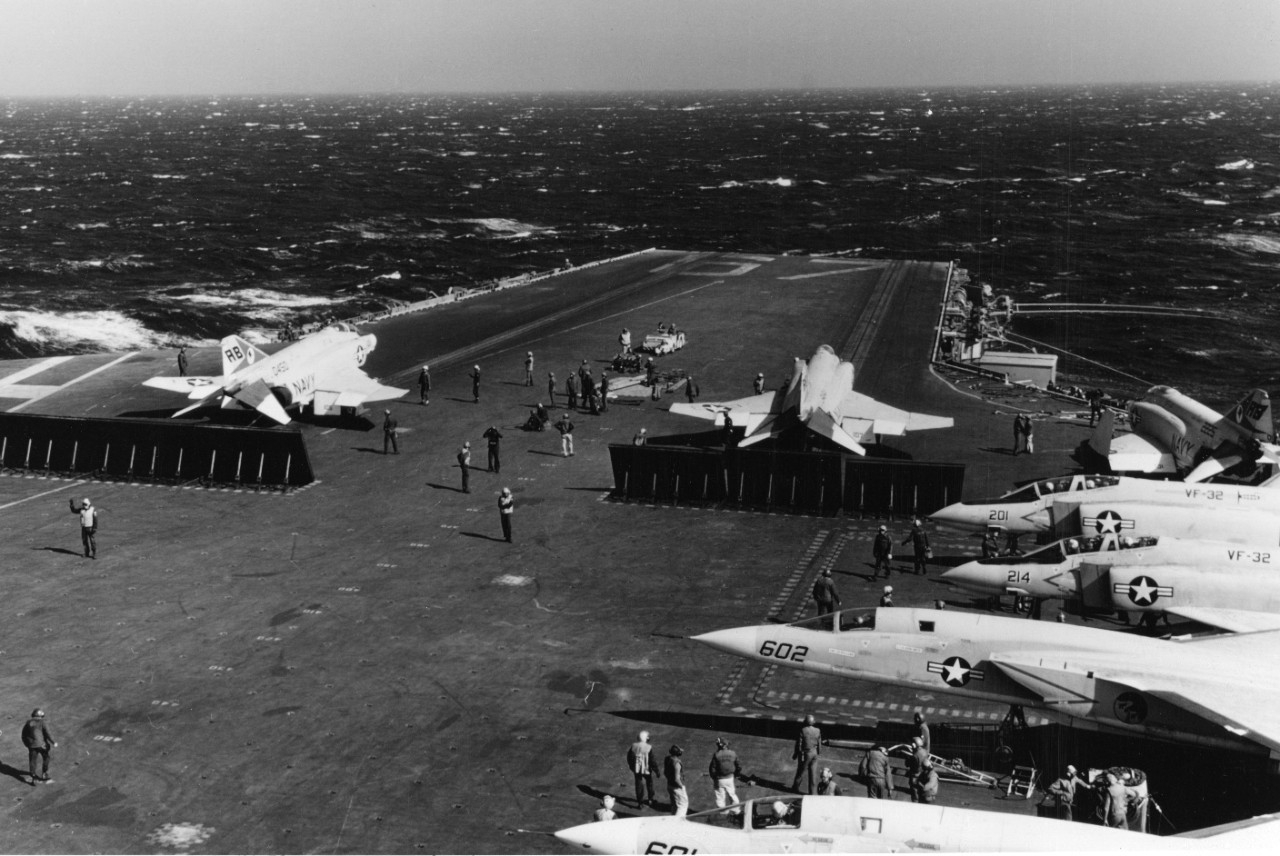
That afternoon, John F. Kennedy got underway for the Virginia capes as flagship for Rear Admiral Leroy V. Swanson, Commander Carrier Division (ComCarDiv) 2, to conduct type training and undergo an ORI. On 12 April, the ship welcomed on board Vice Admiral Robert L. Townsend, Commander, Naval Air Forces, U.S. Atlantic Fleet. That same day, Undersecretary of the Navy John Warner and Admiral Thomas H. Moorer, Chief of Naval Operations, visited the ship, calling upon Vice Admiral Townsend and Rear Admiral Swanson. After the conclusion of the ORI, she disembarked ComCarDiv 2 and his staff by helicopter and set course for the Mediterranean on 14 April 1969, with CVW-1 (VF-14 and VF-32, VA-81, VA-83, and VA-95, RVAH-14, VAH-10 Detachment 67, VAQ-33 Detachment 67, VAW-121 Detachment 67 and HC-2 Detachment 67) embarked, out-chopping from the 2nd Fleet and reporting for duty with the 6th Fleet on 21 April. One day before reaching Rota, Spain, however, in a foretaste of such shadowing that would become commonplace, John F. Kennedy came under surveillance on 20 April by a pair of Tupelov Tu-95 [Bear] maritime reconnaissance aircraft from the Soviet Northern Long Range Air Forces.
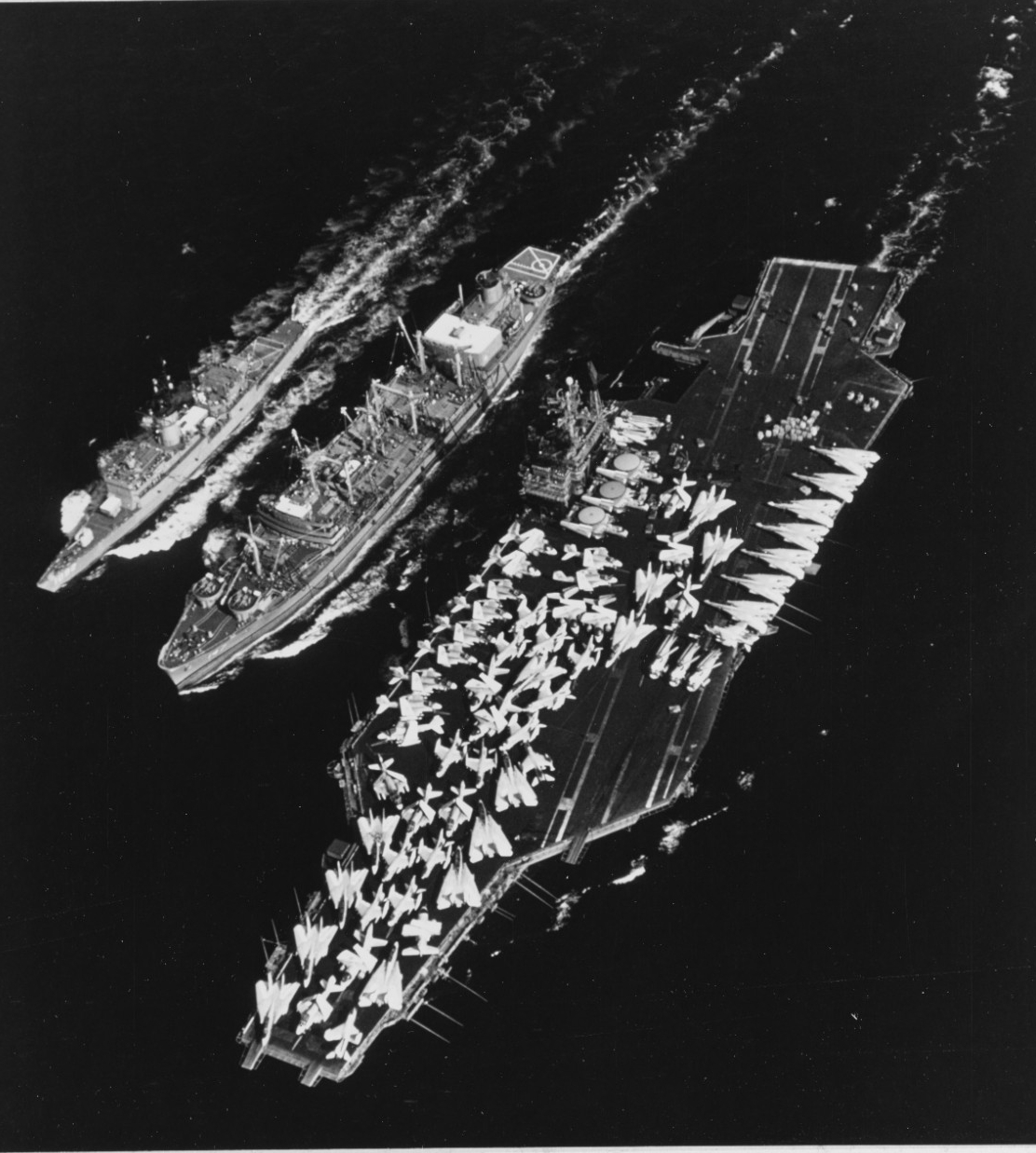
John F. Kennedy reached Rota on the morning of 22 April 1969 and relieved Forrestal (CVA-59). Rear Admiral Pierre N. Charbonnet, Commander, Carrier Striking Forces, 6th Fleet, and Commander, Carrier Striking Unit 60.1.9, shifted his flag to John F. Kennedy. The turnover complete by nightfall, the carrier, escorted by destroyers, transited the Strait of Gibraltar at the start of the mid watch on 22 April. The next day, John F. Kennedy refueled from Marias (AO-57), and acquired the company of a Soviet Kotlin-class destroyer (Pennant No. 383). The carrier later conducted refueling and replenishment from Mississinewa (AO-144) and Arcturus (AF-52), operations observed by a Soviet intelligence collection ship and a Kresta-class guided missile cruiser (No. 542). Observing maritime courtesy, the Soviets rendered honors to John F. Kennedy's embarked flag and the carrier returned them. The formation transited the Strait of Messina on 27 April 1969 for the Tyrrhenian and Ionian Seas , en route to Valletta, Malta. Soviet Tupelov Tu-16 [Badger] reconnaissance aircraft took them under surveillance; and the Kresta-class guided missile cruiser (No. 542) again made her appearance. Two Badgers observed the carrier and her consorts on 28 April.
John F. Kennedy anchored at Valletta on 2 May 1969. Following this brief liberty and upkeep period, she sailed on 12 May for operations in the Ionian Sea. On 16 May, she participated in Mini-National Week exercises, that simulated locating and maintaining continuous surveillance over all Soviet and Orange forces within a defined area; action following a declaration of open hostilities by the Orange force that included strike and self defense; and maintaining an air defense posture.
John F. Kennedy engaged in more training on 20 May 1969, this time with Italian naval forces in NATO-sponsored Quickdraw, wherein the Italians operated as Orange and Blue forces. The nocturnal evolution provided John F. Kennedy’s pilots an opportunity to use flare illumination and test the reaction time of U.S. forces in an emergency scramble situation. National Week III, from 22 to 24 May, followed Quickdraw, enlivened prior to its commencement on 21 May by a visit from a Soviet Badger, and during the exercise on 24 May by another Badger overflying the carrier and the task force.
Following National Week III, John F. Kennedy headed for Genoa, Italy, for liberty and upkeep; one day out, she set a record rigging time for attack carriers during refueling operations with Pawcatuck (AO-108) on 26 May 1969, the men of the “can-do” oiler’s rig 10 accomplishing the work in two minutes and 32 seconds. On 27 May, she reached her destination.
On 4 June 1969, John F. Kennedy stood out for operations in the western Med with the French Naval Mediterranean Squadron, participating in a TransitEx (transit exercise). On the first day of that evolution, a Seasprite (Angel 04) from HC-2, piloted by Lieutenant Francis P. Donovan and Lieutenant (j.g.) James S. Holt, with Aviation Machinist’s Mate (Jet Engine Mechanic) 2d Class W. Case Benham and Aviation Machinist’s Mate (Jet Engine Mechanic) 3d Class Robert L. McCandless as aircrew, sped to the rescue of a Sailor who had fallen overboard from Pawcatuck; Benham and McCandless, in spite of the high winds and heavy seas, rescued the Sailor, James Lam, and the helo returned him to his ship cold and wet but otherwise none the worse for wear.
After completing the exercise, the combined task forces anchored at Porto Vecchio, Corsica, on 6 June 1969. The next day, John F. Kennedy hosted Admiral Sauzay, Allied Esquery Commander for NATO Mediterranean Forces and his staff for the exercise critique. That afternoon, the carrier got underway, conducting operations in the Tyrrhenian Sea. On 8 June, she conducted flight operations around the clock and took part in a Sea Sparrow missile-firing exercise. Three days later, she anchored at Naples, Italy, for liberty and upkeep.
John F. Kennedy hosted the families of officers and enlisted men stationed in the Naples area for a 6th Fleet dependents’ cruise on 14 June 1969. Her air wing also conducted a firepower demonstration that day, enlivened by HC-2’s Angel 04 carrying out another rescue, when a Seasprite piloted by Lieutenant (j.g.) Ronald L. Sitts and Lieutenant (j.g.) Sokol, with Aviation Machinist’s Mate (Jet Engine Mechanic) 3d Class Donald K. Asada and Aviation Electrician’s Mate1st Class Lewis as aircrew, expeditiously retrieved Lieutenant Robert E. Turgeon, Jr., after he had ejected from his A-4C Skyhawk. The ship returned to Naples that same afternoon and remained there until 21 June.
On 23 June 1969, in an accident that illustrated how danger lurked in even routine duties on the John F. Kennedy’s flight deck, Aviation Ordnanceman 3d Class Roger D. Winters of VF-32 suffered severe injury to his right leg when the F-4B onto which he was loading a missile shifted unexpectedly. His leg ultimately had to be amputated above the knee.
John F. Kennedy engaged in two more rounds of Quickdraw with Italian naval forces on 23 and 28 June 1969, during which a Soviet “modified Kotlin-class” destroyer (No. 533), along with two Badgers, joined the carrier’s formation while she conducted an opposed refueling and rearming drill. On 25 June, the ship conducted a combat readiness assessment exercise, and the following day, conducted a basic point defense missile (BPDM) firing exercise, observed by a pair of the ubiquitous Badgers.
On the second day of Quickdraw operations, 28 June 1969, a Douglas EA-1F Spad (BuNo 132599) (side number 753) from Carrier Airborne Early-Warning Squadron (VAW) 33, Detachment 67, ditched about a mile from the ship. A UH-2 (BuNo 150181) Angel 31, piloted by Lieutenant (j.g.)s Holt and Sitts, with Aviation Machinist’s Mate (Jet Engine Mechanic) 3d Class Frank A. Richards and Aviation Structural Mechanic (Hydraulics) 3d Class Major Samson on board sped to the rescue; Samson, lowered into the water, assisted in the pickup of Lieutenant Harold Cummings, USNR (pilot), Lieutenant Jesse A. Fairley, Jr., USNR (navigator), Aviation Electronics Technician 2d Class Robert P. Zeman and Midshipman Kent W. Mohnkern, USNR, from the EA-1F’s crew. Samson, however, suffered a cramp, and, unable to assist in his own retrieval by Angel 04 (BuNo 149015), was ultimately retrieved by a whaleboat crew from the guided missile destroyer Claude V. Ricketts (DDG-5).
John F. Kennedy anchored in Taranto, Italy, for liberty and upkeep, on 30 June 1969, and proceeded thence to Corfu, Greece, arriving on 3 July. She sailed on 7 July for operations in the Ionian Sea. The next day, a Soviet Kashin-class guided missile light cruiser (No. 540) joined the formation. On 9 July, Vice Admiral David C. Richardson, USN, Commander 6th Fleet, arrived by COD and called officially on Rear Admiral Charbonnet.
During Aircraft Tactical Support Squadron (VR) 24 carquals early in the mid watch on 10 July 1969, a Grumman C-1A Trader crashed; a UH-2B sped to the scene from its night plane guard position. Angel 31, flown by Lieutenant Hofstetter and Lieutenant (j.g.) Sitts, with Aviation Machinist’s Mate (Jet Engine Mechanic) 2d Class Benham and Aviation Machinist’s Mate (Jet Engine Mechanic) 3d Class Asada on board, located one survivor, Lieutenant Commander Hugo L. Ecklund, but a motor whaleboat from the ship showed up immediately and rescued the injured officer. Sadly, searchers found no trace of Lieutenant (jg) Carl Preston, the pilot.
A Soviet “modified Kotlin-class” destroyer (No. 533) returned to observe John F. Kennedy, relieving her old comrade, Kashin-class (No. 540) on 11 July 1969. The carrier put in to Golfo di Palmas, Sardinia, on 14 July, where Rear Admiral Charbonnet shifted his flag to Shangri-La (CVA-38). Commander Cruiser Destroyer Flotilla 8, Rear Admiral Frank H. Price, then embarked in John F. Kennedy; she got underway on 15 July for the Tyrrhenian Sea.
Another Quickdraw and Mini National Week exercise followed shortly thereafter. On 21 July 1969, John F. Kennedy reached Naples, where she conducted a competitive precision anchoring exercise. After ten days there, she proceeded to Malta, arriving on 2 August, where Rear Admiral Price and his staff disembarked and Rear Admiral Jack M. James, ComCarDiv 2, shifted his flag from Saratoga (CVA-60) to John F. Kennedy, the latter resuming the role of flagship for Carrier Striking Forces, U.S. 6th Fleet, and Commander Carrier TG 60.1.
John F. Kennedy quit Valletta on 4 August 1969 for operations in the western Med. Vice Admiral Richardson, Commander 6th Fleet, and Marshall Smallwood, Commander Near East Air Force, arrived on 13 August to observe the ship’s undertaking a graded combat readiness assessment exercise. She simultaneously conducted a major underway replenishment with storeship Arcturus (AF-52), after which she anchored at Athens, Greece, on 16 August.
John F. Kennedy departed nine days later for operations in the Ionian Sea where a Soviet Krupny-class guided missile destroyer (No. 971) joined her. Four days later, on 29 August 1969, the warship came under surveillance by yet another Badger. On 31 August, U.S. Ambassador to France R. Sargent Shriver, Jr., Vice Admiral Richardson, and other distinguished visitors arrived via COD and helicopter for an official visit. Her embarked air wing performed a firepower demonstration and John F. Kennedy reached Cannes, France, on 1 September, where Mrs. Joseph P. Kennedy, mother of the late President Kennedy, presented the ship with a bust of the late chief executive.
Increased tension in the Mediterranean basin, however, cut short John F. Kennedy’s visit. On 1 September 1969, the day the ship had arrived at Cannes, a coup overthrew the Libyan monarchy, while instability, that would eventually lead to the 22 October resignation of that country’s Prime Minister, plagued Lebanon. In response, John F. Kennedy sailed on 4 September, Captain Julian S. Lake having relieved Captain Yates as commanding officer the day before, to begin contingency operations off the coast of Libya. En route to the region, the carrier came under surveillance by two Badgers on 6 September. The next day, a Soviet Sverdlov-class guided missile cruiser (No. 849) joined the carrier’s formation. Two more Badgers tracked the ship on 8 September as she rearmed from Nitro (AE-23), refueled from Pawcatuck, and conducted an underway replenishment alongside Concord (AFS-5).
During contingency operations on 9 September 1969, an RA-5C (BuNo 150833) from RVAH-14 lost an engine during a “cat shot” and Lieutenant Commander Jesse L. “Jess” Reed, the pilot, and Lieutenant Andre Marechal, the radar analyst/navigator, both ejected from the Vigilante. A UH-2A Seasprite (BuNo 149748) piloted by Lieutenant (j.g.) Jack D. Ossont and Lieutenant Commander Curtis B. Cutting (officer-in-charge of HC-2’s Detachment 67), with Aviation Machinist’s Mate (Jet Engine Mechanic) 2d Class Benham and Aviation Machinist’s Mate (Jet Engine Mechanic) 3d Class Asada as crew, retrieved both men from the rough sea.
John F. Kennedy transited the Strait of Messina on 14 September 1969, she and her consorts accompanied by a Soviet Kotlin-class guided missile destroyer (No.368), and reached Naples on 15 September 1969. After ten days of liberty and upkeep, she sailed for the Ligurian Sea, en route to Pollensa Bay, Majorca. The next day, she conducted anti-submarine warfare (ASW) exercises with the submarine Sirago (SS-485) and later provided air support for the NATO exercise Diamond Blue. On 28 September, the ship anchored in Pollensa Bay for turnover of the destroyer squadrons and then sailed immediately afterwards for operations in the western Med. Following another Quickdraw engagement and systems tests, during which time she cross-decked two A-7s and a pair of A-6s from Saratoga, the aircraft carrier entered the Adriatic on 3 October and anchored at Trieste, Italy, the next day.
One week later, John F. Kennedy participated in Deep Furrow, a joint NATO amphibious exercise in the eastern Med, between 17 and 23 October 1969. Tragically, during Deep Furrow, CVW-1 suffered the loss of two pilots and two planes in a single day, 19 October. Commander John M. Wolfe of VA-83 perished when his A-4C crashed in western Turkey, while an F-4B from VF-32 crashed at sea; Lieutenant (j.g.) James P. Dilworth, the pilot, died, but Lieutenant (j.g.) Mitchell “Mitch” Austin, Dilworth’s RIO, was recovered.
On 28 October 1969, a Soviet Kynda-class guided missile cruiser (No. 854) joined the carrier’s formation. Two days later, on 30 October, CVW-1’s misfortunes continued when an RA-5C (side number 601) from RVAH-14 broke free from its tie-downs during a high-power turn-up as the ship was heeling to starboard. Tragically, the Vigilante rolled over Airman Roy E. Shaw, from RVAH-14, as it did so, severely injuring the unfortunate Sailor as the plane continued off the port side of the flight deck and plunged into the sea.
John F. Kennedy conducted an ASW transit exercise with Sirago and Seawolf (SSN-575) on 1 November 1969, and three days later anchored off Athens to begin a week of liberty and upkeep, during which time she hosted Secretary of the Navy John Chafee, who visited the ship on an official call. She sailed for the Ionian Sea on 11 November, and on 12 and 14 November conducted ASW exercises with Seawolf. John F. Kennedy reached Marsaxlokk, Malta, on 14 November and stayed for a week. The carrier then operated in the Ionian Sea once more, conducting flight operations in support of Quickdraw. John F. Kennedy transited the Strait of Messina on 24 November 1969, and that day hosted U.S. Ambassador to Germany Kenneth Rush, as well as Admiral Waldemar F.A. Wendt, Commander U.S. Naval Forces, Europe, and Vice Admiral Richardson, Commander 6th Fleet, who were on board to observe a major battle problem and engineering competitive exercises.
John F. Kennedy stood in to Barcelona, Spain, on 25 November 1969, and two days later hoisted U.S. Ambassador to Spain Robert C. Hill. The carrier left Barcelona on 4 December 1969 for St. Paul’s Bay, Malta, and reached her destination on 9 December. The next morning, she sailed for Pollensa Bay, arriving there on 12 December, where, after having been relieved by Forrestal, John F. Kennedy set course for home. She passed through the Strait of Gibraltar on 13 December and once again came under operational control of the Commander 2nd Fleet. Her embarked air group flew off on 20 December, the evolution marking the final carrier operations for Tactical Electronic Warfare Squadron (VAQ) 33 and its Douglas EA-1F Spads. Four days before Christmas of 1969, John F. Kennedy reached Pier 12, where she remained into the third week of January 1970.
John F. Kennedy conducted carquals from 19-23 January 1970, then underwent repair and maintenance at Norfolk Naval Shipyard from 30 January, a pre-administrative readiness inspection while in restricted availability at the shipyard from 4-8 May, and a fast cruise on 18-19 May. She completed her restricted availability on 23 May 1970.
Following limited carquals and other exercises, John F. Kennedy completed nuclear weapons acceptance inspection on 28 May 1970 and on 12 June sailed for Guantanamo for refresher training. She completed her administrative readiness inspection three days later.
John F. Kennedy returned to Norfolk, and through July and August continued training and upkeep, punctuating those operations with a visit to Boston, Massachusetts (2-4 August 1970) during which time Senator Edward M. Kennedy, brother of the late President, members of the Kennedy family, including Caroline, who had been the ship’s sponsor, and her brother John F. Kennedy, Jr., visited the ship.
While conducting operations en route to Norfolk on 6 August 1970, an RA-5C experienced trouble on a catapult launch and went into the water. An HC-2 HH-2D (BuNo 152205) flown by Lieutenant (j.g.)s James C. Harrison and Larry R. Ammerman, with Aviation Machinist’s Mate (Jet Engine Mechanic) Airman Kurt M. Karlsen and Aviation Electronics Technician Airman Robert E. Touchett, rescued the Vigilante’s crew, Commander Edward O. Williams and Lieutenant Ralph S. Feeback, without incident.
After a stint of local operations out of Norfolk that followed John F. Kennedy’s return from Boston, Captain Ferdinand B. Koch relieved Captain Lake on 4 September 1970. Ten days later, on 14 September, the carrier headed for the Caribbean and an ORI. On 18 September, however, she received a change of orders in the wake of the 6th Fleet having been placed on alert (3 September) because of tension in the Middle East. Fighting had broken out between Jordanian and Palestinian forces. Following Syrian intervention in Jordan on 18 September, John F. Kennedy and elements of the 8th Marine Amphibious Brigade (MAB), received orders to return to the Med. By 24 September, however, all Syrian forces had quit Jordanian territory and on 8 October the carrier returned to Souda Bay.
During her 1970-1971 deployment, John F. Kennedy, with CVW-1 (VF-14, VF-32, VA-34, VA-46, VA-72, RVAH-14, HC-2, VAQ-131 and VAW-125) embarked, visited Athens three times, Naples twice, Palma de Mallorca, Spain, and Malta twice (on 27 November 1970 being visited by U.S. Ambassador to Malta John C. Pritzlaff), Avgo Nisi, near Crete, Souda Bay again, St. Paul’s Bay, Valletta, Malta, and Barcelona. On 19 December 1970, while in Souda Bay, John F. Kennedy hosted the Bob Hope Christmas Show.
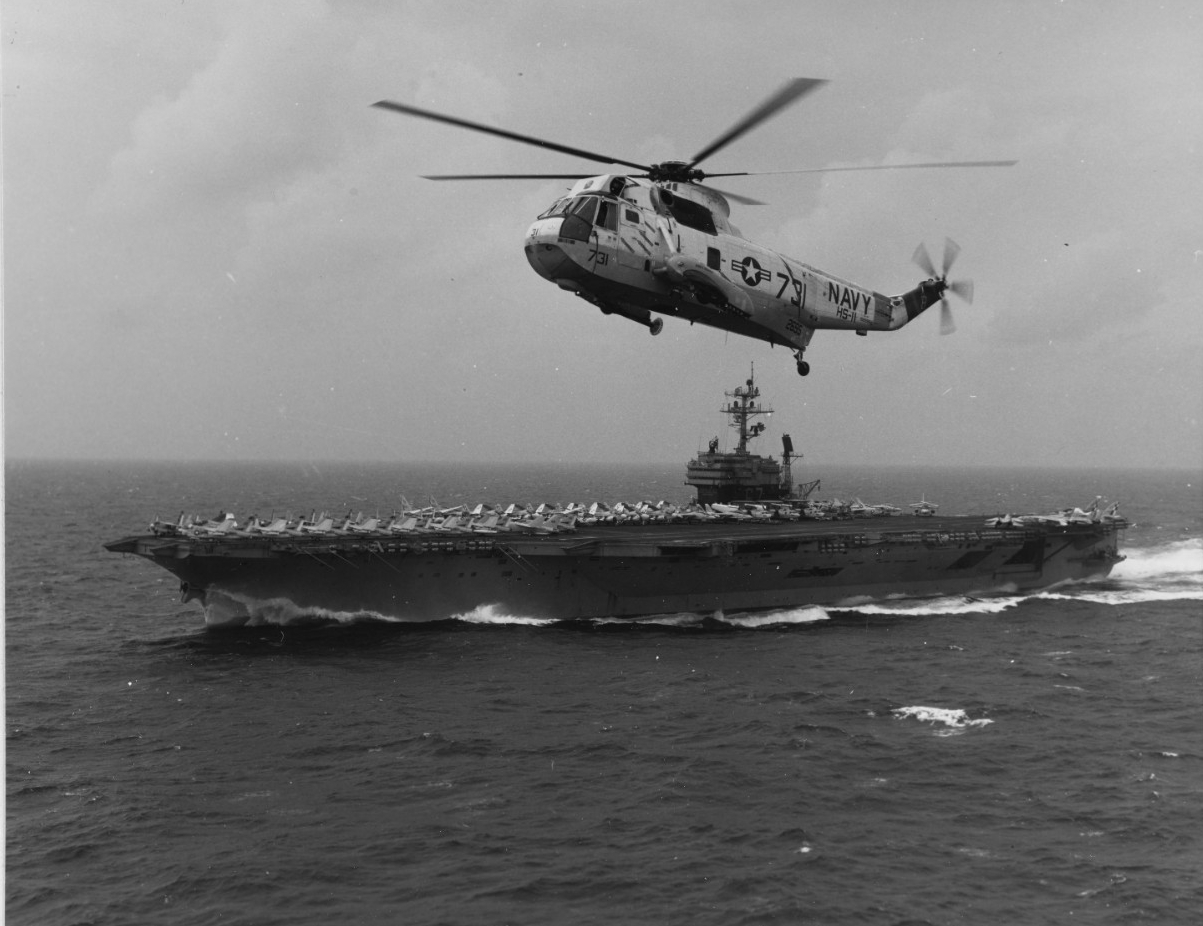
On New Year’s Day 1971, while John F. Kennedy lay anchored at Athens, she deployed one of HC-2’s HH-2Ds on a rescue mission. Bernard Selinger, a Canadian citizen, had fallen while mountain-climbing near Delphi, Greece, and broken his back. The Seasprite, flown by a volunteer crew; Lieutenants W. Dale Sokel and David C. Heiter, with Aviation Structural Mechanic (Structures) 3d Class James E. Cook as rescue crewman and Lieutenant (j.g.) Robert P. Legg, MC, and Hospital Corpsman 1st Class Clifton F. Halsey representing the ship’s medical department, flew “over, around, and between mountains” into the valley where the village of Delphi lay, retrieved Salinger, and transported him back to Athenai Airport, where an ambulance awaited him to take him to a hospital.
Departing Athens on 6 January 1971, John F. Kennedy proceeded to Malta, where she lay in St. Paul’s Bay (14-16 January) and Valletta (16-23 January) before getting underway and conducting operations with guided missile frigate Dahlgren (DLG-12) in the Ionian Sea. Further evolutions in that body of water ensued (24-29 January), observed by a Soviet Kashin-class destroyer (No. 522) on the 24th.
Reaching Barcelona on 30 January 1971, John F. Kennedy remained there until 8 February. Out-chopping from the 6th Fleet on that date, she continued to operate in the Mediterranean for the next 10 days. During that time, on 11 February 1971, while the carrier was at sea, she hosted Secretary of the Navy Chaffee and Rear Admiral Merlin H. Staring.
John F. Kennedy then took part in NATO exercises in the North Atlantic en route to her home port, fueling from the British fleet replenishment tanker Olmeda (A.124) on 20 February 1971 and in turn fueling the Dutch anti-submarine destroyer Gelderland (D.811) the following day. Ultimately, John F. Kennedy reached Pier 12 on 1 March 1971. What had been slated to be a two-week training cruise in the Caribbean had ended up as a 35,127-mile odyssey to the Mediterranean that had spanned six months.
John F. Kennedy conducted flight operations off the Virginia capes from 13-22 April 1971, one day into those evolutions (14 April), an explosion in the 02N2 plant burned Motor Machinist’s Mate 1st Class Charles Pifer, who was transferred to Naval Hospital, Portsmouth, Virginia, three days later. A crash tragically punctuated the intensive carquals when Lieutenant John P. Lay of VA-46 died when his Ling-Temco-Vought A-7B Corsair went down into the ocean on 17 April. After a brief in-port period, the ship returned to the capes from 3-8 May for Operation Exotic Dancer IV, which included a 64-hour endurance exercise (EndurEx). Two days later, she began carquals. Training continued into July, August, and September, in areas that ranged from Guantanamo (during which time she operated a reserve squadron, CVWR-20, from 10-20 August), to Jacksonville, Florida, the Virginia capes, and Newport, Rhode Island.
On 1 October 1971, John F. Kennedy welcomed her third commanding officer when Captain Robert H. Gormley relieved Captain Koch. In November, the ship began operations with the cleaner and more efficient distillate fuel oil. On 1 December, John F. Kennedy cleared Norfolk, and on 9 December, she relieved America (CVA-66) at Rota, rejoining the 6th Fleet; the next day, she entered the Mediterranean.
John F. Kennedy reached Naples on 17 December 1971 and lingered until the day after Christmas. She then conducted air operations en route to Barcelona, where she spent New Year’s Eve, when the ship’s supply division opened a dairy bar on the after mess decks during the festivities, distributing milkshakes and sundaes free of charge.
During the balance of 1972, John F. Kennedy, with CVW-1 embarked (VA-34, VA-46, and VA-72, VF-14 and VF-32, RVAH-14, VAW-125, a VAQ-135 detachment, and Detachment 67 of HC-2) conducted operations in the Med during a period of relative stability in the international scene. The ship and her air wing took part in a succession of exercises: PhiblEx 8-72 (9-10 January), National Week XII (6-9 February) (during the commencement of which A-7 jet blast blew Hospitalman 2d Class Curcuru over the side); Quickdraw (20-21 February), Dawn Patrol (4-9 may), Operation Red Eye (with Spanish forces, 26 May-1 June), and National Week XIII (17-20 July), interspersed with port calls that included Naples, Athens, Corfu, Thessaloniki, Rhodes, Genoa, Cannes, Barcelona, Palma de Majorca, Malaga, Gaeta, Italy, Golfo di Palma, Augusta Bay, Izmir, Turkey, La Maddalena, Sardinia, and Rota. On 8 April 1972, Lord Balniel, UK Minister of State for Defense visited John F. Kennedy. That same day, Aviation Structural Mechanic (Safety Equipment) 3d Class Mark W. Raymond of VA-34 died in an A-6 canopy accident. Two days later, the carrier hosted Operation Rivets, the retirement ceremony for Admiral Horacio (“Rivets”) Rivero.
Only five days after the canopy accident that claimed the life of Aviation Structural Mechanic (Safety Equipment) 3d Class Raymond, an A-6 crashed during a conventional ordnance exercise on 13 April 1972, and a search and rescue effort ensued for Lieutenant (j.g.)s William T. Hackman and David L. Douglas, without success. Two days later, however, debris from the missing Intruder was sighted near the Avgo Nisi target range.
CVW-1 lost three more aircraft (two from VA-72) before the year was out. The first was an A-7 (BuNo 154386) to hydraulic failure on 20 May 1972, with Lieutenant Bernard J. Hedger, from VA-72, being rescued by an HH-2D flown by Lieutenants LeRoy E. Hays and Roy E. Hey, with Aviation Structural Mechanic (Structures) 3d Class F. L. Barthold and Aviation Machinist’s Mate (Jet Engine Mechanic) 3d Class G. H. Trouton, as crew. The second was an HH-2D Seasprite (Angel 013) to a lost tail rotor on 11 June, its four-man crew (Lieutenants Larry E. Crume and James R. Palmquist, Aviation Machinist’s Mate (Jet Engine Mechanic) 3d Class Kent D. Swedberg and Aviation Structural Mechanic (Safety Equipment) Airman Richard F. Diaz) being rescued by Angel 010 flown by Lieutenants Hays and James C. Harrison, with Aviation Machinist’s Mates (Jet Engine Mechanic) 2d Class David T. Warmkessel and James C. McDonald as crew. The third was another Corsair (Decoy 401) due to a stall spin, on 27 June, with Lieutenant (j.g.) Newton R. Gaines, also of VA-72, being rescued by Angel 010 (Lieutenant Palmquist and Lieutenant Commander Lawrence B. Kauffman, with Swedberg and McDonald as crew), with British guided missile destroyer HMS Antrim providing wind velocity data to the inbound helo.
From 14-28 September 1972, John F. Kennedy participated in NATO Exercise Strong Express. During that time, on 17 September, she crossed the Arctic Circle for the first time and received a visit, on 19 September, by Secretary of the Navy John Warner and General Robert E. Cushman, Jr., USMC, the Commandant of the Marine Corps. Another notable event that occurred during those operations was the cross-decking of an F-4K Phantom II and a Hawker-Siddeley Buccaneer IIB from HMS Ark Royal to John F. Kennedy and an F-4B and an A-6 to the British carrier, an evolution that “increased the flexibility of air operations in allied efforts and opened the door to increased efficiency in combat conditions and strategic concepts.” Flight deck crews having been exchanged prior to the evolution ensured that those involved encountered “no major difficulties.” During the same period, John F. Kennedy, operating in the North Sea, cross-decked four A-7s to Franklin D. Roosevelt (CVA-42) operating in the Mediterranean at the time, and received a like number of Corsairs from Franklin D. Roosevelt.
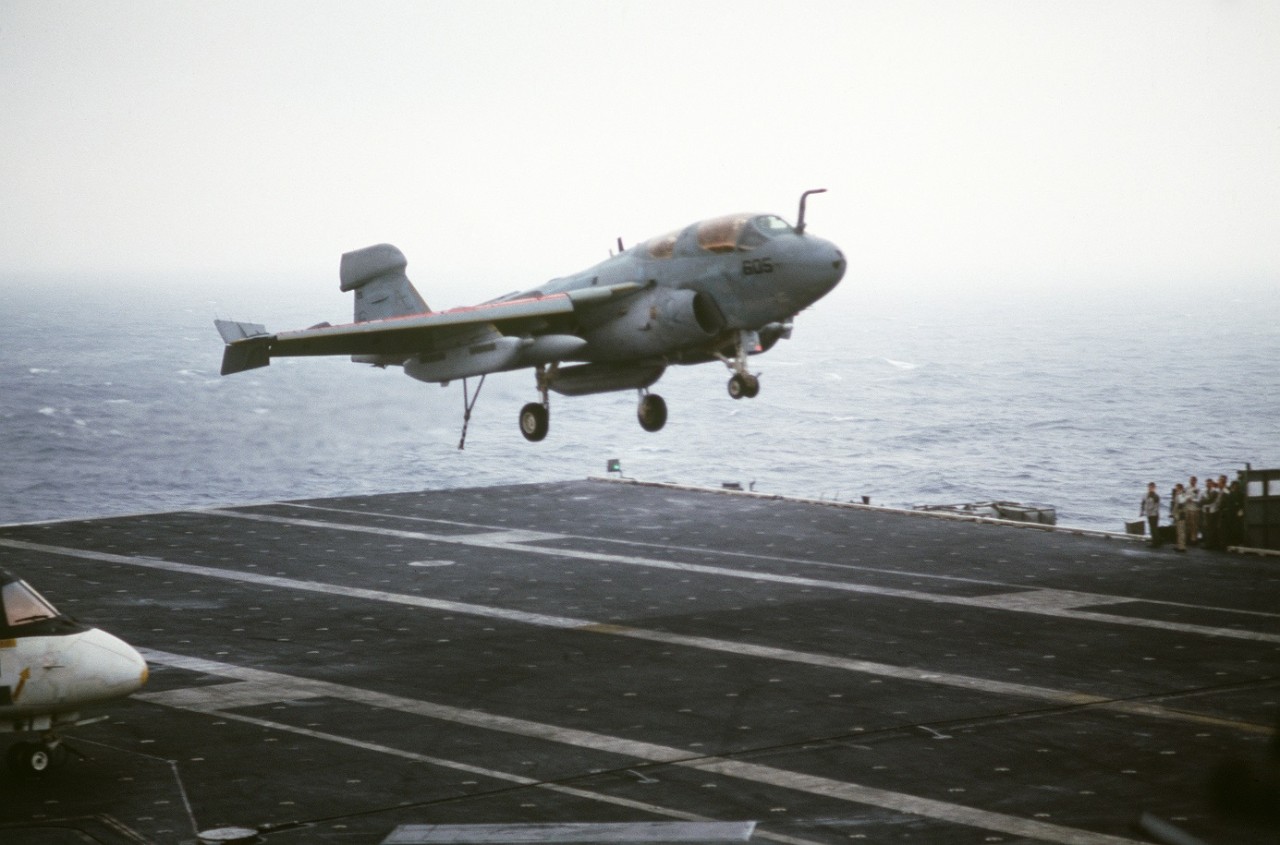
Upon the conclusion of Strong Express, John F. Kennedy proceeded to Norfolk, arriving on 6 October 1972. The next day, she went “cold iron” until 31 October. On 1 November, the ship conducted a fast cruise, then shifted to Portsmouth to begin eight weeks of restricted availability at Norfolk Naval Shipyard. During that yard period, that saw the rework of the catapult water brakes, repairs to weapons elevators, installation of modifications to enable the ship to handle the EA-6B, and the installation of four new salt water cooling pumps, among other items, the carrier also underwent a change of command when Captain John C. Dixon, Jr. relieved Captain Gormley on 30 November 1972.
Emerging from her overhaul on 5 January 1973, John F. Kennedy, earmarked to deploy to Southeast Asia, worked-up in the Virginia capes operating areas, but during her 8-17 February in-port period received word that, in the wake of the Paris peace accords, she would deploy to the Med in April instead of the western Pacific in March. The carrier then began her ORI with flight operations off the Virginia capes and down off the Florida coast, including operations against the Pinecastle, Florida, target range. On the first launch of the day on 17 February, a division of Intruders from VA-46 sank its quarry, ex-Meade (DD-602). Soon thereafter, the ship visited Mayport, Florida (20 February) before returning to Norfolk on 22 February. She remained in port until she participated in Exercise Exotic Dancer VI (28 March – 4 April).
John F. Kennedy departed Norfolk on 16 April 1973 and dropped anchor at Rota on 25 April, relieving Intrepid (CVS-11). The next day, she hosted Spanish Prince Juan Carlos and Princess Sophia, during which visit the 35-year old heir apparent to the Spanish throne commented upon not only the complexity of carrier operations, but the cleanliness of the ship in which he was embarked. CVW-1 performed an air show for the royal guests and then the ship got underway for the Strait of Gibraltar.
John F. Kennedy spent the next five months of 1973 operating with the Sixth Fleet, her port visits including Barcelona and Palma, Formia, Italy, Augusta Bay, Gaeta, Souda Bay, Rhodes, Athens, and Livorno. Her period of routine operations, exercises, and underway replenishments, was punctuated by the ship losing her 301-ton starboard anchor (and 180 fathoms of chain) at Cannes on 1 June. She regained it, with the help of the salvage vessel Opportune (ARS-41) a week later. At Palma on 2 September, John F. Kennedy’s fire and rescue detail extinguished an engine room fire on board a nearby yacht.
After transiting the Strait of Gibraltar on 22 September 1973, John F. Kennedy paused briefly at Rota (23-24 September), relieved by Franklin D. Roosevelt, before she got underway to proceed to the North Sea. Transiting the English Channel on 30 September, the carrier crossed the Arctic Circle on 4 October during NATO exercise Swift Move, a nine-day evolution that combined the efforts of more than 20,000 men, 34 ships, and 250 land and sea-based aircraft from Canada, the Netherlands, Norway, Denmark, the Federal Republic of Germany, the United Kingdom and the United States. Afterwards, on 10 October 1973, John F. Kennedy put in to Edinburgh, Scotland, where, the following day, a fire in a storeroom damaged steam pipe lagging and electrical wiring for her number three catapult – with all repairs completed by the ship’s force within 72 hours.
John F. Kennedy had originally been slated to return home after her three-day visit in Edinburgh, but another crisis in the Middle East reared its head when Egyptian and Syrian forces launched a surprise attack on Israel on 6 October 1973 in The Yom Kippur War. Accordingly, John F. Kennedy sailed from Edinburgh on 13 October in company with guided missile frigate Dale (DLG-19), guided missile destroyer Richard E. Byrd (DDG-23), and destroyer Sarsfield (DD-837), supported by the oiler Caloosahatchee (AO-98). The carrier and her consorts proceeded to a holding area 100 miles west of Gibraltar, to assume an alert position to respond to the crisis in the Middle East.
On 25 October 1973, the day after the completion of the program to fly A-4 Skyhawks to Israel, staging them through the Azores and Franklin D. Roosevelt (on station south of Sicily) John F. Kennedy (which had been earmarked to support those flights if required), received orders to rejoin the 6th Fleet, and entered the Mediterranean. The ship’s entering the Med reflected the middle-level alert ordered for U.S. forces world-wide after the Soviet Union reportedly planned a unilateral move of troops into the Middle East to monitor the shaky cease-fire that had taken effect in the wake of the most recent conflict between Israel and her neighbors. John F. Kennedy prepared contingency weapons loads on 27 October.
Held by NeuraWeb Global Inc. and kept permanently. Her association may claim this record and maintain it.