USS Essex
Commissioned 31 December 1942 · Decommissioned 30 June 1969 · 17 battle stars
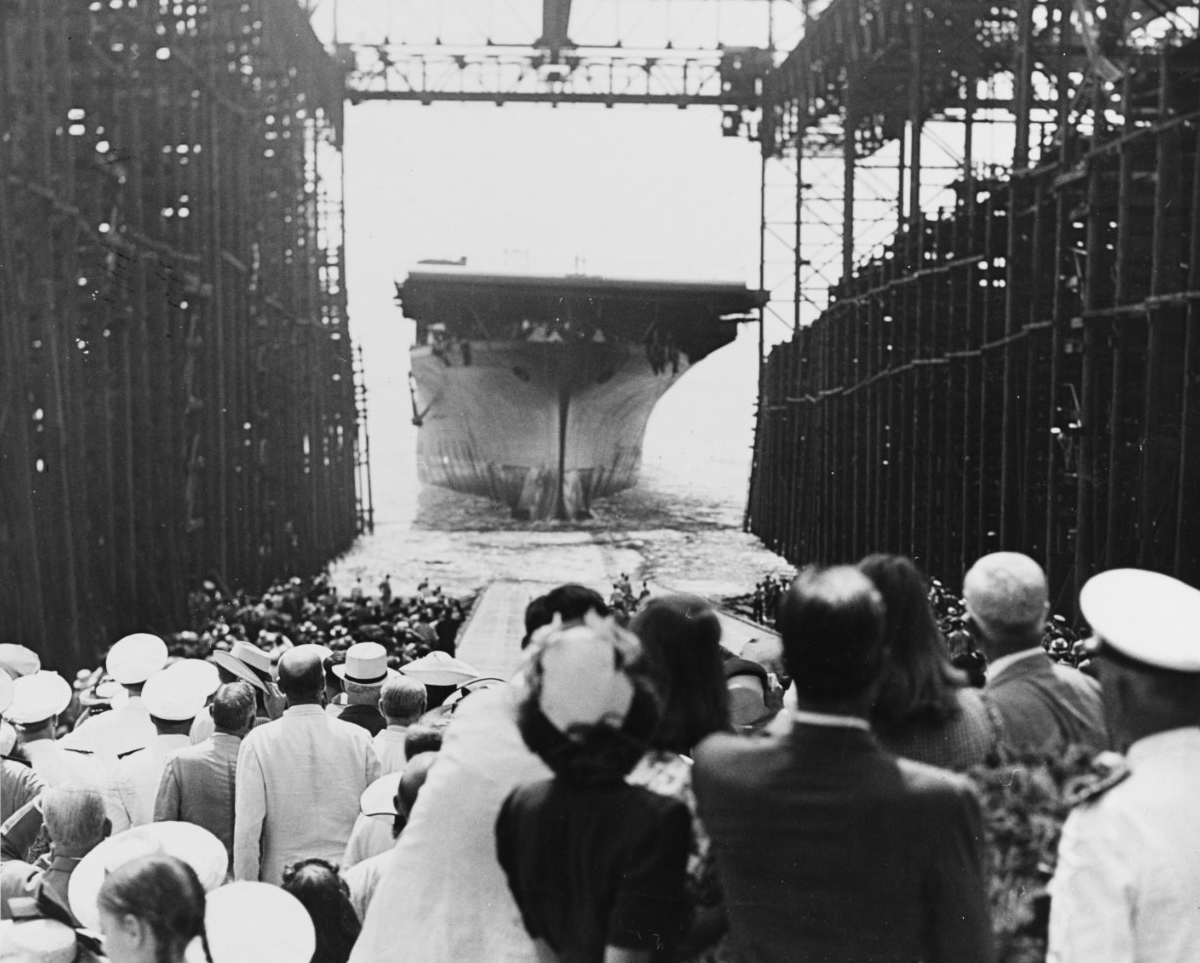
- 31 July 1942 Launched 31 July 1942 USS Essex (CV-9) launched at the Newport News Shipbuilding and Dry Dock Company, Virginia, 31 July 1942.
- 31 December 1942 Commissioned 31 December 1942 USS Essex (CV-9), lead aircraft carrier of her class, was commissioned on 31 December 1942 with Captain Donald B.
- 30 June 1969 Decommissioned 30 June 1969 Essex was decommissioned on 30 June 1969 at the Boston Navy Yard.
- Battle stars 13 battle stars for her World War II service Essex received the Presidential Unit Citation, and 13 battle stars for her World War II service.
- Campaign World War II Essex received the Presidential Unit Citation, and 13 battle stars for her World War II service.
- Battle stars four battle stars and the Navy Unit Commendation for her gallant service during the Korean War
- Campaign Korean War She also received four battle stars and the Navy Unit Commendation for her gallant service during the Korean War.
- Decoration Presidential Unit Citation Essex received the Presidential Unit Citation, and 13 battle stars for her World War II service.
- Decoration Navy Unit Commendation She also received four battle stars and the Navy Unit Commendation for her gallant service during the Korean War.
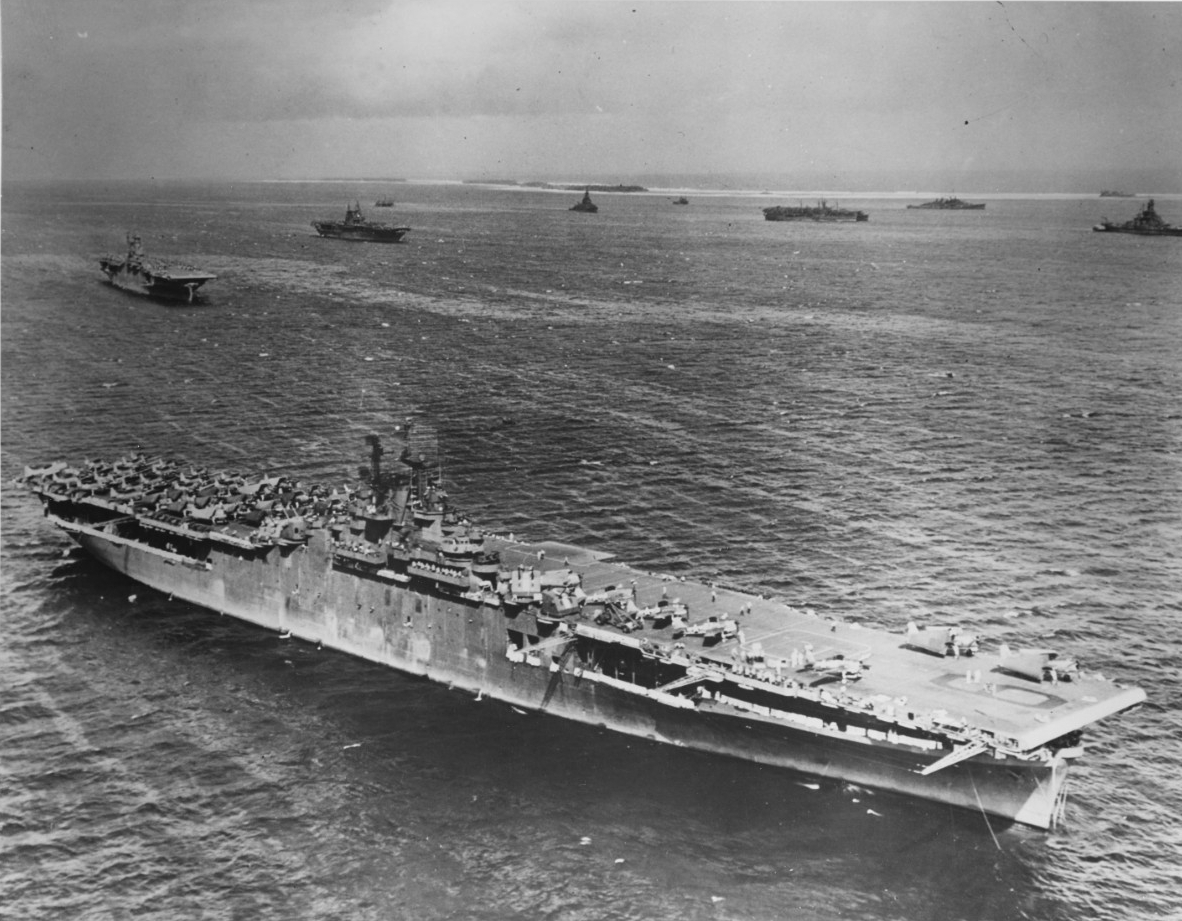
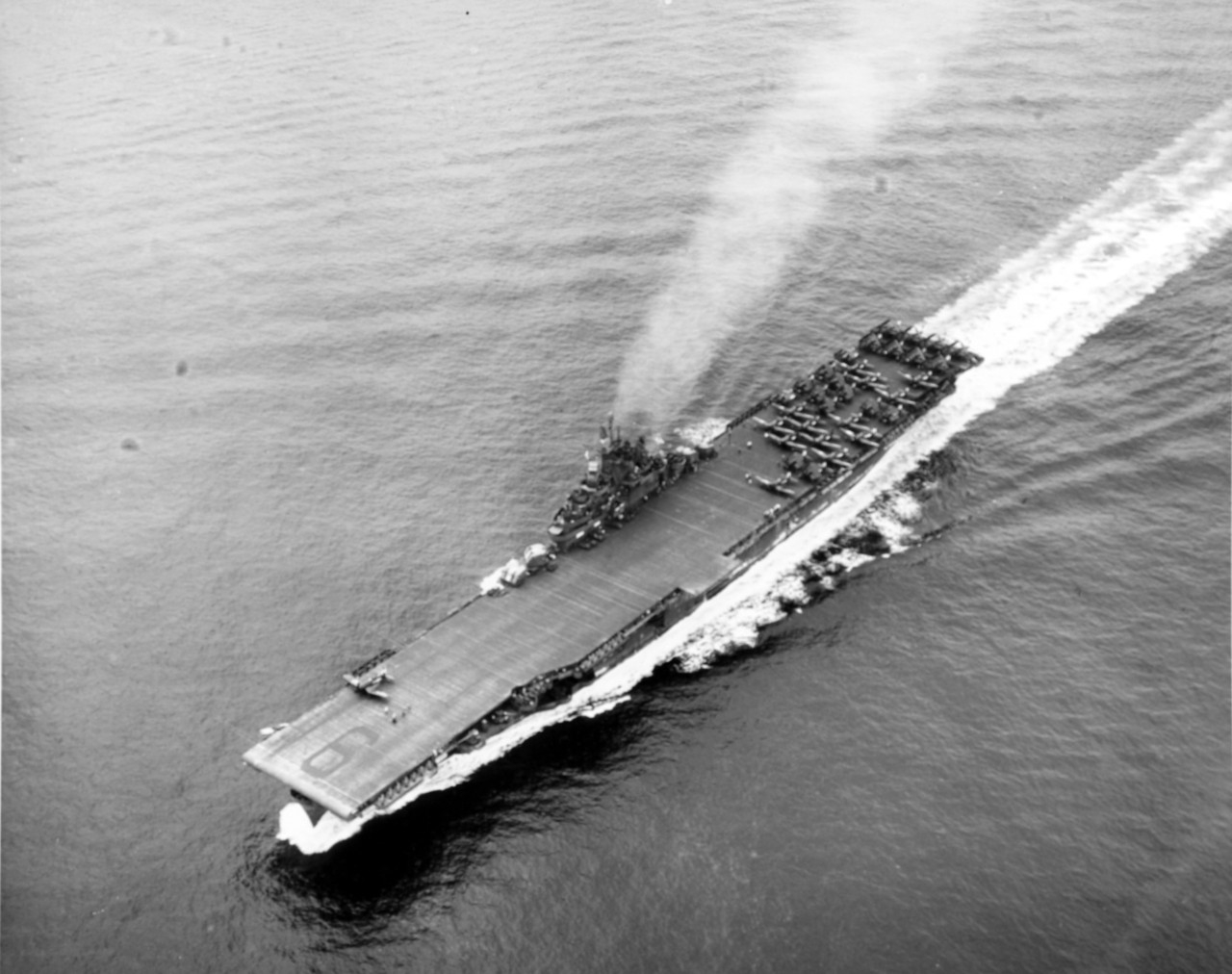
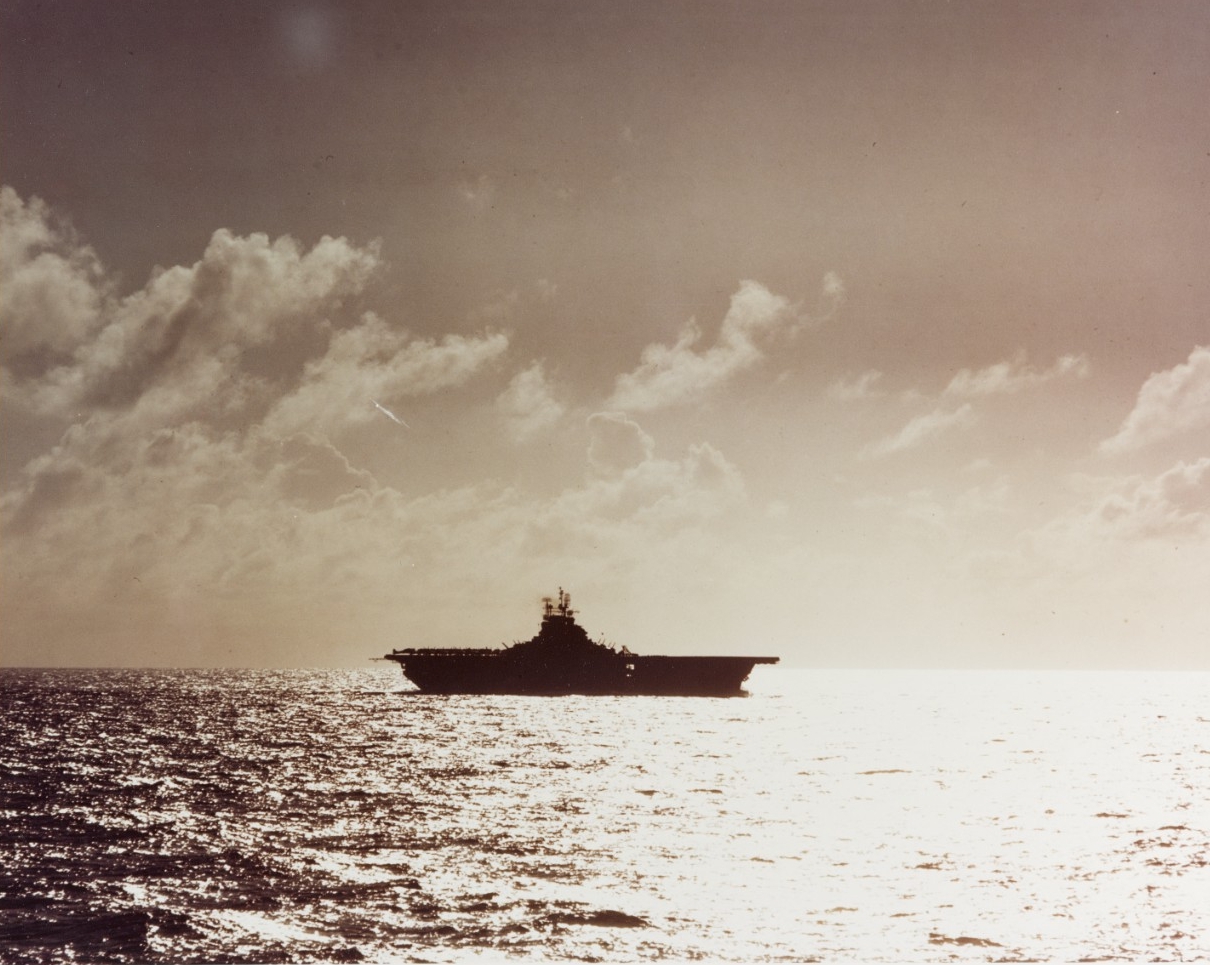
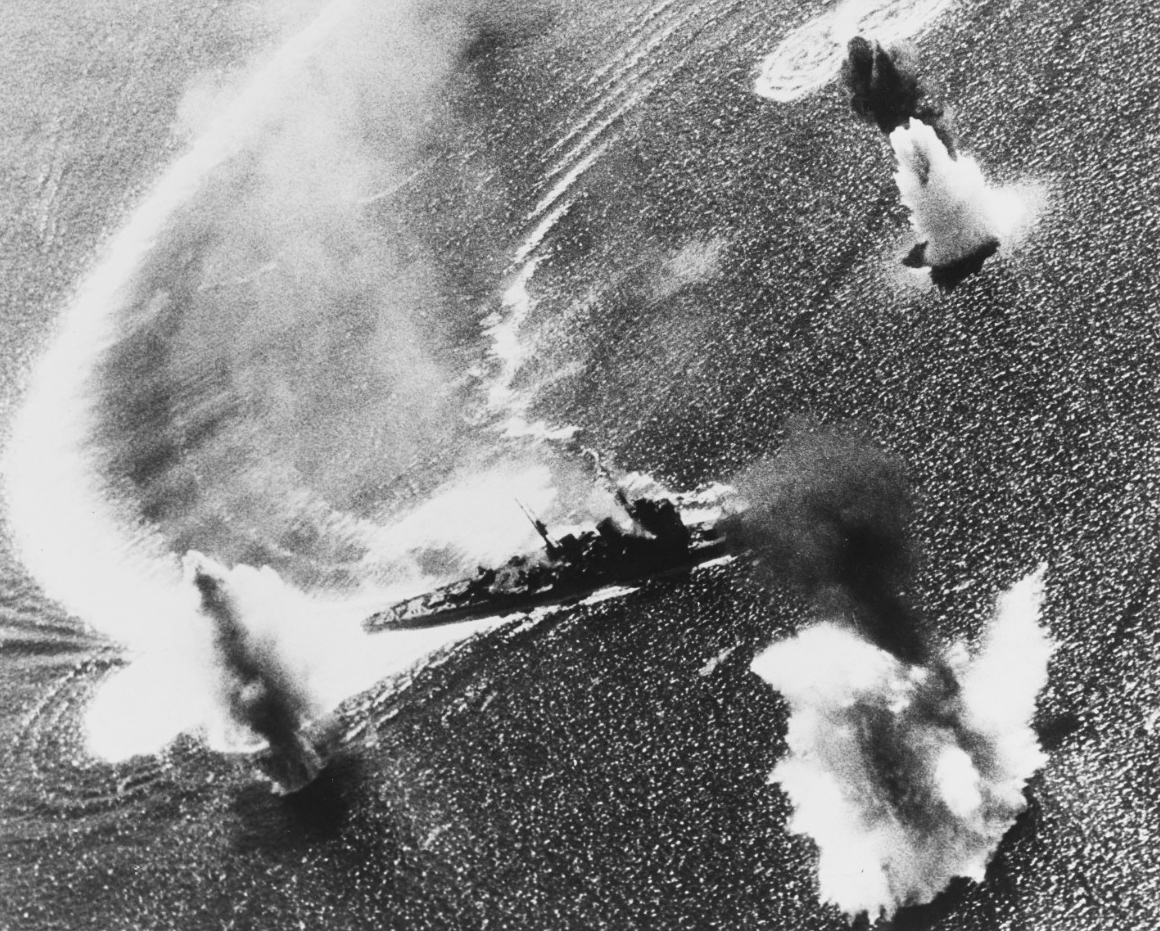
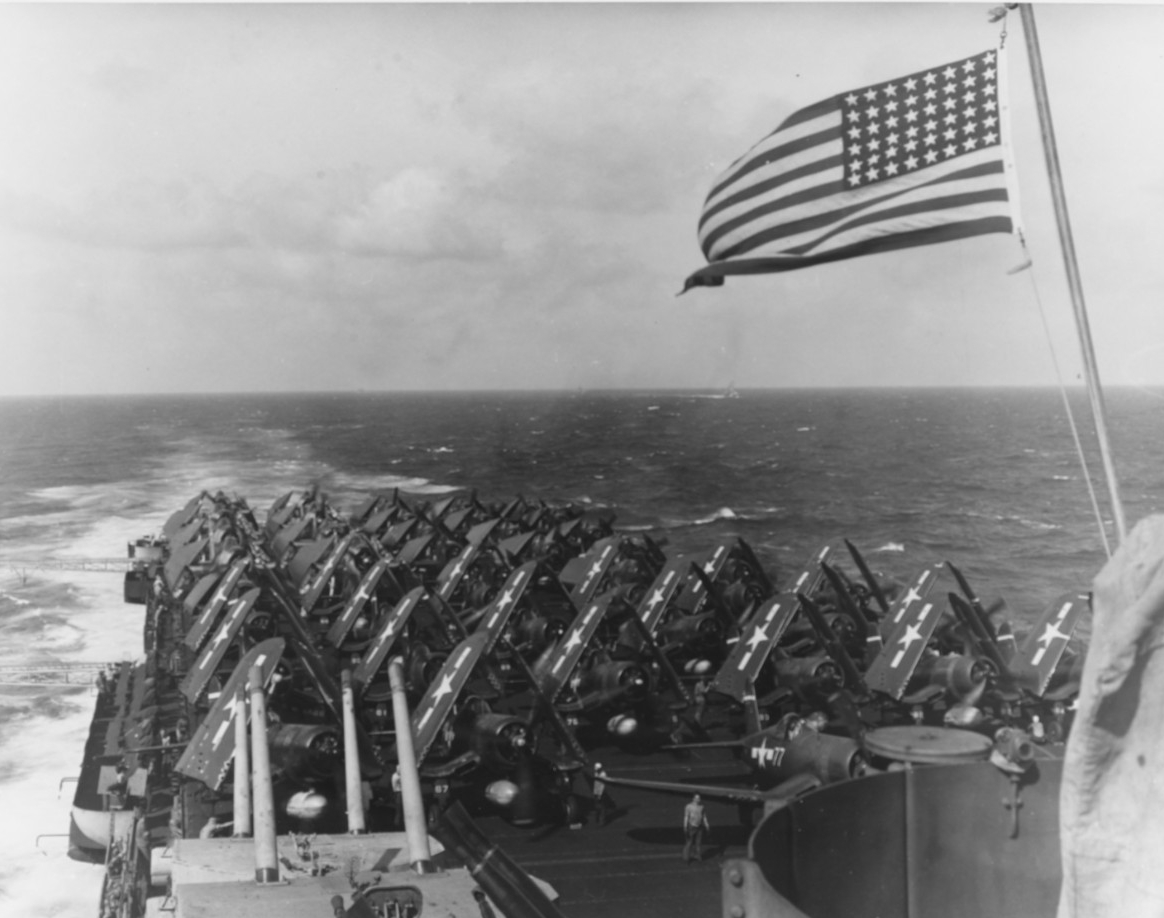
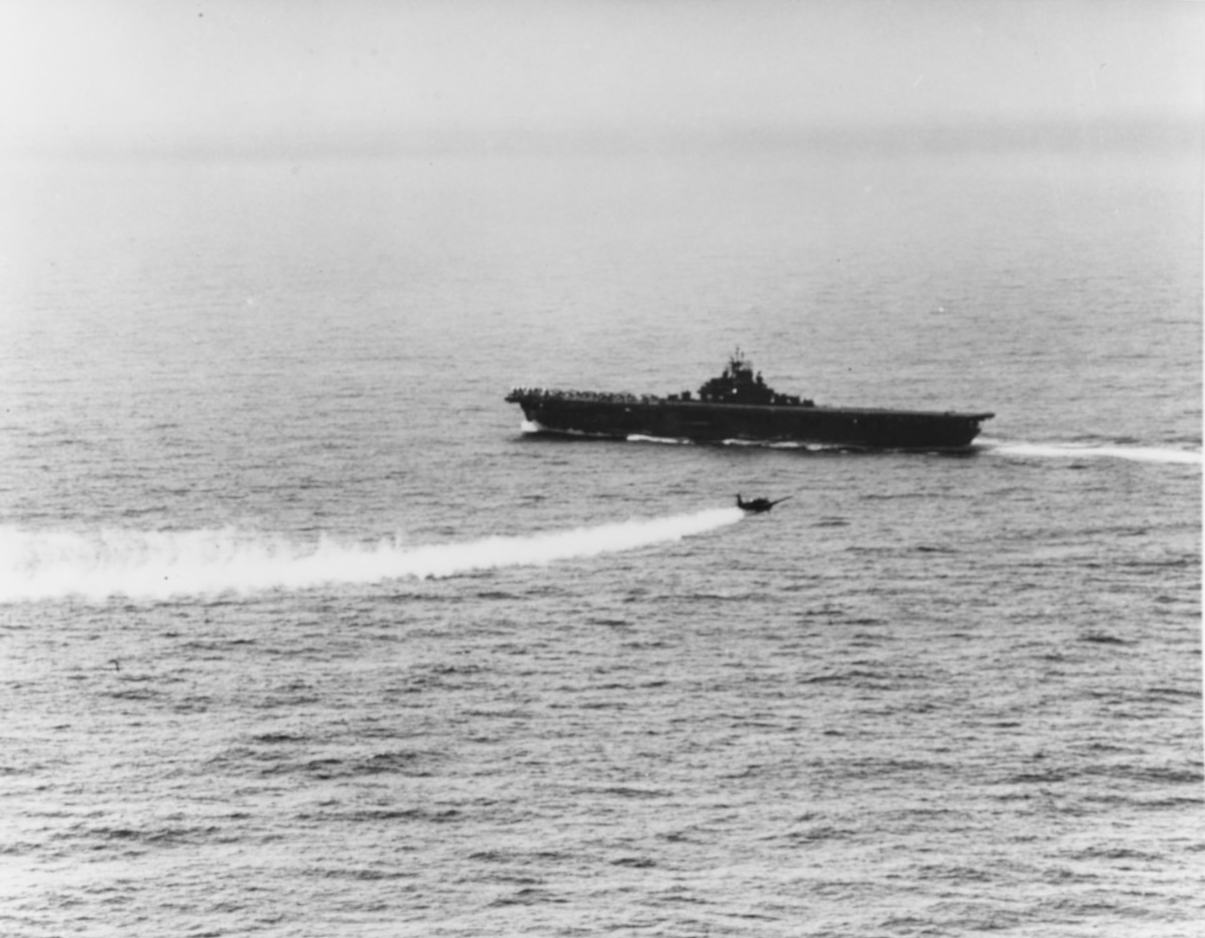
USS Essex (CV-9), lead aircraft carrier of her class, was commissioned on 31 December 1942 with Captain Donald B. Duncan in command. Following an accelerated shakedown cruise, Essex steamed for the Pacific in May 1943. On 31 August, Essex was designated flagship of Task Force 14, and on 5–6 October, her aircraft attacked Wake Island as part of Allied carrier operations in the Pacific. Later, 18–23 November, as lead ship of Task Group 50.3, Essex launched an attack against the Gilbert Islands, where she also took part in her first amphibious assault— the landings on Tarawa. On 4 December, the task group attacked Kwajalein, and from 29 January–2 February 1944, Essex conducted a second amphibious assault against enemy forces in the Marshalls. Essex, in TG 58.2, joined TG 58.1 and 58.3, to constitute the most formidable Allied carrier striking force to date when they launched a massive attack against Truk on 17–18 February during which eight Japanese ships were sunk. While en route to the Marianas to sever Japanese supply lines, the “Fast Carrier Task Force” was detected, and they endured a prolonged aerial attack, which was eventually repelled. They then continued with the scheduled attack on Saipan, Tinian and Guam later that month. After the operations, Essex steamed to San Francisco where she underwent her first and only overhaul of the war.
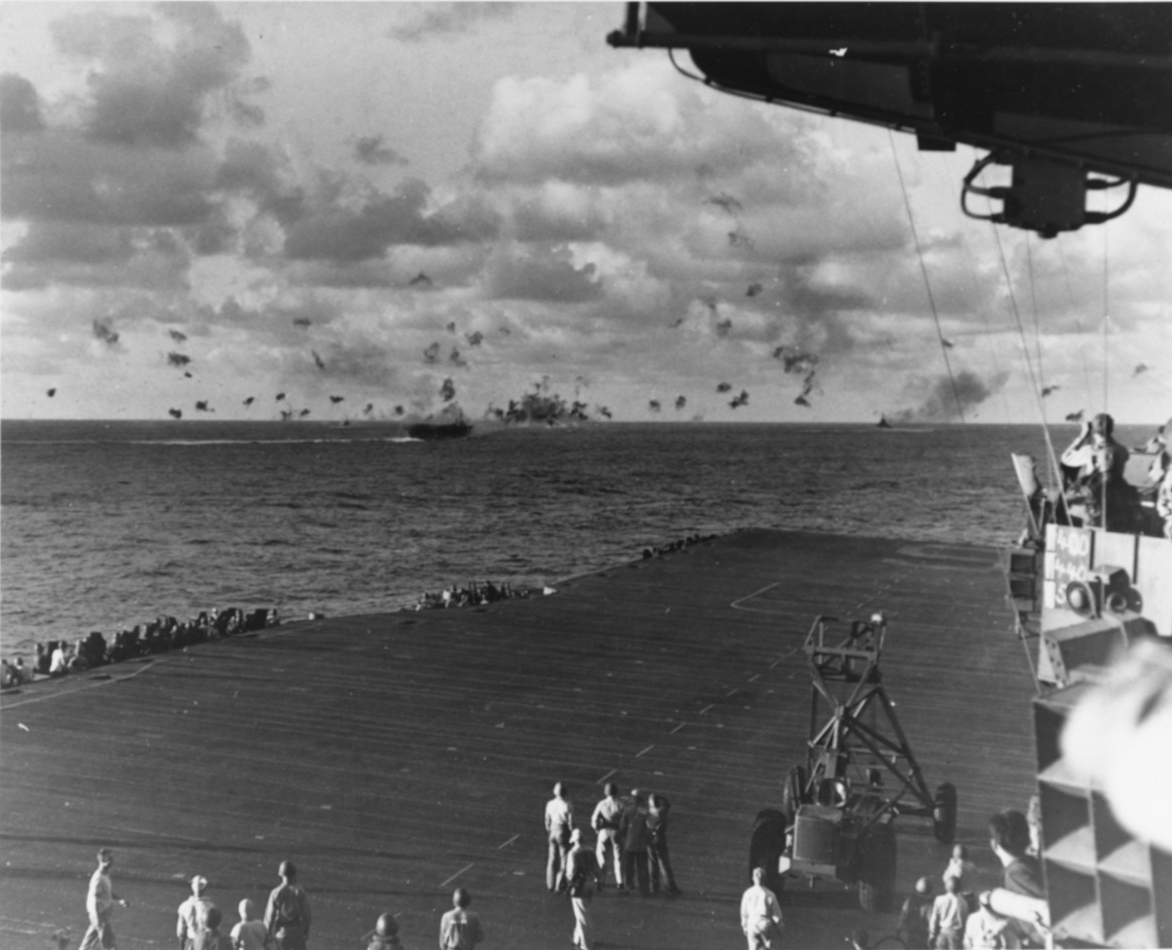
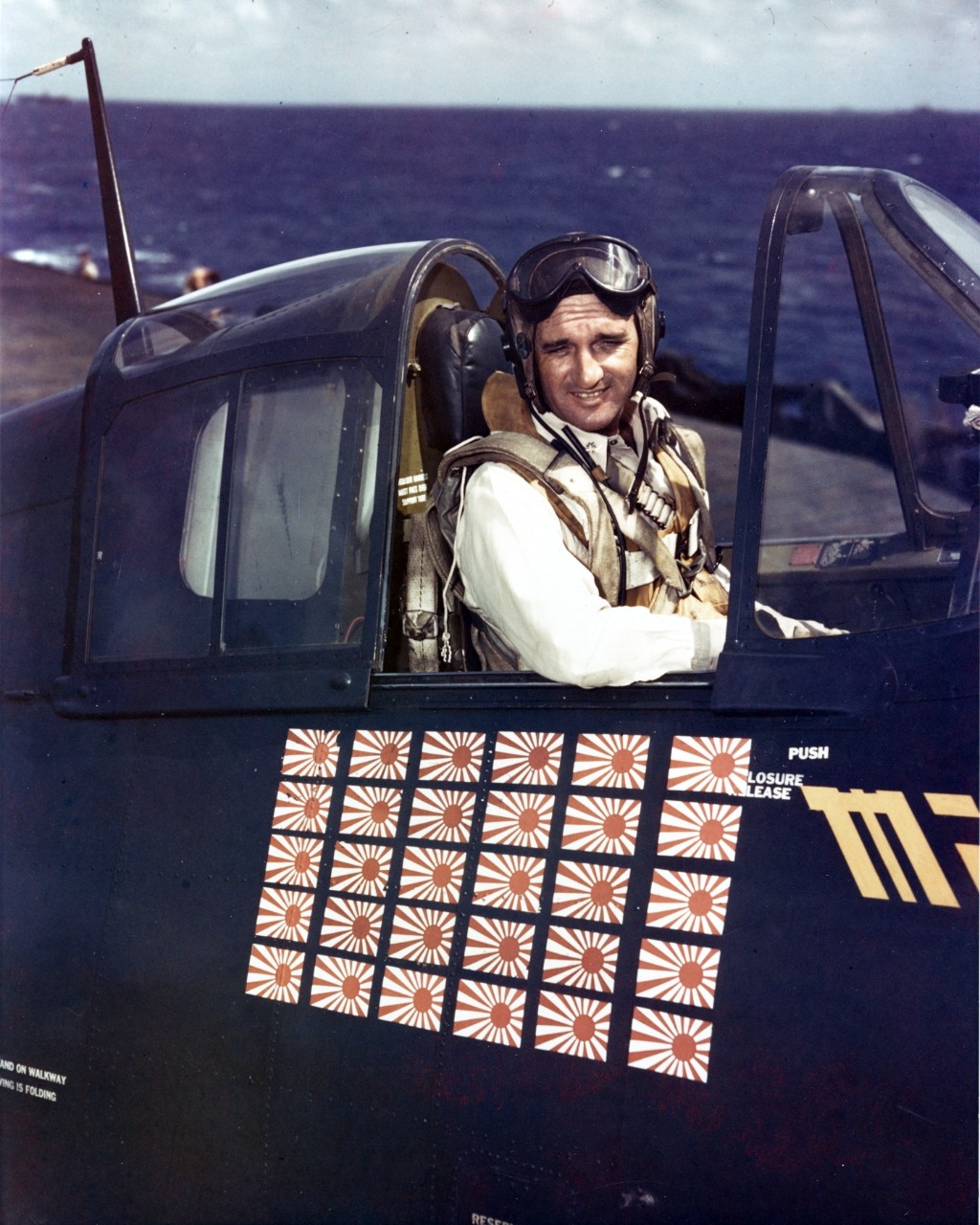
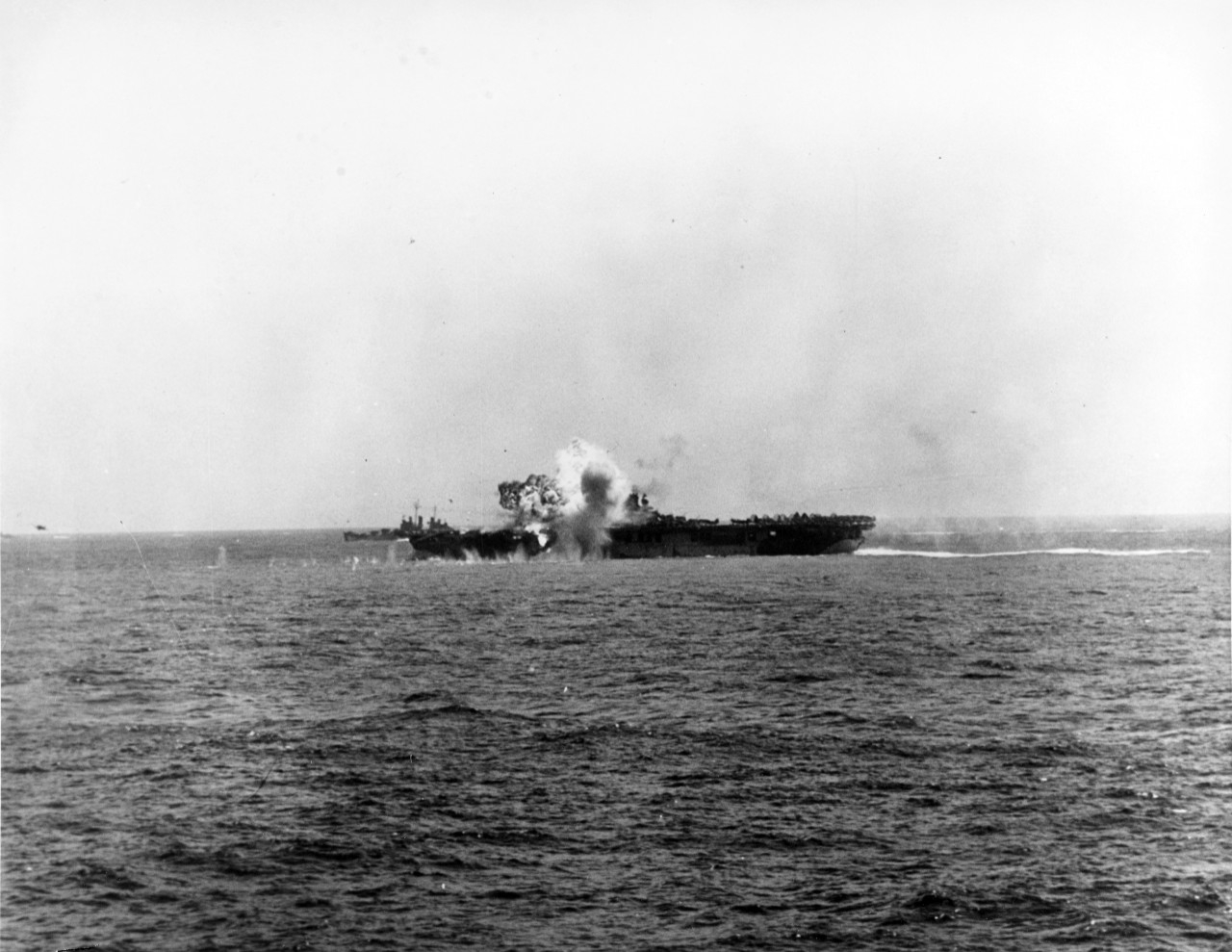
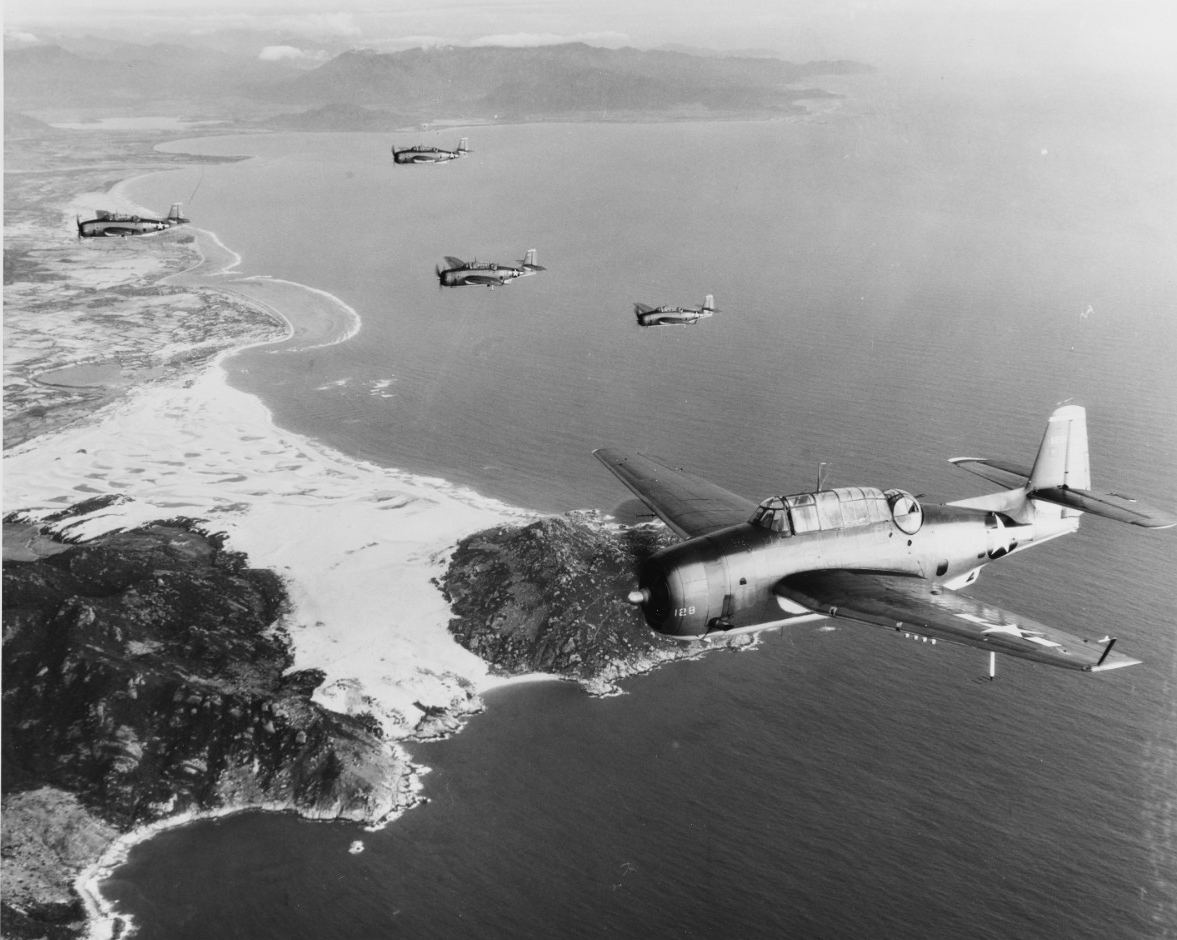
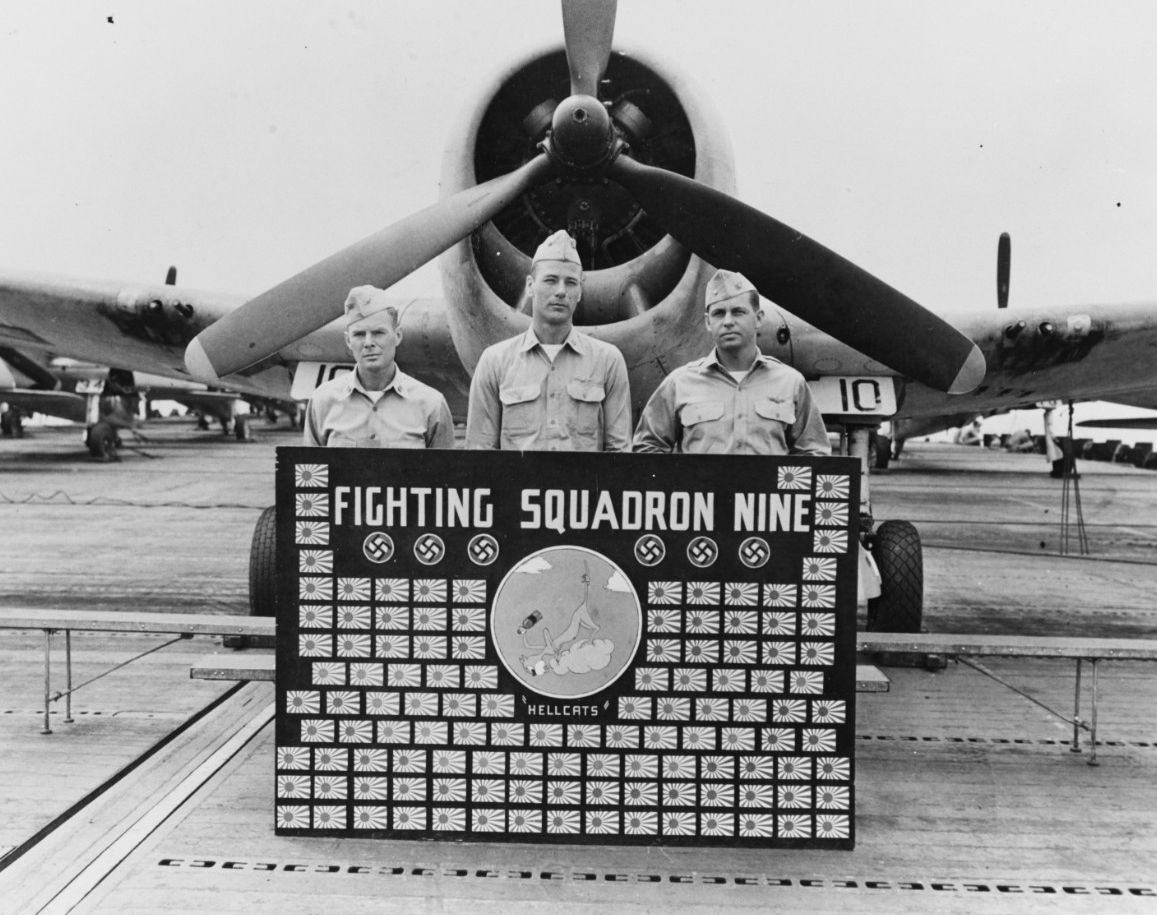
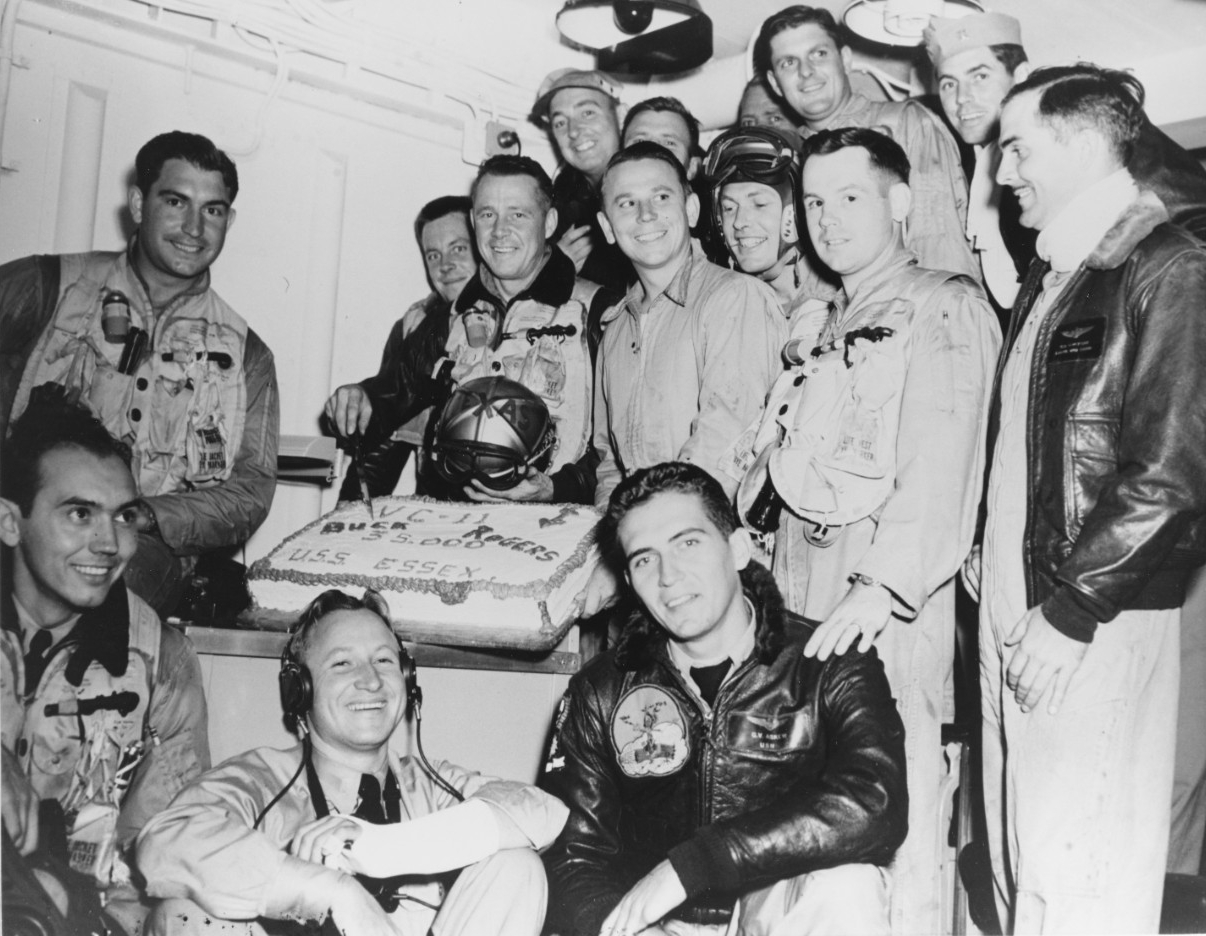
Following work on the ship, Essex became the carrier for Air Group Fifteen lead by Commander David McCampbell. She then joined carriers USS Wasp (CV-18) and USS San Jacinto (CVL-30) for strikes against Marcus Island and Wake in late May 1944. Essex then deployed with TF 58 to support the occupation of the Marianas from 12 June–10 August, then sortied with TG 38.3 to lead an attack on the Palau Islands and Mindanao in early September. She remained in the area of operations to support the landings on Peleliu before weathering a typhoon on 2 October. For the remainder of 1944, Essex participated in strikes against Okinawa and Formosa before taking part in the Battle of Leyte Gulf (24–25 October). She continued to hunt enemy fleet units for the rest of the month before she steamed to Ulithi, Caroline Islands, for replenishment. Afterwards, Essex resumed offensive operations with attacks on Manila and the northern Philippine Islands during the month of November. On 25 November, a kamikaze hit the port edge of her flight deck landing that caused extensive damage, killing 15 and wounding 44. Following expedited repairs, Essex joined 3rd Fleet off Luzon to support the occupation of Mindoro on 14–16 December, then endured a second typhoon two days later. With TG 38.3, Essex participated in the Lingayen Gulf operation, launching strikes against Formosa, Sakishima, Okinawa, and Luzon. Entering the South China Sea in search of the enemy, the task force pounded Japanese shipping and conducted strikes on Formosa, the China coast, Hainan, and Hong Kong. Essex withstood the onslaught of a third typhoon in just four months (20–21 January 1945) before striking again at Formosa, Miyakp Shima, and Okinawa later that month.
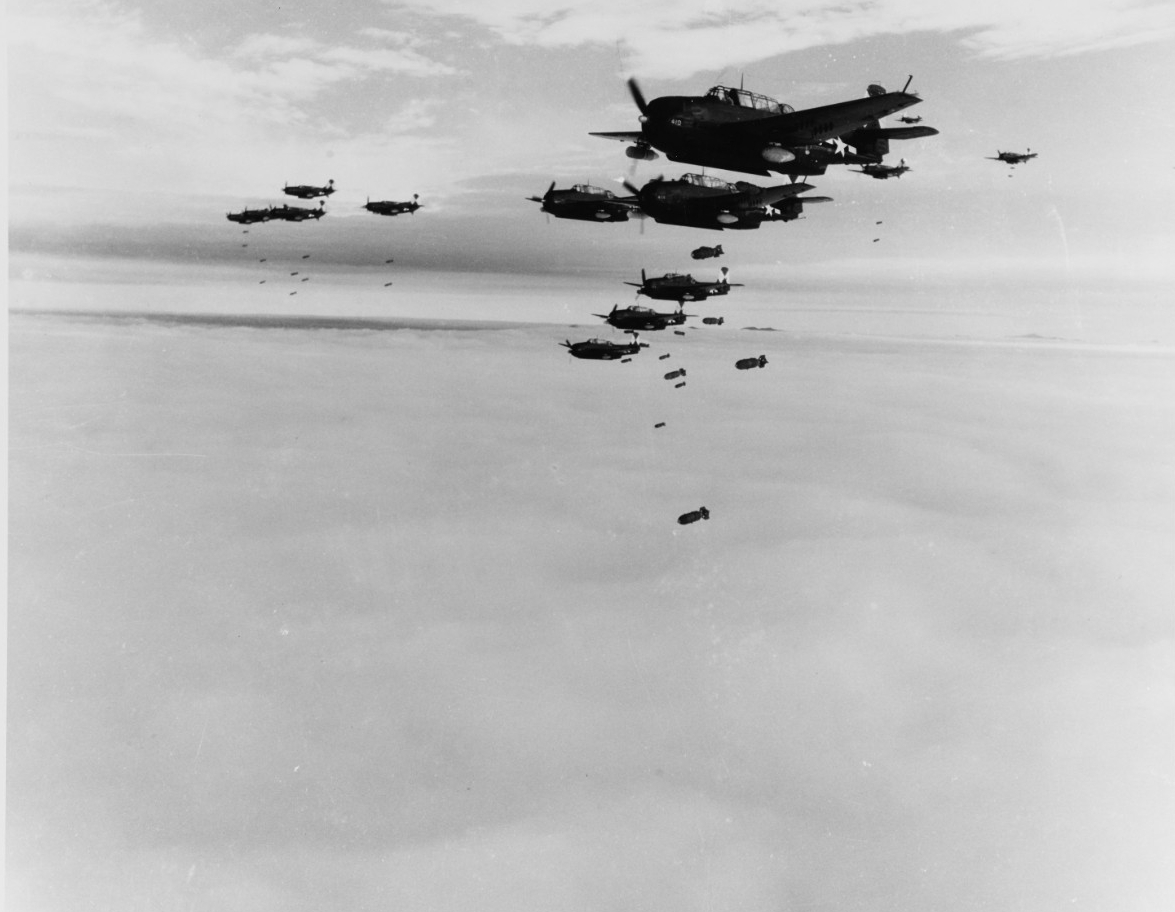
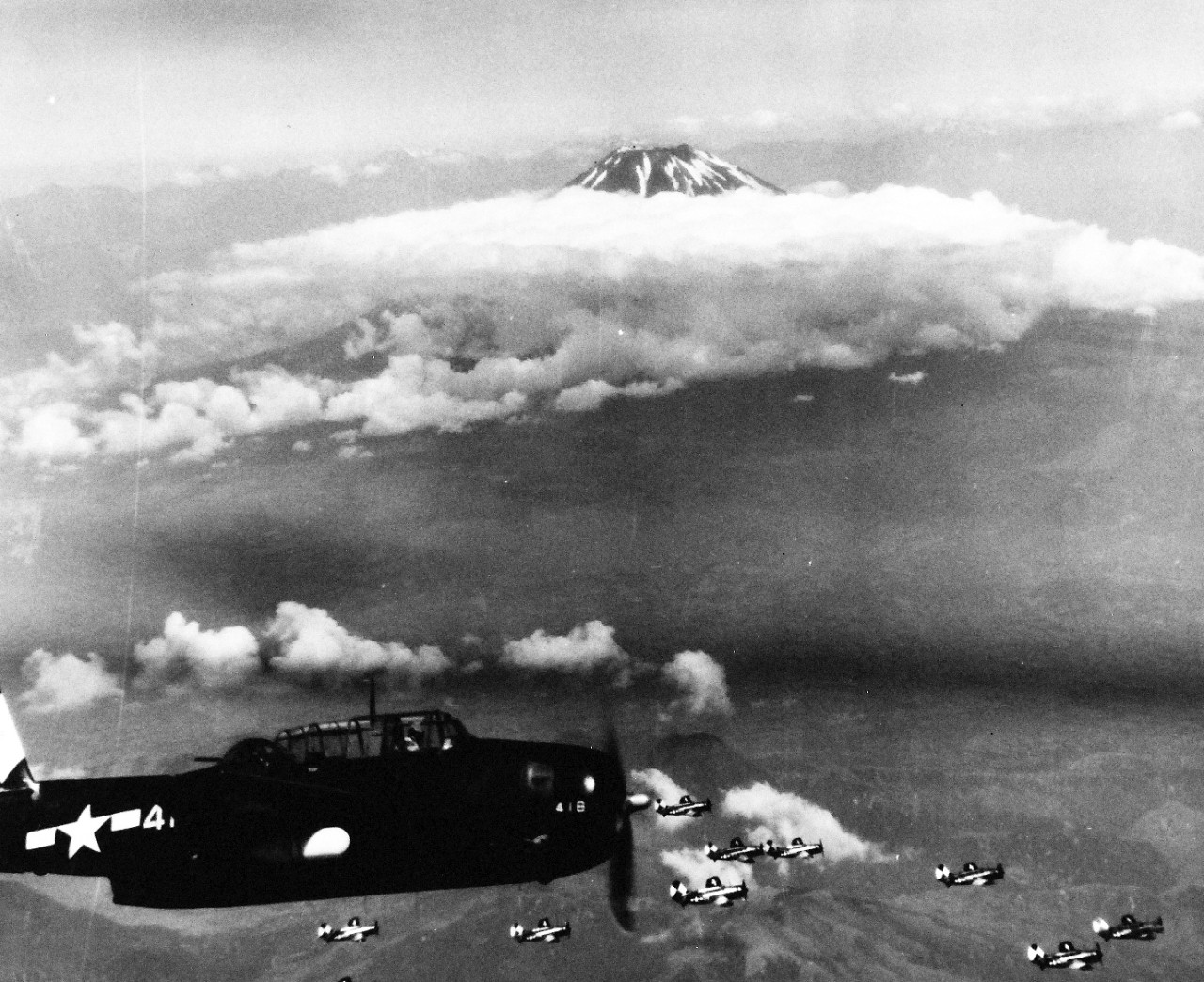
For the remainder of the war, Essex operated with TF 58 with strikes against Tokyo in February to neutralize the enemy’s airpower and to cripple their aircraft manufacturing industry in preparation for the pivotal Battle of Iwo Jima. She later sent multiple support missions to the hard fought battle on the island. From 23 March–28 May, Essex was heavily engaged in the Battle of Okinawa, and in the final days of the war, she took part in the final raids against the Japanese home islands (10 July–15 August). Following Japan’s surrender, she continued defensive combat air patrols until 3 September when she was ordered to Bremerton, Washington, for inactivation. On 9 January 1947, she was placed out of commission in reserve.
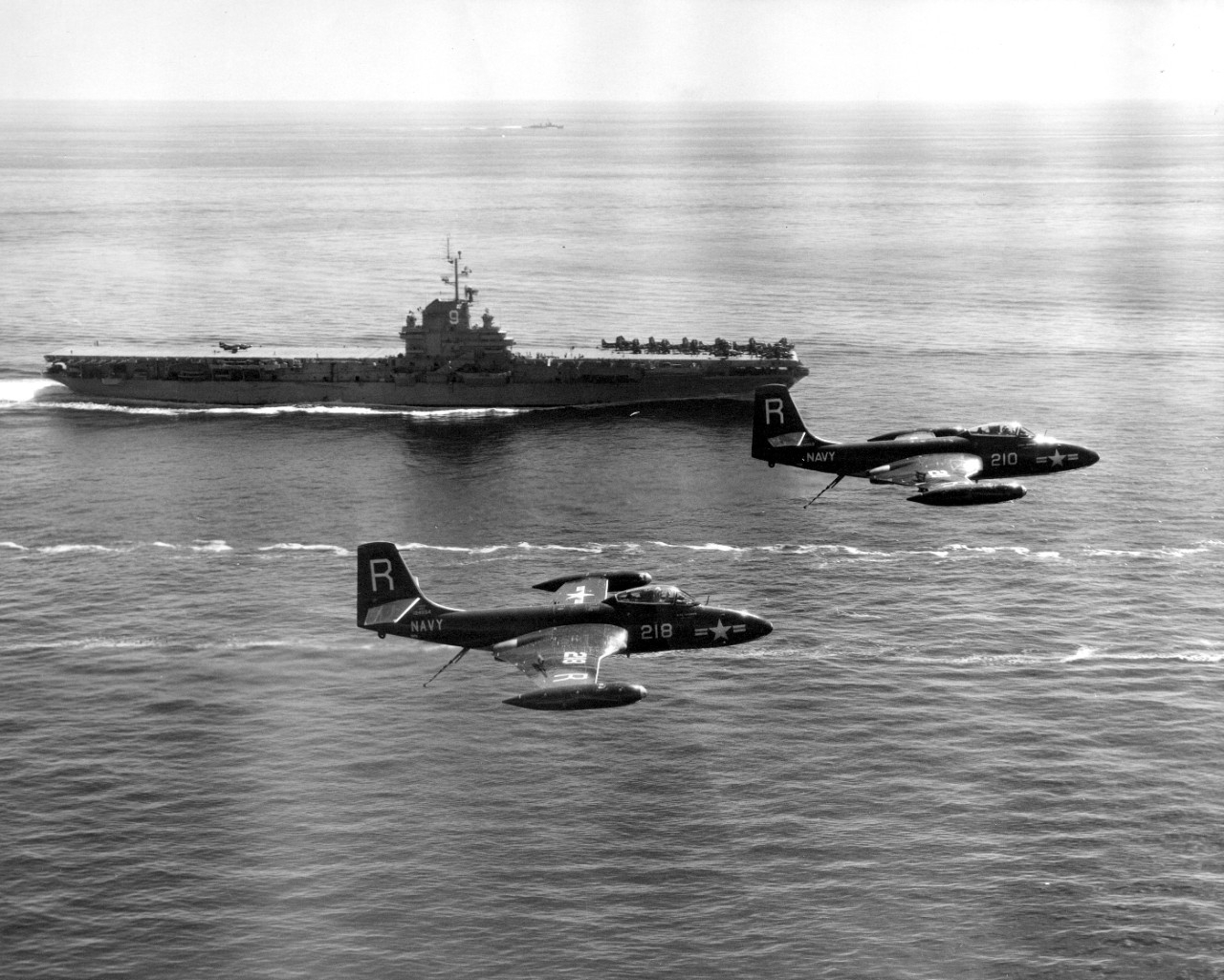
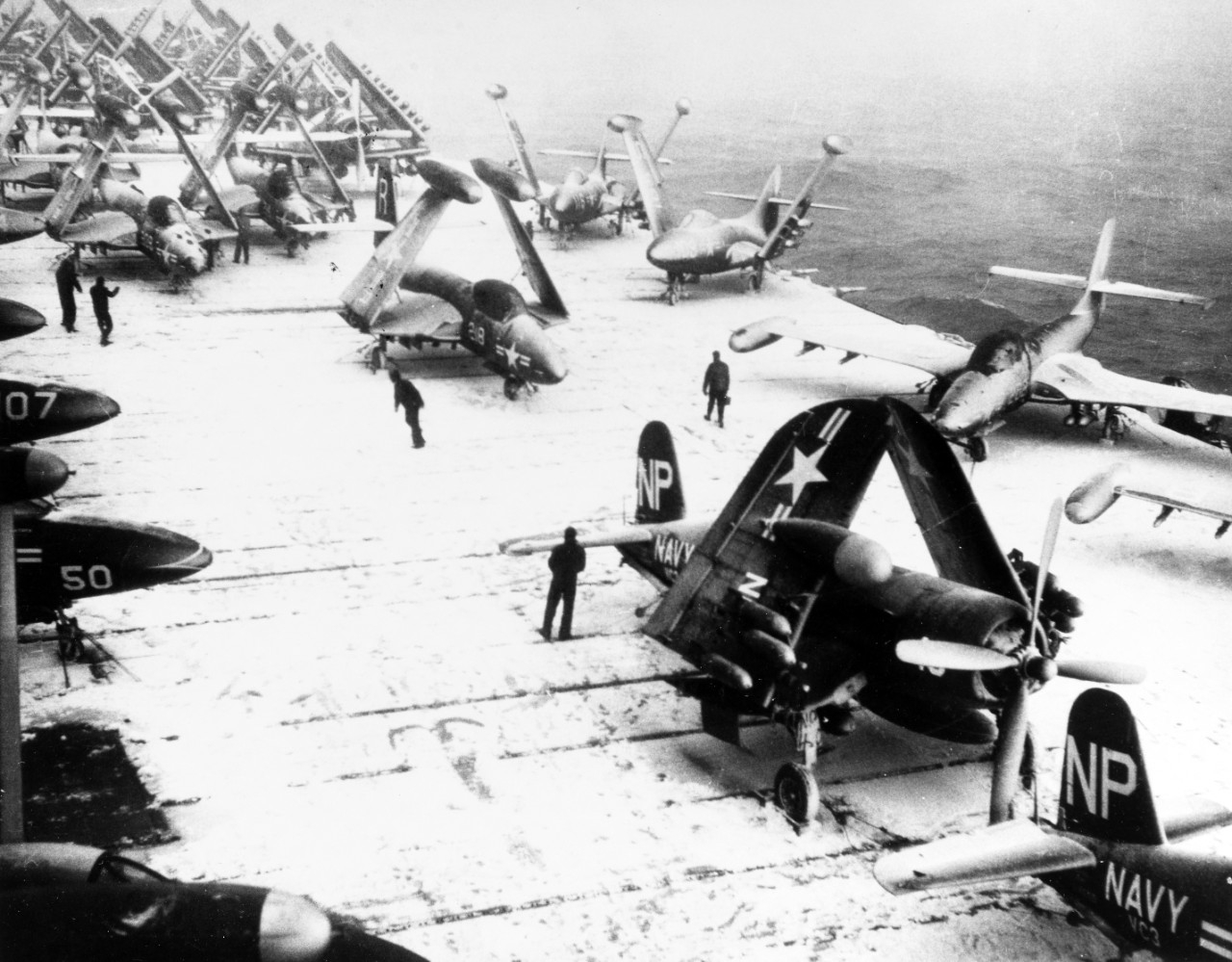
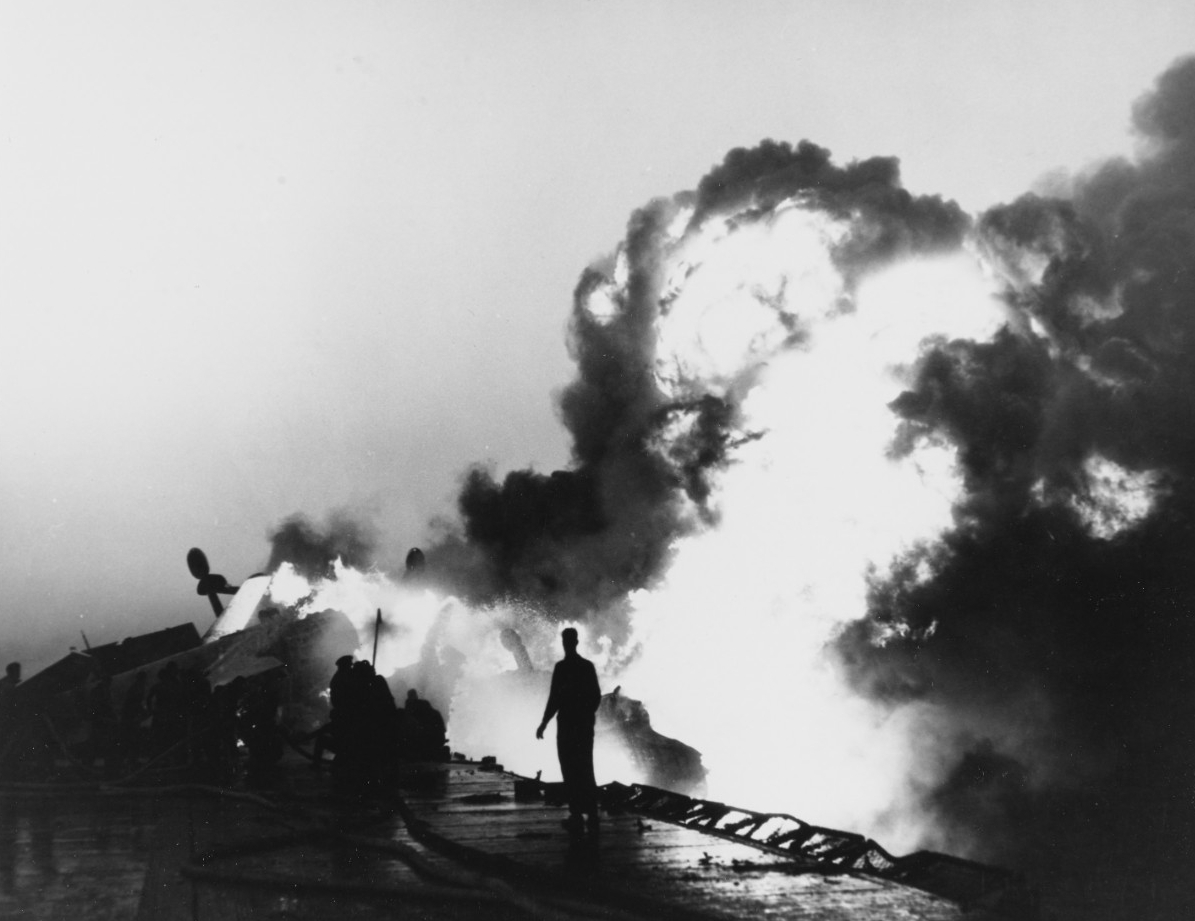
On 15 January 1951, after receiving a new flight deck and a streamlined superstructure, Essex was recommissioned with Captain A.W. Wheelock in command. After serving briefly in Hawaiian waters, Essex began the first of her three tours in Far Eastern waters in support of the Korean War. Essex served as flagship for Carrier Division 1 and TF 77. She was the first carrier to launch F2H Banshee twin-jet fighters on combat missions. On 16 September 1951, one of the Banshees—damaged in combat—crashed into aircraft parked on the forward flight deck of Essex causing an explosion and fire that killed seven. After repairs at Yokosuka, she returned to front-line action on 3 October to launch strikes up to the Yalu River and provide close air support for UN troops on the ground. On 1 October 1952, Essex was reclassified as an attack aircraft carrier (CVA-9). On her final deployment of the war that began in late 1953, Essex sailed the China Sea, and from November 1954–June 1955, engaged in training exercises, operated for several months with 7th Fleet, assisted in the Tachen Islands evacuation, and engaged in air operations and fleet maneuvers off Okinawa.
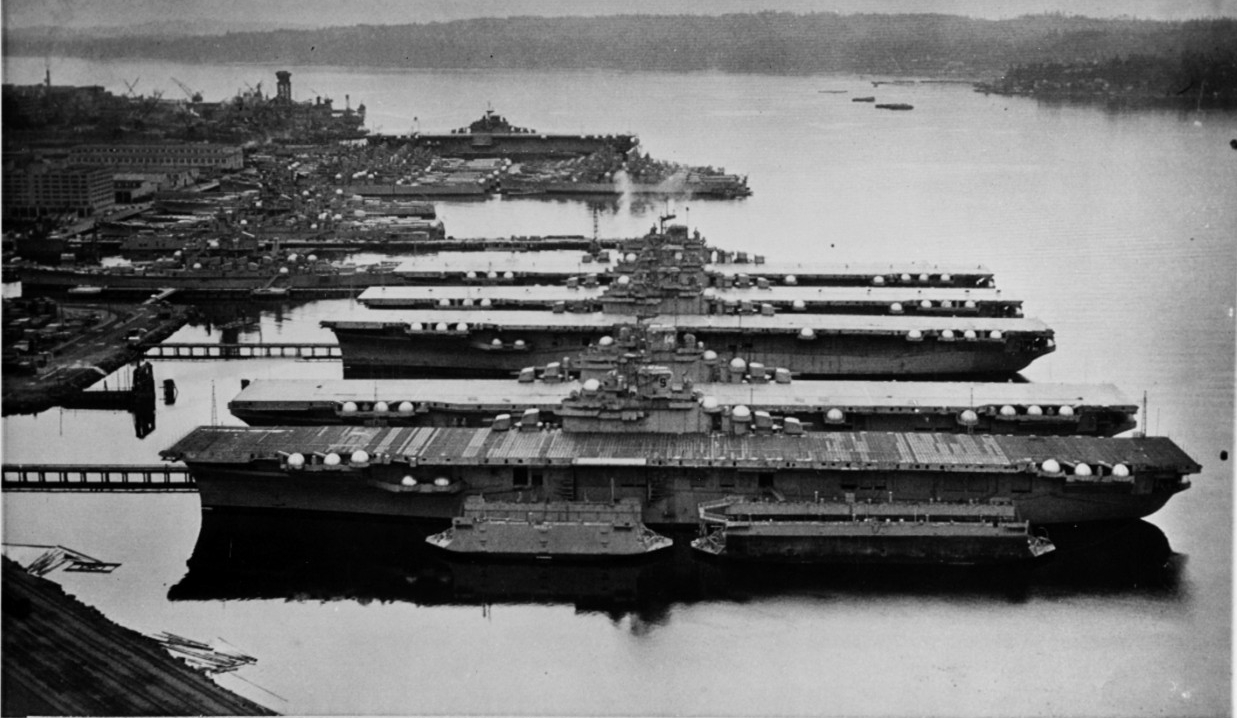
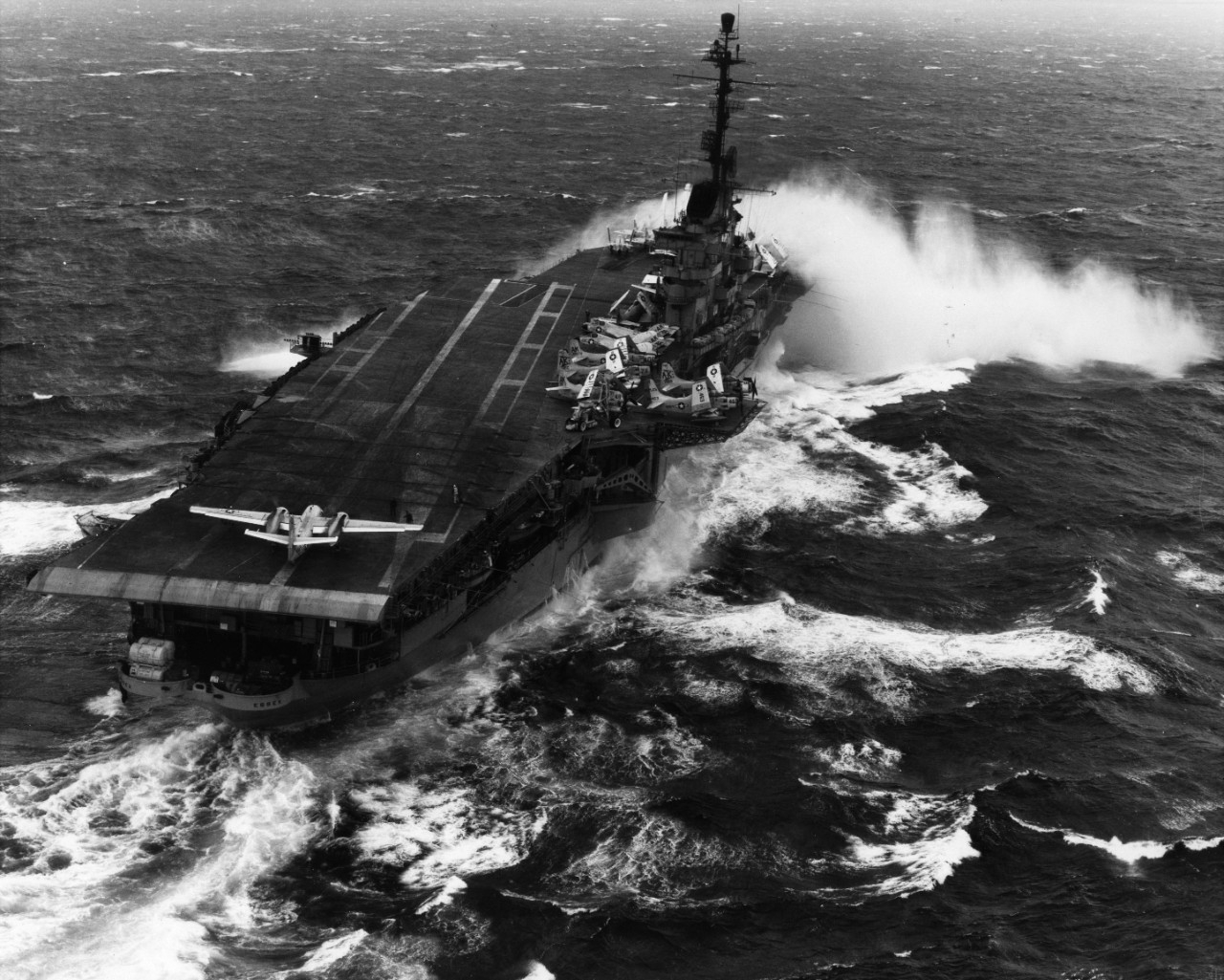
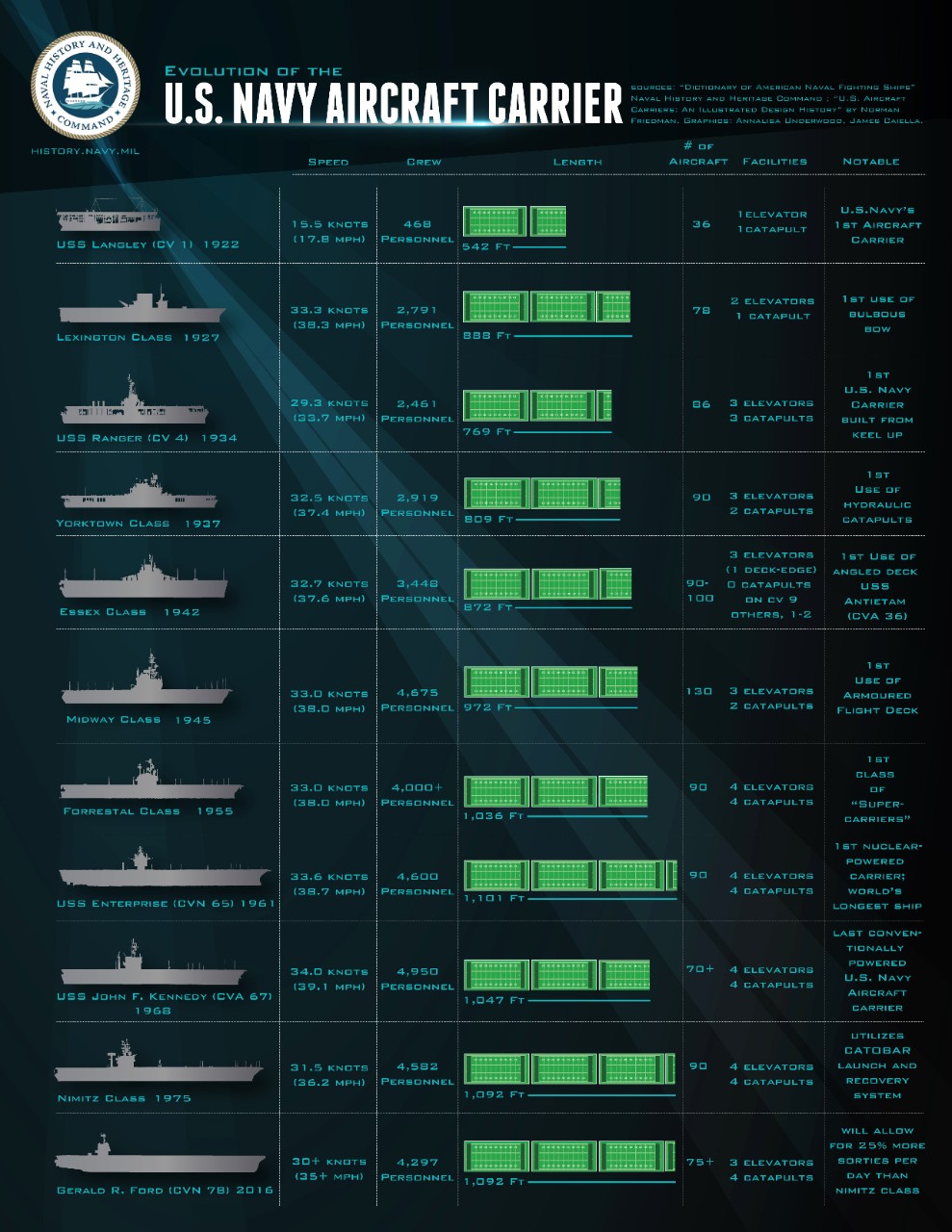
In July 1955, Essex entered the Puget Sound Naval Shipyard for extensive alterations and repairs that included the installation of an angled flight deck. With modernization complete, Essex joined the Pacific Fleet in March 1956. For the next 14 months, she operated off the U.S. west coast except for a six-month cruise with 7th Fleet in the Far East. On 21 June 1957, Essex was ordered to the Atlantic Fleet for the first time in her long, illustrious career. Later that year, she participated as an antisubmarine carrier in the NATO exercises, “Strike Back,” and in February 1958, deployed with 6th Fleet until May when she shifted to the eastern Mediterranean. On 14 July 1958, she steamed to the Middle East in support of the U.S. peace force in Beirut, Lebanon, where she launched reconnaissance and patrol missions until 20 August.
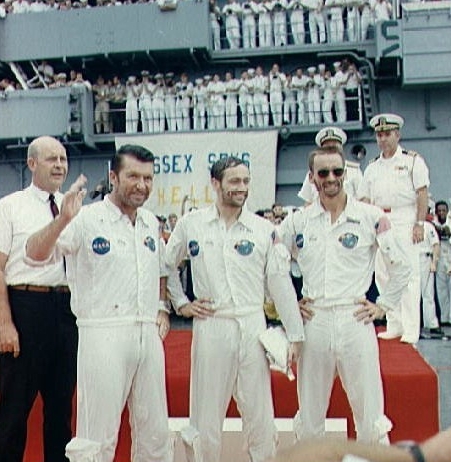
During the fall of 1959, Essex joined 2nd Fleet in the Atlantic for exercises in the Mediterranean. Later that year, she aided victims of a disastrous flood in Frejus, France. In the spring of 1960, she was converted to an antisubmarine warfare support aircraft carrier (CVS-9). Essex participated in several exercises with NATO and the French navy during this time. In the fall of 1962, she participated in the naval quarantine of Cuba during the Cuban Missile Crisis. Essex later was the prime recovery carrier for the Apollo 7 space mission. Essex was decommissioned on 30 June 1969 at the Boston Navy Yard.
Essex received the Presidential Unit Citation, and 13 battle stars for her World War II service. She also received four battle stars and the Navy Unit Commendation for her gallant service during the Korean War.
Interviews with USS Essex (CV-9) Crewmembers
Held by NeuraWeb Global Inc. and kept permanently. Her association may claim this record and maintain it.