Navy · CVAN-65 · Enterprise class
USS Enterprise
Commissioned 25 November 1961 · 37 honoured here served aboard her
They served aboard her
Commissioned 25 November 1961 · 37 honoured here served aboard her
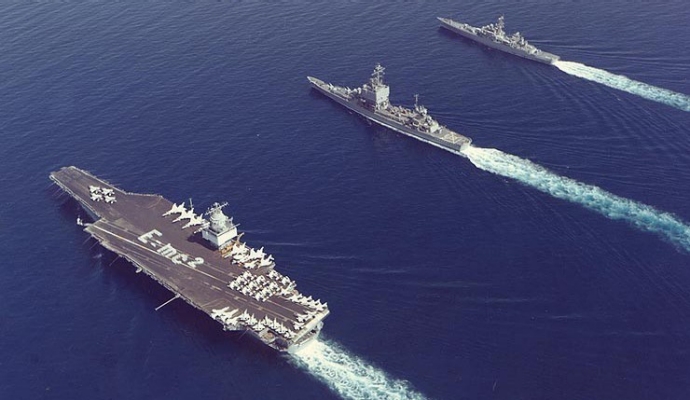
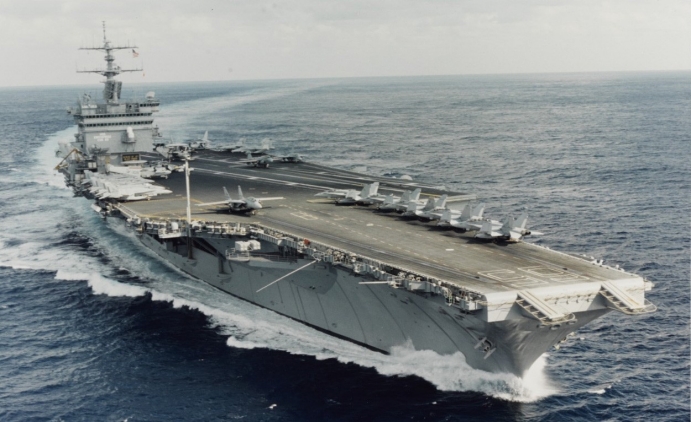
The world's first nuclear-powered aircraft carrier was commissioned on 25 November 1961 and completed 25 deployments during 51 years of service. Click the links below to access the Dictionary of American Naval Fighting Ships entries for Enterprise, which provide the carrier's history by time period.
1961–1965 | 1966–1970 | 1971–1975 | 1976–1980 | 1981–1985
Related Resource: Video - An Answer: JFK Visits the Atlantic Fleet (1962)
Digital Content Enterprise infographic. Available for download from the multimedia gallery, this infographic shares a brief glimpse into one of the most storied ships in U.S. Navy history. The infographic was originally posted shortly after Enterprise was inactivated in 2012, after 51 years of service. JFK Visits the Atlantic Fleet (1962). Available on YouTube, this 1962 Navy film follows President John F. Kennedy on a visit to the Atlantic Fleet and Camp Lejeune. Two other future presidents (Lyndon Johnson and Gerald Ford) were also present during the visit. Navy and Marine Corps units conducted extensive exercises in the presence of the President, including air operations, anti-submarine exercises, and an amphibious assault landing. The Nuclear Navy (released 1967). Available on YouTube, this 1967 Navy documentary explores the development of nuclear power in the United States Navy. H-Gram 025-2: The Enterprise (CVAN-65) Conflagration, 14 January 1969 NHHC Curators Preserve Enterprise Story - Sextant blog
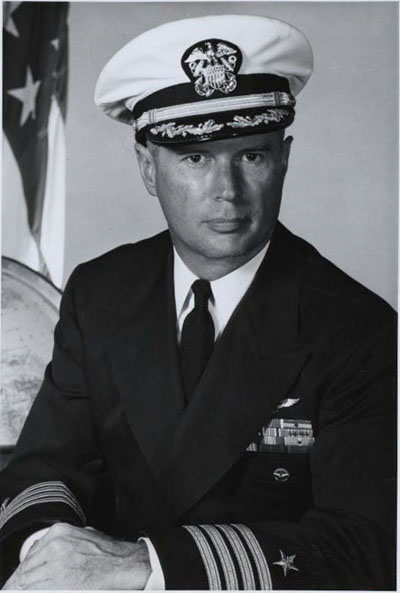
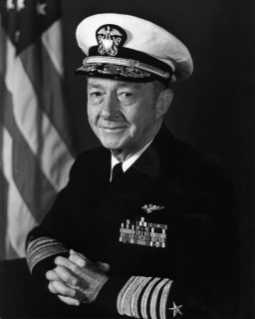
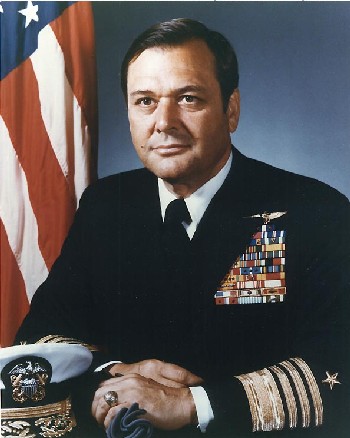
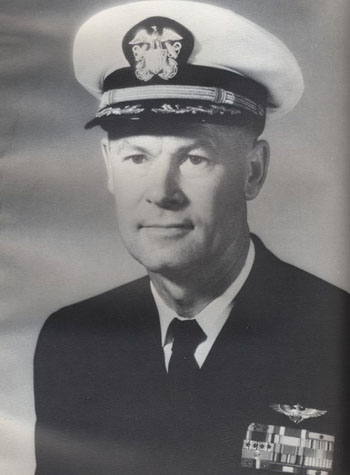
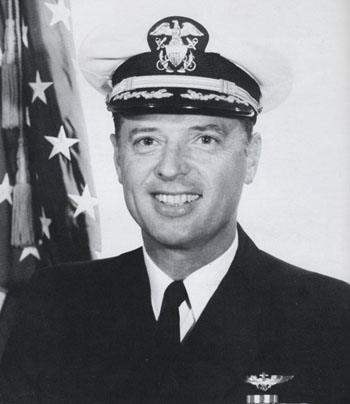
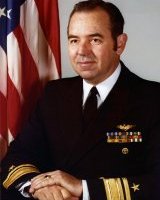
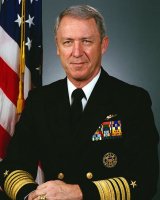
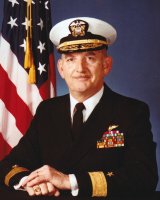
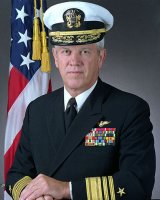
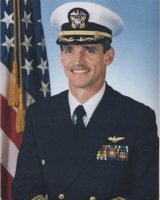
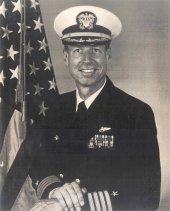
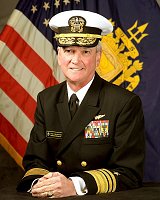
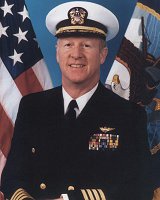
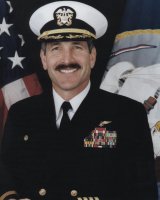
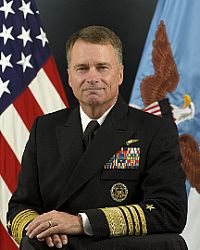
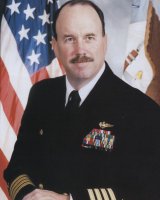
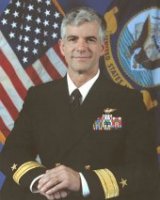
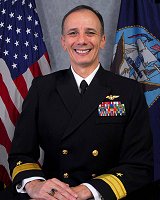
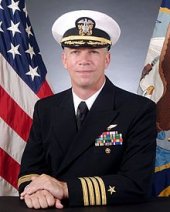
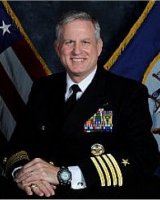
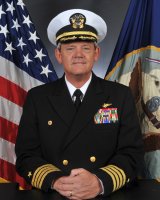
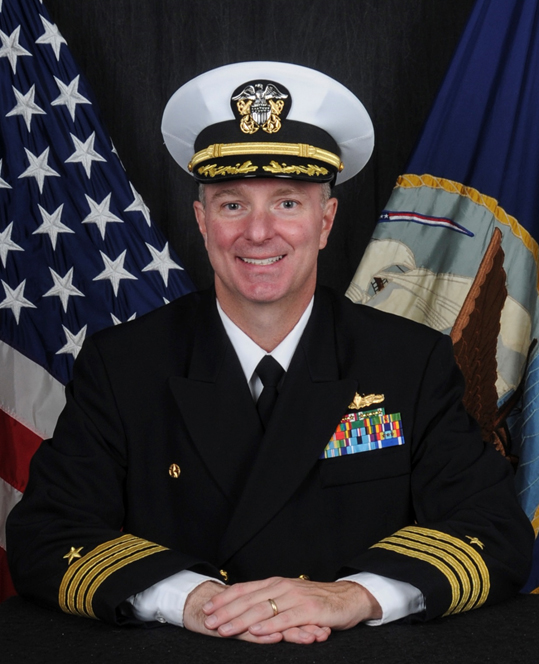
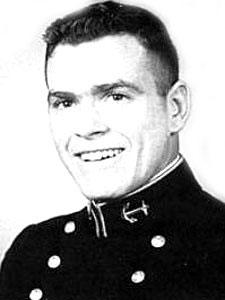
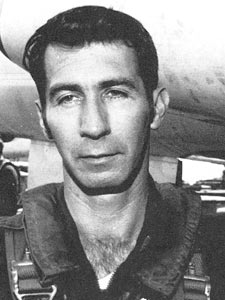
Click each portrait to download image; view list of dates of command below.
List of Commanding Officers Commanding Officer Date 1. Vincent P. de Poix, VADM, USN (Ret.) November 25, 1961 - July 20, 1963 2. Frederick H. Michaelis, ADM, USN (Ret.) Died August 13, 1992 July 20, 1963 - July 17, 1965 3. James L. Holloway III, ADM, USN (Ret.) July 17, 1965 - July 11, 1967 4. Kent L. Lee, VADM, USN (Ret.) July 11, 1967 - July 8, 1969 5. Forrest S. Petersen, VADM, USN (Ret.) Died December 8, 1990 July 8, 1969 - December 3, 1971 6. Ernest E. Tissot, Jr., RADM, USN (Ret.) December 3, 1971 - April 9, 1974 7. Carol C. Smith, Jr., VADM, USN Died October 14, 1983 April 9, 1974 - December 10, 1976 8. James W. Austin, RADM, USN (Ret.) December 10, 1976 - February 23, 1980 9. Robert J. Kelly, ADM, USN (Ret.) February 23, 1980 - June 17, 1983 10. Robert L. Leuschner, Jr., RADM, USN (Ret.) June 17, 1983 - January 28, 1986 11. Robert J. Spane, VADM, USN (Ret.) January 28, 1986 - October 28, 1988 12. Harry T. Rittenour, RDML, USN (Ret.) October 28, 1988 - August 7, 1991 13. Daniel C. Roper, CAPT, USN (Ret.) August 7, 1991 - August 27, 1993 14. Richard J. Naughton, VADM, USN (Ret.) Died February 25, 2011 August 27, 1993 - February 2, 1996 15. Michael D. Malone, VADM, USN (Ret.) February 2, 1996 - November 10, 1997 16. Evan M. Chanik, VADM, USN (Ret.) November 10, 1997 - March 10, 2000 17. James A. Winnefeld, Jr., ADM, USN (Ret.) March 10, 2000 - February 15, 2002 18. Eric C. Neidlinger, CAPT, USN (Ret.) February 15, 2002 - December 10, 2004 19. Lawrence S. Rice, RADM, USN (Ret.) December 10, 2004 - May 17, 2007 20. Ronald Horton, RDML, USN (Ret.) May 17, 2007 - May 6, 2010 21. Owen P. Honors Jr., CAPT, USN (Ret.) May 6, 2010 - January 4, 2011 22. Dee L. Mewbourne, RADM, USN January 4, 2011 - August 17, 2011 23. William C. Hamilton, Jr., CAPT, USN (Ret.) August 17, 2011 - October 15, 2015 24. Todd A. Beltz, CAPT, USN October 15, 2015 - February 3, 2017
Enterprise went to sea for the first time as a commissioned ship for her shakedown cruise, on 12 January 1962, on that date also being announced as the flagship of Nuclear Task Force (TF) One. During this period she began fleet flight operations, when Commander George C. Talley, Jr., Commander Air Group (CAG), Carrier Air Group (CVG)-1 (Tail Code AB), made an arrested landing and catapult launch in an Ling Temco Vought F-8B Crusader (BuNo 145375) from Fighter Squadron (VF) 62 on 17 January.
After completing carrier qualifications (carquals), Enterprise was privileged to play a role in the space age, putting to sea for ten days as part of the Project Mercury Recovery Force off Bermuda. Three carriers, including The Big E, patrolled the most likely areas for reentry and impact of the capsule, but unforeseen delays postponed that second attempt to send a man into space and the ship returned to Norfolk.
The following weeks proved busy ones. On 5 February Enterprise sailed for the Caribbean and Guantánamo Bay, Cuba, for her shakedown with elements of CVG-1, including VF-62 (F-8Bs) and VF-102 (F-4Bs), Attack Squadron (VA)-15 (Douglas A-1H Skyraiders), VA-64 and VA-172 (McDonnell Douglas A-4C Skyhawks), Light Photographic Reconnaissance Squadron (VFP)-62 Detachment (Det) 60 (RF-8A Crusaders) and Carrier Airborne Early Warning Squadron (VAW)-12 Det 60 (Grumman E-1B Tracers) embarked.
In addition, en route to the Caribbean she paused at Mayport, Florida, to embark Heavy Attack Squadron (VAH)-7 (North American A-5A Vigilantes). On 15 February the ship logged her 1,000th arrested landing, by Lieutenant John S. Brickner and his radar intercept officer (RIO), in an F-4B from VF-102, a tremendous amount of flying in a relatively short period of time.
At 0947 on 20 February 1962, Mercury-Atlas 6 launched from Cape Canaveral, Fla., with astronaut Lieutenant Colonel John H. Glenn, Jr., USMC, pilot. Completing three turns about the earth in four hours 55 minutes, Glenn became the first American to orbit the planet, flying spacecraft Friendship 7 in her 75,679-mile orbit at a maximum speed of 17,544.1 miles per hour. Glenn splashed down in the Atlantic some 166 miles east of Grand Turk Island, Bahamas, about 800 miles southeast of Bermuda. Destroyer Noa (DD-841) recovered him after 21 minutes in the water; a helo subsequently transported him to carrier Randolph (CVS-15) at 1745.
Enterprise stood out of Guantánamo Bay in readiness to deploy as one of the potential tracking and measuring stations for the epochal flight. Underway from anchorage Bravo that morning at 0640, the ship went alongside ammunition ship Mauna Loa (AE-8) for rearming. Enterprise then conducted Carrier qualifications before returning to her anchorage during the first dog watch.
Between 1-6 April Enterprise completed both her shakedown training and her Operational Readiness Inspection (ORI), en route to and off Guantánamo Bay. She received an ORI score of Excellent, 90.3%, from the Fleet Training Group, Guantánamo, one of the highest scores awarded to date to a new carrier. Before departing Cuban waters,Enterprises aircraft rounded-off the cruise with an air power demonstration for a congressional delegation.
Upon completion of those requirements, she returned to Norfolk, entering port on the 8th, and conducted combined operations with Forrestal (CVA-59) for a Presidential Cruise from 914 April, President John F. Kennedy and his entourage arriving on board on the 14th. The busy day included sea and air power demonstrations for the Chief Executive and many distinguished guests, including most of his cabinet, the Joint Chiefs of Staff (JCS), many congressmen and about 30 foreign ambassadors, all hosted by Vice Admiral John M. Taylor, Commander, 2nd Fleet (Com2ndFlt).
Approximately 20 ships participated in the exercise off the Virginia and North Carolina coasts, guests being entertained by a spectacular display culminating in a mass fly-by and recovery. Commander Joseph P. Moorer, squadron commanding officer (CO), Lieutenant Commander Joseph S. Elmer, Lieutenant Richard C. Oliver and Lieutenant William F. Heiss, VF-62, had the honor of shaking hands with the President on board Enterprise, at the conclusion of the demonstration.
Enterprise completed her final acceptance trials off the Virginia Capes between 16 and 18 April, and then entered her builders' yard on the 23rd for post-shakedown availability.
Departing the yard on 19 June 1962, the Big E joined the 2nd Fleet, immediately beginning fleet operations. The next senior operational commands she reported to during much of the year included: AirLant, 18 April, and then again, 15 April24 June; Commander Carrier Division Four (ComCarDiv-4), 914 April, Com2ndFlt and again, 2930 September, 6th Fleet (Com6thFlt); and Commander, Cruiser Destroyer Flotilla (ComCruDesFlot)-10, 25 June16 August, Com2ndFlt and again, 17 August28 September, Com6thFlt.
CVG-6 came on board on 22 June for a short cruise off the Atlantic coast. Because of the great number of squadrons and aircraft assigned to the group, the officers and men of CVG-6 touted it as the largest Air Group in the Navy. During this cruise, Enterprise anchored out at President Roads, Boston, Mass., over Independence Day weekend, 25 July, her crew taking part in the celebrations ashore, as well as hosting upward of 12,000 visitors.
Leaving Boston, the ship participated with Forrestal (CVA-59) in LantFlex 2-62, a nuclear strike exercise, under the command of Rear Admiral Reynold D. Hogle, (ComCarDiv-4), Commander, TF 24, 612 July. Enterprise launched eight pre-planned strikes and six call strikes while operating off the Virginia capes, against targets ranging from the Tidewater area to central Florida.
Returning to Norfolk on the 12th, Enterprise remained for leave and upkeep until 3 August, when she sailed for the Mediterranean (Med) with CVG-6 - VA-65 (A-1Hs), VA-66 and VA-76 (A-4Cs), VF-33 (F-8Es) and VF-102 (F-4Bs), VAH-7 (A-5As), VFP-62 Det 65 (RF-8As) and VAW-12 Det 65 (E-1Bs).
Passing the Rock of Gibraltar on 16 August, Enterprise entered the 6th Fleets Area of Responsibility (AOR), the first nuclear-powered carrier to steam in the Med, her intention to relieve carrier Shangri La (CVA-38).
The ship participated in a number of exercises in the Atlantic and Med. RipTide III, (35 August), involved long-range simulated nuclear strikes against targets off the Portuguese and Spanish coasts. Enterprise launched 14 strikes and nine call strikes, all opposed, as well as conducting cross-deck and cross-replenishment operations with other commands, and with the British and French. Lafayette II, 7 September, involved 14 scheduled conventional strikes coordinated with aircraft from Forrestal against multiple targets to the French Low Level Route in southern France, with opposition provided by French air force and naval aircraft. Indian Summer (78 September), comprised three long-range, simulated nuclear strikes, with fighter escort by F-4Bs from VF-102, against Spanish targets defended by both USAF and Spanish commands assigned to NATO. FallEx/High Heels II (620 September) revolved around the exercise of NATO and national communications and alert procedures. Some 13,000 service members and 24 ships operated with British, Greek and Turkish forces, to develop coordination, conducting amphibious landings, with close air support (CAS), anti-submarine warfare (ASW) and anti-air warfare (AAW) tactics.
Fall Trap (2327 September), involved both providing combat air patrol (CAP) for, and flying 22 aggressor raids against, a NATO amphibious task force moving north in the Aegean Sea. This was followed by CAS of the landings themselves, on 25 September, and additional support missions on the 26th-27th, in both Greek and Turkish Thrace.
In addition, her crew was able to go ashore in Cannes, France (27 August-4 September), when Enterprise anchored out, the ships first foreign port-of-call. Visiting by invitation was held on three of the eight days and some 1,200 people took advantage of the opportunity to tour the ship, among whom were celebrities Bing Crosby and his wife, Kathryn Grant, vacationing at their villa on the French Riviera.
Enterprise stood out on 4 September, beginning six days of air operations, following which she sailed for Naples, Italy, arriving at 0800 on the 10th to begin an eight day visit. The ships embarked aircraft were able to accomplish further training in the way of impact bombing on various targets, both live and practice bombs and radar scored bombing. Again the ship held visitation by invitation and over 1,200 Neopolitans saw the ship at first hand.
On the afternoon of the 14th, Italian President Antonio Segni inspected Enterprise, and that evening Rear Admiral Weeks and the skipper hosted a formal reception on board for approximately 400 NATO officers, Italian dignitaries and their guests.
Turning over her duties on station at Soudha Bay, Crete, to TG 60.8, formed around carrier Franklin D. Roosevelt(CVA-42), on 28 September, she proceeded westward shortly thereafter. Transiting the Strait of Gibraltar on the 3rd, the carrier crossed the Atlantic while assigned to TG 21.8, returning to Norfolk at 1540 on 11 October. The following day Rear Admiral John T. Hayward, ComCarDiv-2, broke his flag in Enterprise.
Between MayOctober 1962, Soviet Premier Nikita Khrushchev began secretly deploying additional East Bloc forces, estimated as several thousand Soviet, Czech, Polish and Chinese, to Cuba, intending to address what he considered the strategic imbalance between the U.S. led-Western Alliance and the Russian-dominated East Bloc. While those deployments took time, once those forces, including SS-4 Sandal medium- and SS-5 Skean intermediate-range ballistic missiles and at least 42 Ilyushin Il-28 Beagle light bombers in Cuba or en route, 20 of which were already in various stages of assembly, became operational they would threaten much of the southern continental U.S. with either conventional, or, more ominously, nuclear bombardment.
However, U.S. intelligence originally learned of the operation through the efforts of naval and air crews, who identified and tracked ships smuggling arms into Cuba, and when photo interpreters discovered missile sites west of Havana, near the towns of San Cristobal and Guanajay. Subsequent reconnaissance flights by Lockheed U-2s, operated by both the CIA and the Air Force, revealed additional sites, as well as sophisticated aircraft revetments and surface-to-air missile (SAM) sites, on Cubas northern coast, near Sagua La Grande and Remedios. On 25 October, a reconnaissance mission by VFP-62 also confirmed the presence of Luna (FROG, or Free Rocket Over Ground) tactical rockets, which, though shorter-ranged, could also be armed with nuclear warheads.
Discovery of the Soviet deception precipitated the Cuban Missile Crisis, President Kennedy and his advisors considering such a threat to U.S. national security unacceptable. When the Chief Executive told Admiral Anderson that it looks as though this is up to the Navy, the CNO purportedly replied: Mr. President, the Navy will not let you down. In noting the build-up of East Bloc forces, Commander-in-Chief, Atlantic Fleet (CinCLantFlt) ordered training to include the possibility of action against Cuban targets. These training efforts even included the construction of a simulated V-75 SA-2 Guideline SAM site.
Admiral Anderson sent a personal message to the Fleet Commanders on the 17th, advising them to be prepared to order as many ships as possible to sea on a 24 hour notice, provided their main propulsion plants were ready.
Responding to the crisis, Enterprise, with CVG-6 embarked, sortied from Norfolk on 19 October, having loaded provisions and supplies that normally required up to 10 hours to load, in barely two. Placed on alert on 18 October, CVG-6 embarked the following day, containing primarily the same composition it had during its recent Med cruise. The urgency proved such that the carrier got underway with only part of the wing embarked, some aircraft flying on board as she turned the corner off Cape Henry.
AirLant announced that the carriers rapid departure was to conduct engineering exercises, and to escape possible damage due to Hurricane Ella, then being tracked off the southeastern coast of the U.S. The cover story, however, seemed less than convincing, as evidenced by one reporters incredulous question: Engineering exercises! A week after she gets back from the Med? And Ella turned east at noon today. You really want me to believe that? Security concerns prompted the cordial response: Absolutely.
Destroyers Fiske (DD), Hawkins (DD) and William R. Rush (DD) sailed the next day to rendezvous with the Big E as her initial screen.
The following day, TF 135 (Rear Admiral Robert J. Stroh, ComCarDiv-6, relieved by Rear Admiral Hayward on 24 October), was activated, comprising the Enterprise and Independence (CVA-62) task groups, an underway replenishment group of an oiler and an ammunition ship, Fleet Air Wing (FAW)-11, stationed ashore, and Marine Aircraft Group (MAG)-32, comprising Marine Attack Squadrons (VMA)-331 and VMF-333, the group deploying to Guantánamo Bay and Roosevelt Roads, Puerto Rico. Independence (CVG-7) was originally scheduled to be relieved by Enterprise, but the crisis forced her to remain on station. Her screen initially included destroyers Corry (DD),English (DD), Hank (DD) and OHare (DD).
Also on the 20th, Admiral Robert L. Dennison, CinCLantFlt, ordered the A-5A Vigilantes of VAH-7 to remain ashore at NAS Sanford, Fla., replacing them with 20 USMC A-4D Skyhawks from VMA-225 from Marine Corps Air Station (MCAS) Cherry Point, N.C., the Skyhawks being considered more appropriate for CAS due to their lighter characteristics. This was the first time that a Marine squadron operated from a nuclear-powered carrier, and completing the transfer while underway in the midst of a crisis demonstrated the flexibility for combat commanders afforded by the ship. During the height of the crisis, upward of 100 aircraft would be packed on board Enterprise. Contingency planning for possible action against Soviet forces in Cuba took place on board the carrier during her voyage southward, including most of the planning for carrier-borne aerial operations.
Faced with the problem of halting further East Bloc arms shipments into Cuba, on 20 October the President ordered a blockade of the island, directing the Navy to stop and search any ship suspected of smuggling offensive weapons into Cuba. CinCLantFlt issued Operation Order 43-62, commencing naval operations in support ofOperation Plan 312. By mid-afternoon on Sunday 21 October, Enterprise was approximately 25 miles southeast of San Salvador, Bahama Islands, making all speed to the south to reach her assigned operating areas near Cuba, her escorting destroyers striving to keep up.
While other U.S. vessels, designated TF 136 (Vice Admiral Alfred G. Corky Ward, Com2ndFlt) on the evening of the 21st, established patrol positions in a line out of range of Soviet Il-28s to the east of Cuba, TF 135 prepared to operate in the waters around Jamaica, to the south of Cuba, completing the encirclement of the island.
Held by NeuraWeb Global Inc. and kept permanently. Her association may claim this record and maintain it.
(CVA(N)-65: displacement 85,600 tons (full load); length 1101'; beam 133'; extreme width 252'; draft 35'; speed 30+ knots; complement 4,600; class Enterprise) Enterprise The eighth Enterprise (CVA(N)-65) was named in honor of the seventh Enterprise (CV-6) and her predecessor ships of that name.
VIII
(CVA(N)-65: displacement 85,600 tons (full load); length 1101'; beam 133'; extreme width 252'; draft 35'; speed 30+ knots; complement 4,600; class Enterprise)
History: 1961-1965 The eighth Enterprise (CVA(N)-65), the world's first nuclear-powered aircraft carrier, was laid down on 4 February 1958 at Newport News, Va., by the Newport News Shipbuilding and Dry Dock Co.; launched on 24 September 1960; sponsored by Mrs. William B. Franke, wife of the Secretary of the Navy; and commissioned on 25 November 1961, Captain Vincent P. de Poix in command.
After commissioning, Enterprise began a lengthy series of tests and training exercises, designed to determine her full capabilities. Beginning six days of builders and Navy pre-acceptance trials on 29 October 1961, she exceeded expectations, her reactors generating such horsepower that she literally out-ran her destroyer escort.
Lieutenant Commander Oscar Folsom, Jr., Fleet Tactical Support Squadron (VRC)-40, became the first to fly from the ships flight deck, transporting dignitaries, who had embarked to witness the sea trials, to shore in a Grumman C-1A Trader. Enterprise returned to port with a huge broom tied to her masthead, the traditional symbol of victory at sea, proclaiming a clean sweep.
The first big strike of the New Year 1966 came when 116 aircraft from Enterprise, Hancock and Ticonderoga flew sorties against VC targets in all four Corps areas in South Vietnam, on 8 January. “Suspected” troop concentrations and storage areas were hit in successive runs, FACs reporting 97 structures destroyed and 94 damaged, all aircraft returning safely.
Gale Force 713, an A-4C (BuNo 147753), flown by Lieutenant (jg) Stephen B. Jordan, VA-36, was on an armed reconnaissance mission as part of a Steel Tiger strike against a Laotian bridge, on 14 January 1966. Obscured by “heavy jungle,” the bridge was difficult to adequately locate and identify from the air and Jordan made four runs over the target before locating it on his fifth pass. Making an estimated 20º dive, 800 feet above ground level at 325 KIAS, Jordan pickled once to drop one retarded MK-82 Snakeye bomb. Other flight members reported that one bomb did impact the normal distance astern almost upon recovery, a large cloud of dust and smoke appeared around Jordan’s Skyhawk. Apparently, Jordan pickle released three-bombs, but though initiating a standard recovery, the pilot “felt three mild bumps and experienced a moderate mushing sensation.” Passing over the target, Jordan experienced further settling and his A-4 contacted treetops beyond the bridge, beginning to heavily stream fuel. His flight leader assessed Jordan’s damage, including the loss of approximately one foot of each wing tip, together with damage to the main landing gear and to the ailerons, the latter “vibrating rapidly.” An A-3 rendezvoused with him for refueling en route to a divert to Da Nang Air Base (AB), South Vietnam.
Meanwhile, Bainbridge’s CIC received Jordan’s emergency IFF signal and it was arranged that the pilot would rendezvous with Bainbridge if possible, before bailing out. However, unable to jettison his remaining MK-82 or to lower his port main landing gear, Jordan elected to proceed toward Enterprise and eject near the ship. The wind was 090º, 15 knots, and the air and water temperature were both 75º. The sea was calm, with wave height estimated at no more than two feet. Jordan ejected approximately 10 NM from Enterprise, while at 10,000 feet and 150 knots, at 1649. By the time he entered the water and deployed his raft, Kittyhawk Angel, a UH-2A (BuNo 149769) Lieutenant James H. Biestek, HC-1 Det M, pilot, the plane guard, raced to the scene. However, as the helo crew attempted to recover the downed pilot, Jordan’s parachute shroud lines were drawn-up into the Seasprite’s rotor blades, entangling Jordan’s legs. Following several tense moments, the helo crew lowered Jordan back into the water, a crewman leaping in to assist the dazed pilot, exhausted from his ordeal. The crewman was able to cut Jordan free and the pilot was lifted-up to safety at 1658, Jordan later noting that he believed the helo approached so rapidly that he and his raft (which he had not fully entered) were blown back into the parachute before it sank. Bainbridge later recovered the gear adrift in the water and the raft.
Enterprise left the line after 45-continuous days of combat the next day, CVW-9 having flown 4,242 combat sorties. Her “weary crew” headed to Subic Bay, Philippines, holding memorial services for those lost in action while en route, before arriving at Subic Bay, mooring to Leyte Pier, NAS Cubi Point, on the 17th.
The seven days in port were “uneventful,” except for a meeting of the U.S. and Philippine Mutual Defense Board, led by Rear Admiral Jack P. Monroe, Commander, U.S. Naval Forces, Philippines, Major General J.W. Wilson, Thirteenth Air Force and General Rigoberto J. Atienza, General of the Armed Forces of the Philippines, on 19 January.
After a week of rest and recuperation for her officers and men, Enterprise steamed to Hong Kong, anchoring off Victoria Island for a six day visit, 26 January–1 February 1966. Among the sites visited by sailors in Hong Kong was the Tiger Balm Gardens, while some men also “lent their efforts” in support of the St. John’s Children’s Welfare Center.
On 28 January 1966, Enterprise held a reception including a buffet, colors ceremony and displays, for distinguished visitors. Enterprise was “given a rough treatment” by Chinese communist newspapers, especially following a routine press conference presented by Rear Admiral Miller and Captain Holloway on that date, the Peking International News commenting that “U.S. imperialism has recklessly engaged in war intimidation and provocation by showing off its “strength” in Hong Kong.” During this deployment, the British colony was the only foreign port to receive the ship besides Subic Bay.
Soviet intelligence-gathering vessels (AGIs) constantly bedeviled U.S. ships, following tracks and maneuvering so aggressively in their efforts to collect material as to often impede operations, producing navigational hazards. One such Russian “eavesdropper” in the Gulf of Tonkin began to plague Enterprise, but Captain Holloway ordered the ship up to flank speed on a collision course, afterward recalling that the AGI “got the hell out of the way.”
Beginning on the morning of 3 February 1966, however, Enterprise and Bainbridge were followed by a “playmate,” Soviet AGI KO2-1399, whom they affectionately dubbed Ivan. To deal with KO2-1399’s “somewhat troublesome but not insurmountable… antics” fleet tug Molala (ATF-106) received orders to “spy on the spy.” The formation was revised, Enterprise taking the lead, followed by Bainbridge, in turn shadowed by Ivan, in turn “sleuthed” by Molala, the latter conducting “shouldering and blocking tactics.”
Returning to Dixie Station in company with Bainbridge, Hawkins and Samuel B. Roberts on 4 February 1966, Enterprise unleashed her aircraft against VC “strongholds” in II, III and IV Corps in support of Operation Kick Quick IV, 9–10 February, which were “hammered.” About 100 buildings in “camouflaged enemy buildup areas” were destroyed.
On the 11th, Enterprise moved up to Yankee Station, beginning armed reconnaissance and interdiction attacks against VC supply lines in the north two days later. Aircraft from the “Big E” and “Tico” struck “several” roads north of the 17th Parallel, 13–14 February. The next day, her aircraft flew 16 missions against supply areas and bridges, including the Dong Ngam Shipyard, and a highway bridge at Loc Diem. Operations continued throughout the month, but “constantly overcast monsoon skies” prohibited large scale strikes.
On 16 February 1966, Rear Admiral Thomas J. Walker relieved Rear Admiral Miller as ComCarDiv-3 and Commander, Enterprise TG. During his farewell remarks, Rear. Admiral Miller praised the crew, presenting air medals to over 100 pilots and flight officers, noting that “…arduous work, almost unbelievably long hours and combat environment have become a way of life that all hands have taken in stride. Their performance has been superb in every respect.”
During February, the carrier rendezvoused with Bainbridge and fast combat support ship Sacramento (AOE-1), the crew of the latter transferring 327 tons of supplies to Enterprise and Bainbridge in barely 24 hours, a taxing replenishment.
On 18 February 1966, Silver Kite 201, an F-4B, BuNo. 152297, Lieutenant (jg) James T. Ruffin, pilot, and Lieutenant (jg) Larry H. Spencer, RIO, VF-92, launched as the wingman of a two-plane section on a Big Look CAP mission. Ruffin and Spencer reported radar, TACAN and compass malfunctions, losing sight of their escort due to dense haze, while under control of guided missile destroyer Joseph Strauss (DDG-16), who last held the Phantom II on radar 14 miles north of Hon Me Island, at 19º39’N, 106º04’E, at 1350. The flight leader instructed 201 to squawk emergency IFF, which was detected by a SAR destroyer at 19º39’N, 106º50’E, “an area of high SAM threat.” Four A-4s from Enterprise conducted a “low altitude air to surface search” but failed to locate any trace of 201, being joined by aircraft from Kitty Hawk. Low overcast, fog and poor visibility hampered search efforts. The F-4 was shot down in the vicinity of Thanh Hoa, Spencer being taken by the North Vietnamese after he hit the water following ejection. The pilot was unable to escape his captors, “many junks and small boats” being observed in the area. A Chinese communist correspondent gloatingly described Spencer’s capture: “The Army and people of Thanh Hoa Province neatly brought down an invading U.S. aircraft and captured its American flier yesterday,” continuing by describing how 201 “was hit and burst into flames by the fierce barrage of antiaircraft fire,” local militiamen taking “the American bandit alive.” The spiteful communist propaganda was nonetheless accurate, as Ruffin did not survive, his remains being returned to the U.S. on 3 June 1983, and identified on the 27th. Spencer, captured, did not see home again until 12 February 1973.
Strikes were run on the Bai Thuong Barracks near Thanh Hoa, and a storage area near Vinh, on 20 February 1966. Three days later, Enterprise and Kitty Hawk sent 108 sorties against enemy troop concentration, storage and supply areas south of the Demilitarized Zone (DMZ).
Enterprise came about from Yankee Station for NAS Cubi Point later that day, arriving at Subic Bay on 25 February 1966. Astronaut Captain Walter M. “Wally” Schirra, Jr., and his wife, “special emissaries of the President,” visited on 6 March. Five days later, Ferdinand E. Marcos, newly elected president of the Philippines, and staff was piped on board by sideboys, greeted by a 21 gun salute and Vice Admiral John J. Hyland, Com7thFlt. President Marcos inspected aircraft and spaces, before departing by helo.
Enterprise stood out the next morning for Taiwanese waters for Operation Blue Sky, a joint “special” AD exercise with the Nationalist Chinese. But at 0530 on the 14th, Bainbridge’s collision alarm sounded as Japanese Nippon Yusen Kaisha tanker Tamba Maru headed on a collision course with the formation, in clear violation of international rules of the road. Only “deft maneuvering” by Bainbridge averted a collision; Tamba Maru continued on without yielding the right of way.
Six hours later, Enterprise launched her aircraft for the demonstration. Vice Admiral Hyland welcomed a party led by Generalissimo and Madame Chiang Kai-Shek, who arrived on board from Taipei via an HC-1 Det M helo. “They are more than trained or skilled, they are performing miracles,” observed the Generalissimo regarding the ship’s pilots during the air show, adding that he would remember his visit “with pleasure.”
However, rounding out an eventful day, just before sunset at 1723, at 23º49’2”N, 122º29”E, both ships felt a sudden jar, Bainbridge hauling out to starboard. The origin of the jarring was “mysterious and later evaluated to be of seismic origin,” an aftershock resulting from a magnitude 8.00 earthquake that struck at 1631 on the 12th, at 24º20’N, 122º60”E.
Following the exercise and a reception for the Taiwanese delegation on board Enterprise, she returned “quickly” to Yankee Station to resume interdiction strikes on 16 March 1966, though the monsoon was “at its peak, impeding many scheduled strikes with rain, low foggy ceiling and thunderstorms.”
Hoboken 401, an A-4C, BuNo. 147740, Lieutenant (jg) Frederick C. Baldock, Jr., VA-94, was section leader of an armed reconnaissance mission over North Vietnam, on 17 March 1966. Following an attack on a target, Baldock was last seen at 1453, executing evasive maneuvers “in an area of intense anti-aircraft and surface to air missile defense.” The section leader, 404, had ALQ-51 lock-on, and three minutes later “missiles away” was overheard on the radio, though the caller was not identified. Although no one in the air saw 401 go down, two Enterprise A-4Cs heard a beeper, while three other A-4Cs in the area noted a column of white smoke at 18º34’N, 105º47’E. Crown Alpha sped to the area for a CSAR, and A-1s flew toward a RESCAP area off the coast, however, no trace of Baldock and his Skyhawk were located, though he was tentatively identified as lost over the area of 18º37’N, 105º48’E. Baldock was captured, destined not to return to the U.S. until 12 February 1973.
Gale Force 703, an A-4C, BuNo. 148313, Commander James A. Mulligan, VA-36, launched as “number one” in a division of three aircraft on an armed reconnaissance mission, on 20 March. Attacking traffic on a road, the flight began receiving “intense anti-aircraft and automatic weapons fire commencing at pull up.” Mulligan’s Skyhawk was hit while at approximately 2,000 feet and began streaming smoke, fire and fuel from the vicinity of his aft engine compartment. The strike was aborted, the flight beginning to climb up to extinguish the fire, Mulligan also jettisoning a MK 83 from his starboard wing station, but unable to do so with a hung MK 83 on his port wing station. At approximately 10,000 feet, an explosion was observed in the vicinity of the forward engine compartment, 703 rolling 360º to the left. Mulligan leveled his wings “momentarily,” transmitting and then ejecting, slightly nose down, while at 275 KIAS. Mulligan hit the ground in a marshy area, around 18º28’N, 105º50’E, but apparently lay unconscious for upward of nine minutes, failing to regain consciousness in time to escape capture by six–seven North Vietnamese who arrived and carried him off. The two remaining Skyhawks in the flight made strafing runs with their 20 mm guns in a vain attempt to protect the pilot and to provide cover for a possible rescue, but were unsuccessful. Mulligan did not see freedom again until his return to the U.S. on 12 February 1973.
Also on the 20th, Silver Kite 202, an F-4B (BuNo 151410), Lieutenant Jmes S. Greenwood, pilot, and Lieutenant (jg) Richard R. Ratzlaff, RIO, VF-92, was conducting an armed reconnaissance as part of a strike against targets near the Vinh Luu Bridge, 40 miles south of Vinh, North Vietnam. Accompanying 202 was Silver Kite 210, another squadron Phantom II. Both aircraft approached the target from barely 100 feet from the west, receiving heavy AAA. Both jets were hit “immediately after bomb release,” at about 1745. The crew of Silver Kite 210 extinguished their fire by reducing power, returning to Enterprise.
Silver Kite 202, however, developed fires in both engines, Greenwood losing control within two minutes. The aircraft pitched nose down and Greenwood instructed Ratzlaff to eject. When they ejected, they were 20º nose down, flying about 250 KIAS, between 6,000–7,000 feet, above low coastal clouds and at approximately 18º20’N, 106º17’E. Greenwood afterward explained his intention to remain with the plane as long as possible in an effort to get well out over the Gulf of Tonkin when they bailed out, as the low cloud cover prevented him from seeing whether they were over land or water. Greenwood, whose legs “seemed numb” from tight straps attached to his leg restraints and bleeding from a laceration to his head, hit the water about three miles out, but Ratzlaff went in barely 100 yards from the beach. There were 15–20 junks and sampans in the vicinity, as well as numerous people ashore who ran out to the water’s edge toward the RIO. Greenwood afterward noted “Just before I hit the water, I noticed one enemy junk about two miles north of us, and many people gathering near the beach near the point where my RIO was descending. I considered him too close to the beach to even think of an attempt to swim for open water…”, noting armed men putting to sea in junks and sampans. Ratzlaff stood little chance against such a horde and was captured, not being released until 12 February 1973.
Observing the fate of his backseater, Greenwood justifiably hesitated to draw attention to himself by inflating his flotation gear, waiting 10 minutes until he spotted Crown Bravo, a USAF Grumman HU-16 Albatross flying search patterns. It was now late in the day, and in the gloom of the overcast, Greenwood proved difficult to spot in the water. The downed pilot fired a pencil flare to alert the Albatross’ crew, but was immediately alerted by gunfire from behind. Turning around, he was stunned to see a boat approaching him, barely 500 yards off and closing rapidly, her occupants intent on finishing the job.
Each time that Greenwood fired a flare, the North Vietnamese on board the vessel, estimated at about 10 men and a woman, with at least two riflemen and a gunner with an automatic weapon, opened up on him, but with the gathering darkness rendering spotting him by the rescuers difficult, his options were understandably limited. The crew of the Albatross made a pass over the junk, exchanging automatic fire with the North Vietnamese and when the latter, by now barely 100 yards away, continued toward Greenwood, following it up with a second pass, dropping two empty fuel tanks, “narrowly” missing the boat. Although the Albatross was hit, the pilot expressing doubt that he could land due to impact holes in the fuselage, the men were undaunted, refusing to leave the downed pilot until the RESCAP arrived, also dropping an orange flare to mark Greenwood.
Enterprise was monitoring the entire battle on her radar and radios, doing everything possible to effect the rescue. Overpass 004, an E-1B Tracer, vectored Hoboken 402 and 410, a pair of A-4Cs, as RESCAP, together with diverting Raven 05 and PND 306, another Skyhawk flight. Both flights hurtled in, making strafing and rocket runs on the junk, causing about half of the North Vietnamese on board to jump overboard, but the other half bravely returned fire at the Skyhawks.
Guided missile frigate Worden (DLG-18) had meanwhile launched Clementine Angel, her UH-2B, Lieutenant Commander David J. McCracken, Ensign Robert H. Clark, Jr., Chief Davis and AMH2 G.E. McCormack, HC-1 Det 5 Froggy Five. Clementine Angel was in contact with the Albatross crew, who told them to hurry, as “enemy junks were closing in on the downed pilot,” and at approximately 1830 the helo arrived on the scene. Two sampans turned and also began closing in.
McCracken later reflected upon their close call. “I flew toward what I thought was the flare, got too close to some junks near the beach, and they opened fire on me. The smoke I saw wasn’t from the marker flare, however, but from a burning belly tank.”
Immediately appreciating the dire situation, McCracken made a firing pass from 50 feet above the junk, enabling McCormack to return fire with the M-60, causing more North Vietnamese to jump, apparently killing at least one man. The firefight was so intense that Clark lent a hand with an M-1 Thompson sub machinegun, almost simultaneously spotting Greenwood in the water.
However, mortar and machine gun fire from shore now erupted around the scene. Clementine Angel hovered over Greenwood, lowering a horsecollar sling that the pilot gratefully grabbed “in a death grip,” and returned to Worden. But as they were doing so, mortar rounds straddled the helo, the splash of the first round lifting the Seasprite’s tail and putting it into forward motion, McCracken later noting that “Getting out of there was my intention anyway–but not in so violent a maneuver!”