U.S. Army · Regiment

5th Cavalry Regiment

Constituted 1855 · 1,021 honoured here served in it

The Heraldry 2
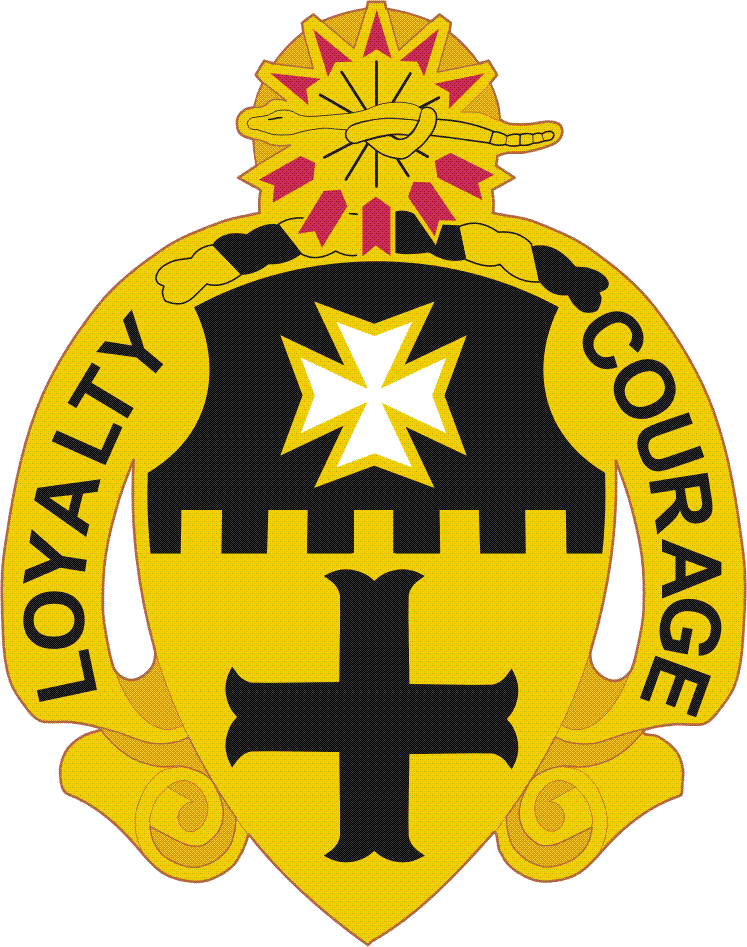
5th Cavalry Regiment — Distinctive unit insignia
Distinctive unit insignia

Authorised 19 January 1923

A Gold color metal and enamel device 1 7/32 inches (3.10 cm) in height consisting of a coat of arms blazoned as follows: Shield: Or a cross moline Sable, on a chief embattled of the last a Maltese cross Argent. Crest: On a wreath of the colors (Or and Sable) a bundle of five arrows Sable armed and flighted Gules, tied with a rattlesnake skin having five rattles Proper; the device enclosed within a motto scroll arcing over the top of the shield and inscribed "Loyalty" on the dexter side and "Courage" to sinister in Black letters.

The shield is yellow for Cavalry. The cross moline symbolizes the charged of this Regiment on Longstreet's troops at Gaines Mills in 1862; a charge which saved the Union artillery and which is characterized by the Regimental historian as "its most distinguished service." The cross moline is supposed to represent the iron pieces of a mill stone (moulin, the French word Mill). The chief is for the Puerto Rican Expedition of 1898. The original name of the island was San Juan, named for the old knights of St. John who wore a white maltese cross on a black habit. The partition line is embattled to suggest the castle on the Spanish arms. The crest is for the Indian campaigns of the Regiment; the number of arrows corresponds to the numerical designation of the organization.

The distinctive unit insignia was originally approved for the 5th Cavalry on 19 January 1923. It was redesignated for the 5th Cavalry Regiment (Infantry) on 16 December 1953. The insignia was redesignated for the 5th Cavalry on 10 July 1959. It was amended to revise the symbolism on 23 June 1960. Coat of Arms
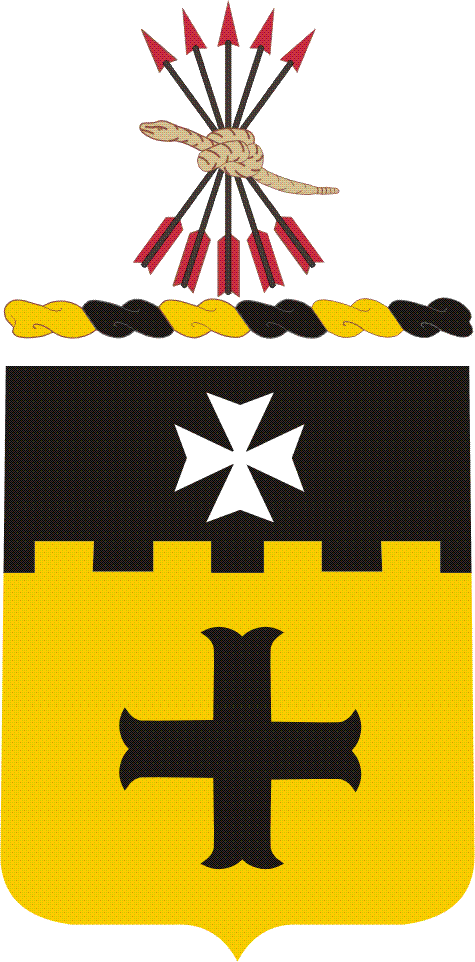
5th Cavalry Regiment — Coat of arms
Coat of arms

Authorised 19 January 1923

Or a cross moline Sable, on a chief embattled of the last a maltese cross Argent. On a wreath of the colors (Or and Sable) a bundle of five arrows Sable armed and flitted Gules, tied with a rattlesnake skin having five rattles Proper. LOYALTY AND COURAGE.

The shield is yellow for Cavalry. The cross moline symbolizes the charged of this Regiment on Longstreet's troops at Gaines Mills in 1862; a charge which saved the Union artillery and which is characterized by the Regimental historian as "its most distinguished service." The cross moline is supposed to represent the iron pieces of a mill stone (moulin, the French word Mill). The chief is for the Puerto Rican Expedition of 1898. The original name of the island was San Juan, named for the old knights of St. John who wore a white maltese cross on a black habit. The partition line is embattled to suggest the castle on the Spanish arms. The crest is for the Indian campaigns of the Regiment; the number of arrows corresponds to the numerical designation of the organization.

The distinctive unit insignia was originally approved for the 5th Cavalry on 19 January 1923. It was redesignated for the 5th Cavalry Regiment (Infantry) on 16 December 1953. The insignia was redesignated for the 5th Cavalry on 10 July 1959. It was amended to revise the symbolism on 23 June 1960. Coat of Arms

Lineage and Honours
American Indian Wars
Where It Sits

1,021 of the men and women on this memorial served in this formation. See them.

In Our Keeping
Country United States
Service U.S. Army
Echelon Regiment
Status Active
Stewarded by NeuraWeb Global Inc.
Permanent identifier neuraspine_01krc4ntvhrm0nra89pd2x3ce4

Held by NeuraWeb Global Inc. and kept permanently. The formation itself may claim this record and maintain it.