United States of America
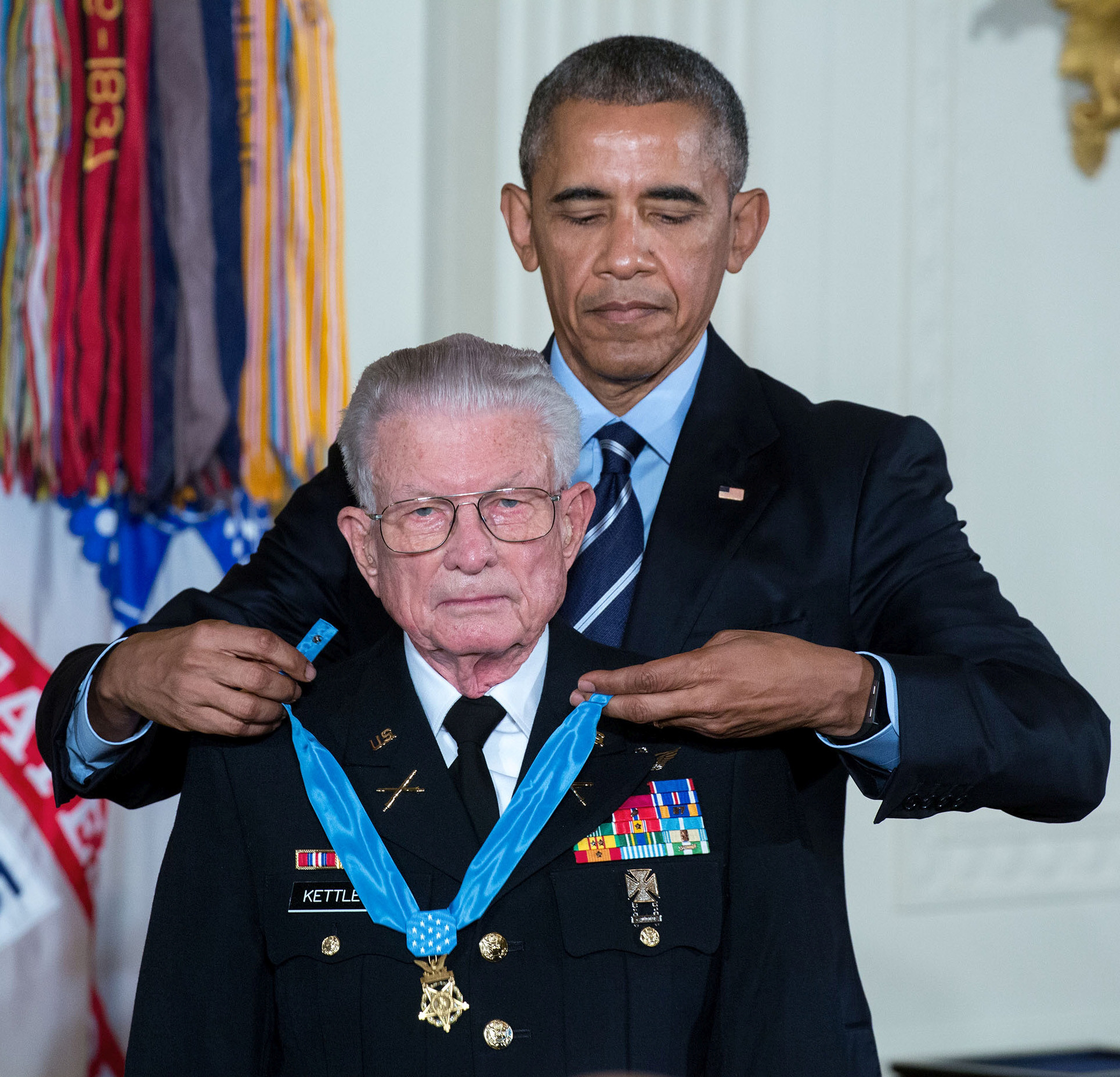
Headstone of Charles S. Kettles
U.S. Army · United States United States

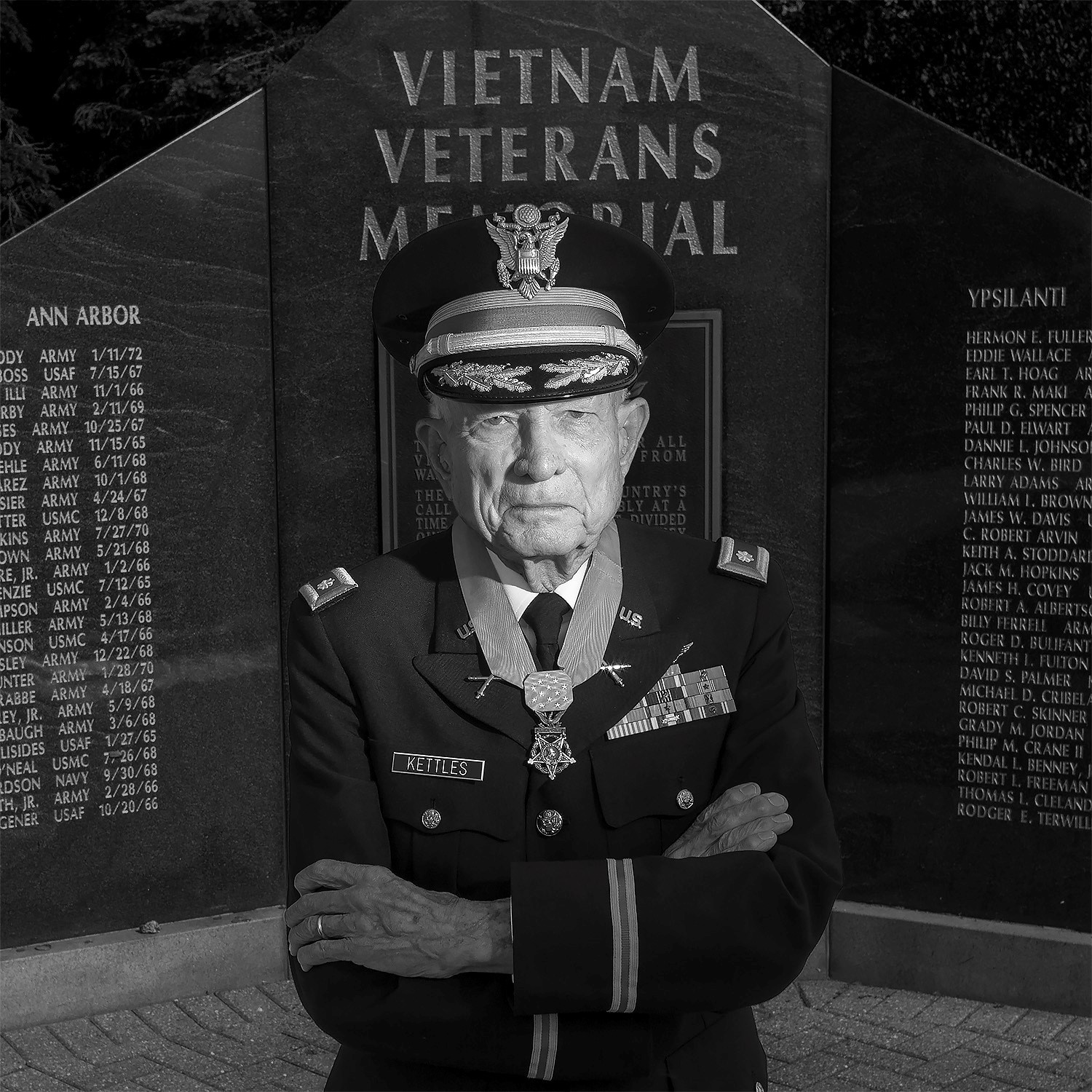
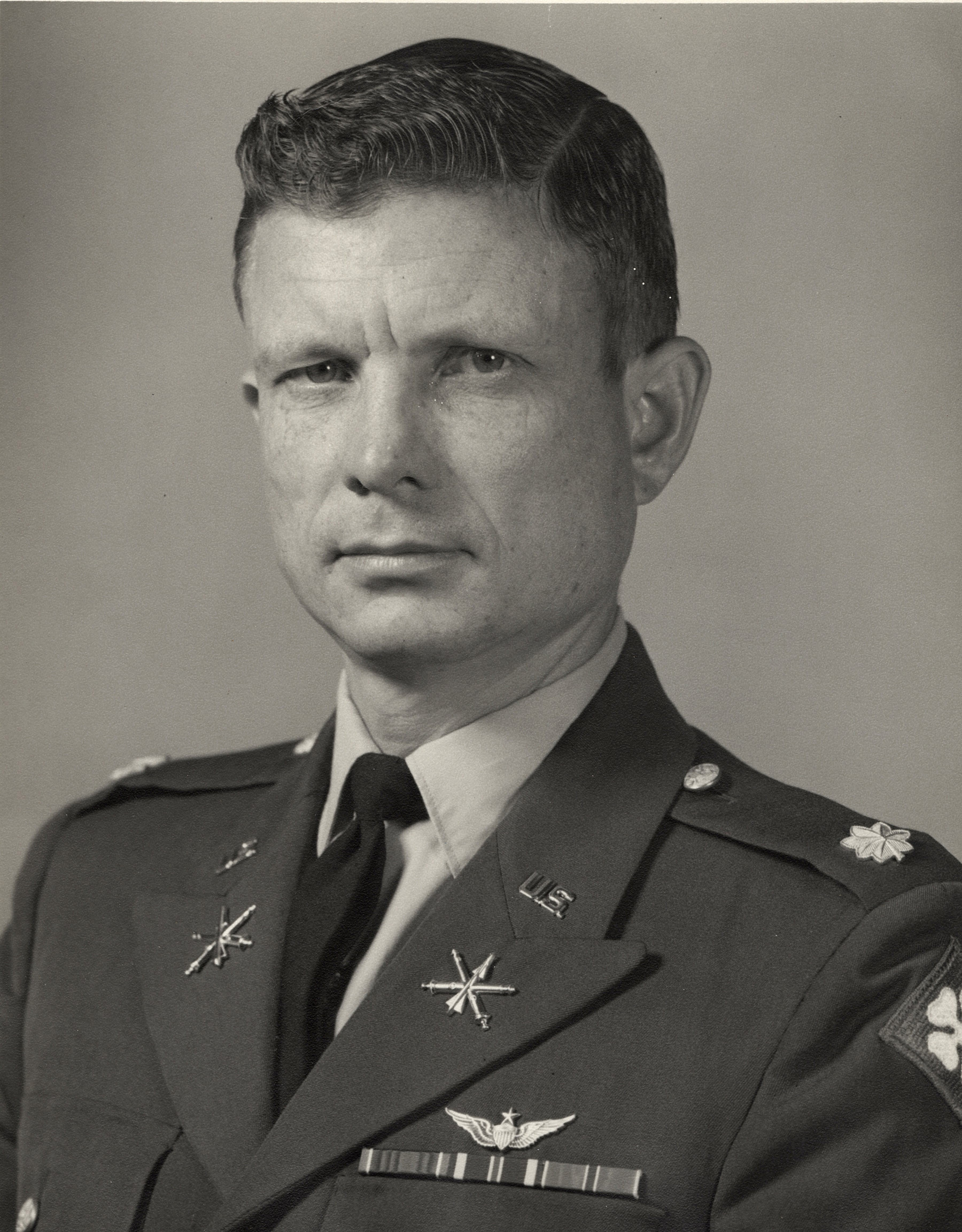
Charles S. Kettles

Major
1930 – 2019
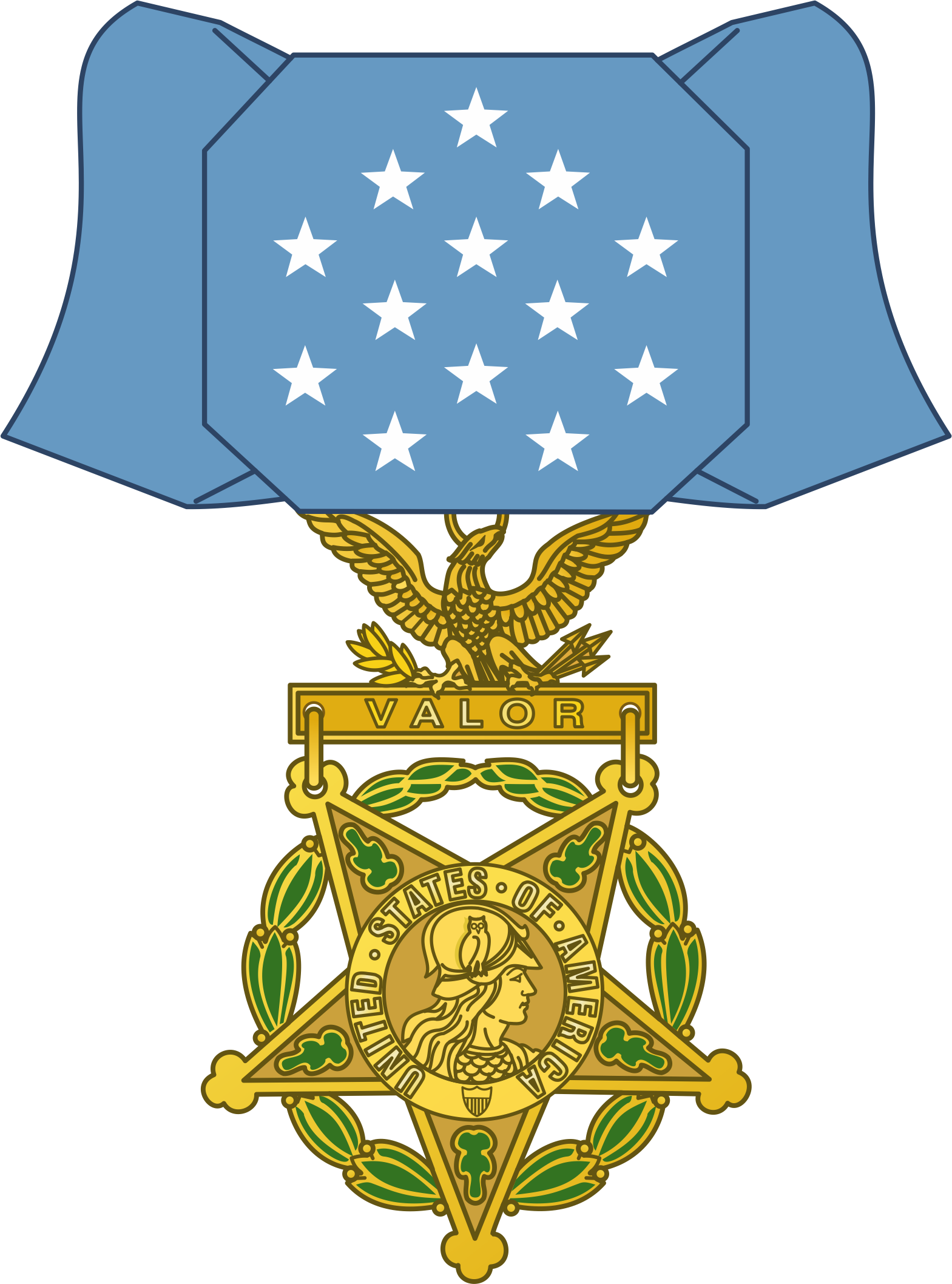
Medal of Honor - Army

Major Charles S. Kettles served the U.S. Army. Charles was 89 years old.
Keepsakes
Charles S. Kettles
Charles S. Kettles
Charles S. Kettles
Charles S. Kettles
Charles S. Kettles
Charles S. Kettles
Charles S. Kettles
Charles S. Kettles
Service Record
U.S. Army
Major
Medal of Honor
Medal of Honor
15 May 1967

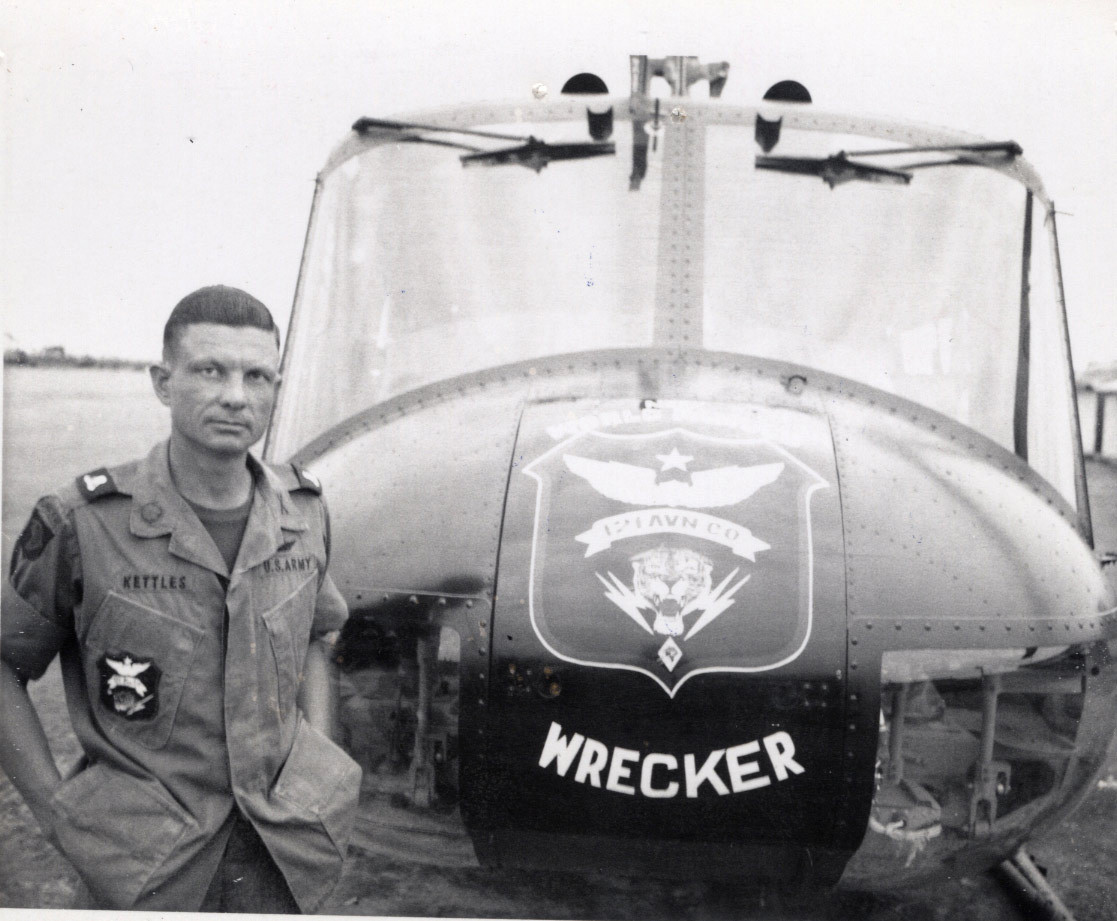
Major Charles S. Kettles distinguished himself by conspicuous gallantry and intrepidity while serving as Flight Commander, 176th Aviation Company (Airmobile) (Light}, 14th Combat Aviation Battalion, Americal Division near Duc Pho, Republic of Vietnam. On 15 May 1967, Major Kettles, upon learning that an airborne infantry unit had suffered casualties during an intense firefight with the enemy, immediately volunteered to lead a flight of six UH-1D helicopters to carry reinforcements to the embattled force and to evacuate wounded personnel. Enemy small arms, automatic weapons, and mortar fire raked the landing zone, inflicting heavy damage to the helicopters; however, Major Kettles refused to depart until all helicopters were loaded to capacity. He then returned to the battlefield, with full knowledge of the intense enemy fire awaiting his arrival, to bring more reinforcements, landing in the midst of enemy mortar and automatic weapons fire that seriously wounded his gunner and severely damaged his aircraft. Upon departing, Major Kettles was advised by another helicopter crew that he had fuel streaming out of his aircraft. Despite the risk posed by the leaking fuel, he nursed the damaged aircraft back to base. Later that day, the Infantry Battalion Commander requested immediate, emergency extraction of the remaining 40 troops, including four members of Major Kettles' unit who were stranded when their helicopter was destroyed by enemy fire. With only one flyable UH-1 helicopter remaining, Major Kettles volunteered to return to the deadly landing zone for a third time, leading a flight of six evacuation helicopters, five of which were from the 161st Aviation Company. During the extraction, Major Kettles was informed by the last helicopter that all personnel were onboard, and departed the landing zone accordingly. Army gunships supporting the evacuation also departed the area. Once airborne, Major Kettles was advised that eight troops had been unable to reach the evacuation helicopters due to the intense enemy fire. With complete disregard for his own safety, Major Kettles passed the lead to another helicopter and returned to the landing zone to rescue the remaining troops. Without gunship, artillery, or tactical aircraft support, the enemy concentrated all firepower on his lone aircraft, which was immediately damaged by a mortar round that shattered both front windshields and the chin bubble and was further raked by small arms and machine gun fire. Despite the intense enemy fire, Major Kettles maintained control of the aircraft and situation, allowing time for the remaining eight soldiers to board the aircraft. In spite of the severe damage to his helicopter, Major Kettles once more skillfully guided his heavily damaged aircraft to safety. Without his courageous actions and superior flying skills, the last group of soldiers and his crew would never have made it off the battlefield. Major Kettles' selfless acts of repeated valor and determination are in keeping with the highest traditions of military service and reflect great credit upon himself and the United States Army.

Awards & Decorations 1

For valor

Medal of Honor - Army May 15, 1967
Major Charles S. Kettles distinguished himself by conspicuous gallantry and intrepidity while serving as Flight Commander, 176th Aviation Company (Airmobile) (Light}, 14th Combat Aviation Battalion, Americal Division near Duc Pho, Republic of Vietnam. On 15 May 1967, Major Kettles, upon learning that an airborne infantry unit had suffered casualties during an intense firefight with the enemy, immediately volunteered to lead a flight of six UH-1D helicopters to carry reinforcements to the embattled force and to evacuate wounded personnel. Enemy small arms, automatic weapons, and mortar fire raked the landing zone, inflicting heavy damage to the helicopters; however, Major Kettles refused to depart until all helicopters were loaded to capacity. He then returned to the battlefield, with full knowledge of the intense enemy fire awaiting his arrival, to bring more reinforcements, landing in the midst of enemy mortar and automatic weapons fire that seriously wounded his gunner and severely damaged his aircraft. Upon departing, Major Kettles was advised by another helicopter crew that he had fuel streaming out of his aircraft. Despite the risk posed by the leaking fuel, he nursed the damaged aircraft back to base. Later that day, the Infantry Battalion Commander requested immediate, emergency extraction of the remaining 40 troops, including four members of Major Kettles' unit who were stranded when their helicopter was destroyed by enemy fire. With only one flyable UH-1 helicopter remaining, Major Kettles volunteered to return to the deadly landing zone for a third time, leading a flight of six evacuation helicopters, five of which were from the 161st Aviation Company. During the extraction, Major Kettles was informed by the last helicopter that all personnel were onboard, and departed the landing zone accordingly. Army gunships supporting the evacuation also departed the area. Once airborne, Major Kettles was advised that eight troops had been unable to reach the evacuation helicopters due to the intense enemy fire. With complete disregard for his own safety, Major Kettles passed the lead to another helicopter and returned to the landing zone to rescue the remaining troops. Without gunship, artillery, or tactical aircraft support, the enemy concentrated all firepower on his lone aircraft, which was immediately damaged by a mortar round that shattered both front windshields and the chin bubble and was further raked by small arms and machine gun fire. Despite the intense enemy fire, Major Kettles maintained control of the aircraft and situation, allowing time for the remaining eight soldiers to board the aircraft. In spite of the severe damage to his helicopter, Major Kettles once more skillfully guided his heavily damaged aircraft to safety. Without his courageous actions and superior flying skills, the last group of soldiers and his crew would never have made it off the battlefield. Major Kettles' selfless acts of repeated valor and determination are in keeping with the highest traditions of military service and reflect great credit upon himself and the United States Army.
In Our Keeping
Permanent identifier neuraspine_01m2r9ktp5wjj20xf5714qk4zv
Record added September 17, 2026 neuraweb.nw
Stewarded by neuraweb.nw
Last updated September 20, 2026

This page is permanent and free. No fee to view it, no advertising, no tracking, and no account required. It will not be taken down.

Are you family? This record can be claimed and maintained by those who knew Charles. Claim this record.

Shadow Box
Charles S. Kettles
Major
U.S. Army
Medal of Honor - Army

Be the first to honor Charles.

Leave a Tribute