 Israel Defense Forces
 · Israel

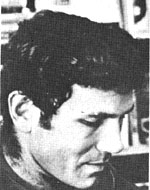
Yonatan Netanyahu
Yonatan "Yoni" Netanyahu
Sgan Aluf Yonatan Netanyahu served in the Israel Defense Forces. Yonatan served with the Intelligence Corps.
Son of Ben-Zion and Tzila. Born on 11 Adar II 5706 [13.3.1946] in New York, United States, where his father was serving on a Zionist-political mission. In 1948, when he was two years old, he came to Israel with his parents. He was educated in the kindergarten in Talpiot in Jerusalem, in the elementary school of the Hebrew Gymnasium, and afterwards in the “HaDarom” elementary school. After the family's further visit to the United States in connection with his father's research, Yoni completed his studies at the aforementioned elementary school and continued to study at the Hebrew Gymnasium in Jerusalem. During this period he stood out for his social activity and his influence on his friends. In his eleventh year of studies he was elected chairman of the student council of the entire Gymnasium, and he also served as a battalion leader in the Jerusalem Scouts, in which he was active.
In 1963 he travelled again with his family to Philadelphia, United States, and there he completed his secondary studies with distinction (in June 1964). Already then Yoni began to be troubled by the thought of the need to set a clear goal for his life. In a letter to a friend in Israel he wrote: “I must feel that not only at the moment of my death will I be able to give an account of the period I lived, but that in every single minute I will be ready to stand before myself and say: this and this is what I did.”
At the end of his studies Yoni returned to Israel, was drafted into the army and volunteered for the Paratroopers Corps. He completed the squad commanders' course as an outstanding trainee, and the officers' course as well. In January 1967 he was discharged from the IDF with the rank of Lieutenant, after taking part in the Samu raid. A few months later, before the Six-Day War, he found himself in the ranks of the army as a reservist. Yoni took part in the battle of Umm Katef (in Sinai), and also in the battles of Darbashiya and Jalabina in the Golan. About four hours before the end of the war, while trying to help a wounded comrade, Yoni was hit by a bullet that shattered his elbow. Bleeding profusely, in a field exposed to Syrian fire, he crawled back to the collection point, collapsed and fainted. Yoni underwent three operations on his arm until it was made functional, though not fully straightened. He was discharged as a disabled IDF veteran.
In September 1967 he travelled to Cambridge, United States, to Harvard University, where he studied physics, mathematics and philosophy. He completed the first academic year with distinction. But the War of Attrition, which was intensifying at that time, disturbed his peace. He wrote to Israel in a letter: “Harvard continues to be wonderful, though I am already impatient to return. I must return! I hope with all my heart that the hand will improve to the point that I can return to reserve duty. This is important, because it is the duty of every good Jew – or, at least, every good Israeli.”
Yoni returned to Israel and enrolled as a student at the Hebrew University, but studied only one semester. At the beginning of 1969 he volunteered for the IDF – this time for career service. After his death his brothers wrote: “His return to the army after the Six-Day War came from purely idealistic motives, and not from consideration of personal interests or any considerations of ‘worthwhileness’. The inner imperative within him drove him to the step he took, and he continued to act according to that same imperative throughout his life. For Yoni never lost his way in life, did not let life lead him, nor the years blur his beliefs. His decision was clear – he must contribute the best of his talents, his time and his energy to the IDF.”
Yoni volunteered for an elite unit and soon revealed outstanding talents as a commander of great initiative and great responsibility. In 1970 he took command of a company in the Haruv Reconnaissance Unit and excelled in carrying out various missions intended to prevent the infiltration of terrorists through the Jordan Valley. That same year Yoni returned to his previous unit, and after a short time was promoted there to the position of deputy commander.
Yoni spent the summer of 1973 in the United States – again at Harvard University. This time he concentrated on the study of political science and international relations – especially in fields concerning Israel and the Middle East in general.
Shortly after he returned from the United States the Yom Kippur War broke out. Yoni went up to the Golan Heights as commander of a select group of fighters and took part in a series of battles and operations. On the morning of the second day of the war Yoni's force spotted two Syrian helicopters that had landed forces near the “Nafakh” base on the Golan front. The following testimony was given by one of the officers about the battle with this force – the first battle in which Yoni and his soldiers took part in the Yom Kippur War: “We received word that in fact we were the last force defending the place... Suddenly heavy fire was opened on us... They caught us in the most convenient way for them... we were exposed in the open... I was very afraid. What I saw then was a picture I will remember all my life; suddenly I saw Yoni rise in complete calm, as if nothing at all was happening there. With hand movements he signaled to the men to rise with him... He began to advance as if he were playing in a live-fire exercise. He walked upright, handing out orders to the right and to the left. I remember my thought then as his soldier: damn it, if he is doing this – then I am no exception! I got up and began to fight.”
The battle ended with the destruction of the Syrian commando force, which numbered about 50 men. Yoni's force, which numbered about 30 men, had two fatalities.
After the Syrian attack in the Golan was halted, Yoni's force joined the IDF counterattack as a security force for the armored battalions. In this framework it carried out operations beyond enemy lines and eliminated a squad of Syrian tank hunters. During the last armored assault of the IDF on the Tel Shams outpost, Yoni heard over the radio that the tank commander of the assaulting force had been badly wounded and left in enemy territory. His rescue involved great risk, for it was only a matter of a short time until the Syrians would enter the area to rescue their own wounded in that battle. Yoni volunteered to rescue the armored commander and carried out the mission. For this action Yoni received in 1974 the Medal of Distinguished Service (Ot HaMofet). In another action in the war Yoni navigated an IDF artillery unit to a point from which the approaches to Damascus could be shelled. Ahead of the capture of the Hermon outpost, which had fallen to the Syrians at the beginning of the war, Yoni and his soldiers positioned themselves in an observation post adjacent to the outpost and supplied the IDF with vital information about it. During the battle they served as a security and blocking force, killing and capturing dozens of enemy soldiers.
After the Yom Kippur War Yoni wished to specialize in the combat methods of other branches of the IDF, and at his request was transferred to the Armored Corps. He commanded an armored company on the Golan Heights during the days of the War of Attrition with the Syrians, and in this post too he excelled. In March 1974 he wrote in one of his letters: “The company sits at the most forward line of the Muba'alet, in a place prone to calamity, and should a war develop, its role will be decisive in the holding battle.” In fact a hard war was already being fought in those very days, and Yoni's position was shelled incessantly. “The force under my command,” wrote Yoni, “is surrounded by a hostile army that hates Israel, including forces from five countries, all of whom rise early to kill us.” Soon he was appointed commander of an armored battalion that took part in the defense of the approaches to the Golan. In fact it was the remnant of a battalion, worn down in the days of the Yom Kippur War. Yoni rebuilt it and raised it to the standing of one of the elite battalions of the IDF Armored Corps. Yoni served as an armored battalion commander until May 1975.
In June 1975, after being promoted to the rank of Lieutenant Colonel, Yoni returned to the same elite unit into which he had been drafted in 1969. He was appointed its commander, and in this post he revealed his full ability in command and in planning daring operations. In this post he also planned, prepared and drilled the rescue force that was meant to free the hostages at Entebbe; Yoni commanded this force and, at the head of his men, reached the terminal at Entebbe in which the hostages were held.
The daring mission was crowned with a success that astonished the entire world, but Yoni did not live to see its conclusion. On Friday, 6 Tammuz 5736 [4.7.1976], in the course of the battle that developed with Ugandan soldiers, Yoni was hit and killed. He was brought to eternal rest in the military cemetery on Mount Herzl in Jerusalem.
Shimon Peres, the Minister of Defense, eulogized Yoni at his grave on 6 July 1976. Among other things he said: “The hardest moment on this night of heroism was when the bitter news arrived that a bullet had torn the heart of one of the finest of the sons of Israel, one of the bravest of Israel's fighters, one of the most promising among the commanders of the IDF – the wonderful Yonatan Netanyahu.”
“Yonatan was an exemplary commander. With his fortitude he overcame his enemies. With the wisdom of his heart he won the hearts of his comrades. Dangers did not alarm him, and victories did not lift up his heart. He demanded much of himself, while to the IDF he gave the sharpness of his mind, his talent for action, his diligence, his battle... In the army he taught volunteering, to his subordinates he gave human warmth, and in battle he instilled calm. And of him one may say in the words of David: they were swifter than eagles, they were stronger than lions... O Jonathan, thou wast slain in thine high places (2 Samuel 1:23, 25). The distance in space between Entebbe and Jerusalem suddenly shortened the distance in time between Jonathan the son of Saul and Jonathan the son of Ben-Zion. The same heroism in the man. The same lament in the heart of the nation.”
His name has been commemorated, among others, in: Camp Yonatan – a camp in the north of the country, where Yoni served as battalion commander. The Yonatan Netanyahu School – a state school in Jerusalem (in Ramot). The Yonatan School – a municipal school in Netanya. A synagogue in Netanya. The Yonatan neighborhood and a public garden named after him – Quarter C in Ashdod. In Afula – the Yonatan neighborhood. A public garden in Be'er Sheva. A child care center in Be'er Sheva. The Yonatan neighborhood – in Ofakim. A street in New York, in the Bronx: Lt. Colonel Jonathan Netanyahu Lane. A garden on the campus of the Hebrew University in Jerusalem, at Givat Ram. Scholarships for students in Jerusalem and Tel Aviv. The Yonatan Netanyahu Fund at Cornell University, USA. A branch of Hadassah in the United States, in Miami, Florida. Branches of B'nai B'rith. A shooting club in Beit Shemesh. A children's day center in Mevaseret Jerusalem. The Yonatan Netanyahu basketball championship cup of the high schools of Jerusalem (grades 9–10) (on behalf of the Youth, Sports and Society Department of the Jerusalem Municipality). Yoni Grove – in the Jewish National Fund forests, on the eastern slopes of the Ramot neighborhood, Jerusalem. The Yonatan Institute.
-
Sgan AlufRank as published: סגן אלוף | Hebrew date: 6th of Tammuz 5736 | Resting place: Cemetery Mt. Herzl (Military)
Branch
Highest rank
Honors · 1 decoration
 Awards & Decorations
1
For valor
Medal of Distinguished Service
 Burial Information
- The cemetery · the exact grave is not yet placed
- 9 monuments carrying the name
Laid nearby · Section Dalet-4 (ד-4)
100 others are held in this section; the nearest 12 by row and grave.
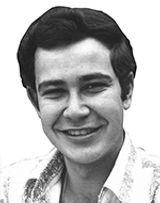 Refael BzezinskiRow 7 · Grave 3
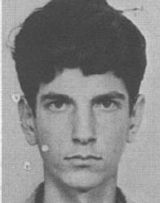 Ehud AmirRow 7 · Grave 4
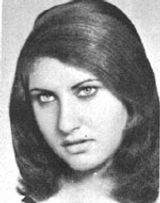 Simha-Sima HayatRow 7 · Grave 5
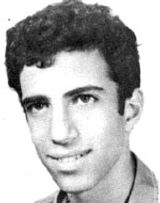 Avraham MahalalRow 7 · Grave 6
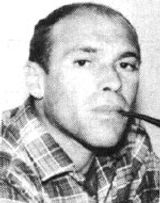 Tzvi BranaRow 7 · Grave 7
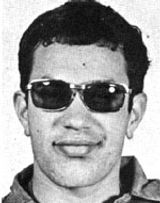 Yizhal FarushRow 7 · Grave 8
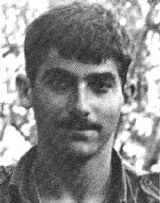 Gideon GlobeterRow 7 · Grave 9
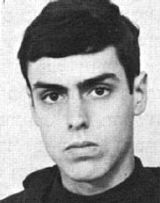 Ehud GideonRow 8 · Grave 2
 Matzliah Shalev ShiloRow 6 · Grave 2
 David EzraRow 8 · Grave 1
 Giora IsraelRow 8 · Grave 3
 Nahum Oren OhanonRow 6 · Grave 3
This page is permanent and free. No fee to view it, no advertising, no tracking, and no account required. It will not be taken down.
Are you family? This record can be claimed and maintained by those who knew Yonatan. Claim this record.


Be the first to honor Yonatan.
Leave a Tribute