In memory of

Shenhav Yaakov Gherafi

Killed at the Nova festival on October 7, 2023, aged 29.

Israel

Her life

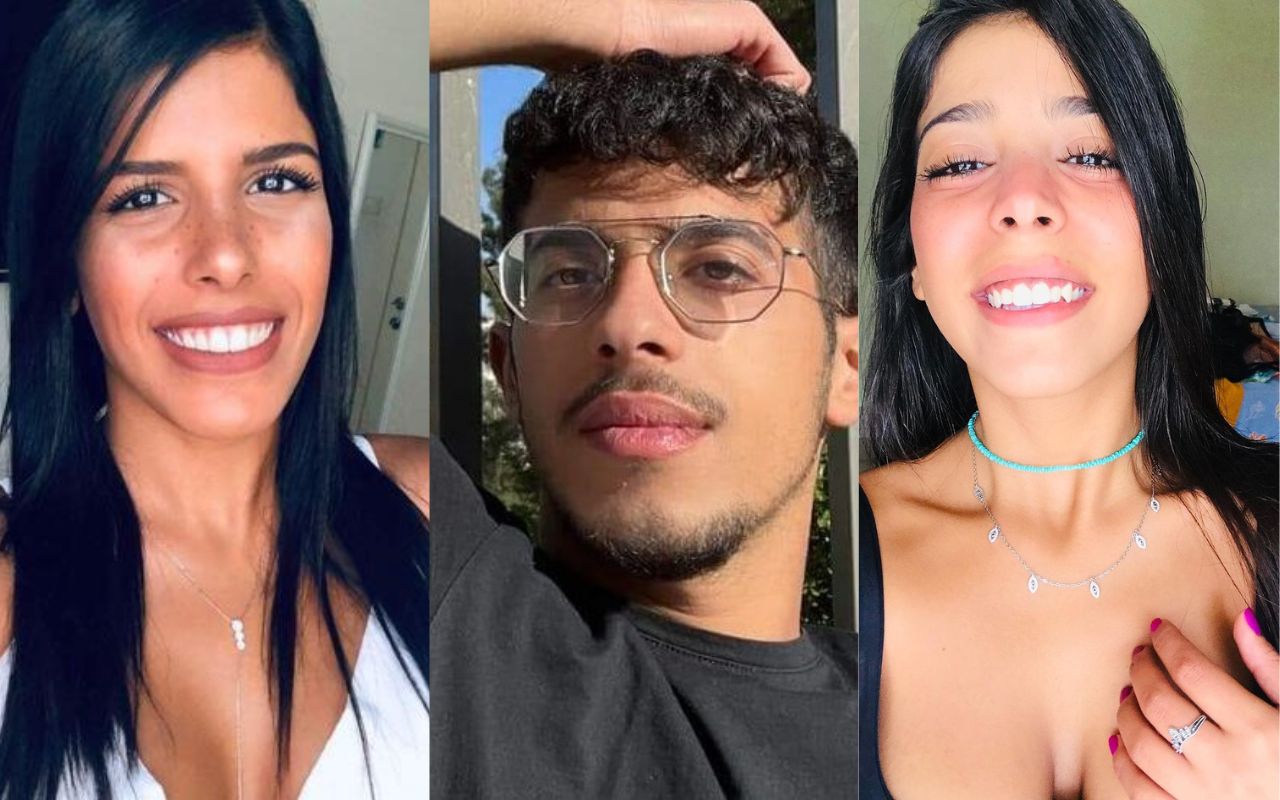
Aunts and nephew. Murdered by Hamas terrorists near the Supernova music festival on October 7.

Her story

Shoham Yaakov, 29, her sister Shenhav Yaakov, 26, from Herzliya, and their nephew Liel Jerafi, 18, from Jerusalem, were murdered by Hamas at the Supernova music festival on October 7.

Shoham and Shenhav were both working as part of the festival’s production staff, and they invited Liel to join them at the rave.

When the rocket fire began, the three decided to flee the site via car, and at some point stopped to seek safety in a roadside bomb shelter. They were all slain inside the shelter along with dozens of others when Hamas terrorists threw grenades inside and opened fire on the huddled partygoers.

Two brothers in the family headed down to the Supernova site to try and find their loved ones that Saturday morning, encountering roadblocks, cops and IDF troops who tried to convince them to turn around. They searched for hours and hours but kept coming up empty handed.

For a week, the family couldn’t find any trace of the three despite constant searching. A week after the massacre, Shenhav’s body was identified, and a day later Liel and Shoham were also confirmed killed.

Shoham was buried in Herzliya on October 15, and Shenhav was buried next to her a day later, on October 16. Liel was buried in Beit Shemesh on October 16.

The sisters are survived by their parents, Rachel and Neria Yehiel, and their seven older siblings, Dudu, Avishag, Dvir, Sapir, Ohad, Elad and Hadas.

Liel is survived by his parents, Dudu and Nardit, and his younger siblings Adir, 14, Itay, 9 and Shaylee, 7.

Born and raised in the Kiryat Yovel neighborhood of Jerusalem, Liel focused his high school studies on cyber communications, and was slated to soon enlist in the IDF, aiming for a spot in the prestigious 8200 intelligence unit.

“He really loved computers, he was always on the computer,” his father, Dudu, told a local Jerusalem news site. “He was supposed to join 8200 and all his future was ahead of him. He had a big future, he was an excellent student. A smart kid, kind and quiet.”

Dudu said Liel’s younger siblings “loved him so much. He was a true firstborn, he would take care of them, talk to them, advise them. He was a role model for them, he was modest, not one who partied much, even though he was murdered at a festival.” His father said, “I miss his smile, his laughter, the nonsense he loved. I think about him all the time, about his positive spirit and his joy for life.”

Eleven months after he was killed, Liel’s mother, Nardit, wrote on Facebook to “my angel in heaven.”

“It’s already a year without you, a year of longing and endless pain, a year that your voice has been silent,” she wrote. “You left an empty space and a hole in my heart in the shape of you, my beautiful angel… Liel, my heart breaks anew every day. I miss you so much.”

Shoham and Shenhav were very close to each other and the rest of the family, were huge fans of the Maccabi Tel Aviv soccer team and loved to go out partying together, their loved ones said.

Avishag, their older sister, told Israel Hayom that Shoham and Shenhav lived every moment of their short lives to the fullest.

“Shoham was very serious on the one hand, but also loved to laugh, to live big and to take life by storm. She dreamed big. She was a personal trainer and a nutritionist, it was important to her to instill in others a healthy lifestyle. She dedicated her life to exercise and even learned boxing,” said Avishag.

“She was always working on herself, she took big trips to faraway places. During our happiest moments, during holidays and vacations, she was the family photographer, she captured every moment,” she added.

Shenhav, the youngest of the nine siblings, was “our baby, who arrived after four brothers and four sisters,” said Avishag.

“She saw day-to-day life as boring and she had big dreams,” she said. “She wanted to explore the world, to fly to Australia for a long period. She was an incredible baker, for every birthday she would make my daughter a gorgeous cake. She also planned to open a bakery.”

The two sisters, she said, “were the centers of our lives, they were so close to each other from childhood until the moment they were murdered. They were opposites who completed each other, the sun and the moon — each of them lit up the world in their own way.”

Hadar Cohen, a niece to Shoham and Shenhav, wrote on Instagram how hard it was to come to terms with the fact that “the aunts who were always there for me, and always hung out with me, and took care of me, and made me laugh, and were my best friends — but so much more — are no longer here.”

“My aunts who were the most beautiful, kindest, successful and funny are not around anymore,” she added. “Those who raised me and also sort of grew up with me, Shenhav who tried unsuccessfully to teach me Justin Bieber songs, and Shoham who would drive even an hour so I could braid her hair before she’d go to a festival.”

“My aunts who taught me what unconditional love was, who always took care of me and wanted the best for me — they’re not coming back and I didn’t even get to say goodbye,” she added.

“We miss Shoham and Shenhav and Liel all the time, at every holiday, at every event,” their brother and uncle, Ohad, told i24 news in August. “Their loss is strongly felt in every moment of our lives. Our family will never return to what it was.”

The Nova festival

October 7, 2023

On the morning of 7 October 2023, during the Jewish holiday of Shemini Atzeret and Simchat Torah, Hamas's military wing, the al-Qassam Brigades, attacked the Supernova Sukkot Gathering, the Nova festival, an open-air trance music festival near kibbutz Re'im in the Eshkol Regional Council, about five kilometres from the Gaza border. It was one part of the wider assault on southern Israel that day. 378 people were killed at the festival or close to it, 344 civilians and 34 security personnel, and 44 were taken hostage. It was the deadliest single site of the 7 October attacks and the deadliest attack on a concert ever recorded.

The festival had begun the evening before, 6 October, as a weekend gathering at the end of Sukkot. The organisers had moved it to this site only two days earlier. There were several stages, camping, food and bars, and about 3,500 people, most of them young Israelis in their twenties and thirties from across the country. Police and security were present. It was billed as a celebration of friends, love and infinite freedom. Investigations later concluded that the attackers most likely did not know the festival was there; they appear to have turned toward it after seeing the crowd on the way to other targets.

At about 6:30 a.m. a rocket barrage began, covering the infiltration, and the sirens sounded. Around 6:35 the senior police commander on duty, Deputy Superintendent Nivi Ohana, ordered the event shut down and the crowd sent out along Route 232, a decision that let most of those there begin to leave. By about 7:00 people were being directed out. Many who fled north or south along the highway ran into fire from gunmen who had taken the junctions and set ambushes. Police opened a dirt track east through the fields, and thousands escaped toward Patish on foot or by car. Dozens of cars were left behind along Route 232 and on the grounds.

The main attacking force, more than a hundred men of the 1st and 3rd companies of Hamas's Nuseirat Battalion in pickup trucks and on motorcycles, had been heading for Netivot. Seeing the festival, they turned. By about 8:00 to 8:20 they were fighting police at a roadblock near the site with rifles and rocket-propelled grenades. An Israeli tank that arrived under heavy fire, most of its crew already killed or wounded, slowed them for a time before it was forced to pull back south. As the perimeter collapsed, the gunmen entered the grounds at around 9:00 to 9:15. They set up a command post, shot people who had stayed or come back, and hunted those hiding in bushes, orchards, portable toilets, dumpsters and under structures. An ambulance where about twenty people had taken shelter was hit by a rocket-propelled grenade, and most inside were killed. Hostages were seized on the highway and on the grounds. Rape and mutilation are documented in survivor testimony, by emergency responders and by later investigations, and the attackers spread video of the killings and abductions.

At about 9:50 the main force withdrew toward Be'eri to join other units. A second wave of armed and unarmed men from Gaza reached the site around 10:20 and looted the dead. The first large Israeli reinforcements, from the Givati Brigade among others, arrived after 11:30, fought the remaining attackers and had cleared the area by about 3:00 p.m. Around twenty of the attackers were killed in the fighting at the festival.

Of the 378 killed, 171 died on the festival grounds or the stretch of Route 232 beside them; the rest were killed or taken farther away across the Gaza envelope as they fled. The 34 security personnel included off-duty soldiers who had come to dance, police officers, many of them killed fighting, and two Shin Bet agents. Among the dead were the festival's organisers Osher and Michael Vaknin, journalists, and people of many nationalities. The 44 hostages were Israelis and dual nationals; releases, rescues and the recovery of remains went on over the months and years that followed, until the last living hostage of the war came home in October 2025 and the last remains were recovered soon after.

The Nova festival was the largest killing of civilians at any single site on 7 October, carried out while the nearby kibbutzim, among them Be'eri, Kfar Aza, Nir Oz and Holit, were under attack at the same time. Early counts varied, from at least 260 bodies recovered from the grounds to 364 in November 2023, before the final toll of 378 was established. What happened there has been recorded in survivor testimony, military inquiries, criminal investigations, films and memorial exhibitions.

Everyone taken by The Nova festival →

October 7, 2023

October 7, 2023

It began at twenty past six in the morning with rocket fire and a coordinated crossing of the perimeter at some thirty points.

At the Nova music festival near Re'im, three hundred and sixty-four people were killed. Most were in their twenties. They had been dancing since before dawn and had nowhere to go across open ground.

In the kibbutzim and villages along the fence - Be'eri, Kfar Aza, Nir Oz, Nahal Oz, Holit and others - families were killed in their houses and their shelters. Be'eri lost about a tenth of its people.

About twelve hundred were killed in all, the large majority of them civilians, and two hundred and fifty-one people were taken into Gaza.

Among the dead were the volunteers and off-duty people who drove toward it without orders. Rachel Edri of Ofakim kept the men who held her and her husband talking for twenty hours, feeding them biscuits and coffee, until a rescue reached the house.

It was the deadliest day for Jews since the Holocaust, and Israel stopped.

Everyone taken by October 7, 2023 →

The ground

The Nova festival

October 7, 2023 · 404 named here

  • Shenhav Yaakov Gherafi
  • 214 others whose spot is known · point at one to see who
  • The other grounds that morning
Shenhav Yaakov Gherafi

No exact spot is recorded for Shenhav Yaakov Gherafi yet; the ring marks The Nova festival.

Media

Shoham Yaakov, Liel Jerafi and Shenhav Yaakov (Courtesy)
Shoham Yaakov, Liel Jerafi and Shenhav Yaakov (Courtesy) 0 Views JPG 136 KB
Portrait
Portrait 0 Views JPG 15 KB

No monument carrying this name is recorded yet.

Who was beside her is still being drawn.

What people have said

Nobody has said anything for Shenhav Yaakov Gherafi yet.

↑