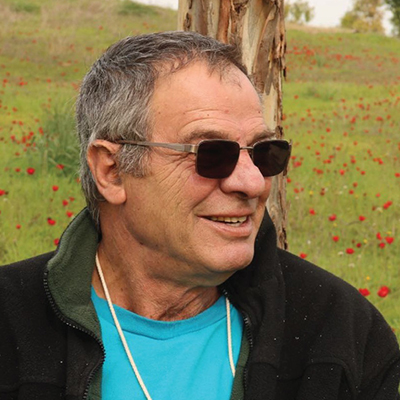
Yona Fricker, 69, and Mordechai Naveh, 76, were murdered by Hamas terrorists in Kibbutz Be’eri on October 7.
The couple was buried on nearby Kibbutz Revivim — Naveh on October 19, and Fricker on November 8. Fricker was presumed missing in the weeks after the massacre, and her body was only identified a month later.
Fricker and Naveh spent the last two decades of their lives together, after both being married previously. Eulogies posted on the Kibbutz Be’eri website described them as “a pair of lovebirds.”
Naveh moved to Israel from Romania with his family in 1959 and settled in Kibbutz Be’eri at the age of 13 as part of the Youth Aliyah program. He served as a Navy SEAL and mechanic in his mandatory military service between 1967 and 1970, and married his first wife Meira shortly after he was released. She died of cancer in 2000.
He is survived by four children from his first marriage, Oshri, Gitit, Elad and Dotan, and eight grandchildren.
His friends and family remember him as a man who loved people and had wonderful relationships with everyone on the kibbutz — including the Bedouin workers from Rahat and the Palestinian workers from the Gaza Strip. He was an involved member of the community, managing the pub and helping to manage the basketball team.
In recent years he had taken up carpentry, and worked with an initiative helping elderly people in the kibbutz aged-care facility make wooden toys.
On the morning of October 7, Naveh was at his home on the kibbutz, fielding messages from neighbors on WhatsApp about how to secure their safe room doors against the terrorists who had infiltrated the Gaza border community.
When he learned that Fricker was having trouble locking the door of her safe room he left his house to try to save her immediately, but was injured on the way. He was spotted and evacuated by two members of the local security team and was killed when terrorists destroyed the building where he was hidden.
“The kibbutz he built with his own hands was hit hard, but the roots he planted in it remained strong. The houses will be rebuilt. The flowers will bloom again,” read his eulogy on the Kibbutz Be’eri website.
His son, Dotan, wrote on Facebook, “Everyone says I look like Mom, but I naturally always felt closer to Dad in a number of ways. His love of creating with his hands, of being exact, of planning. All of his technical abilities I aspired to have as well… Of course there were also many differences and disagreements but I knew that I could always go to him for help and he would come anywhere for me.”
Fricker was born in Tel Aviv, to two Holocaust survivors. After a difficult childhood, she settled in Kibbutz Be’eri as a lone soldier in 1972, where she married her first husband and gave birth to her first child, Aviva. They divorced two years later.
She had two more daughters, Sigal and Stav, with her second husband, Albert Miles, who was also killed in Be’eri on October 7.
Among various roles on the kibbutz, Fricker most enjoyed working as a seamstress. She spent many years in this career, even after she reached retirement age. She loved wearing colorful, flowery dresses and fancy shoes, and was always well-groomed despite the casual environment of the kibbutz. She also loved to paint, especially oil on canvas.
Her neighbors remember her as softly-spoken, always wearing a smile.
Her son-in-law, Andrey Elgort, wrote on Facebook that Fricker was “the best mother, grandmother and mother-in-law in the world, and we will never forget you, we will always remind your beloved granddaughters how much you were there for them and how much you loved them.”
Three days before October 7, during Sukkot, the extended family had gathered to celebrate at Fricker’s house. According to their friends and neighbors, the couple had a happy blended family, taking care of each other’s children as their own and enjoying family meals together.