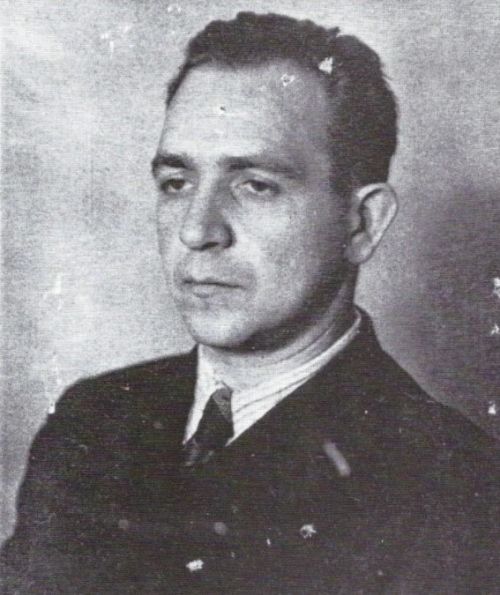
In memory of
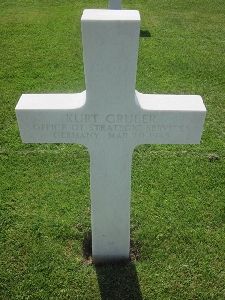
Kurt Gruber
1913 – 1945
- Died in service
- March 20, 1945
- Worked
- Office of Strategic Services
- The day
- The Second World War
Their life
Following the Allied landing at Normandy in June 1944, the OSS dispatched over 200 spies into Nazi Germany. The London office of the Secret Intelligence Branch (SI), under the leadership of the late CIA director William J. Casey, organized and dispatched over 100 missions from September 1944 through April 1945. Agents recruited from the ranks of church dissidents, Spanish civil war veterans, political refugees, and underground labor groups throughout occupied Europe gathered military intelligence critically important to the advance of the Allied armies, leading to the surrender of Germany on 8 May 1945. Each who volunteered would be offered "overseas agent employment contracts," which would provide compensation during training and the performance of their missions, and death benefits for their families should they not return. | Kurt Gruber (Chisel mission), a coal miner from the Ruhr area, Germany, was killed when the US Air Force plane carrying him to his destination in the Ruhr Valley crashed in bad weather on 19 March 1945. | From an initial list of eleven potential Free Germany Committee recruits, seven were chosen for the TOOL missions, which were named Hammer, Chisel, Pickaxe, Mallet and Buzzsaw. In addition to Lindner, Ruh, Buchholz, and Gruber, were selected Werner Fischer, Walter Struewe, and Emil Konhäuser. Like the first group, the latter three had gone underground after the Nazis destroyed the trade unions in Germany; each had grown up in the German towns and cities that later became the targets of their missions; and their ages ranged from 30-41, considered important to avoid the suspicions that younger, conscriptage males would arouse | Chisel Mission: Chisel revolved around a Communist coal miner turned intellectual named Karl Macht. The drop date was set for 19 March. Lieutenant Commander Simpson was having trouble with the Air Corps, but his difficulties appeared to be waning.* Or so it seemed until he learned that the plane scheduled to fly Chisel was badly in need of repair and carried a faulty radio. Usually OSS was placed in the position of asking the Air Corps to fly deep missions, but on this occasion the roles were reversed. Simpson wanted the flight scrubbed, but the Air Corps opted to "get it over with." The aircraft was A-26 #524.. This plane had carried out the OSS Hammer mission to Berlin some days earlier. Now it was sitting on the tarmac at Harrington with both engines torn down. Additionally, a storm was brewing and weather all the way to the target was forecast to be marginal. The crew assigned to fly CHISEL had never worked together. *The problems with the Air Corps were largely those of coordination. The 492nd Bomb Group had thought it would be given a chance to fly regular bombing sorties after it had finished supporting the maquis in France. Agent dropping was both dangerous and unglamorous. | On March 19th orders were given and cancelled several times to fly the Chisel mission (the first A-26 operation). It was brought to everyone's attention that the A-26 needed a 100 hour check and the radio altimeter needed recalibrating. The Loran and Gee navigation systems needed checking and that Lt Emmel had insufficient in the A-26 - he had only flown it twice at night. | Major Tresemer had only been in an A-26 once before and had been completely bewildered by "ground pilotage" at such a speed. None of the crew - pilot, navigator or bombardier had ever flown together before, and were unfamiliar with the ship as a whole. | It was finally decided to put the ship into the hanger for repair and inspection. At 4 o'clock Comdr Simpson heard a rumour that Col Upham had again changed his mind and proceeded to headquarters to find that this was true. Upon advising Col Upham that both engines were down, that the altimeter was not operating properly he was told to call the hanger and get the ship back into commission and have it ready by 7.30. | The whole crew advised the Colonel that it would be impossible to get the flight plan and mission organised by that time, but the colonel stated that this was an order from Headquarters and it had to be done. The weather section added to the unease of the crew, stating that a bad front would be crossing the area and conditions on the continent were not good. | The mission finally got off the ground at approximately 10.00 after instructions from Comdr Simpson and Lt Fogarty on operating the special apparatus in the ship they were not familiar with. Final statements were made by the pilot, navigator and bombardier to Col Upham that the trip was not feasible. | The aircraft did not return from the mission, it was found after the war on a moor in Germany with the remains of the crew. Although this train of events may sound inconceivable it shows the almost impossible decisions expected of a commanding officer during those hectic times. Allied and German commanders had to issue orders that were virtual death sentences to their airmen. Commander Simpson's report was filed and marked "Top Secret" | Lieutenant Emmel, the pilot, was not fully "checked-out" in the A-26. Nevertheless, a desk-bound colonel decreed that the mission would go. At 2230 on the night of 19 March 1945, the glossy black bomber roared into the rainy sky and turned east. Its motors quickly droned into the blackness, and in a few moments, all that was left was the sweep of the wind and the splattering of rain drops on the oil-soaked parking stands. There were four crew members and the agent aboard. None was ever hear from again. | Aircraft A26 #524 was a Invader A-26C with serialnumber 43-22524 from 856 Bomb Squadron, 492nd Bomb Group, USAAF 8th Air Force. It took off from Harrington, Great Britain on March 19, 1944 at 23:20 hours, 2 hours and 17 minutes late. It hit high ground on Grosse Moor, north of Osnabruk, near Bramsche, Germany on 1st A26 mission from Harrington. Remains of the aircraft were discovered after war. | The crew: All were killed | Lt O.N. Emmel USAAF 25th BG - Pilot | Maj E.C. Tresemer USAAF - Bombardier | Maj J.W. Walch USAAF 25th BG - Navigator | S/Sgt F.J. Brunner USMC / OSS - Gunner | Kurt Gruber - OSS agent | S/Sgt Brunner, K. Gruber, Major Tresemer & Major Walch are buried at Ardennes American Cemetery, Neupre, Belgium. | In January 1946, the War Department endorsed an OSS recommendation that Kurt Gruber, who was killed in the airplane crash that aborted the CHISEL mission, be posthumously awarded the Medal of Freedom. Postwar politics, however, interevened. The OSS's final report on wartime penetration operations states that, "because of the political background of these men, there is serious doubt as to whether they could fit into our postwar German operations." Kurt Gruber's family never got word of the US Army's decision to posthumously issue him the Medal of Freedom.
What is held of them
What people have said
Nobody has said anything for Kurt Gruber yet.