Every site on NeuraWeb has a .nw name, and that name is a permanent identity. This site, requiem.nw, is registered to and run by NeuraWeb Global, Inc. Visit it through Navigator and your visit is private by design: no one watches, tracks or collects from you.
Secure unesites use HTTPS and UNES
Look for a lock, https:// or unes:// at the start of the address. Each one means your connection is encrypted and you're on the official site. UNES is NeuraWeb's own secure connection, the one Navigator uses. HTTPS is the same protection on the open web. Only share personal information on a site that shows one of these.
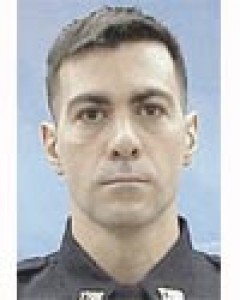
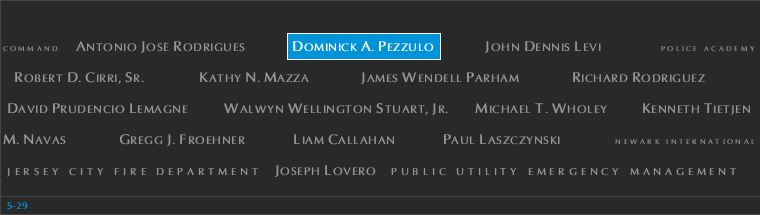
Police Officer Dominick Pezzulo was killed in the September 11, 2001, terrorist attacks while attempting to rescue the victims trapped in the World Trade Center.
As the South Tower collapsed, Officer Pezzulo and several other officers quickly ran to the building's elevator shaft. Only Officer Pezzulo and two other officers survived the initial collapse, but soon afterward, Officer Pezzulo was struck by falling debris.
The two officers that survived say, "Just remember me, I died trying to save you guys," were Officer Pezzulo's last words. He then fired a single shot into the air, trying to let the others know where his friends were, and then died.
Officer Pezzulo had served with the Port Authority of New York and New Jersey Police Department for 13 months.
Officer Pezzulo had served with the Port Authority of New York and New Jersey Police Department for 13 months.
Survived by
He is survived by his wife and two young children.
The World Trade Center
September 11, 2001
The first aircraft struck the north tower at 8:46 in the morning, the second the south tower at 9:03. The south tower came down at 9:59, the north at 10:28.
Two thousand seven hundred and fifty-three people were killed here: in the offices above the impacts, on the floors below them, in the plaza, in the lobbies, on the stairs, and aboard the two aeroplanes. Three hundred and forty-three were firefighters of the New York City Fire Department. Seventy-one were law enforcement officers. Eight were paramedics and emergency medical technicians.
On a clear Tuesday morning, four airliners were taken. Two were flown into the towers of the World Trade Center in New York, one into the western face of the Pentagon, and one came down in a field near Shanksville, Pennsylvania, after the passengers and crew went forward at the cockpit door.
Two thousand nine hundred and seventy-seven people were killed. Three hundred and forty-three were firefighters of the New York City Fire Department. Seventy-one were law enforcement officers. Eight were paramedics and emergency medical technicians. One hundred and twenty-five died at the Pentagon, military and civilian together. The rest - some two thousand four hundred of them - had gone to work, or boarded a plane, and belonged to no service at all.
None of them began that morning as heroes. A great many of them ended it as heroes: men and women who carried strangers down stairwells, who stayed with people who could not walk, who held a door, who went back up. Four men on a flight over Pennsylvania, who had thirty minutes of telephone calls and knew what had already happened, decided where their aircraft would come down.
At Arlington, the nation set aside its own rules of eligibility and buried the Pentagon's civilian dead in national ground. It had decided that on this day the distinction did not apply.