Every site on NeuraWeb has a .nw name, and that name is a permanent identity. This site, requiem.nw, is registered to and run by NeuraWeb Global, Inc. Visit it through Navigator and your visit is private by design: no one watches, tracks or collects from you.
Secure unesites use HTTPS and UNES
Look for a lock, https:// or unes:// at the start of the address. Each one means your connection is encrypted and you're on the official site. UNES is NeuraWeb's own secure connection, the one Navigator uses. HTTPS is the same protection on the open web. Only share personal information on a site that shows one of these.
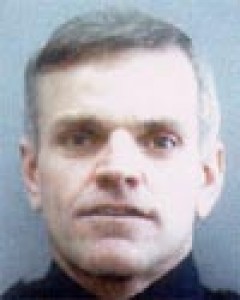
Detective Claude Richards was killed in the September 11, 2001, terrorist attacks while attempting to rescue the victims trapped in the World Trade Center.
Detective Richards was a U.S Army veteran and had served with the New York City Police Department for 18 years. He was assigned to the Bomb Squad.
His story
Claude Daniel Richards was born and raised in Bethpage, Long Island, and later lived in Greenwich Village. He served in the United States Army from 1977 to 1980 as an Airborne Ranger and was a member of the Presidential Honor Guard.
He was appointed to the New York City Police Department on 3 January 1983. In 1986 he was assigned to the Arson and Explosion Division of the Special Investigations Division, whose members were later merged into the Bomb Squad. He became an expert bomb technician, received his detective's shield on 21 July 1989 and was promoted to detective second grade on 20 December 2000. He worked on major cases including the 1993 World Trade Center bombing, the TWA Flight 800 disaster, a series of retail store firebombings in Queens and an incendiary device set off on a subway train. From September 1996 to October 1997 he took leave to serve with the United Nations International Police Task Force in Bosnia, experience he drew on as the Bomb Squad's intelligence coordinator, working with the Secret Service, the ATF and the State Department.
On 11 September 2001, Detective Richards entered 6 World Trade Center with the Bomb Squad and was killed. It was his second day back at work after a short leave to bury his brother, Bill, a Vietnam War veteran and double amputee who had died a few weeks earlier of complications from his injuries. Detective Richards was 46 years old. He was known as a private, even-tempered man who loved to travel.
Survived by
He is survived by his three sisters and two brothers.
The World Trade Center
September 11, 2001
The first aircraft struck the north tower at 8:46 in the morning, the second the south tower at 9:03. The south tower came down at 9:59, the north at 10:28.
Two thousand seven hundred and fifty-three people were killed here: in the offices above the impacts, on the floors below them, in the plaza, in the lobbies, on the stairs, and aboard the two aeroplanes. Three hundred and forty-three were firefighters of the New York City Fire Department. Seventy-one were law enforcement officers. Eight were paramedics and emergency medical technicians.
On a clear Tuesday morning, four airliners were taken. Two were flown into the towers of the World Trade Center in New York, one into the western face of the Pentagon, and one came down in a field near Shanksville, Pennsylvania, after the passengers and crew went forward at the cockpit door.
Two thousand nine hundred and seventy-seven people were killed. Three hundred and forty-three were firefighters of the New York City Fire Department. Seventy-one were law enforcement officers. Eight were paramedics and emergency medical technicians. One hundred and twenty-five died at the Pentagon, military and civilian together. The rest - some two thousand four hundred of them - had gone to work, or boarded a plane, and belonged to no service at all.
None of them began that morning as heroes. A great many of them ended it as heroes: men and women who carried strangers down stairwells, who stayed with people who could not walk, who held a door, who went back up. Four men on a flight over Pennsylvania, who had thirty minutes of telephone calls and knew what had already happened, decided where their aircraft would come down.
At Arlington, the nation set aside its own rules of eligibility and buried the Pentagon's civilian dead in national ground. It had decided that on this day the distinction did not apply.