Yehudi Menuhin
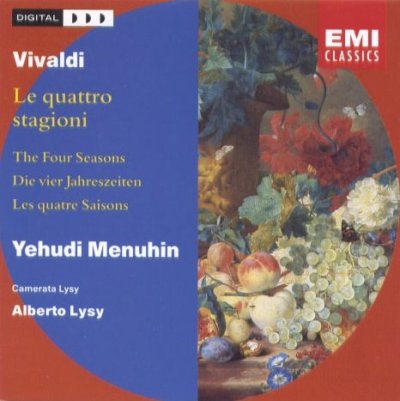
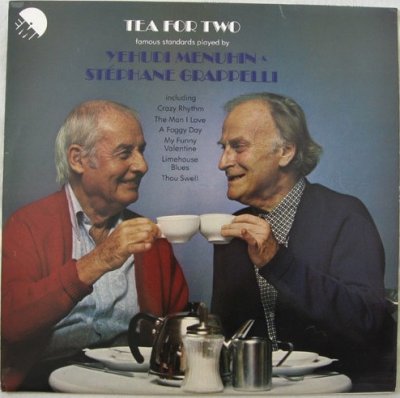
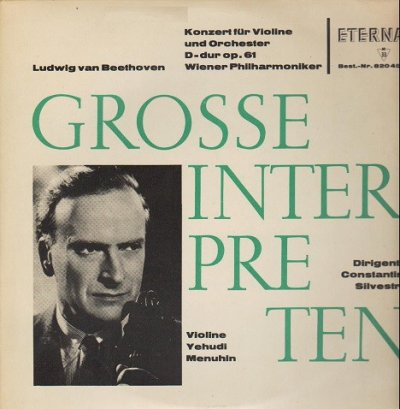
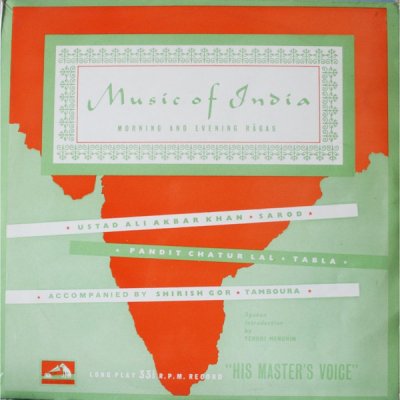
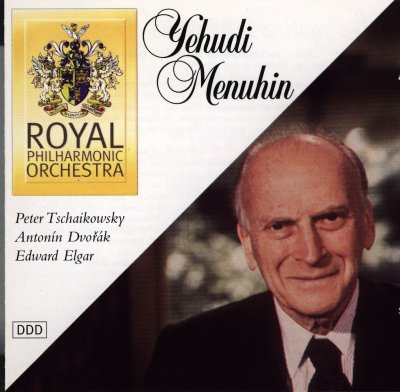
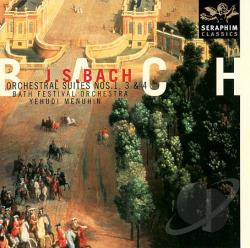
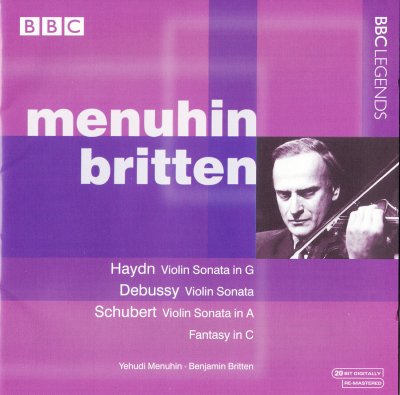
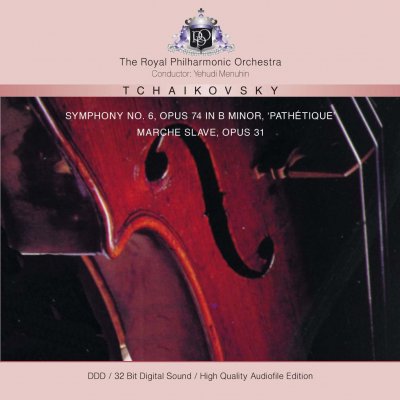
Yehudi Menuhin, Baron Menuhin, OM, KBE (22 April 1916 – 12 March 1999) was an American-born violinist and conductor who spent most of his performing career in the United Kingdom. He became a citizen of Switzerland in 1970, and a British citizen in 1985. He is widely considered one of the greatest violinists of the 20th century. Yehudi Menuhin was born in New York City, United States, as Yehudi Mnuchin, to Jewish parents from what is now Belarus. Through his father Moshe Mnuchin, a former rabbinical student and anti-Zionist, he was descended from a distinguished rabbinical dynasty. In late 1919 Moshe and his wife Marutha (née Sher) became American citizens, and changed the family surname to Menuhin. Yehudi's sisters were concert pianist and human rights worker Hephzibah Menuhin and pianist, painter and poet Yaltah Menuhin. Menuhin's first violin instruction was at age four by Sigmund Anker (1891–1958); his parents had wanted Louis Persinger to teach him, but Persinger initially refused. Menuhin displayed exceptional talent at an early age. His first public appearance, when only seven, was as solo violinist with the San Francisco Symphony Orchestra in 1923. Persinger then agreed to teach him, and accompanied him on the piano for his first few solo recordings in 1928–29. When the Menuhins went to Paris, Persinger suggested Yehudi go to his old teacher, Belgian virtuoso and pedagogue Eugène Ysaÿe. He did have one lesson with Ysaÿe, but disliked his teaching method and his advanced age. Instead, he went to the Romanian composer and violinist George Enescu, under whose tutelage he made recordings with several piano accompanists, including his sister Hephzibah. He was also a student of Adolf Busch. In 1929 he played in Berlin, under Bruno Walter's baton, three concerti by Bach, Beethoven and Brahms. His first concerto recording was made in 1931, Bruch's G minor, under Sir Landon Ronald in London, the labels calling him "Master Yehudi Menuhin". In 1932 he recorded Edward Elgar's Violin Concerto in B minor for HMV in London, with the composer himself conducting; in 1934, uncut, Paganini's D major Concerto with Emile Sauret's cadenza in Paris under Pierre Monteux. Between 1934 and 1936, he made the first integral recording of Johann Sebastian Bach's sonatas and partitas for solo violin, although his Sonata No. 2, in A minor, was not released until all six were transferred to CD. He performed for Allied soldiers during World War II and, accompanied on the piano by English composer Benjamin Britten, for the surviving inmates of the Bergen-Belsen concentration camp after its liberation in April 1945. He returned to Germany in 1947 to play concerto concerts with the Berlin Philharmonic under Wilhelm Furtwängler (who had remained, and actively conducted, in Berlin through the entire Nazi era to the war's end) as an act of reconciliation, the first Jewish musician to do so in the wake of the Holocaust, saying to Jewish critics that he wanted to rehabilitate Germany's music and spirit. He and Louis Kentner (brother-in-law of his wife, Diana) gave the first performance of William Walton's Violin Sonata, in Zürich on 30 September 1949. He continued performing, and conducting (such as Bach orchestral works with the Bath Chamber Orchestra), to an advanced age, including some nonclassical music in his repertory. Menuhin credited German philosopher Constantin Brunner with providing him with "a theoretical framework within which I could fit the events and experiences of life". In 1952 Menuhin met and befriended the influential yogi B. K. S. Iyengar before he had come to prominence outside India. Menuhin arranged for Iyengar to teach abroad in London, Switzerland, Paris and elsewhere. This was the first time that many Westerners had been exposed to yoga. Following his role as a member of the awards jury at the 1955 Queen Elisabeth Music Competition, Menuhin secured a Rockefeller Foundation grant for the financially strapped Grand Prize winner at the event, Argentine violinist Alberto Lysy. Menuhin made Lysy his only personal student, and the two toured extensively throughout the concert halls of Europe. The young protégé later established the International Menuhin Music Academy in Gstaad, in his honor. Menuhin made several recordings with the German conductor Wilhelm Furtwängler, who had been criticized for conducting in Germany during the Nazi era. Menuhin defended Furtwängler, noting that the conductor had helped a number of Jewish musicians to flee Nazi Germany. In 1957, he founded the Menuhin Festival Gstaad in Gstaad, Switzerland. In 1962, he established the Yehudi Menuhin School in Stoke d'Abernon, Surrey. He also established the music program at The Nueva School in Hillsborough, California, sometime around then. In 1965 he received an honorary knighthood from the British monarchy. In the same year, Australian composer Malcolm Williamson wrote a violin concerto for Menuhin. He performed the concerto many times and recorded it at its premiere at the Bath Festival in 1965. Originally known as the Bath Assembly, the festival was first directed by the impresario Ian Hunter in 1948. After the first year the city tried to run the festival itself, but in 1955 asked Hunter back. In 1959 Hunter invited Yehudi Menuhin to become artistic director of the Festival. Menuhin accepted, and retained the post until 1968. At the Edinburgh Festival in 1957 Menuhin premiered Priaulx Rainier's violin concerto Due Canti e Finale, which he had commissioned Rainier to write. He also commissioned her last work, Wildlife Celebration, which he performed in aid of Gerald Durrell's Wildlife Conservation Trust. Menuhin also had a long association with Ravi Shankar, which began with their 1966 album West Meets East. During this time, he commissioned composer Alan Hovhaness to write a concerto for violin, sitar, and orchestra to be performed by himself and Shankar. The resulting work, entitled Shambala (c. 1970), with a fully composed violin part and space for improvisation from the sitarist, is the earliest known work for sitar with western symphony orchestra, predating Shankar's own sitar concertos, but Menuhin and Shankar never recorded it. Menuhin also worked with famous jazz violinist Stéphane Grappelli in the 1970s on Jalousie, an album of pop music of the 1930s arranged in chamber style. In 1983 Menuhin and Robert Masters founded the Yehudi Menuhin International Competition for Young Violinists. Now one of the world's leading competitions for young violinists, many of its prizewinners have gone on to become prominent violinists, including Tasmin Little, Nikolaj Znaider, Ilya Gringolts, Julia Fischer, Daishin Kashimoto and Ray Chen. In 1991 Menuhin was awarded the prestigious Wolf Prize by the Israeli Government. In the Israeli Knesset he gave an acceptance speech in which he criticised Israel's continued occupation of the West Bank: This wasteful governing by fear, by contempt for the basic dignities of life, this steady asphyxiation of a dependent people, should be the very last means to be adopted by those who themselves know too well the awful significance, the unforgettable suffering of such an existence. It is unworthy of my great people, the Jews, who have striven to abide by a code of moral rectitude for some 5,000 years, who can create and achieve a society for themselves such as we see around us but can yet deny the sharing of its great qualities and benefits to those dwelling amongst them. In 1977 Menuhin and Ian Stoutzker founded the charity Live Music Now, the largest outreach music project in the UK. Live Music Now pays and trains professional musicians to work in the community, bringing the experience to those who rarely get an opportunity to hear or see live music performance. Menuhin's pupils included Nigel Kennedy, Nicola Benedetti, Peter Tanfield and the violists Paul Coletti and Csaba Erdélyi. In the 1980s Menuhin wrote and oversaw the creation of a "Music Guides" series of books; each covered a musical instrument, with one on the human voice. Menuhin wrote some, while others were edited by different authors. Menuhin regularly returned to the San Francisco Bay Area, sometimes performing with the San Francisco Symphony Orchestra. One of the more memorable later performances was of Edward Elgar's Violin Concerto, which Menuhin had recorded with the composer in 1932. On 22 April 1978, along with Stéphane Grappelli, Yehudi played Pick Yourself Up, taken from the Menuhin & Grappelli Play Berlin, Kern, Porter and Rodgers & Hart album as the interval act at the 23rd Eurovision Song Contest for TF1. The performance came direct from the studios of TF1 and not that of the venue (Palais des Congrès), where the contest was being held. Menuhin hosted the PBS telecast of the gala opening concert of the San Francisco Symphony from Davies Symphony Hall in September 1980. During the 1970s, 1980s and 1990s, Menuhin made jazz recordings with Stéphane Grappelli, classical recordings with L. Subramaniam and albums of Eastern music with the sitarist Ravi Shankar. In 1983 he founded the Yehudi Menuhin International Competition for Young Violinists in Folkestone, Kent. His recording contract with EMI lasted almost 70 years and is the longest in the history of the music industry. He made his first recording at age 13 in November 1929, and his last in 1999, when he was nearly 83 years old. He recorded over 300 works for EMI, both as a violinist and as a conductor. In 2009 EMI released a 51-CD retrospective of Menuhin's recording career, titled Yehudi Menuhin: The Great EMI Recordings. In 1990 Menuhin was the first conductor for the Asian Youth Orchestra which toured around Asia, including Japan, Taiwan, Singapore and Hong Kong with Julian Lloyd Webber and a group of young talented musicians from all over Asia. Yehudi Menuhin was married twice. He married Nola Nicholas, daughter of an Australian industrialist, and sister of Hephzibah Menuhin's first husband Lindsay Nicholas. They had two children, Krov and Zamira (who married pianist Fou Ts'ong). Following their 1947 divorce he married the British ballerina and actress Diana Gould, whose mother was the pianist Evelyn Suart (who had played with artists such as Eugène Ysaÿe and Karel Halíř), and whose stepfather was Admiral Sir Cecil Harcourt. Menuhin and Gould had two sons, Gerard and Jeremy, a pianist. A third child died shortly after birth. The name Yehudi means "Jew" in Hebrew. In an interview republished in October 2004, he recounted to New Internationalist magazine the story of his name: Obliged to find an apartment of their own, my parents searched the neighbourhood and chose one within walking distance of the park. Showing them out after they had viewed it, the landlady said: "And you'll be glad to know I don't take Jews." Her mistake made clear to her, the antisemitic landlady was renounced, and another apartment found. But her blunder left its mark. Back on the street my mother made a vow. Her unborn baby would have a label proclaiming his race to the world. He would be called "The Jew". Menuhin died in Martin Luther Hospital, Berlin, Germany, from complications of bronchitis. Soon after his death, the Royal Academy of Music acquired the Yehudi Menuhin Archive, which includes sheet music marked up for performance, correspondence, news articles and photographs relating to Menuhin, autograph musical manuscripts, and several portraits of Paganini. Menuhin used a number of famous violins, arguably the most famous of which is the Lord Wilton Guarnerius 1742. Others include the Giovanni Bussetto 1680, the Giovanni Grancino 1695, the Guarneri filius Andrea 1703, the Soil Stradivarius, the Prince Khevenhüller 1733 Stradivari, and the Guarneri del Gesù 1739.
Discography
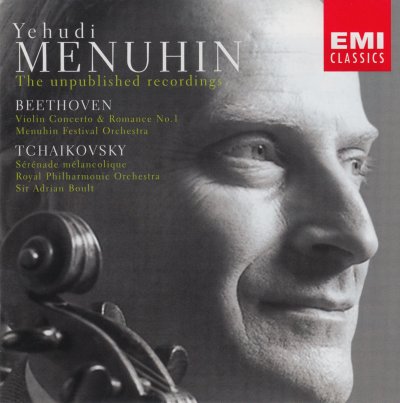
Credits