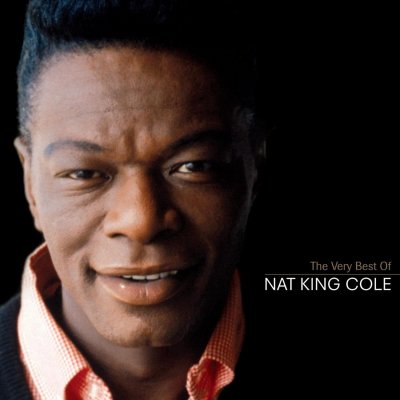
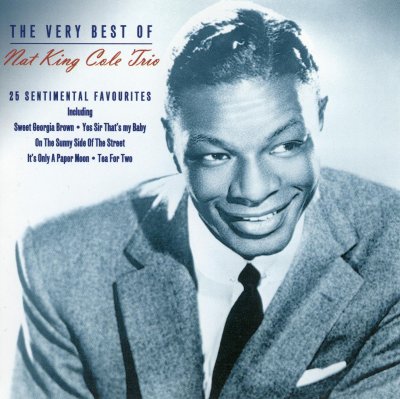
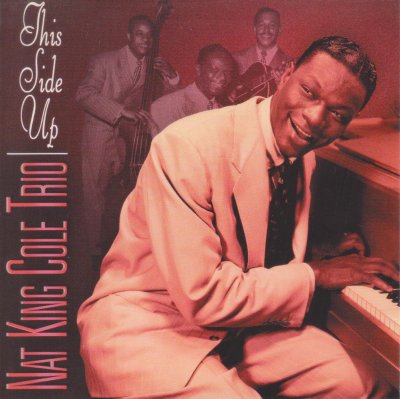
The Nat King Cole Trio
While performing at the Café Century during the summer of 1937, Nat King Cole was approached by the manager of the Swanee Inn, who invited him to put together a small band to play in the club. With guitarist Oscar Moore and bassist Wesley Prince, the act debuted that fall, drawing upon the children's nursery rhyme ("Old King Cole was a merry old soul...") for the name the King Cole Swingsters, later simply the King Cole Trio. The group gradually built up a following, with Cole emerging as a singer as well as a pianist. By September 1938, they had begun making radio transcriptions, originally not intended for commercial release, though they have since been issued. In 1939 and 1940, they made occasional recordings for small labels while expanding their live performing to include appearances across the country and radio work. In late 1940 they were contracted by Decca. Their 1941 recording of Cole's composition "That Ain't Right" hit number one on Billboard magazine's Harlem Hit Parade (i.e., R&B) chart on January 30, 1943, Cole's first successful record. By that time, Prince had left the group to work for the war effort, replaced by Johnny Miller.
The King Cole Trio's contract with Decca expired before "That Ain't Right" became a hit. Their next single, "All for You," was recorded for the tiny Excelsior label in October 1942. After its initial release, it was purchased by Capitol Records and reissued. On November 20, 1943, it became the group's second number one hit on the Harlem Hit Parade. It also crossed over to the pop chart. With that, Capitol signed Cole directly. The trio's first Capitol session produced both the Cole composition "Straighten Up and Fly Right," which topped the black chart for the first of ten weeks on April 29, 1944, spent six weeks at the top of the folk (i.e., country) chart, and reached the Top Ten of the pop chart, and "Gee Baby, Ain't I Good to You," which topped the black chart on October 21 and also crossed over to the pop chart.
The trio placed another four titles in the black chart during 1944, and Capitol released its debut album, The King Cole Trio (catalog number BD-8) that fall. The collection of four 78 rpm discs contained eight tracks, only three of them featuring Cole vocals. When Billboard instituted its first album chart on March 24, 1945, The King Cole Trio was ranked at number one, a position it held for 12 weeks. At the same time, big-band swing music was declining in popularity, and many jazz fans were beginning to turn to the emerging style of bebop, a development that, whatever its artistic significance, spelled the end of jazz as a broadly popular style of music.
The King Cole Trio -- and particularly the singer/pianist then known as "King Cole" -- on the other hand, was going in exactly the opposite direction, as its success on records and at clubs and theaters around the country led to appearances in films and on radio. After numerous guest-star stints on Bing Crosby's Kraft Music Hall radio series, the trio, along with pianist Eddy Duchin, was hired to host the show's summer replacement program for 13 weeks beginning May 16, 1946. During that run, on August 17, The King Cole Trio, Vol. 2 (Capitol BD-29), another set of four 78s, hit number one. Over the next five days, the trio recorded two songs that would add to their pop success. Mel Tormé and Robert Wells' "The Christmas Song (Merry Christmas to You)" (better known by its opening line, "Chestnuts roasting on an open fire"), recorded August 19, was Cole's first disc to feature strings. "(I Love You) For Sentimental Reasons," though it only featured the trio, demonstrated that Cole was more than capable of handling a straight romantic ballad, not just the uptempo novelties with which he and the group had succeeded up until this point.
"(I Love You) For Sentimental Reasons" became Cole's first number one pop single on December 28, 1946; "The Christmas Song (Merry Christmas to You)" peaked at number three, going on to become a holiday perennial and million seller. While these hits were developing, the trio went from its summer replacement berth to its own network radio series, King Cole Trio Time, a 15-minute Saturday afternoon program that debuted on October 19, 1946, and ran until April 1948. The group's recording schedule during the first half of 1947 was relatively light, but the pace picked up considerably starting in August, in anticipation of the musicians' strike called for January 1, 1948. On August 22, 1947, with an orchestral backing, Cole recorded "Nature Boy," an unusual philosophical ballad. Released March 29, 1948, and credited to "King Cole," it hit number one for the first of eight weeks on May 8, becoming a gold record.
Oscar Moore, the trio's original guitarist, left the group in October 1947 after ten years and was replaced by Irving Ashby. In March 1948, Cole divorced his wife and married singer Marie Ellington. Among the couple's children was Natalie Cole, who became a singer. Bass player Johnny Miller quit the trio in August 1948 and was replaced by Joe Comfort. In February 1949, Cole added percussionist Jack Costanzo to the group, which thereafter was billed as "Nat 'King' Cole & the Trio." As of the spring of 1950, Cole's recordings were being credited simply to "Nat 'King' Cole." On July 8 of that year, his recording of the wistful movie theme "Mona Lisa," featuring a string chart arranged by Nelson Riddle, became Cole's third number one pop hit and gold record.
That September, he traveled to Europe for his first international tour, beginning a pattern that would find him giving concerts almost continually in a combination of top nightclubs in major cities and concert halls around the U.S., with occasional trips to Europe, the Far East, and Latin America and extended stays at Las Vegas casinos. In these appearances, he stood for most of the show, only occasional sitting down to play a number or two at the piano. Ashby and Comfort left in 1951, and an announcement was made that the trio was officially dissolved, but that simply meant that Cole henceforth would be billed as a solo act.
Discography
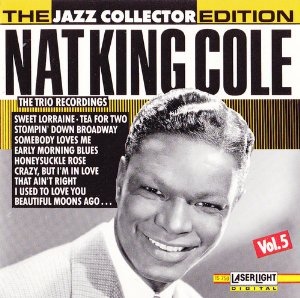
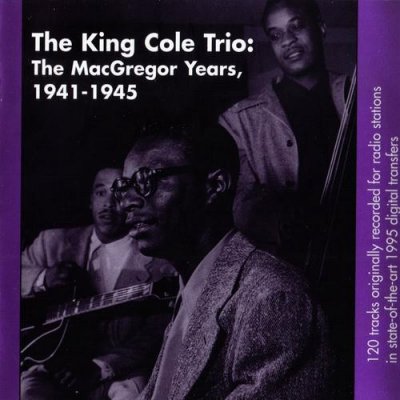
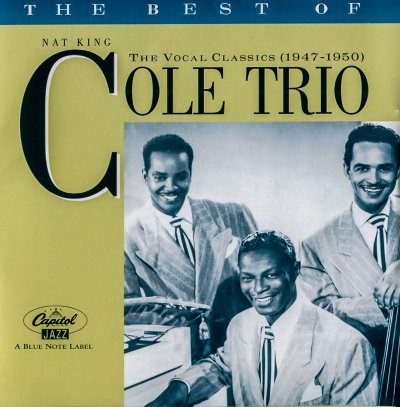
Credits