Son House
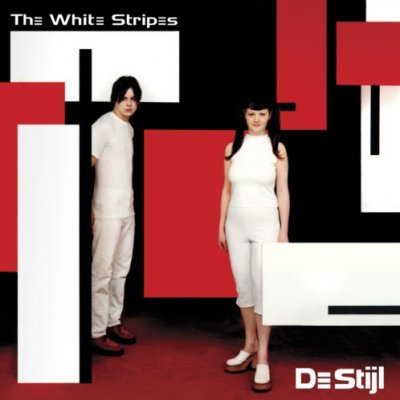
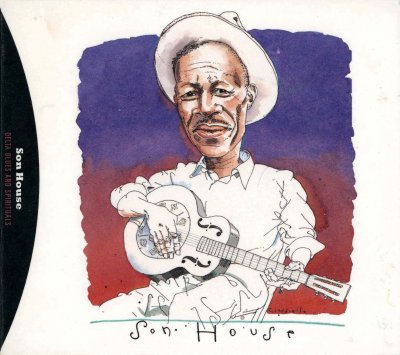
Eddie James House, Jr. (March 21, 1902 - October 19, 1988), better known as Son House, was an influential blues singer and guitarist. His date of birth is a matter of some debate. Son House himself alleged that he was middle aged during World War I, and, more specifically, that he was 79 in 1965, which would mean that he was born around 1886. However, all legal records place his birth on March 21, 1902. House was born, the middle of three brothers, in Riverton, Mississippi, two miles from famed blues capital Clarksdale, Mississippi. Around age seven or eight, he was brought by his mother to Tallulah, Louisiana after his parents separated. The young Son House was determined to become a Baptist preacher, and at age fifteen began his preaching career. Despite the church's firm stand against blues music and the sinful world which revolved around it, House nevertheless became attracted to it and taught himself guitar in his midtwenties, inspired by the work of Willie Wilson. He began playing alongside Charley Patton, Willie Brown, Robert Johnson, Fiddlin' Joe Martin, Leroy Williams, and Howlin' Wolf, around Robinsonville, Mississippi and north to Memphis, Tennessee until 1942. After killing a man, allegedly in self-defense, he spent time on Parchman Farm in 1928 and 1929. Son House recorded for Paramount Records in 1930 and for Alan Lomax from the Library of Congress in 1941 and 1942. He then faded from public view until the country blues revival in the 1960s when, after a long search of the Mississippi Delta region by Nick Perls, Dick Waterman and Phil Spero, he was "re-discovered" in June, 1964 in Rochester, New York where he had lived since 1943; House had been retired from the music business for many years, working for the New York Central Railroad, and was completely unaware of the international revival of enthusiasm for his early recordings. He subsequently toured extensively in the US and Europe and recorded for CBS records. Like Mississippi John Hurt he was welcomed into the music scene of the 1960s and played at Newport Folk Festival in 1964, the New York Folk Festival in July, 1965, and the October, 1967 European tour of the American Folk Festival along with Skip James and Bukka White. In the summer of 1970, House toured Europe once again, including an appearance at the Montreux Festival; a recording of his London concerts was released by Liberty Records. Ill health plagued his later years and in 1974 he retired once again, and later moved to Detroit, Michigan, where he remained until his death from cancer of the larynx. He was buried at Mt. Hazel Cemetery on Lahser south of Seven Mile. Members of the Detroit Blues Society raised money through benefit concerts to put a fitting monument on his grave. He had been married five times. Unlike some blues guitarists of the 1920s and 30s, House was not a virtuoso although there is still much that is technically impressive about his playing. He more than made up for his lack of conventional technique with his powerful and innovative style featuring very strong, repetitive rhythms, often played with the aid of a bottleneck, coupled with singing that owed more than a nod to the hollers of the chain gangs. The music of Son House, in contrast to that of, say, Blind Lemon Jefferson, was emphatically a dance music, meant to be heard in the noisy atmosphere of a barrelhouse or other dance hall. House was an important influence on not only Muddy Waters but also Robert Johnson, who would later take his music to new levels. It was House who, speaking to awe-struck young blues fans in the 1960s, spread the legend that Johnson had sold his soul to the Devil in exchange for his musical powers. More recently, House's music has influenced rock groups such as The White Stripes, who covered his song Death Letter on their album De Stijl, and later performed it at the 2004 Grammy Awards. Describing House's 1967 appearance at the De Montford Hall in Leicester, England, Bob Groom wrote in Blues World magazine, It is difficult to describe the transformation that took place as this smiling, friendly man hunched over his guitar and launched himself, bodily it seemed, into his music. The blues possessed him like a 'lowdown shaking chill' and the spellbound audience saw the very incarnation of the blues as, head thrown back, he hollered and groaned the disturbing lyrics and flailed the guitar, snapping the strings back against the fingerboard to accentuate the agonized rhythm. Son's music is the centre of the blues experience and when he performs it is a corporate thing, audience and singer become as one.
Discography
Credits