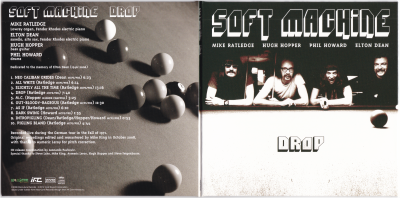
Soft Machine
Soft Machine were an English rock band from Canterbury, named after the book The Soft Machine by William S. Burroughs. They were one of the central bands in the Canterbury scene, and helped pioneer the progressive rock genre. Though they achieved little commercial success, they are considered by Allmusic to be "one of the more influential bands of their era, and certainly one of the most influential underground ones.
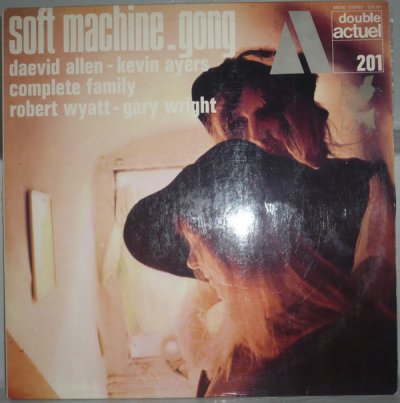
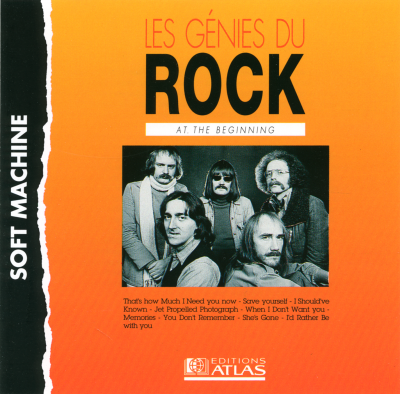
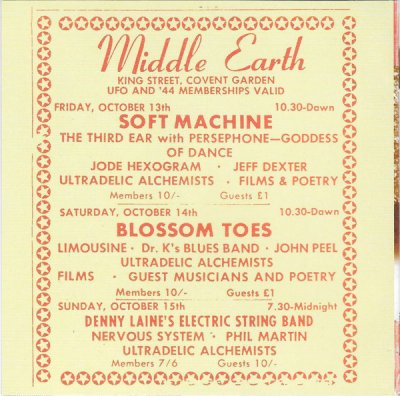
" Soft Machine (billed as The Soft Machine up to 1969) were formed in mid-1966 by Robert Wyatt (drums, vocals), Kevin Ayers (bass, guitar, vocals), Daevid Allen (guitar) and Mike Ratledge (organ) plus, for the first few gigs only, American guitarist Larry Nowlin. Allen, Wyatt and future bassist Hugh Hopper had first played together in the Daevid Allen Trio in 1963, occasionally accompanied by Ratledge. Wyatt, Ayers and Hopper had been founding members of the Wilde Flowers, later incarnations of which would include future members of another Canterbury band, Caravan. This first Soft Machine line-up became involved in the early UK underground, featuring prominently at the UFO Club, and subsequently other London clubs like the Speakeasy and Middle Earth, and recorded the group's first single 'Love Makes Sweet Music', as well as some demo sessions that were released several years later.
They also played in the Netherlands, Germany and on the French Riviera. During July and August 1967, the promoter and manager Giorgio Gomelsky booked shows all along the Côte d'Azur with the band's most notorious early gig taking place in the village square of Saint-Tropez. This led to an invitation to perform at producer Eddie Barclay's trendy "Nuit Psychédélique(fr)", performing a forty minute rendition of "We Did It Again", singing the refrain over and over, achieving a Zen-like quality. This made them instant darlings of the Parisian "in" crowd, resulting in invitations to appear on leading television shows and at the Paris Biennale in October 1967.
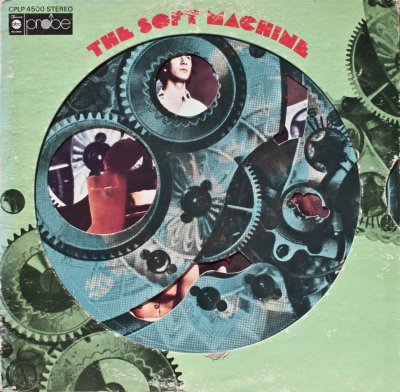
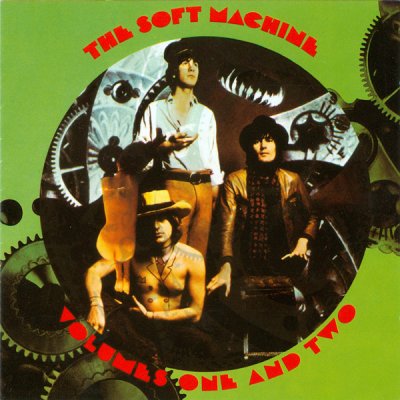
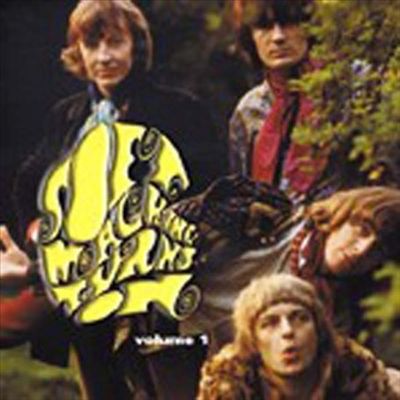
Upon their return from their sojourn in France, Allen (an Australian) was denied re-entry to the United Kingdom, so the group continued as a trio, while he returned to Paris to form Gong. Sharing the same management team as Jimi Hendrix, the band were rewarded with a support slot on the Jimi Hendrix Experience's North America tour throughout 1968. Soft Machine's first album - a psychedelic rock/proto-prog classic - was recorded in New York in April at the end of the first leg. Back in London, eventually guitarist Andy Summers, later of The Police, joined the group, fresh from his stint with Dantalian's Chariot (previously Zoot Money's Big Roll Band).
After a few weeks of rehearsals, the new quartet began a tour of the USA with some solo shows before reuniting with Hendrix for a final string of dates in August–September 1968. Summers, however, had in the meantime been fired at the insistence of Ayers. Ayers departed amicably after the final date at the Hollywood Bowl, and for the remainder of 1968 Soft Machine were no more. Wyatt stayed in the US to record solo demos, while Ratledge returned to London and began composing in earnest.
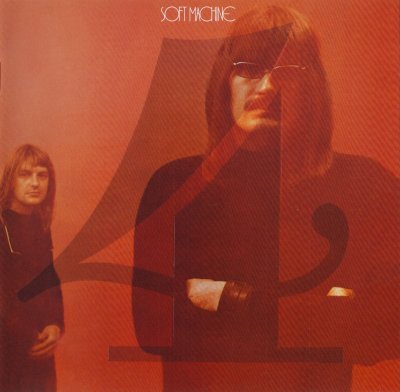
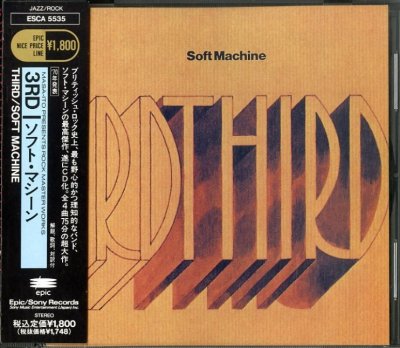
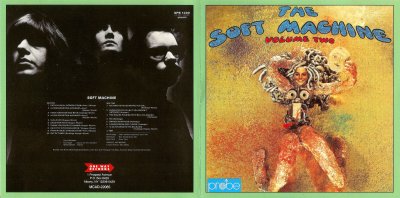
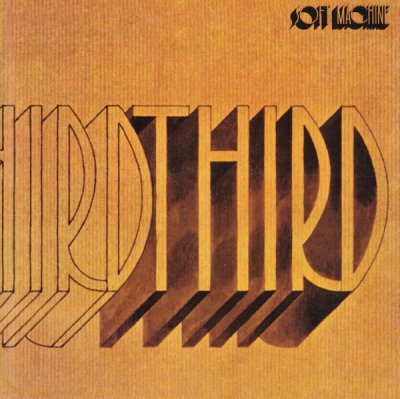
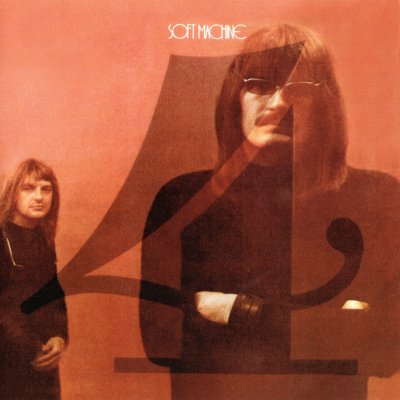
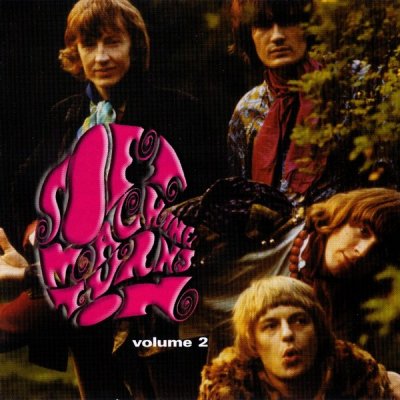
One of Wyatt's demos, Slow Walkin' Talk, allowed Wyatt to make use of his multi-instrumentalist skills (Hammond organ, piano, drums and vocals) and featured Jimi Hendrix on bass guitar. In January 1969, in order to fulfil contractual obligations, Soft Machine reformed with former road manager and composer Hugh Hopper on bass added to Wyatt and Ratledge, and set about recording their second album, Volume Two, which launched a transition towards a purely instrumental sound resembling what would be later called jazz fusion. In May 1969, this lineup acted as the uncredited backup band on two tracks of Syd Barrett's solo debut album, The Madcap Laughs. The base trio was late in 1969 expanded to a septet with the addition of four horn players, though only saxophonist Elton Dean remained beyond a few months, the resulting Soft Machine quartet (Wyatt, Hopper, Ratledge and Dean) running through Third (1970) and Fourth (1971), with various guests, mostly jazz players (Lyn Dobson, Nick Evans, Mark Charig, Jimmy Hastings, Roy Babbington, Rab Spall).
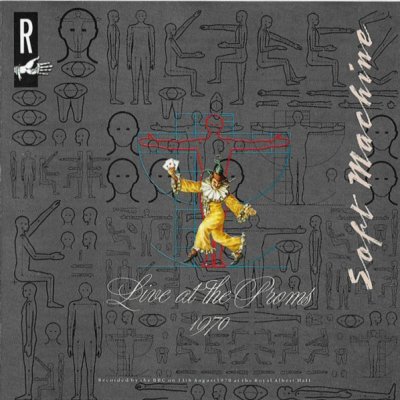
Fourth was the first of their fully instrumental albums, and the last one featuring Wyatt. Their propensity for building extended suites from regular sized compositions, both live and in the studio (already in the Ayers suite in their first album), reaches its maximum in the 1970 album Third, unusual for its time in each of the four sides featuring one suite. Third was also unusual for remaining in print for more than ten years in the United States, and is the best-selling Soft Machine recording. This period saw them gaining unprecedented acclaim across Europe, and they made history by becoming the first 'rock band' invited to play at London's Proms in August 1970, a show which was broadcast live and later appeared as a live album.
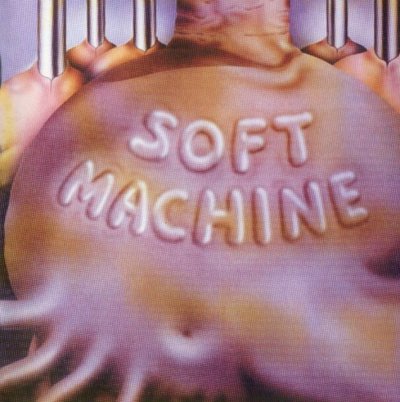
After differences over the group's musical direction, Wyatt left (or was fired from) the band in August 1971 and formed Matching Mole (a pun on machine molle French for soft machine). He was briefly replaced by Australian drummer Phil Howard, but further musical disagreements led to Howard's dismissal after the 1971 recording of the first LP side of Fifth (1972) and, some months later, to Dean's departure. They were replaced respectively by John Marshall (drums) and, for the recording of Six (1973), Karl Jenkins (reeds, keyboards), both former members of Ian Carr's Nucleus, and The Softs' sound developed even more towards jazz fusion. In 1973, after the release of Six, Hopper left and was replaced by Roy Babbington, another former Nucleus member, who had already contributed with double bass on Fourth and Fifth and took up (6-string) electric bass successfully.
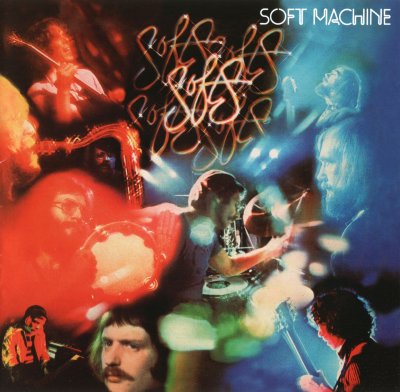
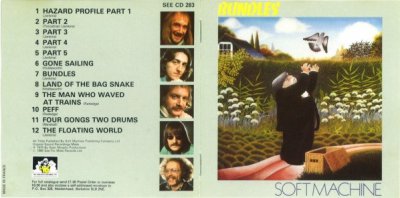
After they released Seven (1973) without additional musicians, the band switched record labels from Columbia to Harvest. On their 1975 album Bundles, a significant musical change occurred with fusion guitarist Allan Holdsworth adding guitar as a very prominent melody instrument to the band's sound, sometimes reminiscent of John McLaughlin's Mahavishnu Orchestra, setting the album apart from previous Soft Machine releases, which had rarely featured guitars. On the last official studio album Softs (1976), he was replaced by John Etheridge. Ratledge, the last remaining original member of the band, had left during the early stages of recording.
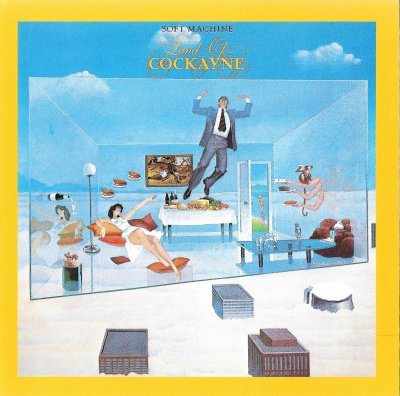
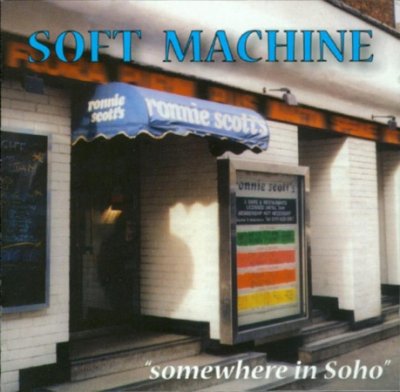
Other musicians in the band during the later period were bassists Percy Jones (of Brand X) and Steve Cook, saxophonists Alan Wakeman and Ray Warleigh, and violinist Ric Sanders. Their 1977 performances and record (titled Alive and Well, ironically) were among the last for Soft Machine as a working band. The Soft Machine name was used for the 1981 record Land of Cockayne (with Jack Bruce and, again, Allan Holdsworth, plus Ray Warleigh and Dick Morrissey on saxes and John Taylor on electric piano), and for a final series of dates at London's Ronnie Scott's Jazz Club in the summer of 1984, featuring Jenkins and Marshall leading an ad hoc lineup of Etheridge, Warleigh, pianist Dave MacRae and bassist Paul Carmichael.
The Groove is music.nw’s own measure of renown — not an opinion, a fact computed from the record. It weighs reach (how many people engaged) against acclaim (how highly they rated it), balanced so a handful of votes can’t outshout a lasting favourite.
Computed the NeuraWeb way, across the whole record. The same yardstick for everyone — which is why the little-known can out-Groove the famous in their own corner.
Discography
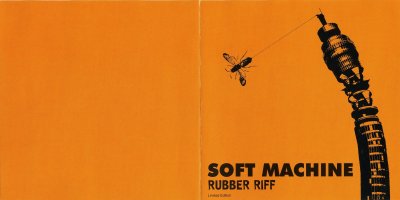
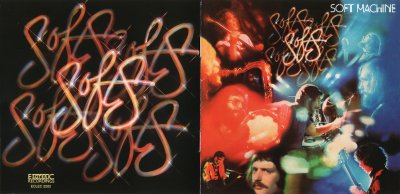
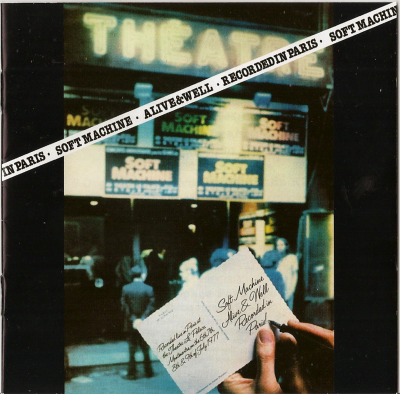
Credits
Ranked #1,791 of 14,615 producers — 718.59 career Groove across 6 records.