Ritchie Blackmore
Richard Hugh "Ritchie" Blackmore (born 14 April 1945 in Weston-super-Mare, England) is an English guitarist, who was a founding member of hard rock bands Deep Purple and Rainbow. He left Deep Purple in 1993 due to a growing rift between Blackmore and other members in spite of renewed commercial success. His current band is the Renaissance influenced Blackmore's Night.
Blackmore was born at Allendale Nursing Home as second son to his parents in Weston-super-Mare, Somerset, and moved to Heston, Middlesex at the age of two. Though the surname Blackmore is of English origin and most commonly found in Somerset, Devon and London, his father was Welsh and his mother was English. His father was born in Cardiff and his paternal grandfather was born in Swansea, Wales. He was 11 when he was given his first guitar from his father on certain conditions, including learning how to play properly, so he took classical guitar lessons for one year.
While at school he participated in sports including the javelin. Blackmore left school at age 15 and started work as an apprentice radio mechanic at nearby Heathrow Airport. He took electric guitar lessons from session guitarist Big Jim Sullivan. In 1960 and 1961 he played with some minor local bands.
In 1963 he began to work as a session player for Joe Meek's music productions and performed in several bands. He was initially a member of the instrumental band The Outlaws, who played in both studio recordings and live concerts. Otherwise, in mainly studio recordings, he backed female singer Glenda Collins, German-born pop singer Heinz (playing on his top ten hit "Just Like Eddie"), and others. Thereafter, in mainly live concerts, he backed horror-themed singer Screaming Lord Sutch, beat singer Neil Christian, and others.
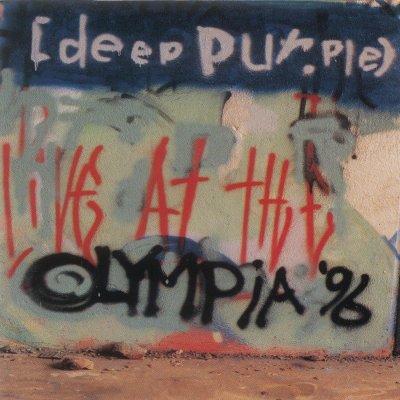
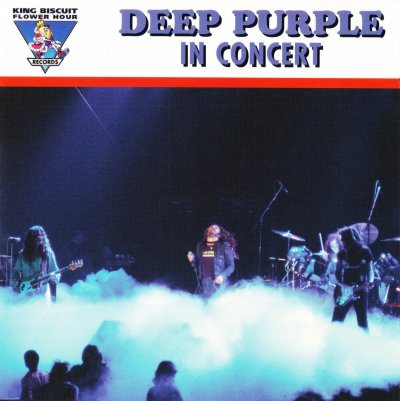
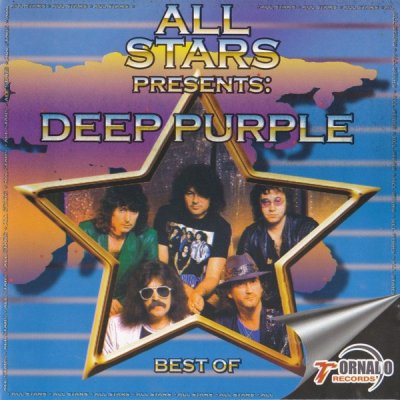
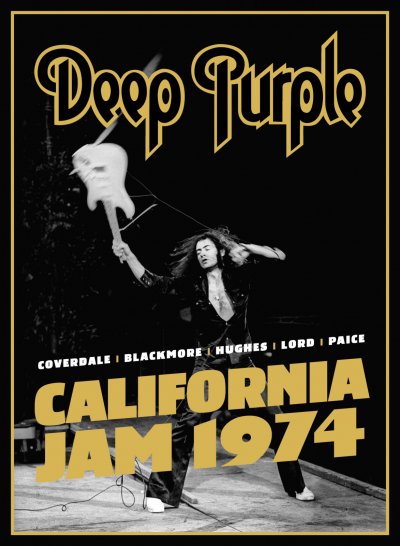
Blackmore joined the rock group Deep Purple in 1968 after receiving an invitation from Chris Curtis who originated the concept of the band (though Curtis would be forced out before the band fully formed). Purple's early sound leaned on psychedelic and progressive rock,but also included generic 1960s pop songs. This "Mark One" line-up featuring pop rock singer Rod Evans lasted until mid-1969 and produced three studio albums. During this period, organist Jon Lord appeared to be the leader of the band, and wrote much of their original material.
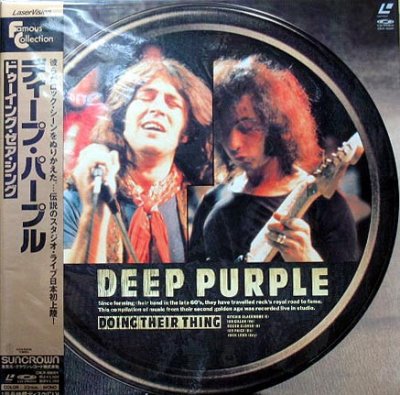
The first studio album from Purple's second line-up, In Rock (1970), signaled a transition in the band's sound from progressive rock to hard rock, with Blackmore being impressed at the time by the King Crimson's first album. This "Mark Two" line-up featuring rock singer Ian Gillan lasted until mid-1973, producing four studio albums, and two live albums. During this period, the band's songs primarily came out of their jam sessions, so songwriting credits were shared by the five members. Blackmore later stated, "I didn't give a damn about song construction. I just wanted to make as much noise and play as fast and as loud as possible."
The third line-up featured blues-rock singer, David Coverdale. This "Mark Three" line-up lasted until mid-1975 and produced two studio albums. Blackmore quit the band to front a new group, Rainbow. In 1974, Blackmore took cello lessons from Hugh McDowell of (ELO). Blackmore later stated that when playing a different musical instrument, he found it refreshing because there’s a sense of adventure not knowing exactly what chord he's playing or what key he's in.
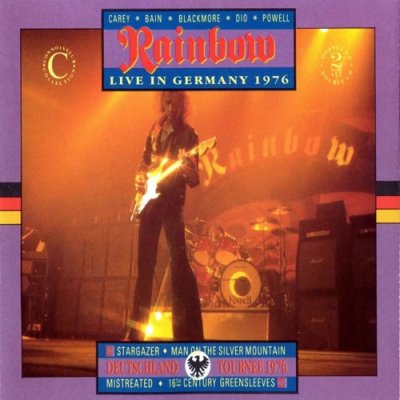
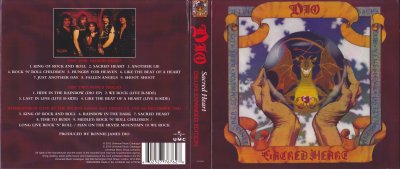
Blackmore originally planned to make a solo album, but instead in 1975 formed his own band, Ritchie Blackmore's Rainbow, later shortened to Rainbow. Featuring operatic rock singer Ronnie James Dio and his blues rock backing band Elf as studio musicians, this first line-up never performed live. The band's debut album, Ritchie Blackmore's Rainbow, was released in 1975. Rainbow was originally thought to be a one-off collaboration, but endured as an ongoing band project with a series of album releases and tours. Rainbow's music was partly inspired by elements of medieval and baroque music since Blackmore started to play cello for musical composition. During this period, Blackmore wrote a lot of Dio's vocal melodies, particularly in their debut album. Shortly after the first album was recorded, Blackmore recruited new backing musicians to record the second album Rising (1976), and the following live album, On Stage (1977). Rising was originally billed as "Blackmore's Rainbow" in the US. After the next studio album's release and supporting tour in 1978, Dio left Rainbow due to "creative differences" with Blackmore, who disliked Dio's fantasy oriented lyric style.
Blackmore continued with Rainbow, and in 1979 the band released a new album entitled Down To Earth, which featured R&B singer Graham Bonnet. During song composition, Bonnet made his vocal melodies though it was uncredited contributions. The album marked the commercialization of the band's sound, and contained Rainbow's first chart successes, as the single "Since You Been Gone" (a cover of the Russ Ballard penned tune) became a smash hit.
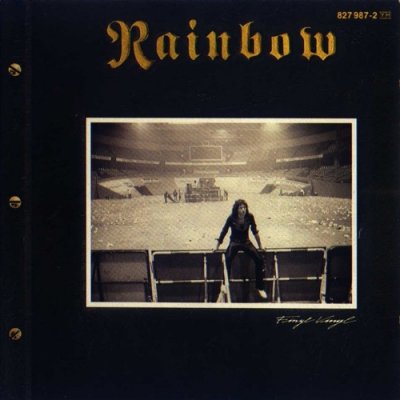
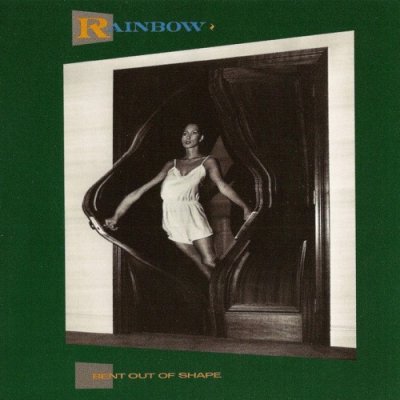
The next Rainbow album, Difficult to Cure (1981), introduced melodic vocalist Joe Lynn Turner. The instrumental title track from this album was an arrangement of Beethoven's Ninth Symphony with additional music. Blackmore once said, "I found the blues too limiting, and classical was too disciplined. I was always stuck in a musical no man's land." The album marked the further commercialization of the band's sound with Blackmore describing at the time a liking for the pop rock band, Foreigner. The music was consciously radio-targeted in a more AOR style, resulting in some degree of alienation with many of Rainbow's earlier fans. Rainbow's next studio album was Straight Between the Eyes (1982) and included the hit single "Stone Cold." It would be followed by the album Bent Out of Shape (1983), which featured the single "Street Of Dreams". In 1983 Rainbow was also nominated for a Grammy Award for his work on an instrumental ballad track, "Anybody There". Rainbow disbanded in 1984. A then-final Rainbow album, Finyl Vinyl, was patched together from live tracks and the B-sides of various singles.
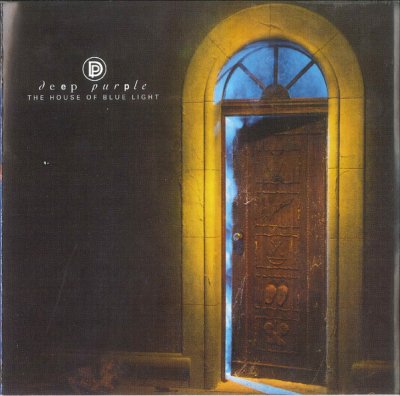
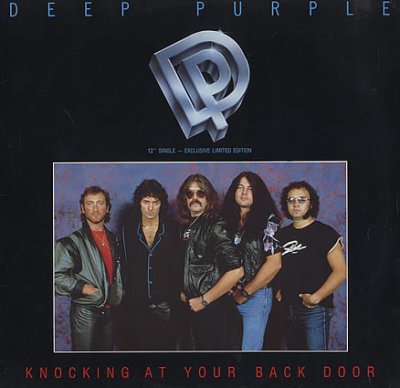
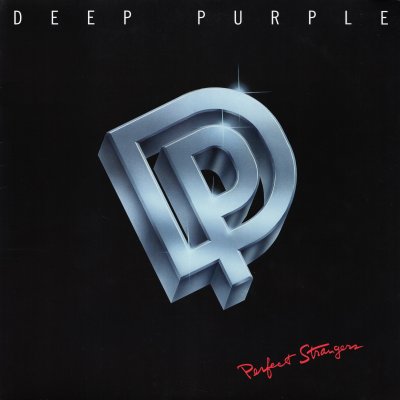
In 1984, Blackmore joined a reunion of the former Deep Purple "Mark Two" line-up and recorded new material. This reunion line-up lasted until 1989, producing two studio albums and one live album. However, the reunion's second studio album The House of Blue Light (1987) displayed a sound that is closer to Rainbow's music. Its album's musical style differed from the traditional Purple sound due to his Rainbow background that distinguished him from other members. During the 1987-1988 tour, Blackmore was repeatedly reluctant to play "Smoke on the Water." Also the screaming singer Ian Gillan was forced to apologise for his vocal range had become weaker than audiences expected.
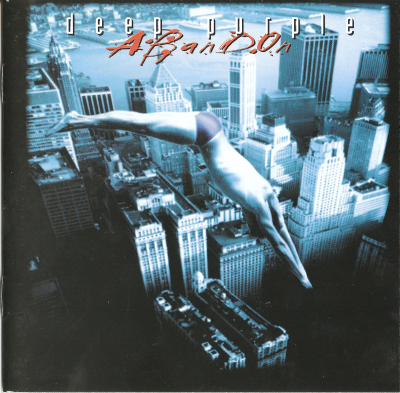
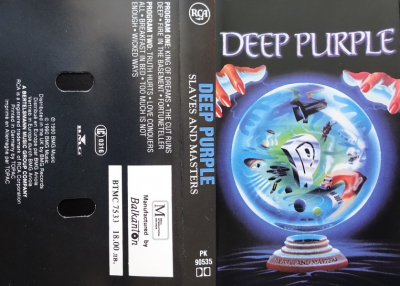
The next line-up recorded one album entitled Slaves & Masters (1990), which featured former Rainbow vocalist Joe Lynn Turner. During song composition, Turner wrote his vocal melodies. Subsequently the "Mark Two" line-up reunited for a second time in late 1992 and produced one studio album. Overall, the traditional Purple sound returned, but the guitar riffs sometimes sounded like generic Def Leppard. During the follow-up promotional tour, Blackmore quit the band for good in November 1993. Prominent guitarist Joe Satriani was brought in to complete the remaining tour dates.
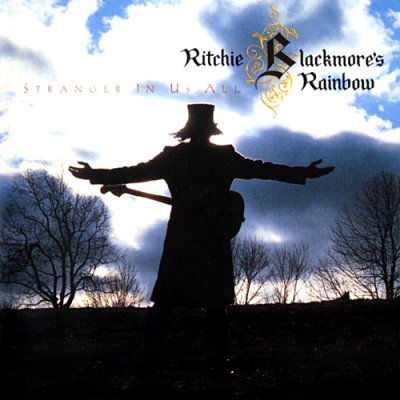
Blackmore reformed Rainbow with new members in 1994. This Rainbow line-up, featuring hard rock singer Doogie White, lasted until 1997 and produced one album entitled Stranger in Us All in 1995. It was originally intended to be a solo album but due to the record company pressures the record was billed as Ritchie Blackmore's Rainbow. Though Doogie White wasn't as distinctive as its previous Rainbow's singers, it had a sound dissimilar to any Rainbow of old. This was Rainbow's eighth studio album made after the blank of 12 years since Bent Out of Shape and is regarded as Blackmore's last hard rock album. A world tour including South America followed. Rainbow was disbanded once again after playing its final concert in 1997. Blackmore later said, "I didn't want to tour very much."
Over the years Rainbow went through many personnel changes with no two studio albums featuring the same line-up: Blackmore was the sole constant band member. Rainbow achieved modest success, the band's worldwide sales estimated at more than 28 million album copies, including 4 million in album sales in the U.S.
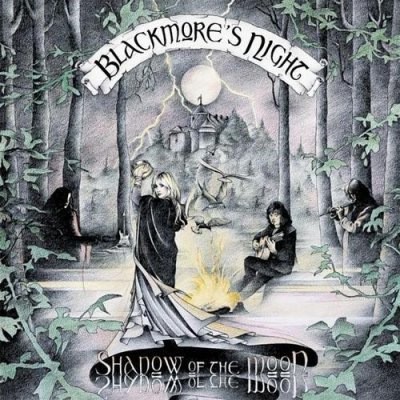
In 1997 Blackmore, with his girlfriend Candice Night as vocalist, formed the traditional folk rock duo Blackmore's Night. From about 1995, they were already working on their debut album Shadow of the Moon (1997). Blackmore once portrayed at the time their artistic characteristics as "Mike Oldfield plus Enya". Blackmore mostly utilized acoustic guitar, to back Night's delicate vocals. During song composition, Blackmore directly wrote her vocal melodies. Night said, "When he sings, he sings only for me, in private". As a result, his musical approach shifted to vocalist-centered sounds. They recorded a mixture of original and cover materials. The band's musical style is inspired by medieval music and it blended with Night's lyrics about love's themes. The second release, entitled Under a Violet Moon (1999) continued in the same folk-rock style, with Night's vocals remaining a prominent feature of the band's style. The title track's lyrics were partly written by Blackmore. "Violet" was his mother's first name and "Moon" was his grandmother's surname.
In subsequent albums, particularly Fires at Midnight (2001) which featured the Bob Dylan cover "The Times They Are a Changin'", there was occasionally an increased incorporation of electric guitar into the music, whilst maintaining a folk rock direction. A live album, Past Times with Good Company was released in 2002. After the next studio album's release, an official compilation album Beyond the Sunset: The Romantic Collection was released in 2004, featuring music from the four studio albums. A Christmas-themed holiday album, Winter Carols was released in 2006. Through numerous personnel changes, the backing musicians have totaled 26 persons. Blackmore sometimes played drums in recording studio. They choose to avoid typical rock concert tours, instead limiting their appearances to small intimate venues. In 2011, Night said, "We have actually turned down a lot of (touring) opportunities." Blackmore continued to write her vocal melodies. To date they have released nine studio albums. The latest "Dancer & The Moon" was released on June 2013.
Blackmore was ranked #55 in Rolling Stone magazine list of the "100 Greatest Guitarists of All Time".
Discography
Credits
Ranked #6,139 of 14,615 producers — 206.70 career Groove across 10 records.