music.nwby NeuraWeb Global Inc.
~13.0M artists · ~39.4M recordings indexed
Narrow to
OK
Person · German-born conductor and composer

Otto Klemperer

Albums
254
Members
0
Active
1885–1973
Origin
Germany
Biography

Otto Nossan Klemperer (14 May 1885 – 6 July 1973) was a Jewish German-born conductor and composer. He is widely regarded as one of the leading conductors of the 20th century. Biography : Otto Klemperer was born in Breslau, Province of Silesia, then in Germany (now Wrocław, Poland), as a son of Nathan Klemperer, a native of Prague, Bohemia (today's Czech Republic). His parents were Jewish. Klemperer studied music first at the Hoch Conservatory in Frankfurt, and later at the Stern Conservatory in Berlin under James Kwast and Hans Pfitzner. He followed Kwast to three institutions and credited him with the whole basis of his musical development. In 1905, he met Gustav Mahler while conducting the off-stage brass at a performance of Mahler's Symphony No. 2, Resurrection. He also made a piano reduction of the second symphony. The two men became friends, and Klemperer became conductor at the German Opera in Prague in 1907 on Mahler's recommendation. Mahler wrote a short testimonial, recommending Klemperer, on a small card which Klemperer kept for the rest of his life. Later, in 1910, Klemperer assisted Mahler in the premiere of his Symphony No. 8, Symphony of a Thousand. Klemperer went on to hold a number of positions, in Hamburg (1910–1912); in Barmen (1912–1913); the Strasbourg Opera (1914–1917); the Cologne Opera (1917–1924); and the Wiesbaden Opera House (1924–1927). From 1927 to 1931, he was conductor at the Kroll Opera in Berlin. In this post he enhanced his reputation as a champion of new music, playing a number of new works, including Janáček's From the House of the Dead, Schoenberg's Erwartung, Stravinsky's Oedipus rex, and Hindemith's Cardillac. On 22 March 1920, his wife, soprano Johanna Geisler, gave birth to their son, the German-American actor Werner Klemperer. Their daughter Lotte was born on 1 November 1923. 1930s move to United States : In 1933, once the Nazi Party had reached power, Klemperer left Germany and moved to the United States. He had previously converted to Catholicism, but returned to Judaism at the end of his life. In the U.S. he was appointed Music Director of the Los Angeles Philharmonic. He was granted United States citizenship in 1937. In Los Angeles, he began to concentrate more on the standard works of the Germanic repertoire that would later bring him greatest acclaim, particularly the works of Beethoven, Brahms and Gustav Mahler, though he gave the Los Angeles premieres of some of fellow Los Angeles resident Arnold Schoenberg's works with the Philharmonic. He also visited other countries, including England and Australia. While the orchestra responded well to his leadership, Klemperer had a difficult time adjusting to Southern California, a situation exacerbated by repeated manic-depressive episodes, reportedly as a result of severe cyclothymic bipolar disorder. He also found that the dominant musical culture and leading music critics in the United States were largely out of sympathy with his taste for modern music from Weimar's Golden Age, and he felt he was not properly valued. Klemperer hoped for a permanent position as lead conductor in New York or Philadelphia. But in 1936 he was passed over for both – first in Philadelphia, where Eugene Ormandy succeeded Leopold Stokowski at the Philadelphia Orchestra, and then in New York, where Arturo Toscanini's departure left a vacancy at the New York Philharmonic but John Barbirolli and Artur Rodziński were engaged in preference to Klemperer. The New York decision was particularly galling, as Klemperer had been engaged to conduct the first fourteen weeks of the New York Philharmonic's 1935-6 season. Klemperer's bitterness at this decision was voiced in a letter he wrote to Arthur Judson, who ran the orchestra: "that the society did not reengage me is the strongest offense, the sharpest insult to me as artist, which I can imagine. You see, I am no youngster. I have a name and a good name. One could not use me in a most difficult season and then expell me. This non-reengagement will have very bad results not only for me in New York but in the whole world... This non-reengagement is an absolutely unjustified wrong done to me by the Philharmonic Society." Then, after completing the 1939 Los Angeles Philharmonic summer season at the Hollywood Bowl, Klemperer was visiting Boston and was diagnosed with a brain tumor; the subsequent brain surgery to remove "a tumour the size of a small orange" left him partially paralyzed. He went into a depressive state and was placed in institution; when he escaped, The New York Times ran a cover story declaring him missing, and after he was found in New Jersey, a picture of him behind bars was printed in the Herald Tribune. Though he would occasionally conduct the Philharmonic after that, he lost the post of Music Director. Furthermore, his erratic behavior during manic episodes made him an undesirable guest to US orchestras, and the late flowering of his career centered in other countries. After World War II, Klemperer returned to Europe to work at the Budapest Opera (1947–1950). Finding Communist rule in Hungary increasingly irksome, he became an itinerant conductor, guest conducting the Royal Danish Orchestra, Montreal Symphony Orchestra, Cologne Radio Symphony Orchestra, Concertgebouw Orchestra, and the Philharmonia of London. The early 1950s and health problems : In the early 1950s Klemperer experienced difficulties arising from his U.S. citizenship. American union policies made it difficult for him to record in Europe, while his left-wing views made him increasingly unpopular with the State Department and FBI: in 1952 the United States refused to renew his passport. In 1954 Klemperer again returned to Europe, and acquired a German passport. His EMI period : His career was turned around in 1954 by the London-based producer Walter Legge, who recorded Klemperer conducting Beethoven, Brahms and much else with his hand-picked orchestra, the Philharmonia, for the EMI label. He became the first principal conductor of the Philharmonia in 1959. He settled in Switzerland. Klemperer also worked at the Royal Opera House Covent Garden, sometimes stage-directing as well as conducting, as in a 1963 production of Richard Wagner's Lohengrin. He also conducted Mozart's The Magic Flute there in 1962. A severe fall during a visit to Montreal in 1951 forced Klemperer subsequently to conduct seated in a chair. A severe burning accident further paralyzed him, which resulted from his smoking in bed and trying to douse the flames with the contents of a bottle of spirits of camphor nearby. Through Klemperer's problems with his health, the tireless and unwavering support and assistance of Klemperer's daughter Lotte was crucial to his success. Final years : One of his last concert tours was to Jerusalem, a couple of years after the Six-Day War, at which time he was awarded an Israeli honorary passport. Klemperer had performed in Israel before it became a state, and returned to Jerusalem only in 1970 to conduct the Israeli Broadcasting Authority Symphonic Orchestra in two concerts, performing the six Brandenburg Concertos of Bach, and Mozart's symphonies 39, 40 and 41. During this tour he took Israeli citizenship. He retired from conducting in 1971. Klemperer died in Zürich, Switzerland, in 1973, aged 88, and was buried at Zürich's Jewish Cemetery Oberer Friesenberg, owned and provided for by the Jewish Religious Community of Zurich. He was an Honorary Member (HonRAM) of the Royal Academy of Music. His son, Werner Klemperer, was a Hollywood actor. The diarist Victor Klemperer, who chronicled his life in the Weimar Republic and Nazi Germany was a cousin, as were Georg Klemperer and Felix Klemperer, who were noted physicians.

Discography
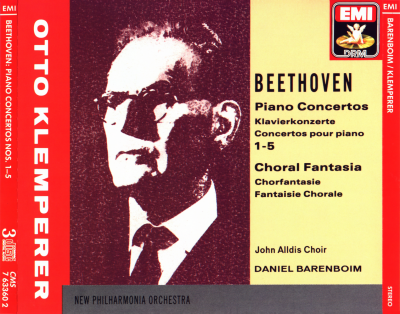
Album cover
Piano Concertos Nos. 1-5 / Choral Fantasia
Otto Klemperer · 1990
Album cover
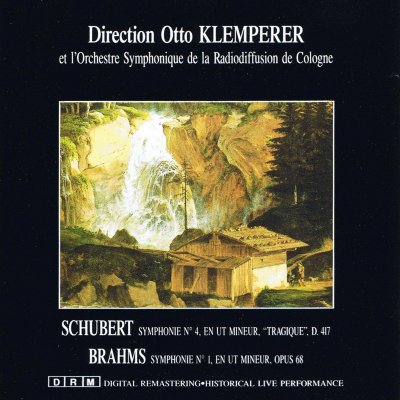
Schubert: Symphonie N° 4 en Ut mineur; "Tragique", D. 417 / Brahms: Symphonie N° 1 en Ut mineur, op. 68
Otto Klemperer · 1990
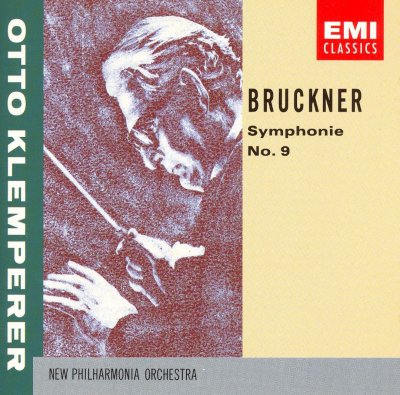
Sinfonia n.9 / Kindertotenlieder
Otto Klemperer · 1990
Album cover
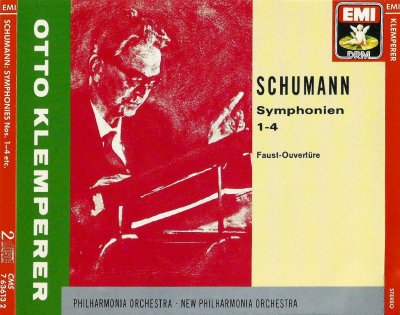
Symphonien 1-4 / Faust-Ouvertüre
Otto Klemperer · 1990
Symphonien 1-4 / Faust-Ouvertüre
Otto Klemperer · 1990
Symphonien 1 & 7
Otto Klemperer · 1990
Symphonien 2 & 4
Otto Klemperer · 1990
Symphonie no. 6 / Egmont / Prometheus
Otto Klemperer · 1990
Symphony no. 2
Otto Klemperer · 1990
Album cover
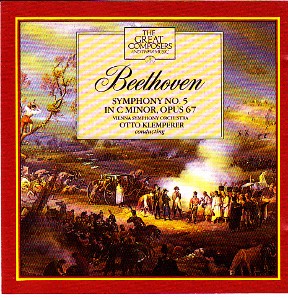
Symphony No. 5 in C minor, Opus 67
Otto Klemperer · 1990
Symphony no. 6
Otto Klemperer · 1990
Symphony no. 3 “Scottish” / Symphony no. 4 “Italian”
Otto Klemperer · 1991
Album cover
Symphony no. 9
Otto Klemperer · 1991
Berlioz: Symphonie fantastique / Beethoven: Ouvertüre Leonore no. 1 / Gluck: Ouvertüre Iphigénie en Aulide
Otto Klemperer · 1992
Brahms: Violin Concerto / Mozart: Sinfonia Concertante
Otto Klemperer · 1992
Mahler: Symphonie no. 7 / Klemperer: Symphonie no. 2 / String Quartet no. 7
Otto Klemperer · 1992
Album cover
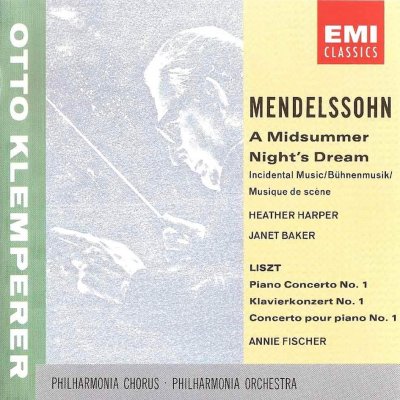
Mendelssohn: A Midsummer Night's Dream / Liszt: Piano Concerto No. 1
Otto Klemperer · 1992
Piano Concerti
Otto Klemperer · 1992
Piano Concerto / Spring Symphony
Otto Klemperer · 1992
Stravinsky: Symphony in Three Movements, Pulcinella / Weill: Kleine Dreigroschenmusik / J. Strauss II: Wiener Blut
Otto Klemperer · 1992
Violin Concerto / Romances 1 & 2
Otto Klemperer · 1992
Don Giovanni
Otto Klemperer · 1994
Merry Waltz / Fantasia on a Theme by Thomas Tallis / Rapsodie Espagnole / Symphony No. 4
Otto Klemperer · 1995
The Kroll Oper Years (1926-1929)
Otto Klemperer · 1996
Album cover
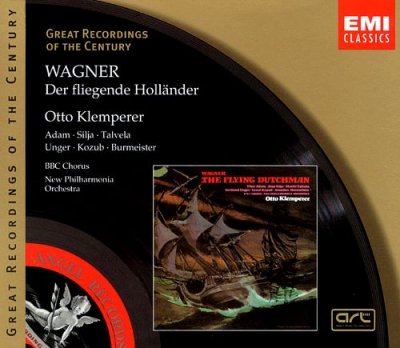
Der fliegende Holländer
Otto Klemperer · 1998
Don Juan / Tod und Verklärung / Tanz der sieben Schleier / Till Eulenspiegels lustige Streiche
Otto Klemperer · 1998
Symphonie 9 / Ouvertüre: Prometheus
Otto Klemperer · 1998
Album cover
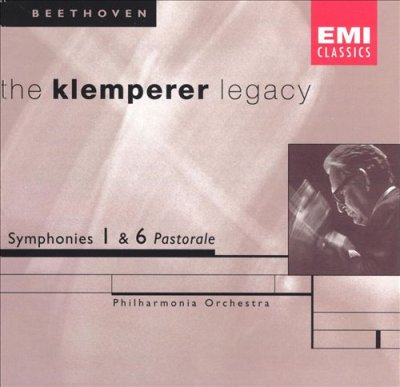
Symphonies 1 & 6 "Pastorale"
Otto Klemperer · 1998
Album cover
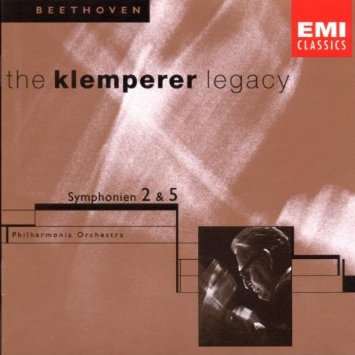
Symphonies Nos. 2, 5
Otto Klemperer · 1998
Symphonies nos. 4 & 7
Otto Klemperer · 1998
Symphony No. 3 "Eroica" / Große Fugue
Otto Klemperer · 1998
Symphony No. 4 "Romantic"
Otto Klemperer · 1998
the klemperer legacy
Otto Klemperer · 1998
The Klemperer Legacy: Orchestral Works 1
Otto Klemperer · 1998
The Klemperer Legacy: Orchestral Works 2
Otto Klemperer · 1998
The Klemperer Legacy: Symphony 8 & Overtures
Otto Klemperer · 1998
A Midsummer Night's Dream / Symphony 4 "Italian"
Otto Klemperer · 1999
Album cover
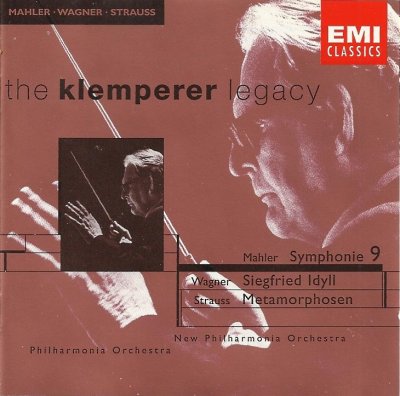
Mahler: Symphonie 9 / Wagner: Siegfried Idyll / Strauss: Metamorphosen
Otto Klemperer · 1999
Petrushka / Pulcinella (Ballet Suite)
Otto Klemperer · 1999
Symphonie 9, Siegfried Idyll, Metamorphosen
Otto Klemperer · 1999
Album cover
Symphonie no. 1 / Tragische Ouvertüre / Alt-Rhapsodie
Otto Klemperer · 1999
Album cover
Symphony no. 3 & 4
Otto Klemperer · 1999
Symphony No. 9 'Choral'
Otto Klemperer · 1999
The Klemperer Legacy: Brahms: Symphony no. 4 and Academic Festival-Overture / Schumann: Overtures Genoveva and Manfred
Otto Klemperer · 1999
The Klemperer Legacy: Bruckner: Symphony 6 / Wagner: Wesendock-Lieder
Otto Klemperer · 1999
The Klemperer Legacy: Haydn: Symphony 98 & Tchkaikovsky: Symphony 5
Otto Klemperer · 1999
Violin Concerto / Overtures: The Consecration of the House / Leonore no. 3
Otto Klemperer · 1999
J.S.Bach Brandenburg Concerto No.1~No.6
Otto Klemperer · 2000
Album cover
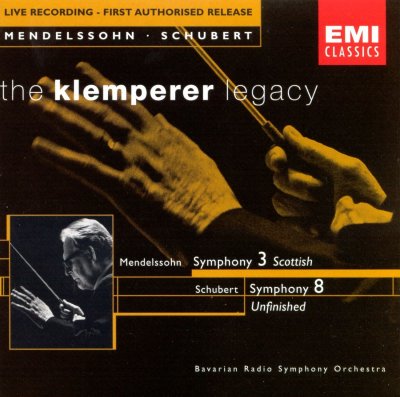
Mendelssohn: Symphonie 3 "Schottische" / Schubert: Symphonie 8 "Unvollendete"
Otto Klemperer · 2000
Album cover
Symphonien 35 "Haffner" / 36 "Linzer" / 38 "Prager" / Ouverture: Die Zauberflote
Otto Klemperer · 2000
Album cover
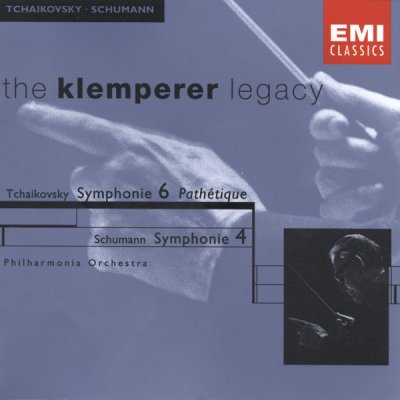
Tchaikovsky: Symphony no. 6 / Schumann: Symphony no. 4
Otto Klemperer · 2000
The Complete Symphonies and Piano Concertos
Otto Klemperer · 2000
Album cover
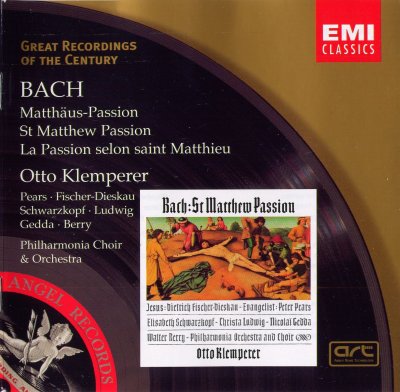
Matthäus-Passion BWV 244
Otto Klemperer · 2001
Serenada No. 6, Symphonies Nos. 25, 29 & 38 (Prager)
Otto Klemperer · 2001
Album cover
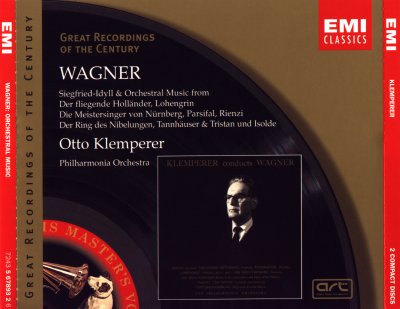
Siegfried‐Idyll / Orchestral Music from Der fliegende Holländer, Lohengrin, Die Meistersinger von Nürnberg, Parsifal, Rienzi, Der Ring des Nibelungen, Tannhäuser & Tristan und Isolde
Otto Klemperer · 2002
Album cover
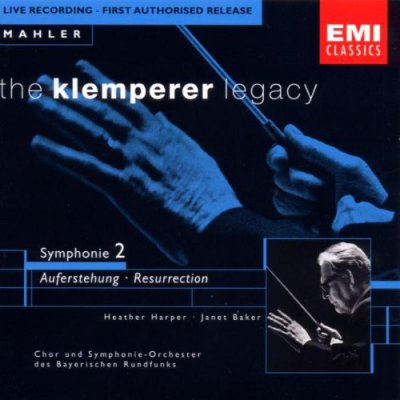
Symphonie 2 "Auferstehung"
Otto Klemperer · 2002
Symphonies Nos. 5 & 7
Otto Klemperer · 2002
Symphony no. 3 "Eroica" / Leonore Overtures nos. 2 & 3
Otto Klemperer · 2002
Album cover
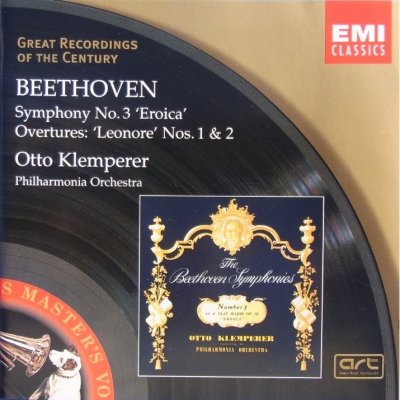
Symphony no. 3 "Eroica" / Overtures "Leonore" nos. 1 & 2
Otto Klemperer · 2002
Wagner ouvertures et préludes , vol. I
Otto Klemperer · 2002

Credits
Messiah Oratorio
Conductor · 2023
Album cover
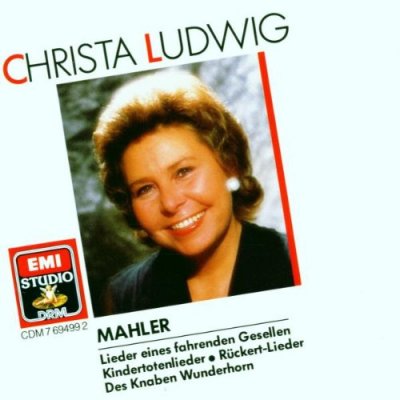
Lieder eines fahrenden Gesellen / Kindertotenlieder / 5 Lieder
Conductor · 2012
Symphonies no. 35 in D, "Haffner" / No. 36 in C, "Linz" / Overture "Die Entfuhrung aus dem Serail"
Conductor · 2011
Mahler: Kindertotenlieder / Brahms: Liebeslieder-Walzer
Conductor · 2008
Album cover
Der fliegende Holländer
Conductor · 1998
Don Giovanni
Liner Notes · 1994
Album cover
Don Giovanni
Conductor · 1989
Album cover
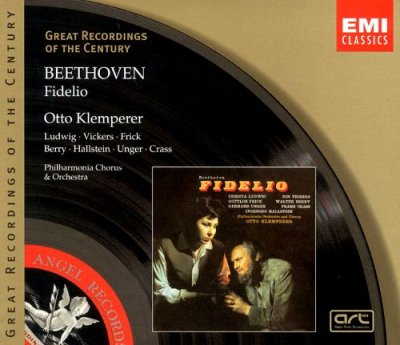
Fidelio
Liner Notes · 1989
Symphonie no. 1 / Tragic Overture / Academic Festival Overture
Conductor · 1989
Album cover
The Magic Flute: Highlights
Conductor · 1987
Album cover
Violinkonzert
Conductor · 1987
Album cover
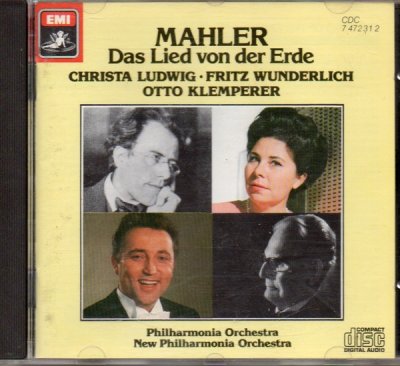
Das Lied von der Erde
Conductor · 1967
Album cover
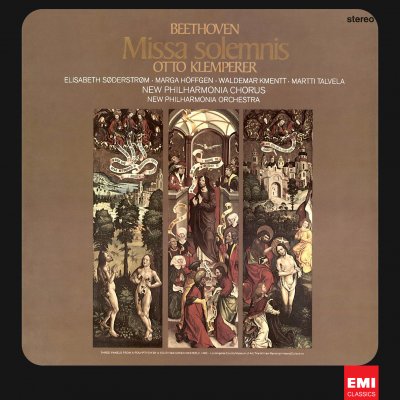
Missa solemnis
Conductor · 1966
Mozart Overtures
Conductor · 1965
Symphonies no. 40 in G minor / No. 41 in C major, "Jupiter"
Conductor · 1965
Album cover
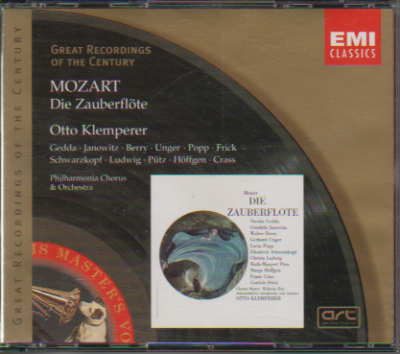
Die Zauberflöte
Conductor · 1964
Klemperer Conducts More Wagner
Conductor · 1963
Album cover
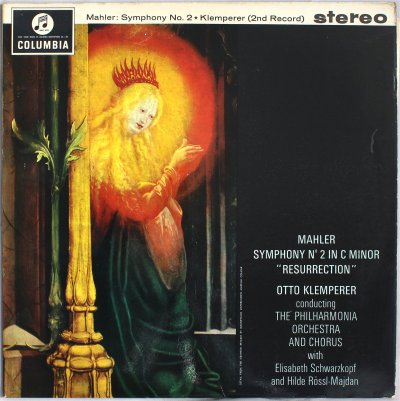
Symphony no. 2 ‘Resurrection’
Liner Notes · 1963
Album cover
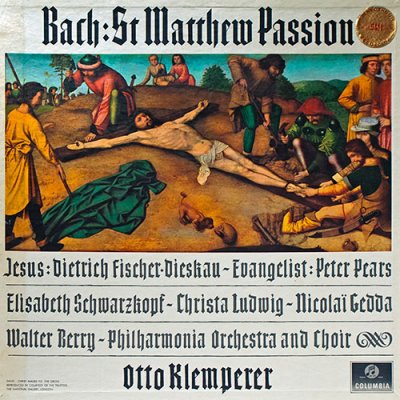
St. Matthew Passion
Conductor · 1962
Symphonie N°5 / Ouverture : Coriolan
Conductor · 1962
Album cover
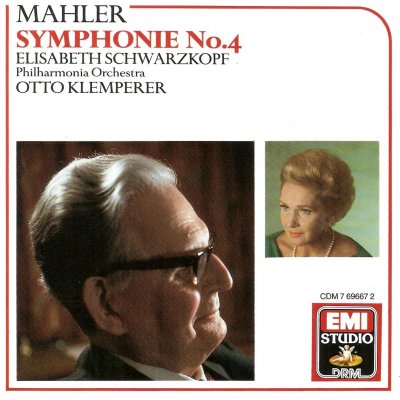
Symphonie no. 4
Conductor · 1962
Album cover
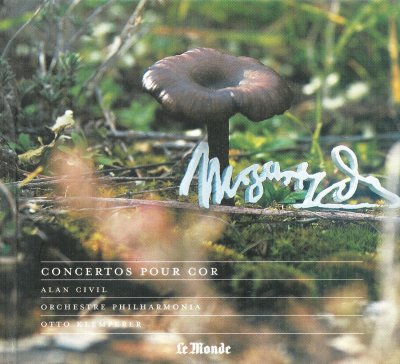
Horn Concertos
Conductor · 1961
Album cover
Violinkonzert
Conductor · 1961
20th Century Masterpieces - 100 Years Of Classical Music
Conductor · —
20th Century Music
Conductor · —
Age Of Elegance
Conductor · —
Age Of Revolution
Conductor · —
A German Requiem (Op. 45)
Conductor · —
Album I / Folge I : Rienzi - Der Fliegende Holländer - Tannhäuser - Lohengrin - Tristan & Isolde
Conductor · —
Alto Rhapsody / Five Songs / Wesendonk Lieder
Conductor · —
Alto Rhapsody / Liebestod From Tristan Und Isolde / Wesendonck Lieder
Conductor · —
Anton Bruckner
Conductor · —
Arias & Duets From The Marriage Of Figaro / Don Giovanni / Così Fan Tutte / The Magic Flute
Conductor · —
Arias From St. Matthew Passion
Conductor · —
Beethoven "Choral", Incidental Music To "Egmont"
Conductor · —
Beethoven Nine Symphonies
Liner Notes · —
Beethoven Overtures
Conductor · —
Beethoven Overtures: Leonore 1, 2 & 3 • Fidelio
Conductor · —
Beethoven Overtures/Ouverturen
Conductor · —
Beethoven: Symphony No. 9 'Choral'
Conductor · —
Brandenburg Concerto #1 & #2 in F Major
Conductor · —
Brandenburg Concerto No. 3 / Brandenburg Concerto No. 4 - Volume II
Conductor · —
Brandenburg Concerto No. 5 / Brandenburg Concerto No. 6 - Volume III
Conductor · —
Brandenburg Concertos Nos. 1, 2 & 6 (Record 1)
Conductor · —
Brandenburg Concertos, Record 2 - Nos. 3,4 &5
Conductor · —
Brandenburgisches Konzert Nr. 3 G-dur BWV 1048
Conductor · —
Chopin Piano Concerto No. 2, Schumann Piano Concerto in A Minor, Op. 54
Conductor · —
Choruses And Chorales From Bach: St Matthew Passion
Conductor · —
Concerto For Piano & Orchestra In A Minor, Op.54 / Kinderszenen, Op.15
Conductor · —
Concerto Grosso in A minor, Op. 6 No.4
Performing Orchestra · —
Concerto In A Minor / Concerto No. 1 In E Flat Major
Conductor · —
Concerto N.1 In Mi Minore Per Pianoforte E Orchestra
Conductor · —
Concerto No. 2 In F Minor For Piano And Orchestra Opus 21
Conductor · —
Concerto No. 4 For Piano And Orchestra In G Major, Opus 58
Conductor · —
Concerto Pour Violon / Double Concerto
Conductor · —
Cosi Fan Tutte
Conductor · —
Das Lied Von Der Erde
Conductor · —
Das Lied Von Der Erde · Symphonies Nos. 2, 4, 7 & 9
Conductor · —
Das Lied Von Der Erde - The Song Of The Earth / Five Mahler Songs
Conductor · —
Death And Transfiguration / Metamorphosen
Conductor · —