music.nwby NeuraWeb Global Inc.
~13.0M artists · ~39.4M recordings indexed
Narrow to
OD
Person · Franco-Flemish Renaissance composer

Orlande de Lassus

Albums
169
Members
0
Active
1532–1594
Origin
Flanders
Biography

Orlande de Lassus (also Roland de Lassus, Orlando di Lasso, Orlandus Lassus, Orlande de Lattre or Roland de Lattre; 1532, possibly 1530 – 14 June 1594) was a composer of the late Renaissance, chief representative of the mature polyphonic style of the Franco-Flemish school, and considered to be one of the three most famous and influential musicians in Europe at the end of the 16th century (the other two being Palestrina and Victoria). Orlando de Lassus was born in Mons in the County of Hainaut, Habsburg Netherlands (modern-day Belgium). Information about his early years is scanty, although some uncorroborated stories have survived, the most famous of which is that he was kidnapped three times because of the singular beauty of his singing voice. At the age of twelve, he left the Low Countries with Ferrante Gonzaga and went to Mantua, Sicily, and later Milan (from 1547 to 1549). While in Milan, he made the acquaintance of the madrigalist Spirito l'Hoste da Reggio, a formative influence on his early musical style. He then worked as a singer and a composer for Costantino Castrioto in Naples in the early 1550s, and his first works are presumed to date from this time. Next he moved to Rome, where he worked for Cosimo I de' Medici, Grand Duke of Tuscany, who maintained a household there, and in 1553, he became maestro di cappella of the Basilica of Saint John Lateran, the ecumenical mother church of Rome and a spectacularly prestigious post indeed for a man only twenty-one years old. However, he stayed there for only a year. (Palestrina would assume this post a year later, in 1555.) No solid evidence survives for his whereabouts in 1554, but there are contemporary claims that he traveled in France and England. In 1555 he returned to the Low Countries and had his early works published in Antwerp (1555–1556). In 1556 he joined the court of Albrecht V, Duke of Bavaria, who was consciously attempting to create a musical establishment on a par with the major courts in Italy. Lassus was one of several Netherlanders to work there, and by far the most famous. He evidently was happy in Munich and decided to settle there. In 1558 he married Regina Wäckinger, the daughter of a maid of honor of the Duchess. They had two sons, both of whom became composers, and his daughter married the painter Hans von Aachen. By 1563 Lassus had been appointed maestro di cappella, succeeding Ludwig Daser in the post. Lassus remained in the service of Albrecht V and his heir, Wilhelm V, for the rest of his life. By the 1560s Lassus had become quite famous, and composers began to go to Munich to study with him. Andrea Gabrieli went there in 1562, and possibly remained in the chapel for a year. Giovanni Gabrieli also possibly studied with him in the 1570s. His renown had spread outside strictly musical circles, for in 1570 Emperor Maximilian II conferred nobility upon him, a rare circumstance for a composer. Pope Gregory XIII knighted him and in 1571, and again in 1573, the king of France, Charles IX, invited him to visit. Some of these kings and aristocrats attempted to woo him away from Munich with more attractive offers, but Lassus was evidently more interested in the stability of his position, and the splendid performance opportunities of Albrecht's court, than in financial gain. "I do not want to leave my house, my garden, and the other good things in Munich", he wrote to the Duke of Electorate of Saxony in 1580, upon receiving an offer for a position in Dresden. In the late 1570s and 1580s Lassus made several visits to Italy, where he encountered the most modern styles and trends. In Ferrara, the center of avant-garde activity, he doubtless heard the madrigals being composed for the d'Este court. However, his own style remained conservative and became simpler and more refined as he aged. In the 1590s his health began to decline, and he went to a doctor named Thomas Mermann for treatment of what was called "melancholia hypocondriaca", but he was still able to compose as well as travel occasionally. His final work was often considered one of his best pieces: an exquisite set of twenty-one madrigali spirituali known as the Lagrime di San Pietro ("Tears of St. Peter"), which he dedicated to Pope Clement VIII, and which was published posthumously in 1595. Lassus died in Munich on 14 June 1594, the same day that his employer decided to dismiss him for economic reasons. He never saw the letter. He was buried in Munich in the Alter Franziskaner Friedhof, a cemetery that was cleared of gravestones in 1789 and is now the site of Max-Joseph-Platz.

Discography
Lamentations of the Prophet Jeremiah / De Profundis Clamari Ad Te - Ave Maria
Orlande de Lassus · 1950
Neue Teutsche Lieder / Chansons, Madrigale, Villanelle
Orlande de Lassus · 1957
Septem Psalmi Davidis Pœnitentiales (7 Busspsalmen)
Orlande de Lassus · 1958
Passion Selon Saint-Matthieu
Orlande de Lassus · 1959
Sacred Choral Works = Œuvres Chorales Religieuses / Secular Choral Works = Œuvres Chorales Profanes
Orlande de Lassus · 1960
2 Lieder / 4 Villanelle
Orlande de Lassus · 1961
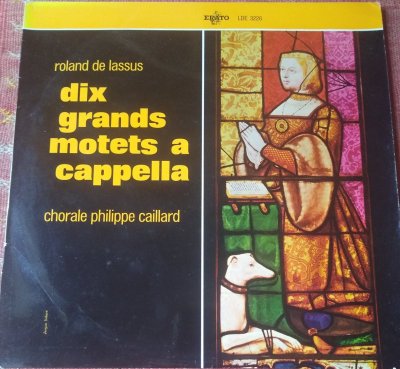
Dix grands motets a cappella
Orlande de Lassus · 1962
Dix Grands Motets A Cappella
Orlande de Lassus · 1962
Madrigals
Orlande de Lassus · 1962
5 Voice Mass: In Die Tribulationis / 8 Voice Mass For Double Choir: Bell' Amfitrit' Altera
Orlande de Lassus · 1963
Prophéties Des Sibylles / Messe "Ecce Nunc Benedicite Dominum"
Orlande de Lassus · 1963
Les Lamentations De Job
Orlande de Lassus · 1968
Missa Super Bella Amfitrit' Altera - 6 Motetten
Orlande de Lassus · 1968
Sacrae Lectiones Ex Propheta Job
Orlande de Lassus · 1970
Requiem For 5 Voices
Orlande de Lassus · 1973
Les Larmes De Saint Pierre = Lagrime Di San Pietro
Orlande de Lassus · 1974
Magnificat • Motetten • Sonata
Orlande de Lassus · 1974
Missa "Bell' Amfitrit' Altera" / Penitential Psalm VII
Orlande de Lassus · 1974
Bußpsalmen / Motetten
Orlande de Lassus · 1975
Meslanges (Chansons · Vol I)
Orlande de Lassus · 1975
Moresken / Prophetiae Sibyllarum
Orlande de Lassus · 1975
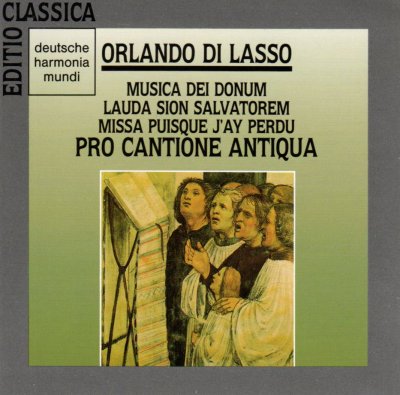
Musica Dei Donum / Lauda Sion Salvatorem / Missa 'Puisque J'ay Perdu'
Orlande de Lassus · 1976
Les Meslanges D'Orlande De Lassus - Tome II - Chansons 21 À 44
Orlande de Lassus · 1977
Heiter & Komödiantisch
Orlande de Lassus · 1978
Psalmi Poenitentiales
Orlande de Lassus · 1978
Moduli Quinis Vocibus 1571
Orlande de Lassus · 1979
Lagrime di San Pietro / II. Psalmus Poenitentialis
Orlande de Lassus · 1980
Sacrae Cantiones
Orlande de Lassus · 1980
Te Deum Laudamus (Süddeutsche Mehrchörigkeit Um 1600)
Orlande de Lassus · 1980
Journal Intime De Roland De Lassus / Aus Den Tagebüchern Des Orlando Di Lasso / From The Diary Of Orlando Di Lasso
Orlande de Lassus · 1982
Le Lagrime Di San Pietro
Orlande de Lassus · 1982
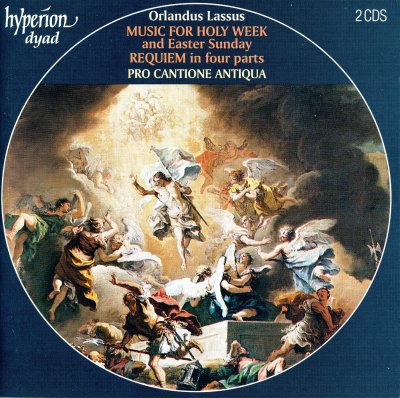
Music For Holy Week And Easter Sunday
Orlande de Lassus · 1982
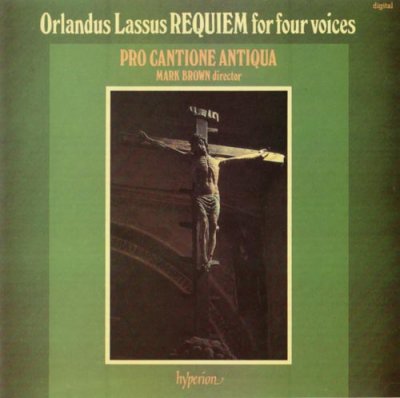
Requiem for Four Voices
Orlande de Lassus · 1983
Requiem For Four Voices
Orlande de Lassus · 1983
Motets Et Chansons
Orlande de Lassus · 1984
Missa (Bell «Amfitrit» Altera) / Misa A Cuatro Voces
Orlande de Lassus · 1985
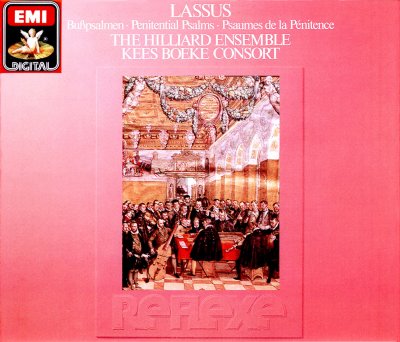
Bußpsalmen • Penitential Psalms • Psaumes De La Pénitence
Orlande de Lassus · 1986
Renaissance-Polyfonie uit de Nederlanden
Orlande de Lassus · 1986
Bußpsalmen
Orlande de Lassus · 1987
Music of Orlando di Lasso and Giaches de Wert
Orlande de Lassus · 1987
How Excellent Is Thy Name: Sacred Music of Lassus
Orlande de Lassus · 1988
To All Things a Season: Chansons, Madrigals and Lieder by Lassus
Orlande de Lassus · 1988
Album cover
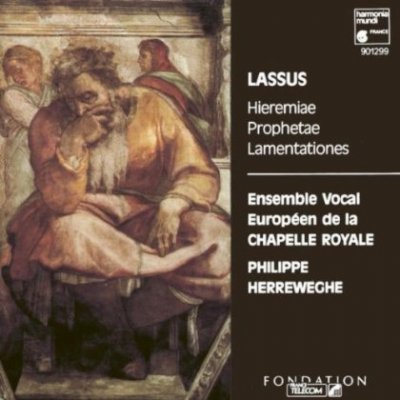
Hieremiae prophetae lamentationes
Orlande de Lassus · 1989
Hieremiae Prophetae Lamentationes
Orlande de Lassus · 1989
Masses And Motets
Orlande de Lassus · 1989
Missa Osculetur Me
Orlande de Lassus · 1989
Musica dei donum / Lauda sion salvatorem / Missa piusque j’ay perdu
Orlande de Lassus · 1990
Music for Holy Week and Easter Sunday
Orlande de Lassus · 1990
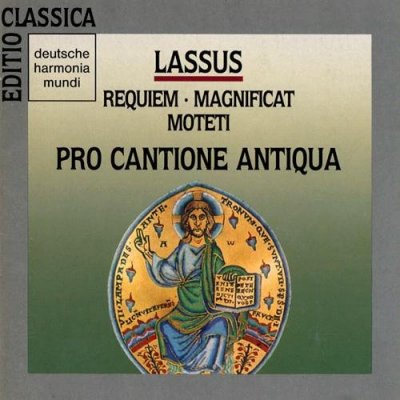
Requiem / Magnificat / Moteti
Orlande de Lassus · 1990
Requiem • Magnificat • Moteti
Orlande de Lassus · 1990
Mariengesänge / Hoheliedmotetten
Orlande de Lassus · 1991
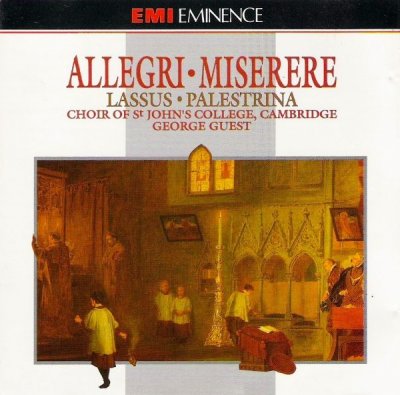
Miserere
Orlande de Lassus · 1991
Chansons & Moresche
Orlande de Lassus · 1992
Chansons & Moresche
Orlande de Lassus · 1992
Deftige Lieder und Chansons
Orlande de Lassus · 1992
Lamentations
Orlande de Lassus · 1992
Lieder - Chansons - Madrigals
Orlande de Lassus · 1992
Masses & Motets
Orlande de Lassus · 1992
Medieval – Renaissance
Orlande de Lassus · 1992
Missa "Bell' Amfitrit' Altera" / Psalmus Poenitentalis VII / 4 Motets
Orlande de Lassus · 1992

Credits

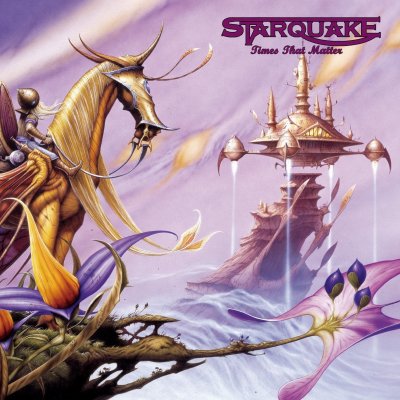
Times That Matter
Writer · 2015
Album cover
From These Wounds
Composer · 2006
Oracula
Composer · 2006
Lamentations de la Renaissance
Composer · 1999
Lassus
Composer · 1998
Lagrime di San Pietro
Composer · 1993
Masses
Composer · 1993
2 Lieder / 4 Villanelle
Composer · —
5 Voice Mass: In Die Tribulationis / 8 Voice Mass For Double Choir: Bell' Amfitrit' Altera
Composer · —
Agnus Dei - Classical Music For Reflection And Meditation
Composer · —
Blockflötenmusik Der Renaissance ›Italien‹ (Recorder Music ∙ Musique Pour Flûte À Bec)
Composer · —
Bußpsalmen / Motetten
Composer · —
Bußpsalmen • Penitential Psalms • Psaumes De La Pénitence
Composer · —
Canticum Canticorum
Composer · —
Cantus Cölln Edition
Composer · —
Chansons Françaises
Composer · —
Chansons & Moresche
Composer · —
Creator Of The Stars: Christmas Music From Earlier Times
Composer · —
Dance Music Of Four Centuries
Composer · —
Deutsche, Italienische Und Englische Madrigale (Gesellige Liedkunst Der Renaissance)
Composer · —
Die Bayerische Hofkapelle Im 16. Jahrhundert
Composer · —
Dix Grands Motets A Cappella
Composer · —
Freß- Und Sauflieder Der Renaissance Garniert Mit Spiel- Und Tanzmusik
Composer · —
Heiter & Komödiantisch
Composer · —
Hieremiae Prophetae Lamentationes
Composer · —
How Excellent Is Thy Name (Sacred Music Of Lassus)
Composer · —
Hymnus
Composer · —
Inferno
Composer · —
Italian Music For Lute & Chitarrone
Composer · —
Italian Renaissance Madrigals
Composer · —
Journal Intime De Roland De Lassus / Aus Den Tagebüchern Des Orlando Di Lasso / From The Diary Of Orlando Di Lasso
Composer · —
Kyrie-Sanctus / Benedictus-Agnus Dei
Composer · —
La Bella Ninfa (Europäische Madrigale Um 1600)
Composer · —
Lagrime Di San Pietro
Lyricist · —
Lagrime di San Pietro / II. Psalmus Poenitentialis
Composer · —
Lagrime Di San Pietro (Spiritual Madrigals)
Composer · —
Le Lagrime Di San Pietro
Composer · —
Les Lamentations De Job
Composer · —
Les Larmes De Saint Pierre = Lagrime Di San Pietro
Composer · —
Les Meslanges D'Orlande De Lassus - Tome II - Chansons 21 À 44
Composer · —
Lieder - Chansons - Madrigals
Composer · —
Madrigals
Composer · —
Madrigals & Motets
Composer · —
Magnificat • Motetten • Sonata
Composer · —
Masses For Five Voices - Infelix Ego
Composer · —
Masters From Flanders - Polyphony From The 15th & 16th Century
Composer · —
Meslanges (Chansons · Vol I)
Composer · —
Miserere / Lamentations Of Jeremiah & Other Renaissance Masterpieces
Composer · —
Missa "Bell' Amfitrit' Altera" / Penitential Psalm VII
Composer · —
Missa "Bell' Amfitrit' Altera" / Psalmus Poenitentalis VII / 4 Motets
Composer · —
Missa "Caput" - Magnom Opus Musicum Excerpts
Composer · —
Missa Carminum / Ave Christe / Motets
Composer · —
Missa Osculetur Me
Composer · —
Missa Papae Marcelli / Choral Music From The Lowlands: 15th And 16th Centuries
Composer · —
Missa Super Bella Amfitrit' Altera - 6 Motetten
Composer · —
Missa Surge Propera
Composer · —
Missa VIII Toni / 8 Motets
Composer · —
Moduli Quinis Vocibus 1571
Composer · —
Moresken / Prophetiae Sibyllarum
Composer · —
Motets Et Chansons
Composer · —