Michael Martin Murphey
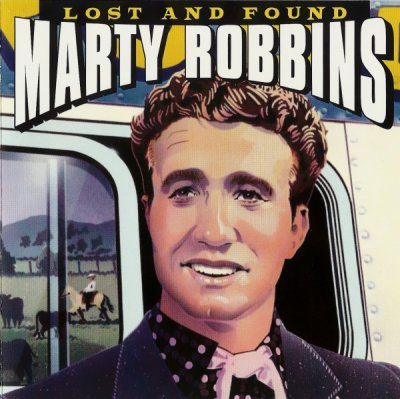
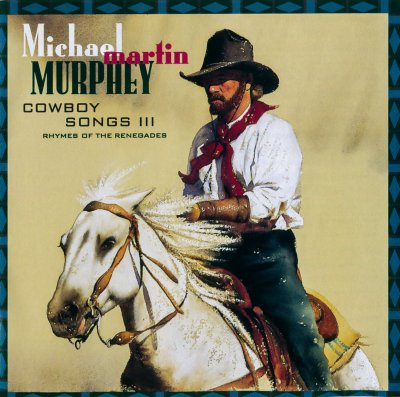
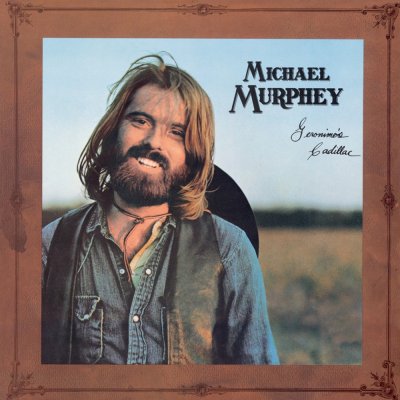
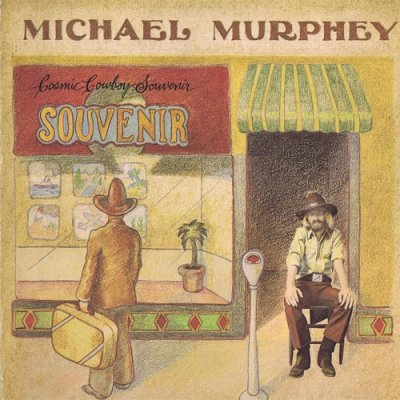
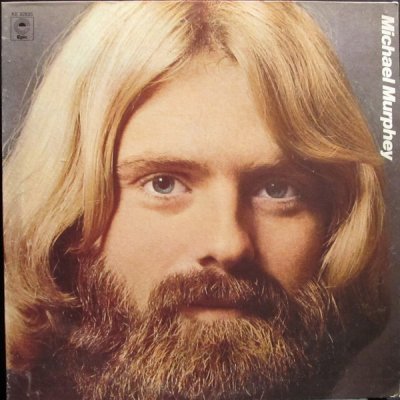
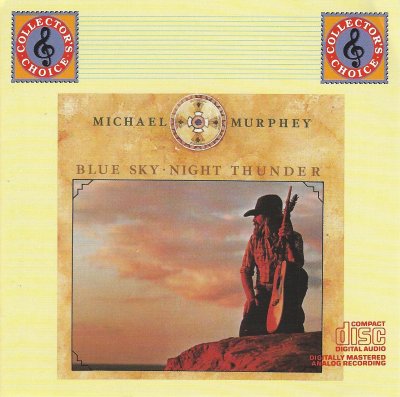
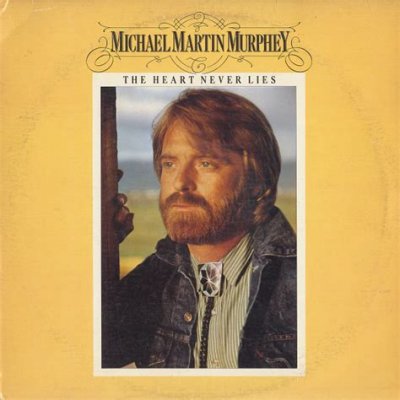
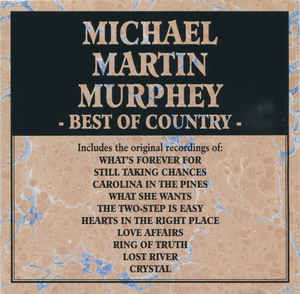
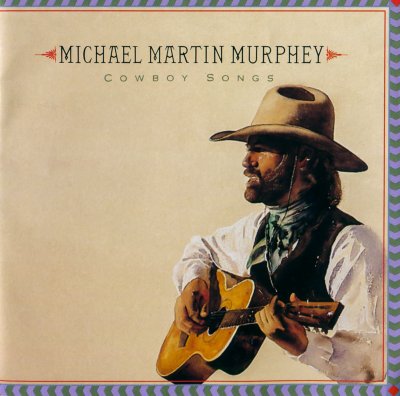
In many ways, Michael Martin Murphey has the career that Michael Nesmith of the Monkees -- with whom Murphey performed early in both of their careers -- might have had if he had never been picked for the NBC series. A guitarist/songwriter, Murphey led the country-rock group the Lewis & Clarke Expedition in the mid- to late '60s and had some pop success, and even got one song, "What Am I Doing Hangin' 'Round?," recorded by the Monkees (with Nesmith singing lead, natch). His songs were cut by the likes of Flatt & Scruggs, Kenny Rogers, Roger Miller, and Bobbie Gentry, and he eventually began recording for A&M Records, and later for Epic Records, where he enjoyed a huge pop hit in the 1970s with "Wildfire." For a time he was known as the Cosmic Cowboy after one of his early songs. Murphey moved to Liberty Records in the early '80s and later jumped to Warner Bros., where his interest in cowboy and Native American subjects led to the foundation of the Warner Western imprint, a subsidiary label devoted to cowboy music and poetry. Murphey was born in Dallas, TX, and quickly took to playing the ukulele. He had a special love for cowboy stories and songs and also read avidly as a boy -- especially the work of Mark Twain and William Faulkner -- and was writing poetry before he was in his teens. He began performing as an amateur while in junior high school and within a few years was playing the clubs around Dallas in the early '60s, combining country, folk, and rock music. Somehow, despite the inherently conservative nature of all of those audiences, Murphey made it work, and he formed a band with a decent following in the area around Dallas. He studied poetry and writing at the University of California, and soon after arriving in the Golden State he was signed up as a songwriter with Sparrow Music. By 1964, he was a popular figure in the folk clubs around Los Angeles and had formed up with three likeminded musicians, Nesmith, John London, and John Raines, under the name the Trinity River Boys, who recorded one never-to-be-released album before disbanding. In 1967, Murphey formed the Lewis & Clarke Expedition with Owen Castleman (aka Boomer Clarke). This group recorded one self-titled album for the Colgems label -- not coincidentally, the label for which the Monkees, of whom Nesmith was a member, recorded -- and got a moderate hit out of the single "I Feel Good (I Feel Bad)." It was around this time that the Monkees recorded Murphey's "What Am I Doing Hangin' 'Round?" Murphey left Los Angeles in 1968 to take up residence in the San Gabriel Mountains, where his songwriting blossomed anew. He was signed to Screen Gems (the publishing arm of Columbia Pictures, which also owned Colgems) as a songwriter, and with the exposure that he received from this association, wrote songs recorded by Flatt & Scruggs and Bobbie Gentry. It was Kenny Rogers who gave Murphey his best showcase as a songwriter, however, by cutting an entire album, The Ballad of Calico, comprised of songs Murphey had written about a Mojave Desert ghost town. Geronimo's Cadillac Back in Texas, in the Austin area, during the early '70s, he resumed his singer/songwriter career and fell in with Jerry Jeff Walker, Willie Nelson, and B.W. Stevenson. He also put together a new band that specialized in country-rock and folk-rock. In 1971, he was signed to his first solo recording contract on A&M Records, and his first album, Geronimo's Cadillac (1972), yielded a modest hit in the title song, which was covered by several other artists, including Hoyt Axton, and also taken up as an anthem by Native American civil rights activists. A second album, Cosmic Cowboy Souvenir, was well received critically and also a modest hit in the Austin area. Blue Sky - Night Thunder In 1974, Murphey moved to Epic Records, a division of Columbia, and recorded the first of six albums, Michael Murphey, that same year. It was his second album, Blue Sky - Night Thunder, recorded in 1975, however, that marked Murphey's commercial breakthrough. He had first heard the story about a ghost horse rescuing people on the desert when he was a boy, from his grandfather, and Murphey dreamed of something similar one night as an adult and set it down to music and words in half an hour that same evening. The resulting song, "Wildfire," got to number three on the pop charts in 1975 and became Murphey's first gold record. Another song off of the same album, "Carolina in the Pines," also made the Top 30. He saw more success with Swans Against the Sun -- which included his first country chart hit, "A Mansion on the Hill" and "Flowing Free Forever," both in 1976. "Cherokee Fiddle" off of that album was a modestly successful single for Murphey, but six years later Johnny Lee brought it into the Top Ten and into the movie Urban Cowboy. Up until 1981, he'd been known as Michael Murphey, but that year he began making a series of film acting appearances, starting with Gus Trikonis' Take This Job and Shove It, and began using his middle name in films and on albums, as a way of distinguishing himself from the actor Michael Murphy (Manhattan). In 1982, Murphey signed a recording contract with Liberty Records, which yielded two original albums, Michael Martin Murphey and The Heart Never Lies, as well as a best-of -- made up of superb re-recordings of his A&M and Epic hits as well as his original Liberty hits "Still Taking Chances," "Love Affairs," "Don't Count the Rainy Days," "Will It Be Love," and "Radio Land," the latter a sort of country-flavored equivalent to "American Pie." By that time he'd been voted Best New Male Vocalist of the year 1983 by the American Country Music Association. Additionally, his re-recording of "Carolina in the Pines" rose to the country Top Ten in 1985, outperforming the original Epic version. Tonight We Ride In 1985, Murphey moved to Warner Bros. Records, making his debut on the label with Tonight We Ride. A year later he got to the country Top Five with "A Face in the Crowd," recorded with Holly Dunn, and then reached the number one spot with "A Long Line of Love." Murphey's singles chart success slackened off after 1989 with "Never Givin' Up on Love," which had been used in the Clint Eastwood film Pink Cadillac that same year. Cowboy Songs It was after this that Murphey returned to one of the first loves of his life, cowboy music. In 1990, he cut an album, Cowboy Songs, made up of traditional and well-known popular songs from the genre, including "The Yellow Rose of Texas" and "Tumbling Tumbleweeds." That record uncovered a niche waiting to be filled, selling several times more than any of Murphey's other Warner Bros. releases. That success, in turn, led the label to establish its Warner Western imprint, which, in addition to Murphey (who also produces a lot of the work), has also recorded the harmony group the Sons of the San Joachin, veteran singing cowboy Herb Jeffries, and poet Waddie Mitchell. Cowboy Songs III Murphey has since recorded a number of additional albums featuring Western songs. Cowboy Songs III (1993) features a duet with the late Marty Robbins, no doubt inspired by the success of Natalie Cole's "Unforgettable" duet with her own father -- using a voice track recorded by Robbins in 1960 -- on the song "Big Iron." In 1996, Murphey released a live album on which he is backed by a full orchestra. He has also organized a series of annual celebrations of the American West, called West Fest, which he stages in various Western states. Cowboy Songs 4 appeared in 1998 and several collections followed. In summer 2002, his storytelling continued on Cowboy Classics: Playing Favorites II. Buckaroo Blue Grass appeared in 2009 from Rural Rhythm Records, followed by Cowboy Classics: Old West Cowboy Collection later that same year. Lone Cowboy, a solo live set recorded at the Western Jubilee Warehouse in Colorado Springs, appeared early in 2010.
Discography
Credits