Marty Robbins
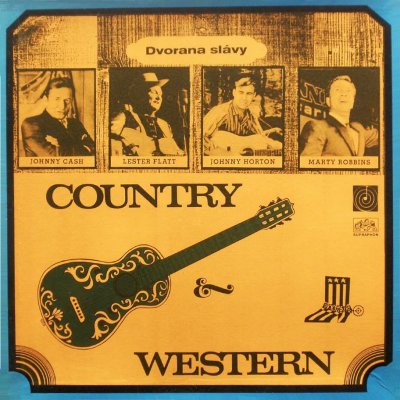
Martin David Robinson (September 26, 1925 – December 8, 1982), known professionally as Marty Robbins, was an American singer, songwriter, and multi-instrumentalist. One of the most popular and successful country and Western singers of all time for most of his nearly four-decade career, Robbins often topped the country music charts, and several of his songs also became pop hits.
Robbins was born in Glendale, a suburb of Phoenix in Maricopa County, Arizona. He was reared in a difficult family situation. His father took odd jobs to support the family of 10 children, but his drinking led to divorce in 1937. Among his warmer memories of his childhood, Robbins recalled having listened to stories of the American West told by his maternal grandfather, Texas Bob Heckle. Robbins left the troubled home at 17 to serve in the United States Navy as an LCT coxswain during World War II. He was stationed in the Solomon Islands in the Pacific Ocean. To pass the time during the war, he learned to play the guitar, started writing songs, and came to love Hawaiian music. After his discharge from the military in 1947, he began to play at local venues in Phoenix, then moved on to host his own show on KTYL and then his own television show on KPHO-TV in Phoenix. After Little Jimmy Dickens made a guest appearance on Robbins' TV show, Dickens got Robbins a record deal with Columbia Records. Robbins became known for his appearances at the Grand Ole Opry in Nashville, Tennessee. In addition to his recordings and performances, Robbins was an avid race car driver, competing in 35 career NASCAR races with six top-10 finishes, including the 1973 Firecracker 400. In 1967, Robbins played himself in the car racing film Hell on Wheels. Robbins was partial to Dodges, and owned and raced Chargers and then a 1978 Dodge Magnum. His last race was in a Junior Johnson-built 1982 Buick Regal in the Atlanta Journal 500 on November 7, 1982, the month before he died. In 1983, NASCAR honored Robbins by naming the annual race at Nashville the Marty Robbins 420. He was also the driver of the 60th Indianapolis 500 Buick Century pace car in 1976. He ran many of the big super-speedway races including Talladega Superspeedway in 1972, when he stunned the competition by turning laps that were 15 mph faster than his qualifying time. Apparently, in his motel room, Robbins had knocked the NASCAR-mandated restrictors out of his carburetor. After the race, NASCAR tried to give him the Rookie of the Race award, but Robbins would not accept it, admitting he was illegal because he "just wanted to see what it was like to run up front for once." Robbins was awarded an honorary degree by Northern Arizona University. On September 27, 1948, Robbins married Marizona Baldwin (September 11, 1930 – July 10, 2001) to whom he dedicated his song "My Woman, My Woman, My Wife". They had two children, son Ronny and daughter Janet, who also followed singing careers in Los Angeles, California. In 1972, Robbins starred in the movie "Guns of a Stranger" (originally titled "The Drifter") and appeared with Chill Wills and Dovie Beams, released in 1973. The movie is about a drifter forced in the line of duty to kill a young Abilene gunman. Sheriff Matthew Roberts (Marty Robbins) is torn by inner anguish and takes off his badge and leaves Kansas. As time passes, Roberts is known as 'The Drifter', wandering restlessly through the west. In Arizona he aids an elderly rancher, Tom Duncan (Chill Wills), and his granddaughter Virginia (Dovie Beams) and her kid brother Danny (Steven Tackett) in their fight to save their small ranch from a crooked banker and his gang of outlaws. It was filmed entirely on location at Apacheland Movie Ranch. Robbins later portrayed a musician in the 1982 Clint Eastwood film Honkytonk Man. Robbins died a few weeks before the release of the film in December 1982 of complications following cardiac surgery. At the time of his death, Robbins lived in Brentwood in Williamson County, outside Nashville. It was Robbins' third heart attack in 13 years. He was interred in Woodlawn Memorial Park in Nashville. The city of El Paso, Texas, later honored Robbins by naming a park and a recreational center after him. Marty's twin sister Mamie Ellen Robinson Minotto died on March 14, 2004, when she was partway through writing a book about her brother "Some Memories: Growing up with Marty Robbins" as remembered by Mamie Minotto, as told to Andrew Means. It was published in January 2007. Music and honors[edit]
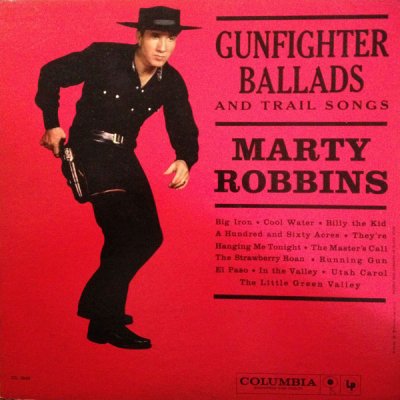
Robbins' 1957 recording of "A White Sport Coat and a Pink Carnation" sold over one million copies, and was awarded a gold disc. His musical accomplishments include the Grammy Award for his 1959 hit and signature song "El Paso", taken from his album Gunfighter Ballads and Trail Songs. "El Paso" was the first song to hit No. 1 on the pop chart in the 1960s. It was followed up, successfully, by "Don't Worry", which reached No. 3 on the pop chart in 1961, becoming his third, and last, Top 10 pop hit. "El Paso" was followed by one prequel and one sequel: "Feleena" and "El Paso City". Also in 1961, Robbins wrote the words and music and recorded "I Told the Brook," a ballad later recorded by Billy Thorpe. He won the Grammy Award for the Best Country & Western Recording 1961, for his follow-up album More Gunfighter Ballads and Trail Songs, and was awarded the Grammy Award for Best Country Song in 1970, for "My Woman, My Woman, My Wife". Robbins was named Artist of the Decade (1960–1969) by the Academy of Country Music, was elected to the Country Music Hall of Fame in 1982, and was given a Grammy Hall of Fame Award in 1998 for his song "El Paso". Robbins was inducted into the Nashville Songwriters Hall of Fame in 1975. For his contribution to the recording industry, Robbins has a star on the Hollywood Walk of Fame at 6666 Hollywood Blvd. Robbins has been honored by many bands, including the Grateful Dead who covered "El Paso". The Who's 2006 album Endless Wire includes the song "God Speaks of Marty Robbins". The song's composer, Pete Townshend, explained that the song is about God deciding to create the universe just so he can hear some music, "and most of all, one of his best creations, Marty Robbins." The Beasts of Bourbon released a song called "The Day Marty Robbins Died" on their 1984 debut album The Axeman's Jazz. Johnny Cash recorded a version of "Big Iron" as part of his American Recordings series, which is included in the Cash Unearthed box set. Both Frankie Laine and Elvis Presley, among others, recorded versions of Robbins' song "You Gave Me a Mountain", with Laine's recording reaching the pop and adult contemporary charts in 1969. Robbins performed and recorded several songs by longtime songwriter Coleman Harwell, most notably "Thanks But No Thanks" in 1964; Robbins and his producers employed the top sessions musicians and singers including the Jordanaires to record Harwell's songs. Harwell is the nephew of former Nashville Tennessean newspaper editor Coleman Harwell. When Robbins was recording his 1961 hit "Don't Worry", session guitarist Grady Martin accidentally created the electric guitar "fuzz" effect — his six-string bass was run through a faulty channel in a mixing console. Marty decided to keep it in the final version. The song reached No. 1 on the country chart, and No. 3 on the pop chart. Robbins' song "Big Iron", originally released on his 1959 album Gunfighter Ballads and Trail Songs, gained renewed popularity following its use in the video game Fallout: New Vegas. His song "El Paso" was featured on AMC Breaking Bad's final episode.
Discography
Credits