music.nwby NeuraWeb Global Inc.
~13.0M artists · ~39.4M recordings indexed
Narrow to
Ludwig van Beethoven
Person · German composer

Ludwig van Beethoven

Albums
11200
Members
0
Active
1770–1827
Origin
Germany
Biography

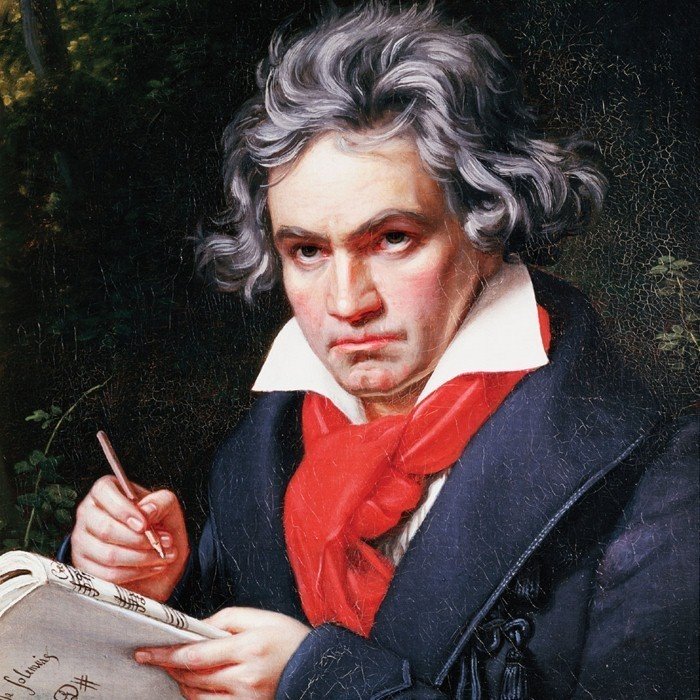
Ludwig van Beethoven (baptized 17 December 1770 – 26 March 1827) was a German composer and pianist. A crucial figure in the transition between the Classical and Romantic eras in Western art music, he remains one of the most famous and influential of all composers. His best known compositions include 9 symphonies, 5 concertos for piano, 32 piano sonatas, and 16 string quartets. He also composed other chamber music, choral works (including the celebrated Missa Solemnis), and songs.

Born in Bonn, then the capital of the Electorate of Cologne and part of the Holy Roman Empire, Beethoven displayed his musical talents at an early age and was taught by his father Johann van Beethoven and Christian Gottlob Neefe. During his first 22 years in Bonn, Beethoven intended to study with Wolfgang Amadeus Mozart and befriended Joseph Haydn. Beethoven moved to Vienna in 1792 and began studying with Haydn, quickly gaining a reputation as a virtuoso pianist. He lived in Vienna until his death.

About 1800 his hearing began to deteriorate, and by the last decade of his life he was almost totally deaf. He gave up conducting and performing in public but continued to compose; many of his most admired works come from this period. Beethoven was the grandson of Lodewijk van Beethoven (1712–73), a musician who came from Mechelen in present-day Belgium who moved at the age of twenty to Bonn. Lodewijk (Ludwig is the German cognate of Dutch Lodewijk) was employed as a bass singer at the court of the Elector of Cologne, eventually rising to become Kapellmeister (music director).

Lodewijk had one son, Johann (1740–1792), who worked as a tenor in the same musical establishment, and gave lessons on piano and violin to supplement his income. Johann married Maria Magdalena Keverich in 1767; she was the daughter of Johann Heinrich Keverich, who had been the head chef at the court of the Archbishopric of Trier. Beethoven was born of this marriage in Bonn. There is no authentic record of the date of his birth; however, the registry of his baptism, in a Roman Catholic service at the Parish of St.

Regius on 17 December 1770, survives. As children of that era were traditionally baptised the day after birth in the Catholic Rhine country, and it is known that Beethoven's family and his teacher Johann Albrechtsberger celebrated his birthday on 16 December, most scholars accept 16 December 1770 as Beethoven's date of birth. Of the seven children born to Johann van Beethoven, only Ludwig, the second-born, and two younger brothers survived infancy. Caspar Anton Carl was born on 8 April 1774, and Nikolaus Johann, the youngest, was born on 2 October 1776.

Beethoven's first music teacher was his father. Although tradition has it that Johann van Beethoven was a harsh instructor, and that the child Beethoven, "made to stand at the keyboard, was often in tears, " the Grove Dictionary of Music and Musicians claimed that no solid documentation supported this, and asserted that "speculation and myth-making have both been productive. " Beethoven had other local teachers: the court organist Gilles van den Eeden (d. 1782), Tobias Friedrich Pfeiffer (a family friend, who taught Beethoven the piano), and Franz Rovantini (a relative, who instructed him in playing the violin and viola). Beethoven's musical talent was obvious at a young age.

Johann, aware of Leopold Mozart's successes in this area (with son Wolfgang and daughter Nannerl), attempted to exploit his son as a child prodigy, claiming that Beethoven was six (he was seven) on the posters for Beethoven's first public performance in March 1778. Some time after 1779, Beethoven began his studies with his most important teacher in Bonn, Christian Gottlob Neefe, who was appointed the Court's Organist in that year. Neefe taught Beethoven composition, and by March 1783 had helped him write his first published composition: a set of keyboard variations (WoO 63). Beethoven soon began working with Neefe as assistant organist, at first unpaid (1781), and then as a paid employee (1784) of the court chapel conducted by the Kapellmeister Andrea Luchesi.

His first three piano sonatas, named "Kurfürst" ("Elector") for their dedication to the Elector Maximilian Frederick (1708–1784), were published in 1783. Maximilian Frederick noticed Beethoven's talent early, and subsidised and encouraged the young man's musical studies.

Discography

Minuet
Ludwig van Beethoven · 1912
Kreutzer Sonata
Ludwig van Beethoven · 1918
Kreutzer Sonata
Ludwig van Beethoven · 1918
Quartet In C Sharp Minor
Ludwig van Beethoven · 1924
Quartet In A Minor (Op. 132)
Ludwig van Beethoven · 1925
Choral Symphony, No. 9 (D Minor)
Ludwig van Beethoven · 1926
Concerto In D Major, Op. 61 (Violin And Orchestra)
Ludwig van Beethoven · 1927
Concerto No. 5, Op. 73, (The "Emperor") (Pianoforte And Orchestra)
Ludwig van Beethoven · 1927
"Missa Solemnis", Op. 123 / "Der Messias"
Ludwig van Beethoven · 1927
Quartet In B Flat Major, Op. 130
Ludwig van Beethoven · 1927
Quartet In E Minor (Op. 59, No. 2)
Ludwig van Beethoven · 1927
Quartet In F Major Op. 59, No. 1 (Rasoumoffsky)
Ludwig van Beethoven · 1927
Quartet No. 16 In F Major
Ludwig van Beethoven · 1927
Quartet No.16 In F Major (Op. 135)
Ludwig van Beethoven · 1927
Sonata In A (Op. 47) - The Kreutzer Sonata
Ludwig van Beethoven · 1927
Symphony No. 2, In D Major
Ludwig van Beethoven · 1927
Symphony No. 4 In B Flat, Op. 60
Ludwig van Beethoven · 1927
Symphony No. 5, In C Minor (Op. 67)
Ludwig van Beethoven · 1927
Symphony No. 6 (Pastoral) In F Major Op. 68
Ludwig van Beethoven · 1927
Symphony No. 7 In A Major
Ludwig van Beethoven · 1927
Symphony No. 8, In F (Op. 93)
Ludwig van Beethoven · 1927
Symphony No. 9 (Choral) In D Minor
Ludwig van Beethoven · 1927
Trio In B Flat (Op. 97, No. 6)
Ludwig van Beethoven · 1927
7e Quatuor En Fa Majeur (Op, 59 N° 1)
Ludwig van Beethoven · 1928
Kreutzer Sonata In A Major
Ludwig van Beethoven · 1928
Missa solemnis, op. 123
Ludwig van Beethoven · 1928
Op. 97 Trio No 7 In B Flat Major "The Arch-Duke"
Ludwig van Beethoven · 1928
Seven Variations On An Air From "The Magic Flute"
Ludwig van Beethoven · 1928
Leonora Overture, No. 3
Ludwig van Beethoven · 1929
Leonore Overture, No. 3
Ludwig van Beethoven · 1929
Symphony No. 1 In C Major, Op. 21
Ludwig van Beethoven · 1929
Symphony No. 6 In F Major ("Pastoral")
Ludwig van Beethoven · 1929
Sonata In D Major, Op. 12, No. 1
Ludwig van Beethoven · 1930
Sonata No. 9, In A Major, Op. 47 ("Kreutzer Sonata")
Ludwig van Beethoven · 1930
Quartet In F Major ("Rasumovsky" Op. 59, No. 1)
Ludwig van Beethoven · 1931
Sonata In C Major, Op. 53 ("Waldstein" Sonata)
Ludwig van Beethoven · 1931
Sonata In E Flat Major, Op. 12, No. 3
Ludwig van Beethoven · 1931
Sonate A Kreutzer, En La Majeur (Op. 47)
Ludwig van Beethoven · 1931
Concerto No. 5 In E Flat Major, Op. 73 ("The Emperor")
Ludwig van Beethoven · 1932
Egmont - Overture
Ludwig van Beethoven · 1932
Quartet In B Flat, Op. 18 No. 6
Ludwig van Beethoven · 1932
Violin Concerto In D Major (Op. 61)
Ludwig van Beethoven · 1932
Volume Five - Pianoforte Sonatas Op. 22 / Op. 57 / Op. 49, No. 2
Ludwig van Beethoven · 1932
Volume Nine - Pianoforte Sonatas Op. 26 / Op. 53
Ludwig van Beethoven · 1932
Volume One - Pianoforte Sonatas Op. 78 / Op. 90 / Op. 111
Ludwig van Beethoven · 1932
Concerto No. 1 In C-Dur Do Majeur Op. 15
Ludwig van Beethoven · 1933
Concerto No. 4 In G Major (Opus 58)
Ludwig van Beethoven · 1933
Quartet In C Sharp Minor, Op. 131
Ludwig van Beethoven · 1933
Quatuor En Ut Dièze Mineur N° 14, Op. 131
Ludwig van Beethoven · 1933
Sonata In F Major (F Dur), Op. 24 ("Spring")
Ludwig van Beethoven · 1933
String Quartet In F Minor, Op.95, No.11
Ludwig van Beethoven · 1933
Symphony No. 5, In C Minor (Op. 67)
Ludwig van Beethoven · 1933
Volume Four - Sonata In A Major, Op. 2, No. 2 / Sonata In C Sharp Minor, Op. 27, No. 2 / Sonata In E Flat Major, Op. 81a : "Les Adieux"
Ludwig van Beethoven · 1933
Volume Six - Sonata In F Major (F Dur), Op. 10, No. 2 / Sonata In C Minor (C Moll), Op.13 ("Pathetique") / Sonata In E Flat (Es Dur), Op.31, No 3
Ludwig van Beethoven · 1933
Volume Three - Sonata In D Major (D Dur), Op. 28 / Sonata In G Minor (G Moll), Op. 49, No. 1 / Sonata In A Flat Major (As Dur), Op. 110
Ludwig van Beethoven · 1933
Volume Two - Pianoforte Sonatas Op. 14/1; Op.27/1; Op.109
Ludwig van Beethoven · 1933
Overture "Coriolan," Op. 62
Ludwig van Beethoven · 1934
Sonata In A Major, Op. 69
Ludwig van Beethoven · 1934
Symphony No. 4, In B Flat
Ludwig van Beethoven · 1934
Symphony No. 9, In D Minor ("Choral")
Ludwig van Beethoven · 1934

Credits

Cellosonate D-dur Op. 102 Nr. 2 · Variationen Über Themen Von Händel Und Mozart (Cello Sonata In D Major, Op. 102, No. 2 · Variations On Themes By Händel And Mozart)
Composer · —
Cellosonaten Op. 5 F-Dur Nr. 1 Und G-Moll Nr. 2
Composer · —
Cellosonaten Op. 5 • Variationen
Composer · —
Cellosonaten Op. 69, Op. 102 / 7 Variationen Über Ein Thema Von Mozart
Composer · —
Cellosonaten Opp. 69 & 102 · Variationen
Composer · —
Cello-Sonate Nr. 2 / Cello-Sonate Nr. 1
Composer · —
Cellosonaten = Sonatas For Cello And Piano
Composer · —
Chamber Music
Composer · —
Chamber Music
Composer · —
Chamber Music For Flute
Composer · —
Chamber Music For Wind Instruments
Composer · —
Chamber Music For Wind Instruments
Composer · —
Chamber Music From Marlboro: Octet In E Flat ‧ Serenade In D Minor
Composer · —
Chicago Symphony Orchestra-From The Archives Volume 3
Composer · —
Chloe Flower
Composer · —
Chopin / Smetana / Beethoven
Composer · —
Choral Fantasia / The Ruins Of Athens
Composer · —
"Choral Fantasy" / Rondo In B-Flat / Elegaic Song / "Calm Sea & Prosperous Voyage"
Composer · —
Choral Symphony
Composer · —
"Choral" Symphony (No.9) / "Choral" Fantasy
Composer · —
Choral Symphony, No. 9 (D Minor)
Composer · —
Choral Symphony - Symphony No.9 In D Minor - Symphony No.8 In F
Composer · —
Chor-Fantasie Op. 80 / Freude Schöner Götterfunken (Schluss-Satz Der IX. Sinfonie D-moll Op.125)
Composer · —
Chorus Fantasy / Deutsche Messe
Composer · —
Chorus Of Dervishes (from "Ruins Of Athens")
Composer · —
Christ On Olive Mountain • Leonore Overture No. 2
Composer · —
Christ On The Mount Of Olives
Composer · —
Christ On The Mount Of Olives
Composer · —
Christ On The Mount Of Olives
Composer · —
Christ On The Mount Of Olives
Composer · —
Christus am Ölberge
Composer · —
Christus Am Ölberge / Christ On The Mountain Of Olives
Composer · —
Christus Am Ölberge = Christ On The Mount Of Olives
Composer · —
Christus Am Ölberge Op. 85
Composer · —
Christus Am Ölberge Op. 85
Composer · —
Christus Am Ölberge (Oratorio Op.85)
Composer · —
Christus Am Ölberg, Op. 85 (Christ On The Mount Of Olives)
Composer · —
"Clair De Lune", "Pathétique", "La Tempête", "Appassionata"
Composer · —
Clarinet Sonatas 1 & 2 / Clarinet Trio
Composer · —
Classical Collection Vol. 4
Composer · —
Classical In New Age
Writer · —
Classical Masters - The Best Of Mozart • Bach • Beethoven • Tchaikovsky
Composer · —
Classical Praise I
Composer · —
Classic Hour At Emerald Hall
Composer · —
Classic Piano Sonatas
Composer · —
Classics A La Wunderlich
Composer · —
Classics In The Air
Composer · —
Classics In The Air (3LP In 2CD)
Composer · —
Claudio Arrau At Tanglewood: Beethoven Piano Concertos 4 & 5 'Emperor'
Composer · —
Členská Prémie
Composer · —
C-Moll Zongoraverseny Op. 37 / Andante Favori
Composer · —
Cohata № 18, Coч. 31 № 3 / Cohata № 21 Coч. 53 <<Aвpopa>>
Composer · —
Collection
Composer · —
Colonna Sonora Originale Del Film Di Luchino Visconti - Morte A Venezia
Composer · —
Complete Beethoven Edition Sampler
Composer · —
Complete Beethoven Symphonies Vol. II (Nos. 5-8)
Composer · —
Complete Chamber Music For Flute
Composer · —
Complete Chamber Music For Winds And Brass
Composer · —
Complete Concertos I
Composer · —
Complete Music For Cello And Piano
Composer · —