Little Walter
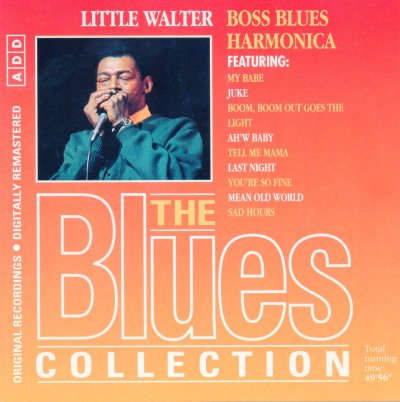
Little Walter (born Marion Walter Jacobs in Marksville, Louisiana; May 1, 1930; died on February 15, 1968 in Chicago, Illinois) was an American blues singer, harmonica player, and guitarist, whose revolutionary approach to the harmonica earned him comparisons to Charlie Parker and Jimi Hendrix for innovation and impact on succeeding generations. His virtuosity and musical innovations fundamentally altered many listeners' expectations of what was possible on blues harmonica. He was inducted into the Rock and Roll Hall of Fame in 2008 in the "sideman" category, making him the first and only artist ever to be inducted specifically for his work as a harmonica player. Tired of the generic electric guitar blues of the mid-1940s, Little Walter introduced to blues a new sound by simply combining the use of a guitar amp, mic, and a harmonica; a technique used among harmonica musicians to this day. He made his first released recordings in 1947 for Bernard Abram's tiny Ora-Nelle label, which operated out of the back room of the Abrams' Maxwell Radio and Records store in the heart of the Maxwell Street market area in Chicago. Little Walter thus became the first musician to use electric distortion on purpose. Little Walter is widely regarded as the best harmonica player ever, and you can hear much of his talent accompanying Muddy Waters's repertoire from the 50's, as well as his own numerous and successful recordings of that time. Jacobs is generally included among blues music greats: his revolutionary harmonica technique has earned comparisons to Charlie Parker and Jimi Hendrix in its impact: There were great musicians before and after, but Jacobs' virtuosity and musical innovations reached heights of expression never previously imagined, and fundamentally altered many listeners' expectations of what was possible on blues harmonica. His body of work earned Little Walter a spot in The Rock and Roll Hall of Fame in the sideman category on March 10, 2008, making him the only artist so honored specifically for his work as a harmonica player. Jacobs made his first released recordings in 1947 for Bernard Abrams' tiny Ora-Nelle label, which operated out of the back room of Abrams' Maxwell Radio and Records store in the heart of the Maxwell Street market area in Chicago. These and several other early Little Walter recordings, like many blues harp recordings of the era, owed a strong stylistic debt to pioneering blues harmonica player Sonny Boy Williamson I (John Lee Williamson). Little Walter joined Muddy Waters' band in 1948, and by 1950, he was playing acoustic (unamplified) harmonica on Muddy's recordings for Chess Records. The first appearance on record of amplified harmonica was Little Walter's performance on Muddy's "Country Boy" (Chess 1452), recorded on July 11, 1951. For years after his departure from Muddy's band in 1952, Chess continued to hire Little Walter to play on Waters' recording sessions, and as a result his harmonica is featured on most of Muddy's classic recordings from the 1950s. As a guitarist, Little Walter recorded three songs for the small Parkway label with Muddy Waters and Baby Face Leroy Foster (reissued on CD as "The Blues World of Little Walter" from Delmark Records in 1993), as well as on a session for Chess backing pianist Eddie Ware; his guitar work was also featured occasionally on early Chess sessions with Muddy Waters and Jimmy Rogers. Jacobs had put his career as a bandleader on hold when he joined Muddy's band, but stepped back out front once and for all when he recorded as a bandleader for Chess's subsidiary label Checker Records on 12 May 1952. The first completed take of the first song attempted at his debut session became his first hit, spending eight weeks in the number-one position on the Billboard R&B chart - the song was "Juke", and it is still the only harmonica instrumental ever to become a number-one hit on the Billboard R&B. (Three other harmonica instrumentals by Little Walter also reached the Billboard R&B top 10: "Off the Wall" reached number eight, "Roller Coaster" achieved number six, and "Sad Hours" reached the number-two position while Juke was still on the charts.) "Juke" was the biggest hit to date for Chess and its affiliated labels, and one of the biggest national R&B hits of 1952, securing Walter's position on the Chess artist roster for the next decade. Little Walter scored fourteen top-ten hits on the Billboard R&B charts between 1952 and 1958, including two number-one hits (the second being "My Babe" in 1955), a level of commercial success never achieved by his former boss Waters, nor by his fellow Chess blues artists Howlin' Wolf and Sonny Boy Williamson II. Following the pattern of "Juke", most of Little Walter's single releases in the 1950s featured a vocal performance on one side, and a harmonica instrumental on the other. Many of Walter's vocal numbers were originals which he or Chess A&R man Willie Dixon wrote or adapted and updated from earlier blues themes. In general, his sound was more modern and uptempo than the popular Chicago blues of the day, with a jazzier conception and less rhythmically rigid approach than other contemporary blues harmonica players. Upon his departure from Muddy Waters' band in 1952, he recruited a young band that was already working steadily in Chicago backing Junior Wells, The Aces, as his new backing band. The Aces consisted of brothers David Myers and Louis Myers on guitars, and drummer Fred Below, and were re-christened "The Jukes" on most of the Little Walter records on which they appeared. By 1955 the members of The Aces / Jukes had each left Little Walter to pursue other opportunities, initially replaced by guitarists Robert "Junior" Lockwood and Luther Tucker, and drummer Odie Payne. Jr. Others who worked in Little Walter's recording and touring bands in the '50s included guitarists Jimmie Lee Robinson and Freddie Robinson. Little Walter also occasionally included saxophone players in his touring bands during this period, among them a young Albert Ayler, and even Ray Charles on one early tour. By the late 1950s, Little Walter no longer employed a regular full-time band, instead hiring various players as needed from the large pool of local blues musicians in Chicago. Jacobs was frequently utilized on records as a harmonica accompanist behind others in the Chess stable of artists, including Jimmy Rogers, John Brim, Rocky Fuller, Memphis Minnie, The Coronets, Johnny Shines, Floyd Jones, Bo Diddley, and Shel Silverstein, and on other record labels backing Otis Rush, Johnny Young, and Robert Nighthawk. Jacobs suffered from alcoholism and had a notoriously short temper, which in late 1950s led to a series of violent altercations, minor scrapes with the law, and increasingly irresponsible behavior. This led to a decline in his fame and fortunes beginning in the late 1950s, although he did tour Europe twice, in 1964 and 1967. (The long-circulated story that he toured the United Kingdom with The Rolling Stones in 1964 has since been refuted by Keith Richards). The 1967 European tour, as part of the American Folk Blues Festival, resulted in the only film/video footage of Little Walter performing that is known to exist. Footage of Little Walter backing Hound Dog Taylor and Koko Taylor on a television program in Copenhagen, Denmark on 11 October 1967 was released on DVD in 2004. Further video of another recently discovered TV appearance in Germany during this same tour, showing Little Walter performing his songs "My Babe", "Mean Old World", and others were released on DVD in Europe in January 2009, and is the only known footage of Little Walter singing. Other TV appearances in the UK (in 1964) and the Netherlands (in 1967) have been documented, but no footage of these has been uncovered. Jacobs recorded and toured only infrequently in the 1960s, playing mainly in and around Chicago. In 1967 Chess released a studio album featuring Little Walter with Bo Diddley and Muddy Waters titled Super Blues. Death A few months after returning from his second European tour, he was involved in a fight while taking a break from a performance at a nightclub on the South Side of Chicago. The relatively minor injuries sustained in this altercation aggravated and compounded damage he had suffered in previous violent encounters, and he died in his sleep at the apartment of a girlfriend at 209 E. 54th St. in Chicago early the following morning. The official cause of death indicated on his death certificate was "coronary thrombosis" (a blood clot in the heart); evidence of external injuries was so insignificant that police reported that his death was of "unknown or natural causes", and there were no external injuries noted on the death certificate. His body was buried at St. Mary's Cemetery in Evergreen Park, IL on February 22, 1968. His grave remained unmarked until 1991, when fans Scott Dirks and Eomot Rasun had a marker designed and installed. [Legacy Music journalist Bill Dahl described Little Walter as "king of all post-war blues harpists", who "took the humble mouth organ in dazzling amplified directions that were unimaginable prior to his ascendancy." His legacy has been enormous: he is widely credited by blues historians as the artist primarily responsible for establishing the standard vocabulary for modern blues and blues rock harmonica players. His influence can be heard in varying degrees in virtually every modern blues harp player who came along in his wake, from blues greats such as Junior Wells, James Cotton, George "Harmonica" Smith, Carey Bell, and Big Walter Horton, through modern-day masters Sugar Blue, Billy Branch, Kim Wilson, Rod Piazza, William Clarke, and Charlie Musselwhite, in addition to blues-rock crossover artists such as Paul Butterfield and John Popper of the band Blues Traveler. Little Walter was portrayed in the 2008 film, Cadillac Records, by Columbus Short. Little Walter's daughter, Marion Diaz Reacco, has established the Little Walter Foundation in Chicago, to preserve the legacy and genius of Little Walter. The foundation aims to create programs for the creative arts, including music, animation and video. Stephen King's novel, Under the Dome, also features a character named Little Walter Bushey, based on Little Walter.
Discography
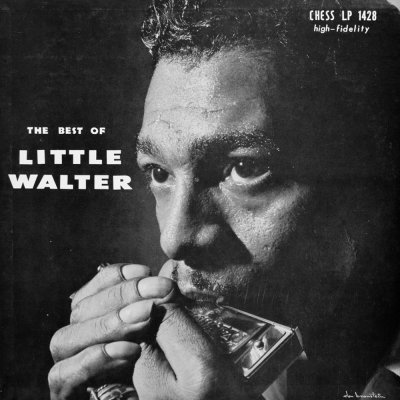
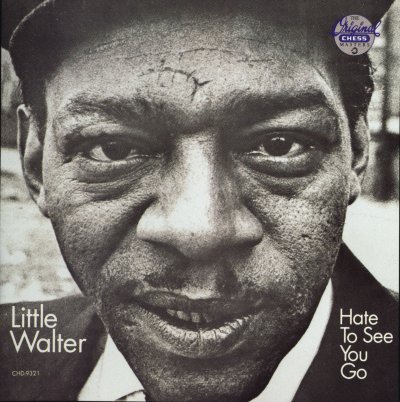
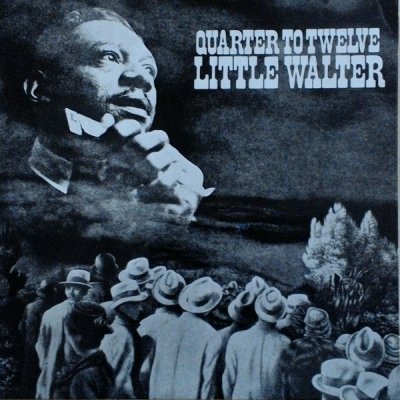
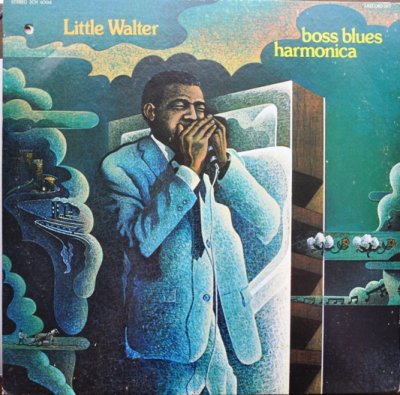
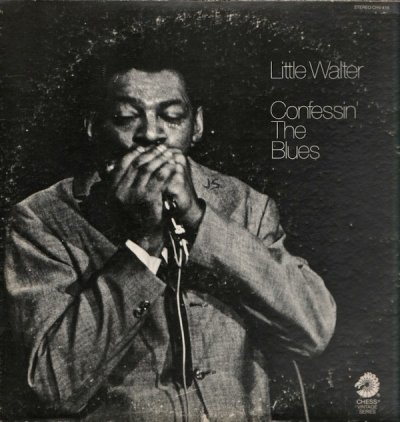

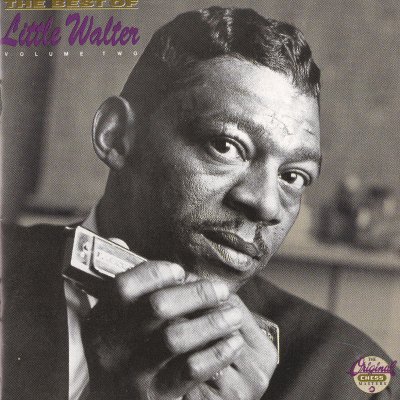
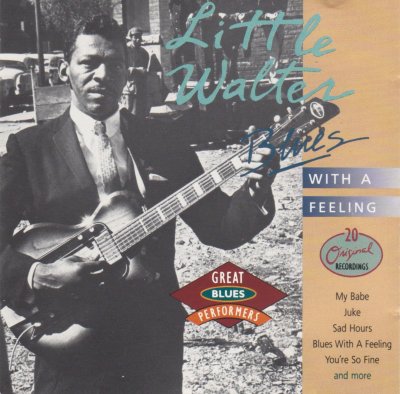
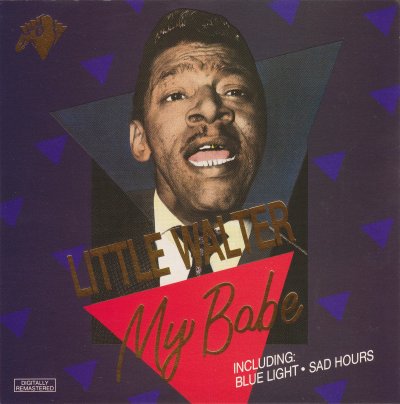
Credits