José Cid
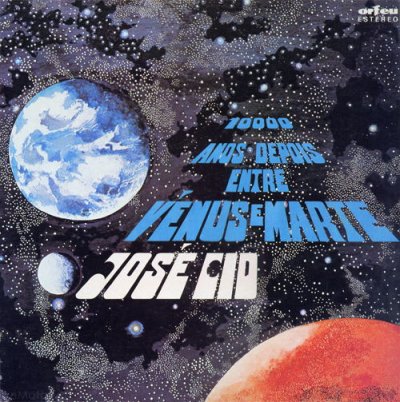
osé Cid (José Albano Cid de Ferreira Tavares), born on February 4, 1942 in Chamusca, Portugal, is a Portuguese singer and composer. Abroad, Cid is best known for performing "Um grande, grande amor" at the Eurovision Song Contest 1980 and for his progressive rock album 10,000 Anos Depois Entre Vénus e Marte.
Cid has been awarded 25 Silver, eight Gold (two double), and three Platinum records.
Early life Cid was born in 1942 in Chamusca, son of Francisco Albano Coutinho Ferreira and Fernanda Tavares Salter Cid Ferreira Gameiro. At age 6, he moved with his family to the municipality of Anadia . His professional career began when he started a covers band called Os Babies ("The Babies"), in 1956.
José Cid married Gabriela Carrascalão in 2013. Carrascalão is an East Timorese journalist and artist/painter . Cid and Gabriela live in a farm in Mogofores, municipality of Anadia. José Cid has one daughter, Ana Sofia Infante Pedroso (born 1964) from his first marriage with Emilia Infante Pedroso. Ana Sofia worked briefly with her father, but are currently estranged .
In 1965 Cid dropped out of school, never finishing the first year of Law School at the University of Coimbra (FDUC). In the city of Coimbra in created the musical group Conjunto Orfeão with José Niza, Proença de Carvalho and Rui Ressurreição.
Cid went to Lisbon in 1965, to attend the National Institute of Physical Education (INEF). One of his colleagues at INEF was the brother of Michel, a member of the band Conjunto Mistério. After an audition he was invited to join the group, later renamed Quarteto 1111. José Cid did not graduate from INEF either, because he was called to serve as an officer of the Portuguese Air Force. At the air base of Ota he was a gym teacher between 1968 and 1972. He taught in the morning and in the afternoon he played music in a garage. On the weekends, he played with the Quarteto 1111 .
Quarteto 1111 Main article: Quarteto 1111 José Cid co-founded Quarteto 1111, the first band to take a new approach to pop-rock music in Portugal, with a modern line-up and instrumentation.
Quarteto 1111 was the first symphonic rock band in Portugal. Between 1968-69 they received media attention from a hit single, "El Rei D. Sebastião", a song about the lost of the Portuguese king D. Sebastião, who supposedly died in the fields of Morocco during the battle of Alcazarquivir (a loss that would eventually lead to Portugal losing its independence from Spain). All the myths related with the return of King Sebastian – a quite anchored Portuguese myth – were fairly treated in this song. The harpsichord made its first appearance in Portuguese rock music. A single with the English version of the song was released in Great Britain. José Cid was the band leader, composer, keyboard and lead singer. The rest of the band had a classic formation influenced by the usual Beatles line-up, but with a sound and song structure reminiscent of The Moody Blues. The following album continued in the same vein, combining melodic songs with new "progressive" instruments, namely the Mellotron. Later on the band evolved to the late 1970s pop sound.
Progressive rock
José Cid at a promotion shoot in the Netherlands for the Eurovision Song Contest 1980 Cid explored symphonic rock with Cantamos Pessoas Vivas (1974), Vida – Sons do Quotidiano (1976) and 10,000 Anos Depois Entre Venus E Marte (1978). The progressive concept album 10,000 Anos Depois Entre Venus E Marte was released in 1978 and was consistently featured in www.progarchives.com on the top five progressive rock albums ever, and considered "Essential: a masterpiece of progressive rock music". Most of the songs, influenced by a sort of mix combining The Moody Blues and Pink Floyd psychedelia, were composed by Cid, some of them with the help of guitar player Mike Sergeant and drummer Ramon Galarza. Another (unfinished) project from this lineup, Vozes do Além, explored the "Life after Death / Reincarnation" theme. Featured in the record are a poem by Natália Correia ("Creio") and two from Sofia de Mello Breyner ("Quando" and "Um Dia"). Presently, work on this album has resumed, with the original lineup and the addition of younger musicians.
OTI Festival In 1979 José Cid was selected by RTP to represent Portugal in the eighth edition of the OTI Festival, which was held in Caracas, Venezuela. He competed with the song "Na cabanha junto á praia" (In a little house next to the beach), which was well received in the festival to the point that he managed to get the third place with 32 points.
In 1981, one year after his participation in the Eurovision Song Contest, he was again selected by the Portuguese broadcaster to compete in the tenth edition of the OTI Festival, which was held in Mexico City. This time he was not as successful as in his previous attempt in the Latin-American song contest and he got the tenth place scoring 14 points.
Eurovision The pop inclinations of José Cid led him to create, during the first half of the 1970s, a 4 piece vocal pop group (Green Windows) and to participate in the 1974 Festival da Canção with Imagens and No Dia Em Que O Rei Fez Anos. He also participated in the Eurovision Song Contest 1980 with the song Um grande, grande amor.
Discography
Credits