John Phillips
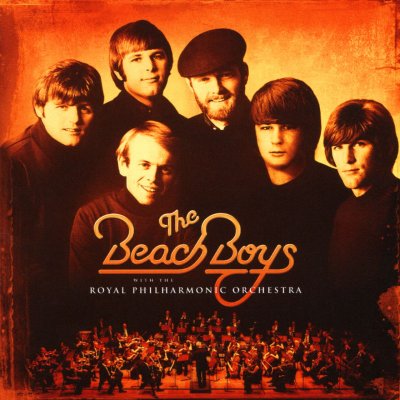
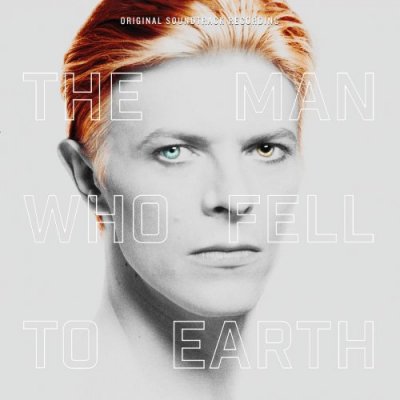
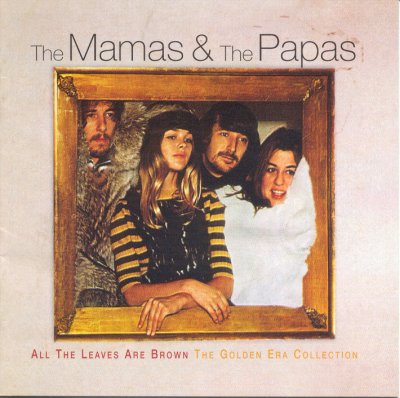
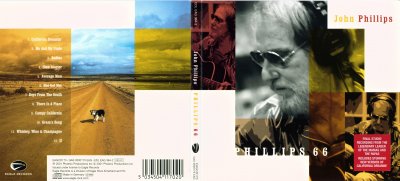
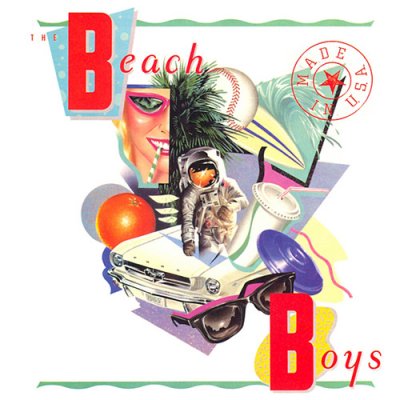
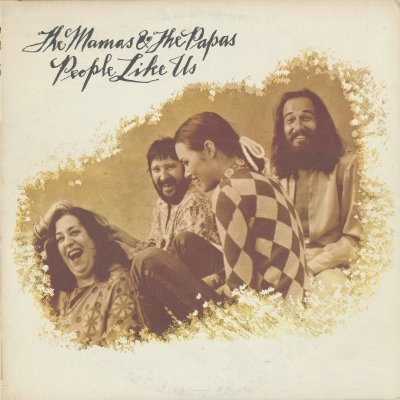
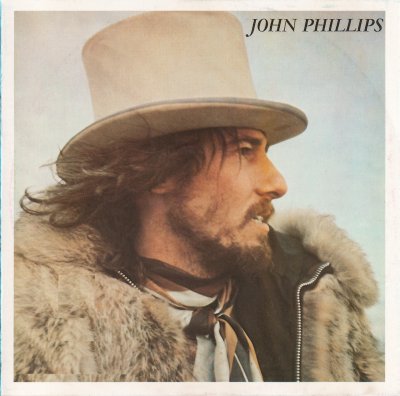
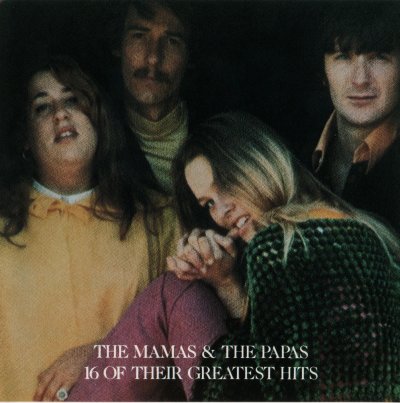
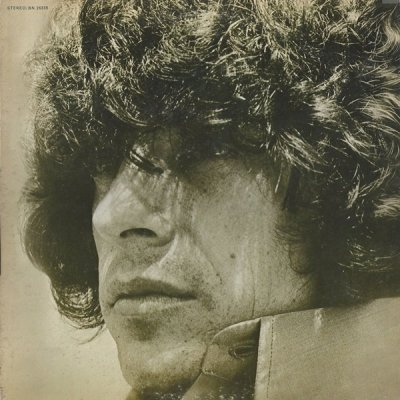
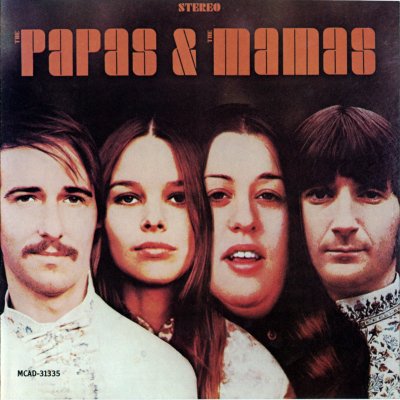
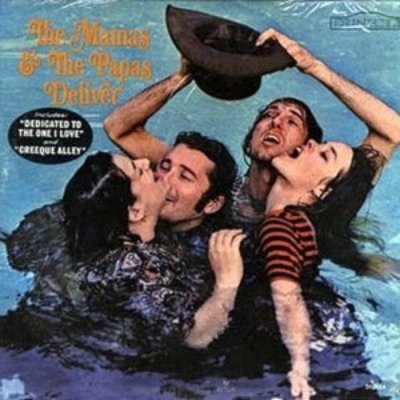
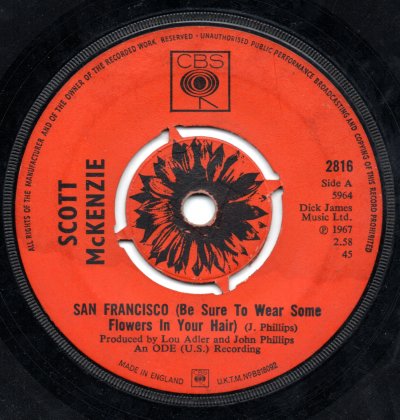
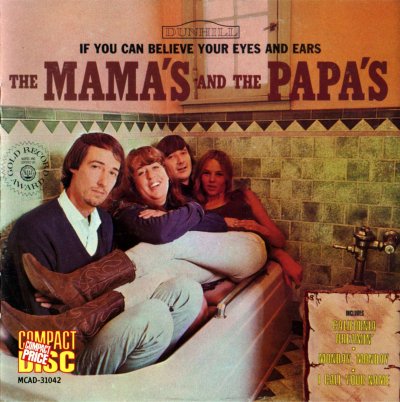
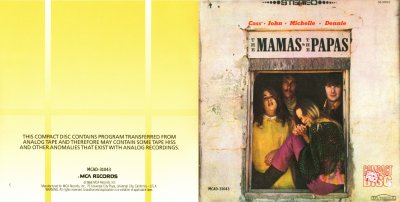
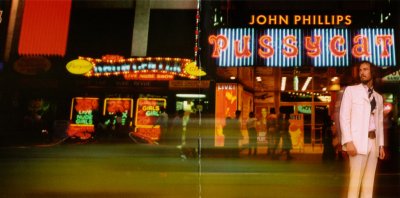
John Edmund Andrew Phillips (August 30, 1935 - March 18, 2001), was an American singer, guitarist, and songwriter. Known as Papa John, Phillips was a member and leader of the singing group The Mamas & the Papas. Phillips was born in Parris Island, South Carolina. His father was a retired United States Marine Corps officer who won an Oklahoma bar from another Marine in a poker game on the way home from France after World War I. His mother was a Cherokee Native his father met in Oklahoma. According to his autobiography, Papa John, Phillips' father was a heavy drinker who suffered from poor health. Phillips grew up in Alexandria, Virginia, where he was inspired by Marlon Brando to be "street tough". He formed a group of teenage boys, who also sang doo-wop songs. He played basketball at George Washington High School, where he graduated in 1953, and gained an appointment to the U.S. Naval Academy. However, he resigned during his first (plebe) year. Phillips then attended Hampden-Sydney College on a partial athletic scholarship, but dropped out and married his first of four wives: Susan Adams, the daughter of a wealthy Virginia family. They had a son, Jeffrey, and a daughter, Laura Mackenzie (known as "Mackenzie") Phillips. Phillips longed to have success in the music industry and traveled to New York to find a record contract in the early 1960s. His first band, The Journeymen, was a folk trio, with Scott Mckenzie and Dick Weismann. They were fairly successful, putting out 3 albums and several appearance on the 1960s TV show, Hootenanny. All three albums, as well as a "Best of the Journeymen" were reissued on CD. He developed his craft in Greenwich Village, during the American folk music revival, and met his future The Mamas & the Papas bandmates Denny Doherty and Cass Elliot there. Lyrics of their song "Creeque Alley" describe this period. While touring California with The Journeymen, he met his future second wife, the teenage Michelle Gilliam. Their affair finally forced the dissolution of his first marriage. Phillips was married to Michelle Phillips from 1962 to 1970. They had one child together, Chynna Phillips, vocalist of the 1990s' pop trio Wilson Phillips. Phillips was the primary songwriter and musical arranger of The Mamas & the Papas. Early in the band's history, John and Michelle were responsible for writing most of the band's songs. John would often come up with a melody and some lyrics and Michelle would help him complete the lyrical portion of the song. After being signed to Dunhill Records, they had several Billboard Top Ten hits during the group's short lifetime, including "California Dreamin'", "Monday, Monday", "I Saw Her Again", "Creeque Alley", and "12:30 (Young Girls Are Coming to the Canyon)". John Phillips also wrote "San Francisco (Be Sure to Wear Flowers in Your Hair)", the 1967 Scott McKenzie hit that was to become the Summer of Love anthem. Phillips also wrote the oft-covered "Me and My Uncle", which was the song performed more times than any other over 30 years of Grateful Dead concerts. The Phillipses became Hollywood celebrities, living in the Hollywood Hills and socializing with stars like Jack Nicholson, Warren Beatty, and Roman Polanski. The group broke up largely because Cass Elliot wanted to go solo and because of some personal problems among Phillips, Michelle, and Denny Doherty. Michelle had been fired briefly in 1966, for having had affairs with both Gene Clark and Denny, and was replaced for two months by Jill Gibson, their producer Lou Adler's girlfriend. Although Michelle was forgiven and asked to return to the group, the personal problems would continue until the band split up in 1968. Cass Elliot went on to have a successful solo career until her death from heart failure in 1974. Phillips released his first solo album John, the Wolf King of L.A. in 1970. The album was not commercially successful, although it did include the minor hit "Mississippi", and Phillips began to withdraw from the limelight as his use of narcotics increased. Actress Geneviève Waïte became his third wife in 1972. The couple had two children, Tamerlane and Bijou Phillips. Reportedly, both parents were drug addicts and infidelity marked their marriage. Phillips produced a Genevieve Waite album, Romance Is On the Rise and wrote music for films. Between 1969 and 1974, Phillips and Waite worked on a script and composed over 30 songs for a space-themed musical called Man On The Moon, which was eventually produced by Andy Warhol but played for just two days in New York after receiving disastrous opening night reviews. Phillips moved to London in 1973; Mick Jagger encouraged him to record another solo album. It was to be released on Rolling Stones Records and funded by RSR distributor Atlantic Records. Jagger and Keith Richards would produce and play on the album, as well as former Stone Mick Taylor and future Stone Ronnie Wood. The project was derailed by Phillips' increasing use of cocaine and heroin, substances that he shot into his body, by his own admission, "almost every fifteen minutes for two years". In 2001, the tracks of the Half Stoned or The Lost Album album were released as Pay Pack & Follow a few months after Phillips' death. In 1975 Phillips, still living in London, was commissioned to create the soundtrack to the Nicolas Roeg film The Man Who Fell to Earth, starring David Bowie. Phillips asked Mick Taylor to help out; the film was released in 1976. In 1981 Phillips was convicted of drug trafficking; subsequently, he and his television star daughter Mackenzie Phillips made the rounds in the media, instructing kids and their parents how not to become addicts. This public relations campaign helped reduce his prison time to only a month in jail. Upon release, he re-formed The Mamas & the Papas, with Mackenzie Phillips, Spanky McFarlane (of the group Spanky And Our Gang) and Denny Doherty. Throughout the rest of his life, Phillips toured with various versions of this group. Phillips was divorced from Waite in 1985. In 1986, his best-selling autobiography, Papa John, was published. With Terry Melcher, Mike Love and his former Journeyman colleague Scott McKenzie, he co-wrote the number 1 single for the Beach Boys, "Kokomo", which was also nominated for a Grammy Award in the Best Song Written specifically for a Motion Picture or Television category (it lost to Phil Collins's "Two Hearts", from the film "Buster"). In the 1990s, his years of addiction led to the need for a liver transplant in 1992. Several months later, however, he was photographed drinking alcohol in a bar in Palm Springs, California, as published in the National Enquirer newspaper. Phillips was questioned about the photo on the Howard Stern radio show, and explained, "I was just trying to 'break in' the new liver". The Mamas and the Papas were inducted into the Rock 'n' Roll Hall of Fame on Jan 12th, 1998. John Phillips died on March 18, 2001 in Los Angeles of heart failure at the age of 65. He is interred in an outdoor crypt at Forest Lawn Cemetery (Cathedral City) near Palm Springs, California, where he had lived with his fourth wife, Farnaz. He died just days after completing sessions for a new album. Phillips 66 was released posthumously in August 2001.
Discography
Credits
Ranked #4,076 of 14,615 producers — 333.91 career Groove across 3 records.