Johann Strauss
Johann Strauss I (German: Johann Baptist Strauß, Johann Strauss (Vater); also Johann Baptist Strauss, Johann Strauss Sr., the Elder, the Father; March 14, 1804 – September 25, 1849) was an Austrian Romantic composer. He was famous for his waltzes, and he popularized them alongside Joseph Lanner, thereby setting the foundations for his sons to carry on his musical dynasty. He is perhaps best known for his composition of the Radetzky March (named after Joseph Radetzky von Radetz). Strauss was born in Leopoldstadt (now in Vienna). Strauss's parents, Franz Borgias Strauss (October 10, 1764 – April 5, 1816) and Barbara Dollmann (December 3, 1770 – August 28, 1811), were innkeepers (Zum heiligen Florian). He was born a Roman Catholic. His mother died of 'creeping fever' when he was seven and five years later his father drowned, possibly as a result of suicide, in the Danube river. Strauss' guardian, the tailor Anton Müller, placed him as an apprentice to the bookbinder, Johann Lichtscheidl; Strauss took lessons in the violin and viola in addition to fulfilling his apprenticeship. Contrary to a story, later told by his son Johann II, Strauss successfully completed his bookbinder appreciation in 1822. He also studied music with Johann Polischansky during his apprenticeship and eventually managed to secure a place in a local orchestra, headed by Michael Pamer. Strauss left the orchestra to join a popular string quartet known as the Lanner Quartet, formed by his would-be rivals Joseph Lanner and the Drahanek brothers, Karl and Johann. This string quartet playing Viennese Waltzes and rustic German dances expanded into a small string orchestra in 1824. Strauss became deputy conductor of the orchestra to assist Lanner in commissions after it became so popular during the Fasching of 1824 and Strauss was soon placed in command of a second smaller orchestra which was formed as a result of the success of the parent orchestra. In 1825, he decided to form his own band and began to write music (chiefly, dance music) for it to play after he realized that he could also possibly emulate the success of Lanner in addition to putting an end to his financial struggles. By so doing, he would have made Lanner a serious rival although the rivalry did not entail hostile consequences as the musical competition was very productive for the development of the waltz as well as other dance music in Vienna. He soon became one of the best-known and well loved dance composers in Vienna. During the carnival of 1826, Strauss inaugurated his long line of triumphs by introducing his band to the public of Vienna at the Schwan in the suburb of Roßau where his Täuberln-Walzer (Op. 1) at once established his reputation. He toured with his band to Germany, the Netherlands, Belgium and Britain. The conducting reins and management of this Strauss Orchestra would eventually be passed on to the hands of his sons until its disbandment by Eduard Strauss in 1901. On a trip to France in 1837 he heard the quadrille and began to compose them himself, becoming largely responsible for introducing that dance to Austria in the 1840 Fasching, where it became very popular. It was this very trip (in 1837) which has proved Strauss' popularity with audiences from different social backgrounds and this paved the way to forming an ambitious plan to perform his music in England for the coronation of Queen Victoria in 1838. Strauss also adapted various popular melodies of his day into his works so as to ensure a wider audience, as evidenced in the incorporation of the Oberon overture into his early waltz, "Wiener Carneval", Op. 3, and also the French national anthem "La Marseillaise" into his "Paris-Walzer", Op. 101. Johann Strauss I, 1837 Strauss married Maria Anna Streim in 1825 in the Roman Catholic Lichtental Parish Church in Vienna. The marriage was relatively unhappy due to his prolonged absences caused by frequent tours abroad which led to a gradual alienation. They had seven children; Johann, Josef and Eduard Strauss, the last of whom had a son called Johann Strauss III. Strauss Sr. also had two daughters, Anna, who was born in 1829, and Therese, who was born in 1831. His third son, Ferdinand, born in 1834, lived only ten months. The family home was called 'Hirschenhaus' but was better known in Vienna as the 'Goldener Hirsch' (The Golden Stag). Strauss was a strict disciplinarian and demanded that none of his sons pursue careers in music, despite their display of musical talent. Johann Junior was to study banking, likewise his brother Josef Strauss was destined for a military career, whereas the youngest Eduard Strauss was expected to join the Austrian consulate. By 1834 Strauss had taken a mistress, Emilie Trampusch, with whom he had eight children. When her husband openly acknowledged his paternity of a daughter born to Emilie in 1844, Maria Anna sued for divorce. With the ending of the marriage Anna Strauss determined to further Johann Strauss II's musical career, allowing him to develop his skills as a composer. Despite family problems, Strauss senior continued to tour frequently and was always prepared to write novelty pieces for numerous charitable organizations. His waltzes were gradually developed from a rustic peasant dance into one which posterity would recognize as the Viennese Waltz. They were written in three-quarter time with a short introduction; often with little or no reference to the later chain of five two-part waltz structure; usually appended with a short coda and concluded in a stirring finish, although his son Johann Strauss II expanded the waltz structure and utilized more instruments than his father. While he did not possess a musical talent as rich as his eldest son's, nor a business mind as astute, he was among the handful of early waltz composers along with Joseph Lanner to actively write pieces with individual titles — with the view to boost sales of their sheet music — which enabled music enthusiasts to easily recognize those pieces. In fact, during his performances at the Sperl-Ballroom in Vienna, where he established his name, he actively pursued the concept of collecting a fixed entrance fee from the patrons of the ballroom instead of the old practice of passing around a collection plate where income was reliant on the goodwill of the patrons. Grave of Johann Strauss I, Zentralfriedhof, Vienna, Austria Johann Strauss II often played his father's works and openly declared his admiration of them, although it was no secret to the Viennese that their rivalry was intense, with the press at that time fueling it. Johann Strauss I himself refused to play ever again at the Dommayer's Casino, which offered his son his conducting debut, and was to tower over his son during his lifetime in terms of career advancement, although Strauss II was to eclipse him in terms of popularity in the classical repertoire. In 1846, Johann Strauss I was awarded the honorary title of K.K. Hofballmusikdirektor (Director of Music for the Imperial and Royal Court Balls) by Emperor Ferdinand I. Strauss died in Vienna on September 25, 1849 at the age of 45 from scarlet fever contracted from one of his illegitimate children. He was buried at the Döblinger cemetery beside his friend Joseph Lanner. In 1904, both of their remains were transferred to the graves of honour at the Zentralfriedhof. The former Döbling Cemetery is now a Strauss-Lanner Park. Hector Berlioz himself paid tribute to the 'Father of the Viennese Waltz' by commenting that "Vienna without Strauss is like Austria without the Danube".
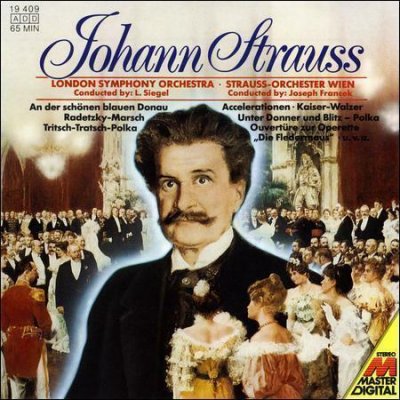
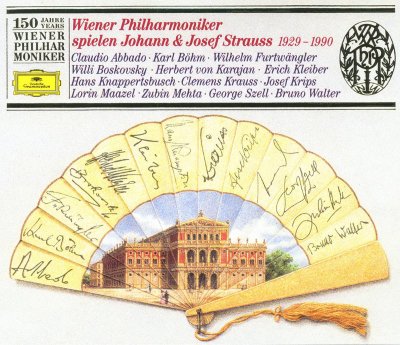
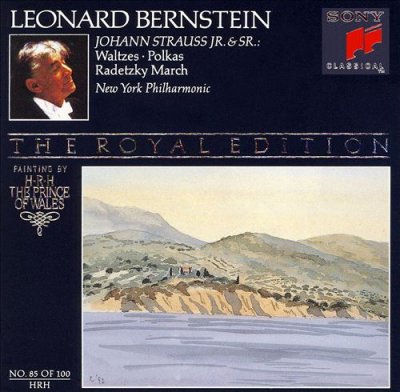
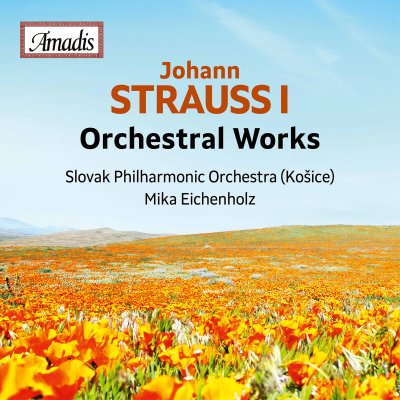
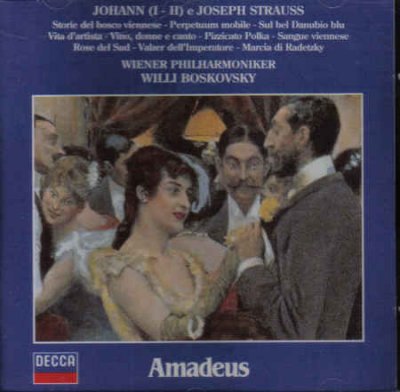
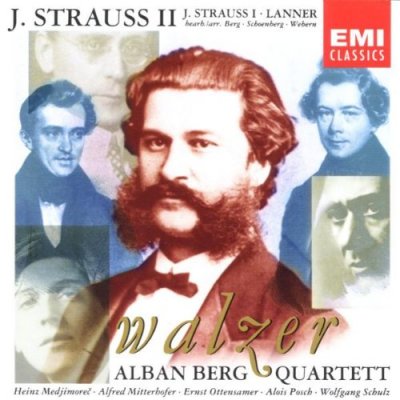
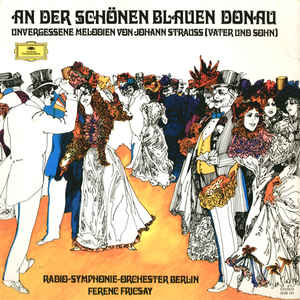
Discography

Credits