João Gilberto
João Gilberto was born in Juazeiro, Bahia, Brazil. From an early age, music was a part of Gilberto's life. His grandfather bought him his first guitar at the age of 14. During high school, Gilberto teamed up with some of his classmates to form a small band.
Gilberto, who led the band, was influenced by Brazilian popular songs, American jazz, and even some opera, among other genres. After trying his luck as a radio singer in Salvador, Bahia, the young Gilberto was recruited in 1950 as lead singer of the vocal quintet Garotos da Lua (Moon Boys) and moved to Rio de Janeiro. A year and a half later, he was dismissed from the group for his lack of discipline (he would often show up late to rehearsals or not at all). João Gilberto's first recordings were released in Brazil as two-song 78-rpm singles between 1951 and 1959.
In the 1960s, Brazilian singles evolved to the "double compact" format, and João would release some EPs in this new format, which carried 4 songs on a 45-rpm record. For seven years, Gilberto's career was at a low ebb. He rarely had any work, was dependent on his friends for living quarters, and fell into chronic depression. Eventually, in 1955 he was rescued from this rut by Luiz Telles, leader of the vocal group Quitandinha Serenaders, who took him to Porto Alegre in southern Brazil.
In this provincial town João Gilberto blossomed musically. Next he spent eight months with his sister in Diamantina, Minas Gerais, where he sequestered himself and played day and night in a little bathroom (because of the improved acoustic), forging a personal style for voice and guitar, that would come to be known as bossa nova. The first bossa nova song, titled "Bim-Bom", was written as Gilberto watched passing laundresses on the banks of the São Francisco River balance loads of clothes on their heads. Just after this time Gilberto's father, upset by João's bizarre singing style and refusal to take "normal" work, committed him to a mental hospital.
In a psychological interview there, Gilberto stared out the window and remarked, “Look at the wind depilating the trees.” The psychologist replied, “But trees have no hair, João,” to which Gilberto responded, “And there are people who have no poetry.” He was released after a week. The next year (1956) he returned to Rio and struck up old acquaintances, most significantly Antonio Carlos Jobim, who was by then working as a composer, producer and arranger with Odeon Records. Jobim was impressed with Gilberto's new style of guitar playing, and set about finding a suitable song to pitch the style to Odeon management. Bossa nova ("new style") is a refined version of samba, de-emphasizing the percussive aspect of its rhythm and enriching the melodic and harmonic content.
Rather than relying on the traditional Afro-Brazilian percussive instruments, João Gilberto often eschews all accompaniment except his guitar, which he uses as a percussive as well as a harmonic instrument, incorporating the parts of different samba percussion instruments such as the tamborim and the surdo from a full batucada band. The singing style he developed is almost whispering, economical, and without vibrato. He creates his tempo tensions by singing ahead or behind the beat. This style, which Gilberto introduced in 1957, created a sensation in the musical circles of Rio's Zona Sul, and many young guitarists sought to imitate it.
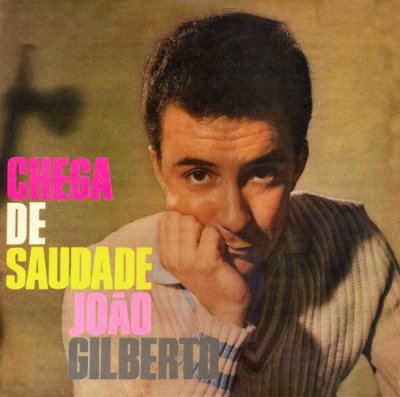
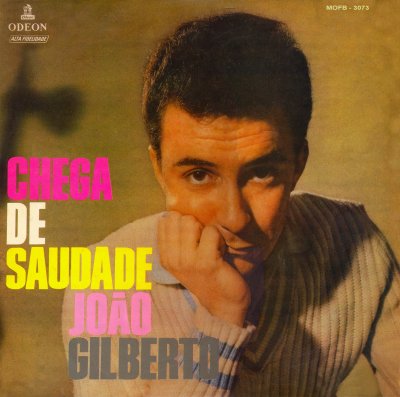
It was first heard on record in 1958 in a recording of "Chega de Saudade", a song by Jobim and Vinicius de Moraes. Gilberto had first accompanied singer Elizeth Cardoso as her guitarist in a recording of this song, explaining his vision for the new style, but Cardoso would have none of his singing advice and sung it in the standard way. But shortly after this recording, João Gilberto made his own debut single of the same song, in the new style, followed by the 1959 LP, Chega de Saudade. The song () turned into a hit, launching Gilberto's career and the bossa nova craze.
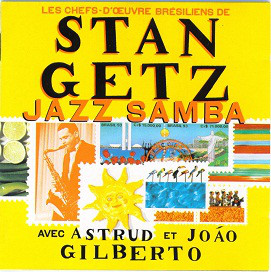
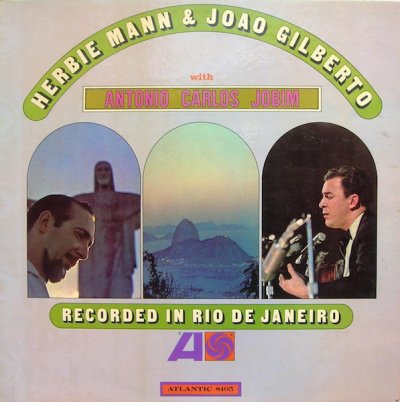
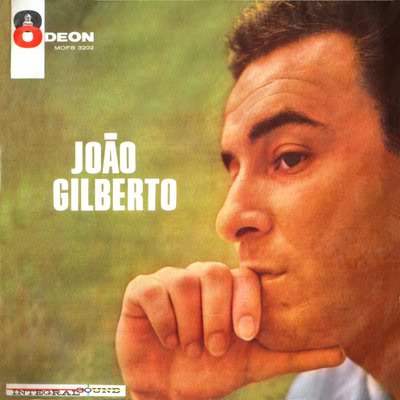
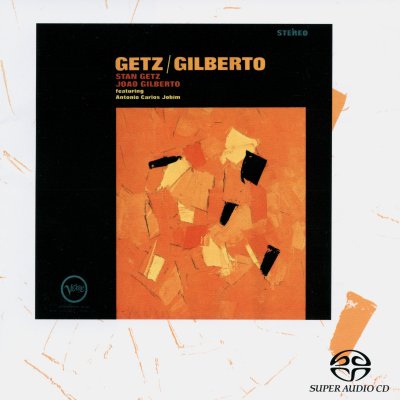
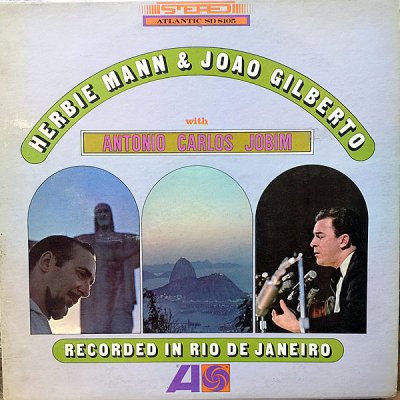
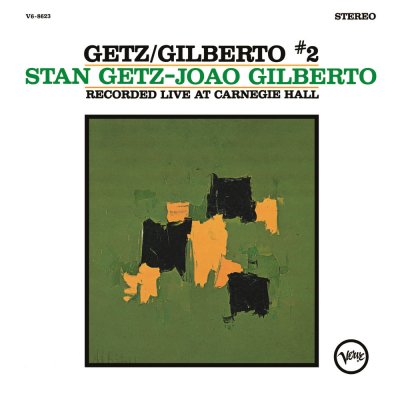
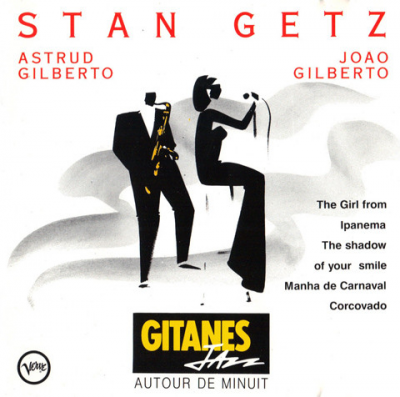
Besides a number of Jobim compositions, the album featured older sambas and popular songs from the 1940s and 1950s, all performed in Gilberto's distinctive style. This album was followed by two more in 1960 and 1961, by which time the singer featured new songs by a younger generation of performer/composers such as Carlos Lyra and Roberto Menescal. By 1962, bossa nova had been embraced by North American jazz musicians such as Herbie Mann, Charlie Byrd, and Stan Getz, who invited Gilberto and Jobim to collaborate on what became one of the best-selling jazz albums of all time, Getz/Gilberto. Through this album, Gilberto's then wife Astrud—who had never sung professionally prior to this recording session-became an international star, and the Jobim/de Moraes composition "The Girl from Ipanema" became a worldwide pop music standard.
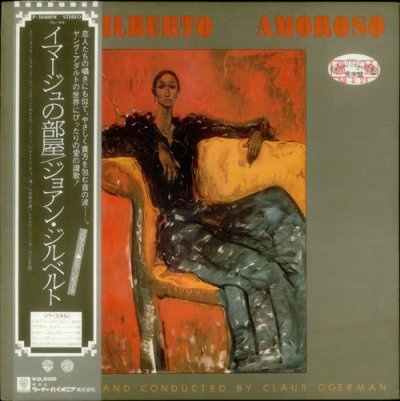
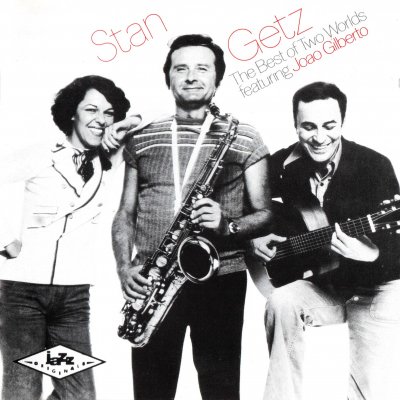
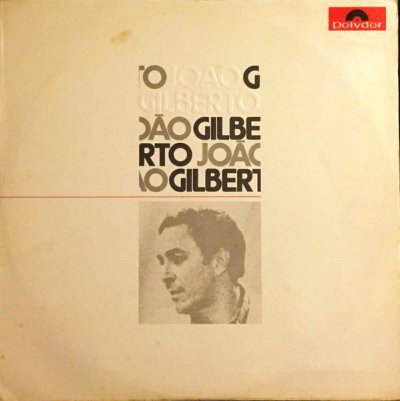
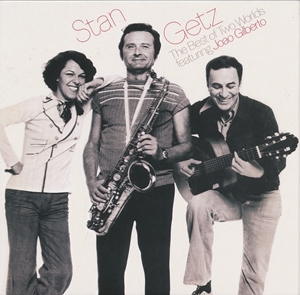
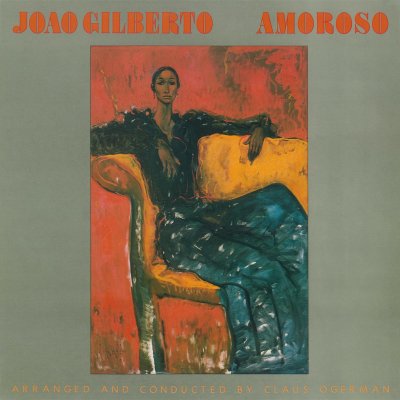
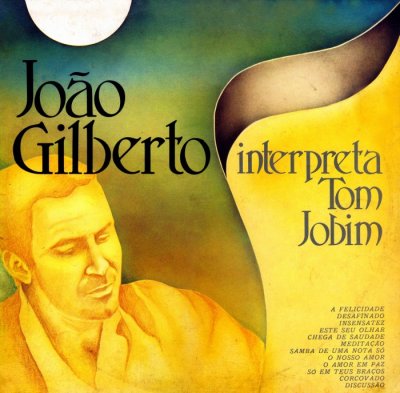
João Gilberto lived in the United States from 1962 until 1969, when he moved to Mexico for two years. There he recorded João Gilberto en México (1970). João Gilberto, aka the "White Album" (1973), featured hypnotic minimalist execution, limited to the singer, his guitar, and Sonny Carr on drums. 1976 saw the release of The Best of Two Worlds, a reunion with Stan Getz, featuring singer Miúcha, (sister of Chico Buarque), who had become Gilberto's second wife in April 1965. Amoroso (1977) backed Gilberto with the lush string orchestration of Claus Ogerman, who had provided a similar sound to Jobim's instrumental recordings in the late 1960s and early 1970s.
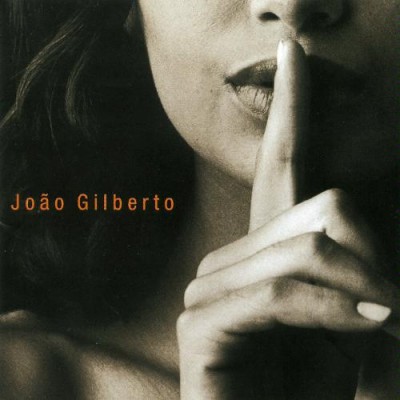
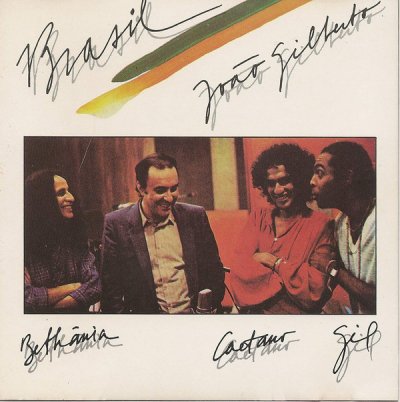
As had been the case for all of Gilberto's albums, the album consisted mostly of Jobim compositions, mixed with older sambas and an occasional North American standard from the 1940s. João Gilberto returned to Brazil in 1980. The following year saw the release of Brasil, with guests Gilberto Gil and Caetano Veloso, who in the late 1960s had founded the Tropicalia movement, a fusion of Brazilian popular music with foreign pop. The 1991 release João, with orchestrations by Clare Fischer, was unusual in its lack of even a single Jobim composition, instead featuring songs in English, French, Italian, and Spanish, plus old sambas and the solitary contemporary song "Sampa" (Caetano Veloso).
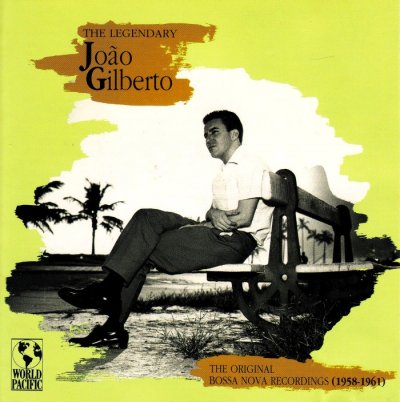
Also released in 1991 was the album Canto do Pajé by Veloso's sister Maria Bethânia, on which Bethânia and Gilberto sing an intimate medley of "Maria" (Ary Barroso/Luiz Peixoto) and "Linda Flor"' (Henrique Vogeler/Luiz Peixoto/Marques Pôrto), accompanied solely by his guitar. João Voz e Violão (2000) was an homage to the music of Gilberto's youth as well as a nod to producer Caetano Veloso. Evenly interspersed with these studio recordings have been the live recordings Live in Montreux; João Gilberto Prado Pereira de Oliveira; Eu Sei Que Vou Te Amar; Live at Umbria Jazz; and Live in Tokyo. While all of Gilberto's albums since Getz/Gilberto have been released on CD, the first three domestic albums were released in 1988 by EMI on a single CD entitled The Legendary João Gilberto: The Original Bossa Nova Recordings (1958–1961).
The disc also included three tracks from the singer's 1959 Orfeu Negro EP: "Manhã de Carnaval, " O Nosso Amor, and A Felicidade, the latter two merged into a single medley track to fit within the recording time of a CD. After its release, Gilberto successfully sued to have the title removed from sale as an unauthorized release of his artistic works. João Gilberto has long had a reputation as an eccentric artist who values his privacy. He lives in an apartment in Leblon, Rio de Janeiro, and frequently shuns interviews and crowds.
He has high standards for acoustics and noise control. He has been known to walk out on performances, citing reasons such as poor acoustics or audiences that interfere with the music by creating inappropriate noise. On several occasions he requested that the air conditioning be turned off at concert venues. During a recording session of the song "Rosa Morena" Gilberto insisted on 28 takes to get the pronunciation of the 'o' in "Rosa" just right.
He continues to perform, though rarely, to sell-out crowds in Brazil, Europe, North America, and Japan. His planned public performances in Madrid (2009) and New York (2010) were cancelled with short notice. A 2011 mini-tour of Brazil was cancelled due to health reasons. He is the father of singer Bebel Gilberto (Isabel), via his marriage to Miúcha.
In 1997, João sued record label EMI over a reissuing of several of his early works, which he contended were poorly remastered. According to The New York Times, "A statement by his lawyer at the time declared, that the reissues contained sound effects that 'did not pertain to the original recordings, banalizing the work of a great artist. '" Following the incident, EMI ceased to manufacture the albums in question, and, as of 2008, the lawsuit is yet to reach a decision. For his work in the album João Voz E Violão, João won the Grammy award for Best World Music Album (2000)
The Groove is music.nw’s own measure of renown — not an opinion, a fact computed from the record. It weighs reach (how many people engaged) against acclaim (how highly they rated it), balanced so a handful of votes can’t outshout a lasting favourite.
Computed the NeuraWeb way, across the whole record. The same yardstick for everyone — which is why the little-known can out-Groove the famous in their own corner.
Discography





Credits