Jim Morrison
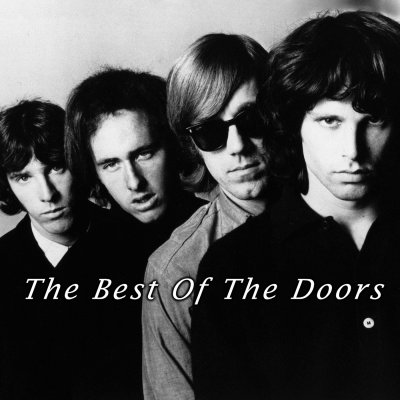
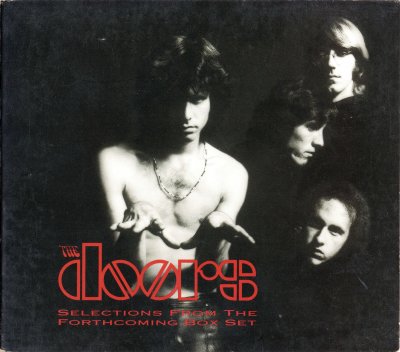
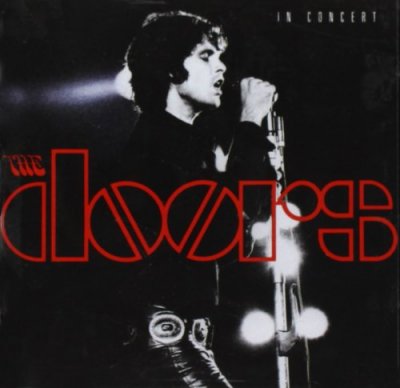
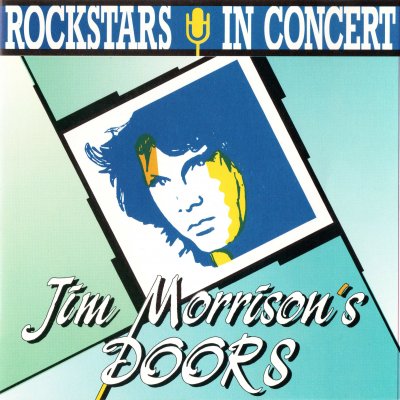
James Douglas “Jim” Morrison (born December 8, 1943 in Melbourne, Florida, United States – died July 3, 1971 in Paris, France) was an American singer, songwriter, poet, writer and filmmaker. He is best known as the lead singer and lyricist of The Doors and is widely considered to be one of the most charismatic frontmen in rock music history. He was also the author of several books of poetry and the director of a documentary and short film. Although Morrison was known for his baritone vocals, many fans, scholars and journalists alike have referenced his theatrical stage persona, self-destructive lifestyle and his work as a poet. He was ranked number 47 on Rolling Stone’s “100 Greatest Singers of All Time”.
Morrison was born in Melbourne, Florida, to future Admiral George Stephen Morrison and Clara Clarke Morrison. Morrison had a sister, Anne Robin, who was born in 1947 in Albuquerque, New Mexico, and a brother, Andrew Lee Morrison, who was born in 1948 in Los Altos, California. He was of Scottish, Irish, and English ethnic heritage. He reportedly had an I.Q. of 149.
In 1947, Morrison, then four years old, allegedly witnessed a car accident in the desert, where a family of Native Americans were injured and possibly killed. He referred to this incident in a spoken word performance on the song “Dawn’s Highway” from the album An American Prayer, and again in the songs “Peace Frog” and “Ghost Song”.
Indians scattered on dawn’s highway bleeding Ghosts crowd the young child’s fragile eggshell mind
Morrison believed the incident to be the most formative event in his life and made repeated references to it in the imagery in his songs, poems, and interviews. Interestingly, his family does not recall this incident happening in the way he told it. According to the Morrison biography No One Here Gets Out Alive, Morrison’s family did drive past a car accident on an Indian reservation when he was a child, and he was very upset by it. However, the book The Doors written by the remaining members of The Doors, explains how different Morrison’s account of the incident was from the account of his father. This book quotes his father as saying, “We went by several Indians. It did make an impression on him . He always thought about that crying Indian.” This is contrasted sharply with Morrison’s tale of “Indians scattered all over the highway, bleeding to death”. In the same book, his sister is quoted as saying, “He enjoyed telling that story and exaggerating it. He said he saw a dead Indian by the side of the road, and I don’t even know if that’s true.”
With his father in the United States Navy, Morrison’s family moved often. He spent part of his childhood in San Diego, California. In 1958, Morrison attended Alameda High School in Alameda, California. However, he graduated from George Washington High School (now George Washington Middle School) in Alexandria, Virginia in June 1961. His father was also stationed at Mayport Naval Air Station in Jacksonville, Florida.
Morrison went to live with his paternal grandparents in Clearwater, Florida where he attended classes at St. Petersburg Junior College. In 1962, he transferred to Florida State University (FSU) in Tallahassee where he appeared in a school recruitment film. While attending FSU Morrison was arrested for a prank, following a home football game.
In January 1964, Morrison moved to Los Angeles, California. He completed his undergraduate degree in UCLA’s film school, the Theater Arts department of the College of Fine Arts in 1965. He made two films while attending UCLA. First Love, the first of these films, was released to the public when it appeared in a documentary about the film Obscura. During these years, while living in Venice Beach, he became friends with writers at the Los Angeles Free Press. Morrison was an advocate of the underground newspaper until his death in 1971.
Poetry and film
Morrison began writing in adolescence. In college, he studied the related fields of theater, film, and cinematography.
He self-published two volumes of his poetry in 1969, The Lords / Notes on Vision and The New Creatures. The Lords consists primarily of brief descriptions of places, people, events and Morrison’s thoughts on cinema. The New Creatures verses are more poetic in structure, feel and appearance. These two books were later combined into a single volume titled The Lords and The New Creatures. These were the only writings published during Morrison’s lifetime.
Morrison befriended Beat Poet Michael McClure, who wrote the afterword for Danny Sugerman’s biography of Morrison, No One Here Gets Out Alive. McClure and Morrison reportedly collaborated on a number of unmade film projects to include a film version of McClure’s infamous play The Beard in which Morrison would have played Billy the Kid.
After his death two volumes of Morrison’s poetry were published. The contents of the books were selected and arranged by Morrison’s friend, photographer Frank Lisciandro, and girlfriend Pamela Courson’s parents, who owned the rights to his poetry. The Lost Writings of Jim Morrison Volume 1 is titled Wilderness, and, upon its release in 1988, became an instant New York Times best seller. Volume 2, The American Night, released in 1990, was also a success.
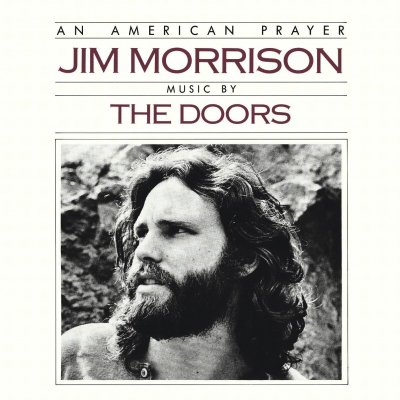
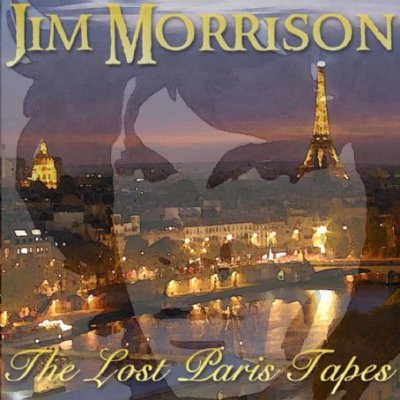
Morrison recorded his own poetry in a professional sound studio on two separate occasions. The first was in March 1969 in Los Angeles and the second was on December 8, 1970. The latter recording session was attended by Morrison’s personal friends and included a variety of sketch pieces. Some of the segments from the 1969 session were issued on the bootleg album The Lost Paris Tapes and were later used as part of the Doors’ An American Prayer album, released in 1978. The album reached number 54 on the music charts. The poetry recorded from the December 1970 session remains unreleased to this day and is in the possession of the Courson family.
Morrison’s best-known but seldom seen cinematic endeavor is HWY: An American Pastoral, a project he started in 1969. Morrison financed the venture and formed his own production company in order to maintain complete control of the project. Paul Ferrara, Frank Lisciandro and Babe Hill assisted with the project. Morrison played the main character, a hitchhiker turned killer/car thief. Morrison asked his friend, composer/pianist Fred Myrow, to select the soundtrack for the film.
Personal life
Morrison’s early life was a nomadic existence typical of military families. Jerry Hopkins recorded Morrison’s brother Andy explaining that his parents had determined never to use corporal punishment on their children. They instead instilled discipline and levied punishment by the military tradition known as “dressing down”. This consisted of yelling at and berating the children until they were reduced to tears and acknowledged their failings.
Once Morrison graduated from UCLA, he broke off most of his family contact. By the time Morrison’s music ascended to the top of the charts in 1967 he had not been in communication with his family for more than a year and falsely claimed that his parents and siblings were dead (or claiming, as it has been widely misreported, that he was an only child). This misinformation was published as part of the materials distributed with The Doors’ self-titled debut album.
In a letter to the Florida Probation and Parole Commission District Office dated October 2, 1970, Morrison’s father acknowledged the breakdown in family communications as the result of an argument over his assessment of his son’s musical talents. He said he could not blame his son for being reluctant to initiate contact and that he was proud of him nonetheless.
Death
Morrison moved to Paris in March 1971, took up residence in an apartment, and went for long walks through the city, admiring the city’s architecture.
During that time, Morrison grew a beard, and by all accounts, became depressed and was planning to return to the US.
It was in Paris that Morrison made his last studio recording with two American street musicians — a session dismissed by Manzarek as “drunken gibberish”. The session included a version of a song-in-progress, “Orange County Suite”, which can be heard on the bootleg The Lost Paris Tapes.
Morrison died on July 3, 1971. In the official account of his death, he was found in a Paris apartment bathtub by Courson. Pursuant to French law, no autopsy was performed because the medical examiner claimed to have found no evidence of foul play. The absence of an official autopsy has left many questions regarding Morrison’s cause of death.
In Wonderland Avenue, Danny Sugerman discussed his encounter with Courson after she returned to the U.S. According to Sugerman’s account, Courson stated that Morrison had died of a heroin overdose, having inhaled what he believed to be cocaine. Sugerman added that Courson had given numerous contradictory versions of Morrison’s death, at times saying that she had killed her common-law husband, or that his death was her fault. Courson’s story of Morrison’s unintentional ingestion of heroin, followed by accidental overdose, is supported by the confession of Alain Ronay, who has written that Morrison died of a hemorrhage after snorting Courson’s heroin, and that Courson nodded off, leaving Morrison bleeding to death instead of phoning for medical help.
Ronay confessed in an article in Paris-Match that he then helped cover up the circumstances of Morrison’s death. In the epilogue of No One Here Gets Out Alive, Hopkins and Sugerman write that Ronay and Varda say Courson lied to police who responded to the death scene and later in her deposition, telling them Morrison never took drugs.
In the epilogue to No One Here Gets Out Alive, Hopkins says that 20 years after Morrison’s death Ronay and Varda broke silence and gave this account: They arrived at the house shortly after Morrison’s death and Courson said that she and Morrison had taken heroin after a night of drinking in bars. Morrison had been coughing badly, had gone to take a bath, and had thrown up blood. Courson said that he appeared to recover and that she then went to sleep. When she awoke sometime later Morrison was unresponsive and so she called for medical assistance.
Courson herself died of a heroin overdose three years later. Like Morrison, she was 27 years old at the time of her death.
However, in the epilogue of No One Here Gets Out Alive, Hopkins and Sugerman also claim that Morrison had asthma and was suffering from a respiratory condition involving a chronic cough and throwing up blood on the night of his death. This theory is partially supported in The Doors (written by the remaining members of the band) in which they claim Morrison had been coughing up blood for nearly two months in Paris. However, none of the members of the Doors were in Paris with Morrison in the months before his death.
In the first version of No One Here Gets Out Alive published in 1980, Sugerman and Hopkins gave some credence to the theory that Morrison may not have died at all, calling the fake death theory “not as far-fetched as it might seem”. This theory led to considerable distress for Morrison’s loved ones over the years, notably when fans would stalk them. In 1995 a new epilogue was added to Sugarman and Hopkins’ book, giving new facts about Morrison’s death and discounting the fake death theory, saying “As time passed, some of Jim and Pamela friends began to talk about what they knew, and although everything they said pointed irrefutably to Jim’s demise, there remained and probably always will be those who refuse to believe that Jim is dead and those who will not allow him to rest in peace.” Morrison is buried in the Père Lachaise Cemetery in eastern Paris, one of the city’s most visited tourist attractions. The grave had no official marker until French officials placed a shield over it which was stolen in 1973. In 1981, Croatian sculptor Mladen Mikulin placed a bust of Morrison and the new gravestone with Morrison’s name at the grave to commemorate the 10th anniversary of his death; the bust was defaced through the years by cemetery vandals and later stolen in 1988. In the 1990s Morrison’s father, George Stephen Morrison, placed a flat stone on the grave. The stone bears the Greek inscription: ΚΑΤΑ ΤΟΝ ΔΑΙΜΟΝΑ ΕΑΥΤΟΥ, literally meaning “according to his own daimōn” and usually interpreted as “true to his own spirit”. Mikulin later made two more Morrison portraits in bronze but is awaiting the license to place a new sculpture on the tomb.
Artistic roots
As a naval family the Morrisons relocated frequently. Consequently Morrison’s early education was routinely disrupted as he moved from school to school. Nonetheless he proved to be an intelligent and capable student drawn to the study of literature, poetry, religion, philosophy and psychology, among other fields.
Biographers have consistently pointed to a number of writers and philosophers who influenced Morrison’s thinking and, perhaps, behavior. While still in his teens Morrison discovered the works of philosopher Friedrich Nietzsche. He was also drawn to the poetry of William Blake, Charles Baudelaire and Arthur Rimbaud. Beat Generation writers such as Jack Kerouac also had a strong influence on Morrison’s outlook and manner of expression; Morrison was eager to experience the life described in Kerouac’s On the Road. He was similarly drawn to the works of the French writer Louis-Ferdinand Céline. Céline’s book, Voyage au Bout de la Nuit (Journey to the End of the Night) and Blake’s Auguries of Innocence both echo through one of Morrison’s early songs, “End of the Night”. Morrison later met and befriended Michael McClure, a well known beat poet. McClure had enjoyed Morrison’s lyrics but was even more impressed by his poetry and encouraged him to further develop his craft.
Morrison’s vision of performance was colored by the works of 20th century French playwright Antonin Artaud (author of Theater and its Double) and by Julian Beck’s Living Theater.
Other works relating to religion, mysticism, ancient myth and symbolism were of lasting interest, particularly Joseph Campbell’s The Hero with a Thousand Faces. James Frazer’s The Golden Bough also became a source of inspiration and is reflected in the title and lyrics of the song “Not to Touch the Earth”.
Morrison was particularly attracted to the myths and religions of Native American cultures. While he was still in school, his family moved to New Mexico where he got to see some of the places and artifacts important to the Southwest Indigenous cultures. These interests appear to be the source of many references to creatures and places such as lizards, snakes, deserts and “ancient lakes” that appear in his songs and poetry. His interpretation of the practices of a Native American “shaman” were worked into parts of Morrison’s stage routine, notably in his interpretation of the Ghost Dance, and a song on his later poetry album, The Ghost Song. The songs “My Wild Love” and “Wild Child” were also inspired by his ideas of Native American rhythm and ritual. He also consumed 8 buttons of peyote and tripped for a week and wrote about seeing the “God of Peyote”.
Influence
Morrison remains one of the most popular and influential singers/writers in rock history as The Doors’ catalog has become a staple of classic rock radio stations. To this day he is widely regarded as the prototypical rock star: surly, sexy, scandalous and mysterious. The leather pants he was fond of wearing both on stage and off have since become stereotyped as rock star apparel.
Iggy and the Stooges are said to have formed after lead singer Iggy Pop was inspired by Morrison while attending a Doors concert in Ann Arbor, Michigan. One of Pop’s most popular songs, “The Passenger”, is said to be based on one of Morrison’s poems. After Morrison’s death, Pop was considered as a replacement lead singer for The Doors; the surviving Doors gave him some of Morrison’s belongings and hired him as a vocalist for a series of shows.
Wallace Fowlie, professor emeritus of French literature at Duke University, wrote Rimbaud and Jim Morrison, subtitled “The Rebel as Poet – A Memoir”. In this book, Fowlie recounts his surprise at receiving a fan letter from Morrison who, in 1968, thanked him for his latest translation of Arthur Rimbaud’s verse into English. “I don’t read French easily”, he wrote, “…your book travels around with me.” Fowlie went on to give lectures on numerous campuses comparing the lives, philosophies and poetry of Morrison and Rimbaud.
Scott Weiland, the vocalist of Stone Temple Pilots and Velvet Revolver, as well as Scott Stapp of Creed, claim Morrison to be their biggest influence and inspiration. Stone Temple Pilots and Velvet Revolver have both covered “Roadhouse Blues” by the Doors. Weiland also filled in for Morrison to perform “Break On Through” with the rest of the Doors. Stapp filled in for Morrison for “Light my fire”, “Riders on the Storm” and “Roadhouse Blues” on VH1 Storytellers. Creed performed their version of “Riders on the Storm” with Robbie Krieger for the 1999 Woodstock Festival.
The book The Doors by the remaining Doors quotes Morrison’s close friend Frank Lisciandro as saying that too many people took a remark of Morrison’s that he was interested in revolt, disorder, and chaos “to mean that he was an anarchist, a revolutionary, or, worse yet, a nihilist. Hardly anyone noticed that Jim was restating Rimbaud and the Surreal poets.”
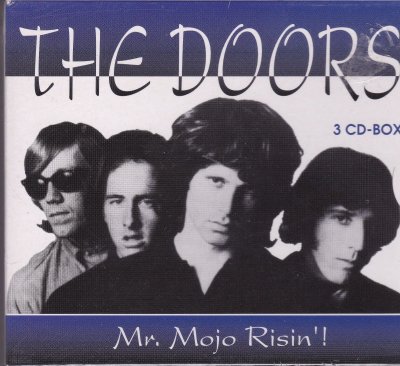
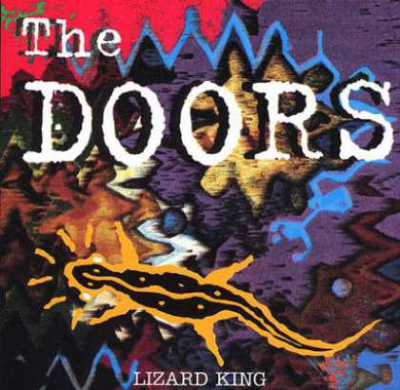
Jim Morrison is also sometimes referred to by the nicknames The Lizard King and Mr Mojo Risin’ (anagram of Jim Morrison)
The Groove is music.nw’s own measure of renown — not an opinion, a fact computed from the record. It weighs reach (how many people engaged) against acclaim (how highly they rated it), balanced so a handful of votes can’t outshout a lasting favourite.
Computed the NeuraWeb way, across the whole record. The same yardstick for everyone — which is why the little-known can out-Groove the famous in their own corner.
Discography
Credits