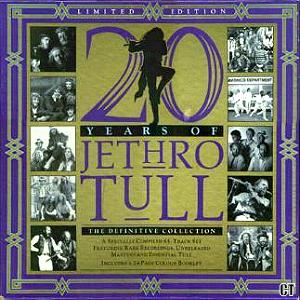
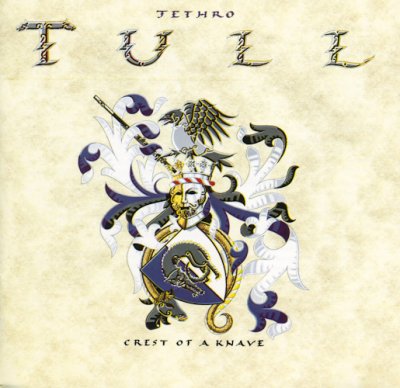
Ian Anderson
Ian Scott Anderson, MBE (born 10 August 1947) is a Scottish singer, songwriter and multi-instrumentalist, best known for his work as the leader and flautist of British rock band Jethro Tull. Ian Anderson was born the youngest of three children. His father, James Anderson, ran the RSA Boiler Fluid Company in East Port, Dunfermline, Fife, Scotland. Anderson spent the first part of his childhood in Edinburgh, Scotland.
He was influenced by his father's big band and jazz records and the emergence of rock music, though disenchanted with the "show biz" style of early American rock and roll stars like Elvis Presley. His family moved to Blackpool, Lancashire in 1959, where he gained a traditional education at Blackpool Grammar School. In a recent interview, Anderson stated that he was asked to leave Grammar School for refusing to submit to corporal punishment (still permitted at that time) for some serious infraction. He went on to study fine art at Blackpool College of Art from 1964 to 1966.
While a teenager, Anderson took a job as a sales assistant at Lewis' department store in Blackpool, then as a vendor on a newsstand. He later said it was reading copies of Melody Maker and the New Musical Express during his lunch breaks that gave him the inspiration to play in a band. In 1963, he formed The Blades from among school friends: Barriemore Barlow (drums), John Evan (keyboards), Jeffrey Hammond (bass) and Michael Stephens (guitar). This was a soul and blues band, with Anderson on vocals and harmonica - he had yet to take up the flute.
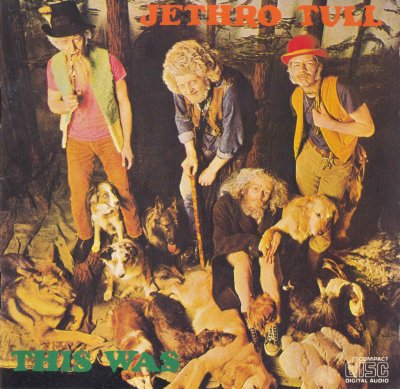
At this time Anderson abandoned his ambition to play electric guitar, allegedly because he felt he would never be "as good as Eric Clapton". As he himself tells it in the introduction to the video "Live at the Isle of Wight", he traded his electric guitar in for a flute which, after some weeks of practice, he found he could play fairly well in a rock and blues style. According to the sleeve notes for the first Tull album, "This Was", he had been playing the flute only a few months when the album was recorded. His guitar practice was not wasted either, as he continued to play acoustic guitar, using it as a melodic as well as rhythmic instrument.
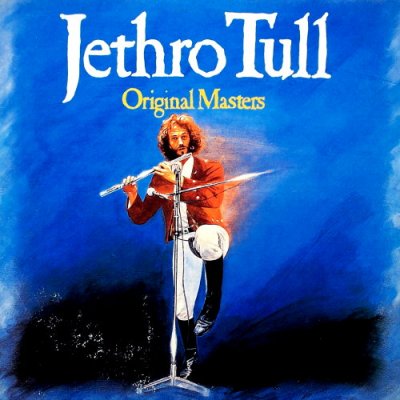
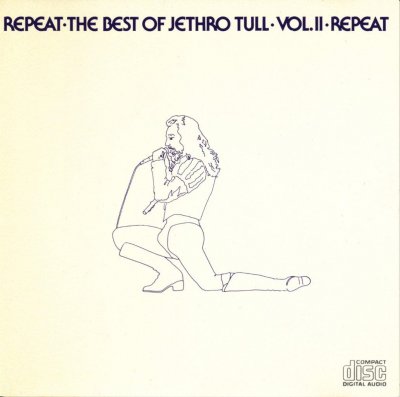
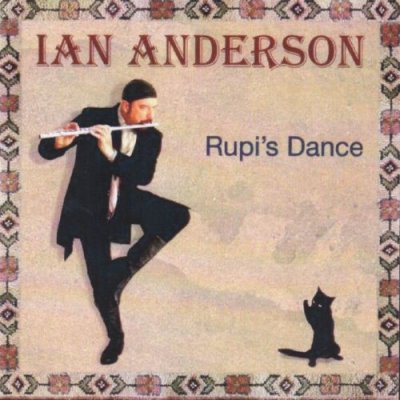
As his career progressed, he added soprano saxophone, mandolin, keyboards and other instruments to his arsenal. His famous tendency to stand on one leg while playing the flute came about by accident, as he had been inclined to stand on one leg while playing the harmonica, holding the microphone stand for balance. During the long stint at the Marquee Club, a journalist described him, wrongly, as standing on one leg to play the flute. He decided to live up to the reputation, albeit with some difficulty.
His early attempts are visible in The Rolling Stones Rock and Roll Circus film appearance of Jethro Tull. In later life he was surprised to learn of iconic portrayals of various flute playing divinities, particularly Krishna and Kokopelli, which show them standing on one leg. While Anderson has recorded a small number of critically acclaimed projects under his own name, and frequently makes guest appearances in other artists' work, he has been identified in the public eye as the frontman of Jethro Tull for 44 years. This is undoubtedly because a signature motif of Anderson's career has been a highly distinctive stage image, which has often been counter to the prevailing rock music culture.
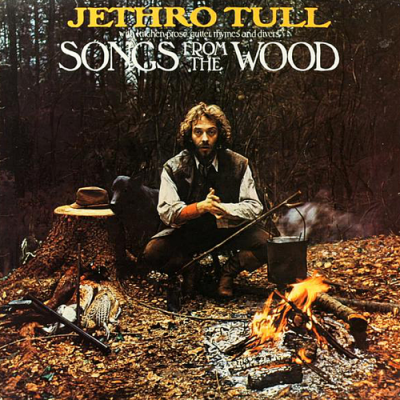
While he has habitually drawn inspiration from British folklore - at different times deploying stylistic elements of mediæval jester, Elizabethan minstrel, English country squire and Scottish laird - at other times he has appeared as astronaut, biker, pirate and vagrant. His personae often involve a large degree of self-parody. As a flautist, Anderson is self-taught; his style, which often includes a good deal of flutter tonguing and occasionally singing or humming (or even snorting) while playing, was influenced by Roland Kirk. In 2003 he recorded a composition called Griminelli's Lament in honour of his friend, the Italian flautist Andrea Griminelli.
In the 1990s he began working with simple bamboo flutes. He uses techniques such as over-blowing and hole-shading to produce note-slurring and other expressive techniques on this otherwise simple instrument. Anderson plays several other musical instruments, including acoustic and electric guitar, bass, bouzouki, balalaika, saxophone, harmonica, and a variety of whistles. He has recorded several songs on which he plays all the instruments as well as carrying out all the engineering and production (such as 1988's "Another Christmas Song").
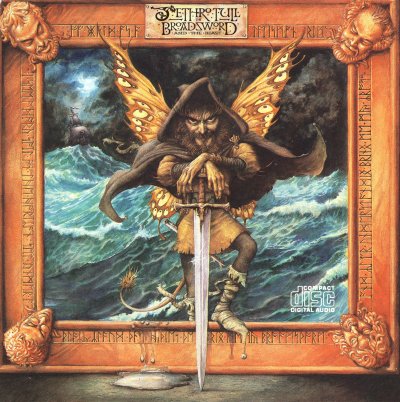
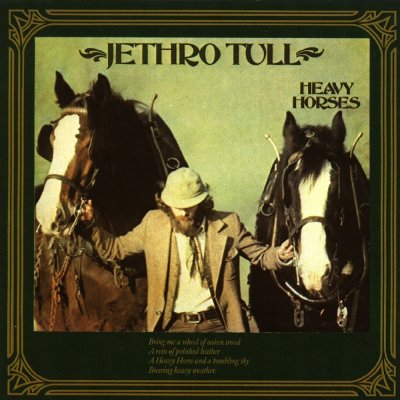
Anderson's music blends styles such as folk, jazz, blues, rock and pop. His lyrics are frequently complex, (mostly) tongue-in-cheek criticism of the absurd rules of society and/or religion ("Sossity, You're a Woman"; "Hymn 43"; "Thick as a Brick"). He often combines lyrics with other leitmotifs such as folk, mythological, fantastic ("The Minstrel in the Gallery", "Jack-in-the-Green", "Broadsword and the Beast"). In the 1990s and 2000s, Anderson's songs often capture 'snapshots' of his daily life ("Old Black Cat", "Rocks on the Road", "Heavy Horses").
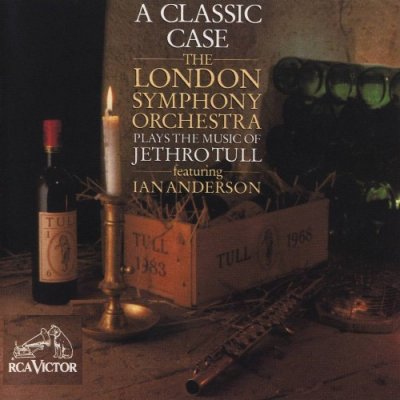
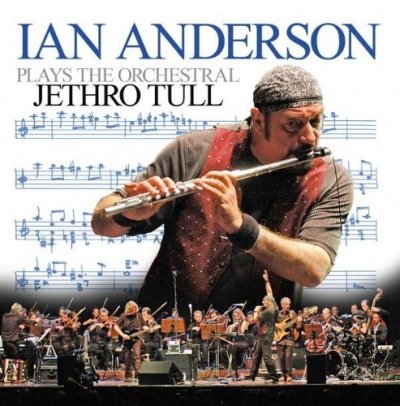
Ian Anderson's touring guitarist will be Florian Opahle. Florian began working with Jethro Tull front man, Ian Anderson, in his solo band and orchestral projects. As guitarist on the "Ian Anderson Plays Orchestral Jethro Tull" tour, he performed in Italy, Greece, France and Germany with Anderson's band and a full orchestra. The tour has since been captured as a home DVD release.
In 1973 Anderson appeared, along with several other artists, on the cover of Time Magazine, for an article about new directions in early 1970s music. In recognition of his lifelong contribution to popular music, Anderson received two honours in 2006: the Ivor Novello Award for International Achievement and an honorary Doctorate of Literature at Heriot-Watt University, on 11 July 2006. He remains widely regarded as the man who introduced the flute to rock music, and the only one who uses it as his main instrument. He is also considered the first rock musician to utilize a classical orchestral instrument and develop music to use it as a lead instrument.
Other flute players to gain recognition now include Walter Parazaider of Chicago, Burton Cummings of The Guess Who, Ian McDonald of King Crimson, Ray Thomas of The Moody Blues, Thijs van Leer of Focus, Chris Wood of Traffic, Andrew Latimer of Camel, Jerry Eubanks of The Marshall Tucker Band and Peter Gabriel during his years with Genesis, however none but Gabriel and Wood gained anything close to the amount of recognition utilizing the instrument. Anderson was appointed Member of the Order of the British Empire (MBE) in the 2008 New Year Honours. He was awarded an Honorary Doctorate (Doctor of Letters) from Abertay University in July 2011 From 1970 to 1974, Anderson was married to Jennie Franks, a photographer who is credited with writing most of the lyrics to the song "Aqualung". Anderson subsequently married Shona Learoyd in 1976, described by Rolling Stone magazine as a "beautiful convent-educated daughter of a wealthy wool manufacturer".
She had studied ballet for 10 years, though Anderson met her when she was working as a press officer at Jethro Tull's then record-label Chrysalis Records. She later became involved with the band's on-stage special effects. The couple have lived in a 16th-century redbrick farmhouse on the 500-acre (2.0 km2) Pophleys estate in Radnage Buckinghamshire, England, and on the Isle of Skye in Scotland. They currently live in Wiltshire, England.
They have two children: James Duncan Anderson, also a musician; and Gael, who works in the film industry and is married to the actor Andrew Lincoln. Anderson is a survivor of deep vein thrombosis, and has done several public service announcements to raise awareness of the disease. Among his interests Anderson lists protecting wild cats, especially those that have been rescued from harsh captivity; cameras, chiefly Leicas; Indian cuisine - he has written a beginner's guide, thus far published only on the Internet. Anderson describes himself as being "somewhere between Deist and Pantheist" religiously, according to his foreword to the pamphlet for his 2006 St.
Brides charity concerts for the homeless. Anderson has never taken the driving test, though he lists off-road motorcycling among his interests.
Discography
Credits
Ranked #364 of 14,615 producers — 2,175.00 career Groove across 26 records.