Horace Silver
Horace Silver (born Horace Ward Martin Tavares Silva, September 2, 1928, Norwalk, Connecticut, United States) is an American jazz pianist and composer. Silver is known for his distinctive humorous and funky playing style and for his pioneering compositional contributions to hard bop. He was influenced by a wide range of musical styles, notably gospel music, African music, and Latin American music and sometimes ventured into the soul jazz genre.
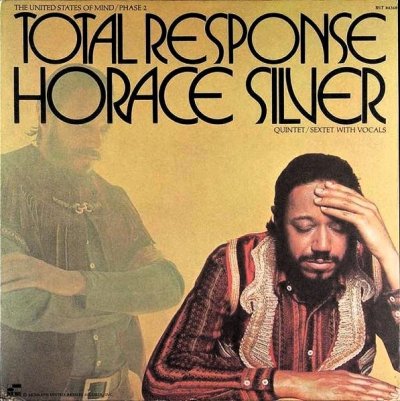
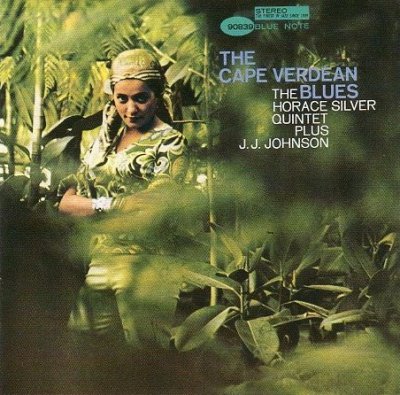
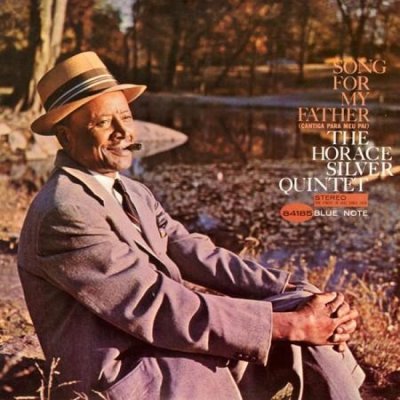
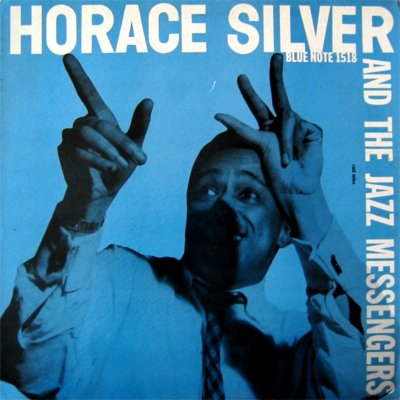
Silver's father, John Tavares Silva, was from the island of Maio in Cape Verde. His mother was born in New Canaan, Connecticut, and was of Irish-African descent. Silver began his career as a tenor saxophonist but later switched to piano. His tenor saxophone playing was highly influenced by Lester Young, and his piano style by Bud Powell. Silver was discovered in the Sundown Club in Hartford, Connecticut, in 1950 by saxophonist Stan Getz. Getz was playing as a guest star at the club with Silver's trio backing him up. Getz liked Silver's band and took them on the road, eventually recording three of Silver's compositions. It was with Getz that Silver made his recording debut. Silver moved to New York City in 1951, where he worked at the jazz club Birdland on Monday nights, when different musicians would come together and informally jam. During that year he met the executives of the label Blue Note while working as a sideman. He eventually signed with them, remaining there until 1980. In New York, he formed the Jazz Messengers, a cooperatively-run group with Art Blakey. In 1952 and 1953 Silver recorded three sessions with his own trio, featuring Blakey on drums and Gene Ramey, Curly Russell and Percy Heath on bass. The drummer-pianist team lasted for four years; during this time, Silver and Blakey recorded at Birdland (A Night at Birdland Vol. 1) with Russell, Clifford Brown and Lou Donaldson; at the Bohemia with Kenny Dorham and Hank Mobley; and also in the studios. Silver was also a member of the Miles Davis All Stars, recording the influential Walkin' in 1954. From 1956 onwards, Silver recorded exclusively for Blue Note, eventually becoming close to label boss Alfred Lion, who allowed him greater input on aspects of album production than was usual at the time. During his years with Blue Note, Silver helped to create the rhythmically forceful branch of jazz known as "hard bop", which combined elements of rhythm-and-blues and gospel music with jazz. Gospel elements are particularly prominent on one of his biggest hits, "The Preacher", which Lion thought corny, but which Silver persuaded him to record. While Silver's compositions at this time featured surprising tempo shifts and a range of melodic ideas, they caught the attention of a wide audience. His own piano playing easily shifted from aggressively percussive to lushly romantic within just a few bars. At the same time, his sharp use of repetition was funky even before that word could be used in polite company. Along with Silver's own work, his bands often featured such rising jazz stars as saxophonists Junior Cook and Hank Mobley, trumpeter Blue Mitchell, and drummer Louis Hayes. Silver's key albums from this period include Horace Silver Trio (1953), Horace Silver and the Jazz Messengers (1955), 6 Pieces of Silver (1956) and Blowin' the Blues Away (1959), which includes his famous "Sister Sadie". He also combined jazz with a sassy take on pop through the 1961 hit "Filthy McNasty". Silver tended not to play up that he was proficient in Portuguese, nor draw directly on his rich Lusophone musical upbringing. His 1965 hit, "Cape Verdean Blues", is the only clear rhythmic reference to his childhood home where his father and friends jammed, with traditional Capeverdean morna and coladeira as the main fare. In the interview for the liner notes to 1964's Song for My Father (Cantiga Para Meu Pai), however, Silver remarked of the title track, "This tune is an original of mine, but it has a flavor of it that makes me think of my childhood days. Some of the family, including my father and my uncle, used to have musical parties with three or four stringed instruments; my father played violin and guitar. Those were happy, informal sessions." Silver melded additional Lusophone influences into his music directly after his February 1964 tour of Brazil. Referring to "Song for My Father", Silver said, "I was very much impressed by the authentic bossa nova beat. Not just the monotonous tick-tick-tick, tick-tick, the way it's usually done, but the real bossa nova feeling, which I've tried to incorporate into this number." His early influences included the styles of boogie-woogie and the blues. It includes but is not limited to Art Tatum, Teddy Wilson, Nat “King” Cole, and Thelonious Monk. He liked to quote other musicians within his own work and would often recreate famous solos in his original pieces as something of a tribute to the greats who influenced him. During Silver's time with Blakey he rarely recorded as a leader, but after splitting with him in 1956, formed his own hard bop quintet at first featuring the same line-up as Blakey's Jazz Messengers with 18-year-old Louis Hayes replacing Blakey. The quintet's more enduring line-up featured Mitchell and Cook. In 1963 Silver created a new group featuring Joe Henderson on tenor saxophone and Carmell Jones on trumpet; this quintet recorded most of Silver's best-known album Song for My Father. When Jones left to settle in Europe, the trumpet chair was filled by a young Woody Shaw and Tyrone Washington replaced Henderson. Silver's compositions, catchy and very strong harmonically, gained popularity while his band gradually switched to funk and soul. This change of style was not readily accepted by many long-time fans. The quality of several albums of this era, such as The United States of Mind (on which Silver himself provided vocals on several tracks), is to this day contested by fans of the genre. Silver's spirituality displayed on these albums also has a mixed reputation. Silver was the last musician to be signed to Blue Note in the 1970s before it went into temporary hiatus. In 1981 he formed his own short-lived labels, Silveto and Emerald. After Silver's long tenure with Blue Note ended, he continued to create vital music. The 1985 album Continuity of Spirit (Silveto) features his unique orchestral collaborations. In the 1990s, he directly answered the urban popular music that had been largely built from his influence on It's Got To Be Funky (Columbia, 1993). Now living surrounded by a devoted family in California, Silver has received much of the recognition due a venerable jazz icon. In 2005, the National Academy of Recording Arts and Sciences (NARAS) gave him its President's Merit Award. The SFJazz Collective focused on Silver's music for their 2010 season. Silver's music has been a major force in modern jazz. He was one of the first pioneers of the style known as hard bop, influencing such pianists as Bobby Timmons, Les McCann, and Ramsey Lewis. Second, the instrumentation of his quintet (trumpet, tenor sax, piano, double bass, and drums) served as a model for small jazz groups from the mid-1950s until the late 1960s. Further, Silver's ensembles provided an important training ground for young players, many of whom (such as Donald Byrd, Art Farmer, Mitchell, Shaw, Cook, and Henderson) later led similar groups of their own. Silver's talent did not go unnoticed among rock musicians who bore jazz influences, either; Steely Dan sent Silver into the Top 40 in the early 1970s when they crafted their biggest hit single, "Rikki, Don't Lose That Number", off the bass riff that opens "Song for My Father". As social and cultural upheavals shook the nation during the late 1960s and early 1970s, Silver responded to these changes through music. He commented directly on the new scene through a trio of records called The United States of Mind (1970–72) that featured the spirited vocals of Andy Bey. The composer got deeper into cosmic philosophy as his group, Silver 'N Strings, recorded Silver 'N Strings Play The Music of the Spheres (1979).
Discography
Credits