music.nwby NeuraWeb Global Inc.
~13.0M artists · ~39.4M recordings indexed
Narrow to
GG
Person

Giorgio Gaber

Albums
137
Members
6
Active
1939–2003
Origin
Italy
Biography

Giorgio Gaber (Italian pronunciation: [ˌdʒordʒo ˈɡaːber]), byname of Giorgio Gaberscik (25 January 1939 - 1 January 2003), was an Italian singer-songwriter, actor and playwright. He was also an accomplished guitar player and author of one of the first rock songs in Italian ("Ciao ti dirò", 1958). Together with Sandro Luporini, he pioneered the musical genre known as teatro canzone ("song theatre").

The new underground auditorium of the Pirelli Tower in Milan is dedicated to him.

Debut

He was born in Milan into a lower middle-class family. His father, Guido Gaberscik, was born in Trieste, when the city was still part of Austria-Hungary. The surname Gaberscik is in of Slovene origin (Gaberščik). His mother was from the Veneto region. The two met and married in Veneto and later moved to Milan, where Giorgio was born.

Gaber began to play as rehabilitation for an injury to his hand which required constant but not strenuous activity to recover his motor skill. Since his health as a child was not the best and his older brother Marcello played guitar, he was encouraged to play as well. The outcome was good both in terms of his health and artistically, and at only fourteen years of age he was engaged to play at a New Eve's party and earned his first paycheck of 1,000 lire.

Subsequently he began to frequent the Santa Tecla, a venue in Milan where he had the chance to meet musicians of the time, including Luigi Tenco, Gianfranco Reverberi, Adriano Celentano, Ricky Gianco, and Mogol, who obtained a contract for Gaber with Dischi Ricordi. He then played with the Rocky Mountains Old Time Stompers (replacing Tony Dallara who had left to pursue a solo career) and with Rolling Crew.

Because neither Tenco nor Gaber were yet members of the Italian Society of Authors and Publishers they could not trademark the song "Ciao ti dirò" ("I'll Say Hi to You", inspired by Elvis Presley's "Jailhouse Rock"), which was signed off by Giorgio Calabrese and Giampiero Reverberi despite being composed by Tenco and Gaber.

The two went on to continue writing music together, developing at the same time a close friendship. In 1958 they toured Germany together with Adriano Celentano, Enzo Jannacci, Paolo Tomelleri e Gianfranco Reverberi.

Gaber paired up with Enzo Jannacci as I Due Corsari ("The Two Privateers"), who made their debut at the end of 1958 with two vinyl singles - "Come Facette Mammeta", a classic song of Neapolitan humour, and "Non occupatemi il telefono" ("Don't Hog the Telephone"). They continued to release singles with Dischi Ricordi throughout the following year, and in 1960 released their first album, Giorgio Gaber - Enzo Jannacci.

After a sentimental-artistic companionship with singer and actress Maria Monti, he married Ombretta Colli in 1965, then a student of languages (Chinese and Russian) at the University of Milan.

He took part to Festival di Sanremo four times, with the songs "Benzina e cerini" ("Petrol and Matches") in 1961, "Così felice" ("So Happy") in 1964, "Mai, Mai, Mai Valentina" ("Never, Never, Never Valentina") in 1966 and "...E allora dai" ("...Well Come On Then!") in 1967.

Il signor G In 1969 he released one of his best known successes, "Com'è bella la città" ("How Beautiful the City Is"), an example of the introduction of social matters in a song. The following year, he showed at Piccolo teatro his first ediction of Il Signor G ("Mister G"), a recital he repeated in many Italian squares.

In 1973, he recorded the one song by which he is most recognized by international audiences: Far Finta di Essere Sani which was covered in English as Tomorrow's Got to be Sunny by Tony Orlando and Dawn on their 1975 album He Don't Love You (Like I Love You).

A year later, he was given the very first Premio Tenco award, and many years later, also received the Targa Tenco in 2001 for his song "La razza in estinzione" ("The Dying Race") and in 2003 for the album Io non mi sento italiano ("I Don't Feel Italian"). After the Tenco award Gaber abandoned television and began to tour only in theatres, as one of the founders of the teatro canzone genre. He would appear again in TV, although sporadically, only in the 1990s and early 2000s.

Death A lifelong smoker, Giorgio Gaber died after a long battle with cancer, on 1 January 2003 in his country house in Montemagno near Camaiore (Lucca, Tuscany). He is buried in the Cimitero Monumentale in Milan.

Discography
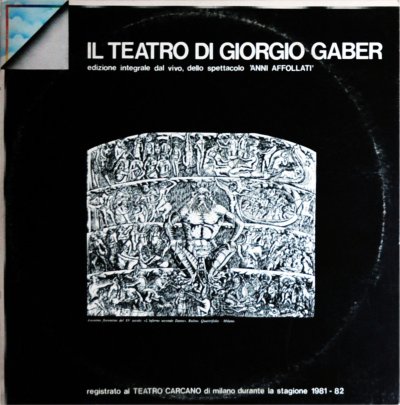
Album cover
Il teatro di Giorgio Gaber
Giorgio Gaber · 1982
Proteste D'Altri Tempi...
Giorgio Gaber · 1982
Special
Giorgio Gaber · 1982
Ja-Ga Brothers
Giorgio Gaber · 1983
Gaber
Giorgio Gaber · 1984
Gaber
Giorgio Gaber · 1984
Io se fossi Gaber
Giorgio Gaber · 1985
Giorgio Gaber
Giorgio Gaber · 1986
Parlami d'amore Mariù
Giorgio Gaber · 1987
Parlami D'Amore Mariù
Giorgio Gaber · 1987
Album cover
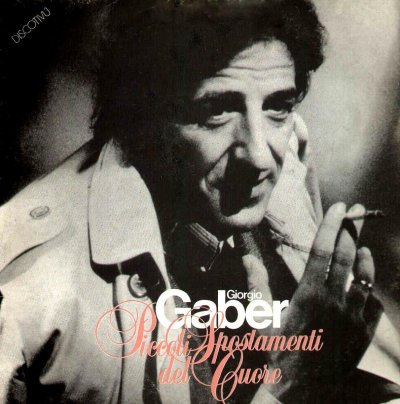
Piccoli spostamenti del cuore
Giorgio Gaber · 1987
Piccoli Spostamenti Del Cuore
Giorgio Gaber · 1987
Il grigio
Giorgio Gaber · 1989
Il Grigio
Giorgio Gaber · 1989
Album cover
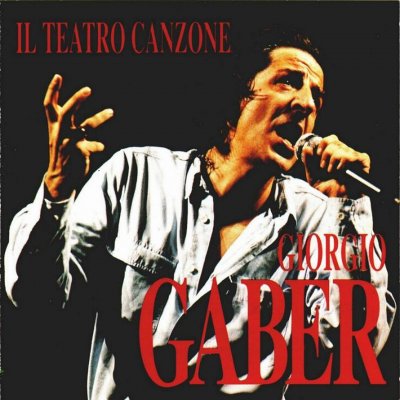
Il teatro canzone
Giorgio Gaber · 1992
Il Teatro Canzone
Giorgio Gaber · 1992
I Grandi Successi Di Giorgio Gaber
Giorgio Gaber · 1993
Il Meglio Di Giorgio Gaber
Giorgio Gaber · 1993
I successi
Giorgio Gaber · 1993
Album cover
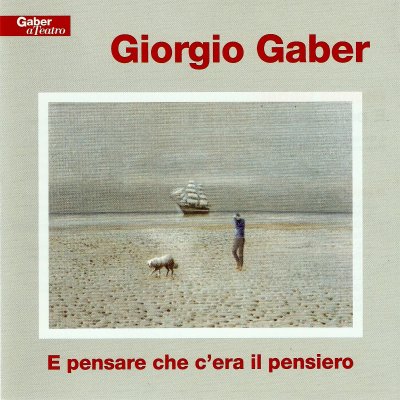
E pensare che c'era il pensiero
Giorgio Gaber · 1994
Album cover
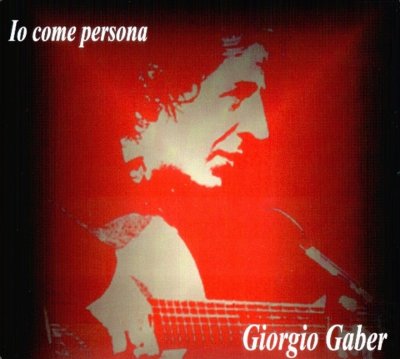
Io come persona
Giorgio Gaber · 1994
Io Come Persona
Giorgio Gaber · 1994
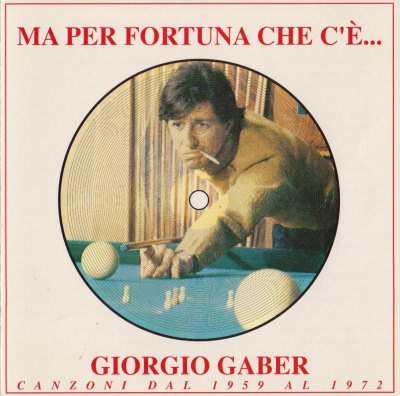
Ma Per Fortuna Che C'È... Giorgio Gaber
Giorgio Gaber · 1994
E Pensare Che C'era Il Pensiero
Giorgio Gaber · 1995
Gli anni che verranno...
Giorgio Gaber · 1995
Le Origini
Giorgio Gaber · 1995
Barbera E Champagne
Giorgio Gaber · 1996
Album cover
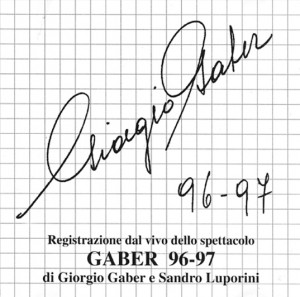
Gaber 96-97
Giorgio Gaber · 1997
Gaber 96-97
Giorgio Gaber · 1997
I Grandi Successi
Giorgio Gaber · 1997
Giorgio Gaber 97-98 (Un'Idiozia Conquistata A Fatica)
Giorgio Gaber · 1998
Album cover
Ma per fortuna che c’è…: Canzoni dal 1959 al 1972
Giorgio Gaber · 1998
Un'idiozia conquistata a fatica 1997/1998
Giorgio Gaber · 1998
Le Canzoni Di... Giorgio Gaber
Giorgio Gaber · 1999
Un'idiozia conquistata a fatica 1998/1999
Giorgio Gaber · 1999
Un'Idiozia Conquistata A Fatica 98 - 99
Giorgio Gaber · 1999
E Allora Dai (Collezione Dei Singoli 1965-1967)
Giorgio Gaber · 2000
Gaber 1999/2000
Giorgio Gaber · 2000
I grandi successi originali
Giorgio Gaber · 2000
I Grandi Successi Originali
Giorgio Gaber · 2000
Gaber Studio Collection
Giorgio Gaber · 2001
Gaber Studio Collection
Giorgio Gaber · 2001
Album cover
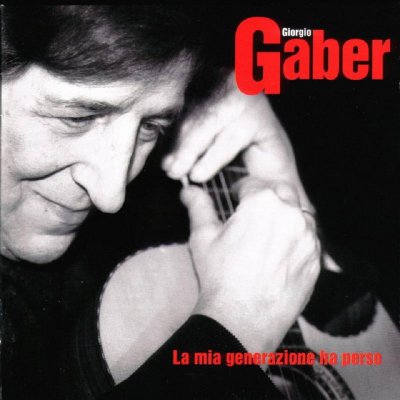
La mia generazione ha perso
Giorgio Gaber · 2001
La Mia Generazione Ha Perso
Giorgio Gaber · 2001
Album cover
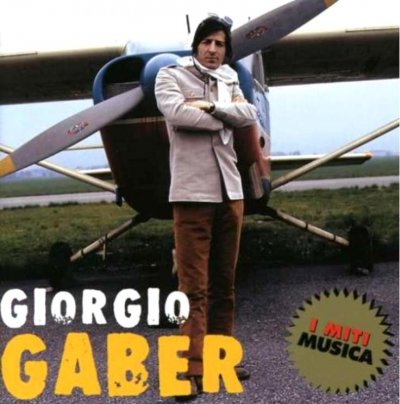
I miti musica: Giorgio Gaber
Giorgio Gaber · 2002
Un'idiozia conquistata a fatica
Giorgio Gaber · 2002
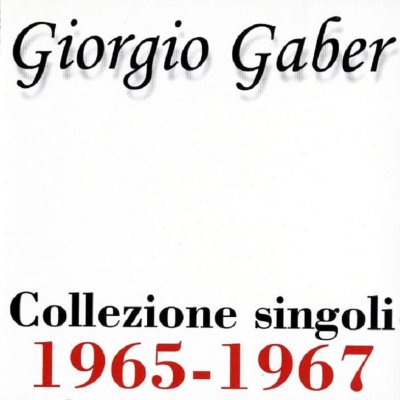
Album cover
Collezione singoli 1965-1967
Giorgio Gaber · 2003
I grandi successi
Giorgio Gaber · 2003
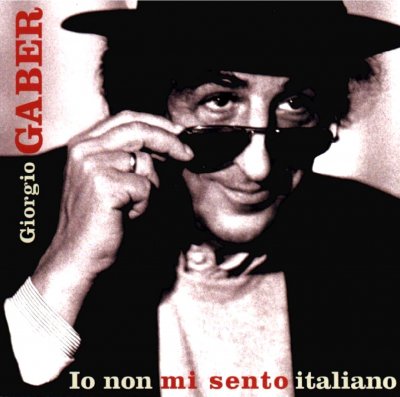
Album cover
Io non mi sento italiano
Giorgio Gaber · 2003
Io Non Mi Sento Italiano
Giorgio Gaber · 2003
Io Non Mi Sento Italiano
Giorgio Gaber · 2003
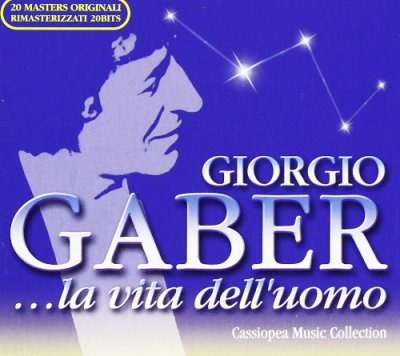
Album cover
La vita dell'uomo
Giorgio Gaber · 2003
Sexus et politica / Tutti i grandi successi “68–69”
Giorgio Gaber · 2003
Sexus Et Politica - Tutti I Grandi Successi "68 - 69"
Giorgio Gaber · 2003
Il signor G / I borghesi
Giorgio Gaber · 2004
Il Signor G / I Borghesi
Giorgio Gaber · 2004
Rock’n’roll, amore e storie metropolitane
Giorgio Gaber · 2004
Rock’N’ Roll, Amore E Storie Metropolitane
Giorgio Gaber · 2004
Prima del signor G
Giorgio Gaber · 2005
Con tutta la rabbia con tutto l’amore
Giorgio Gaber · 2006

Credits

Quando sarò capace d’amare
Writer · 2008
Io se fossi Gaber
Lyricist · 1985
Album cover
Il teatro di Giorgio Gaber
Lyricist · 1982
Album cover
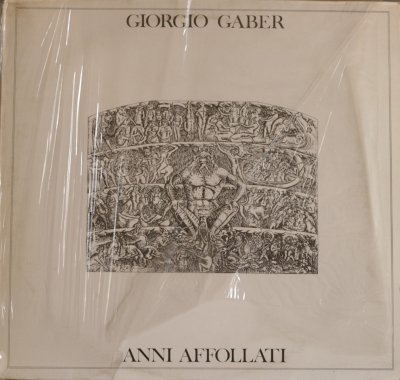
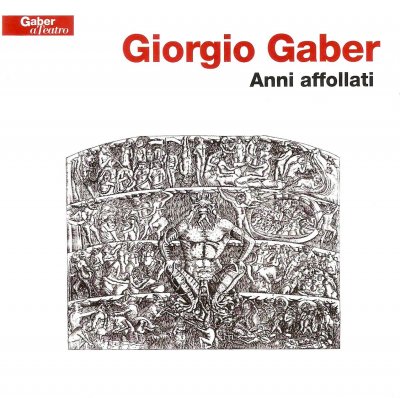
Anni affollati
Lyricist · 1981
Album cover
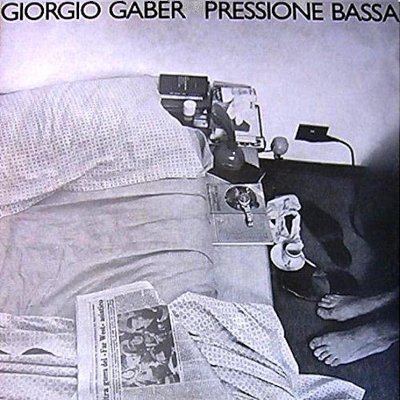
Pressione bassa
Writer · 1980
Album cover
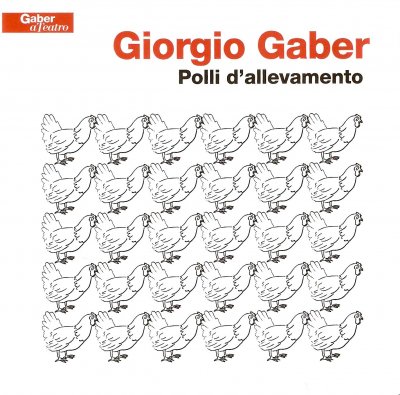
Polli d'allevamento
Writer · 1978
Album cover
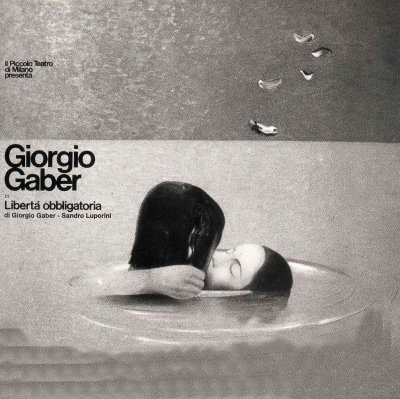
Libertà obbligatoria
Instrument · 1976
Album cover
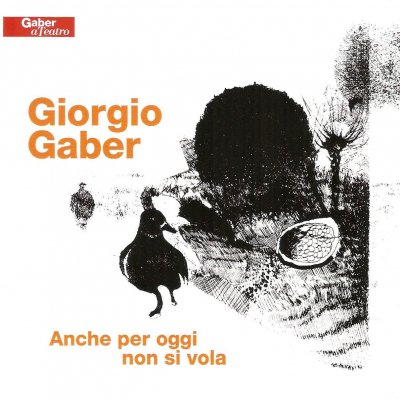
Anche per oggi non si vola
Writer · 1974
Album cover
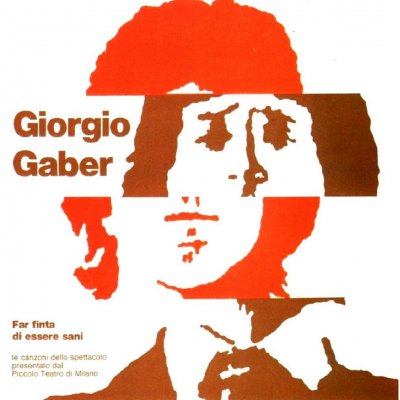
Far finta di essere sani
Lyricist · 1973
Album cover
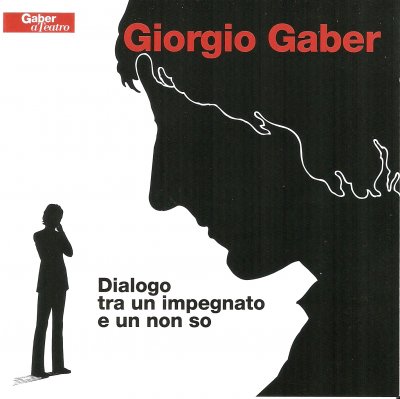
Dialogo tra un impegnato e un non so
Writer · 1972
I borghesi
Writer · 1971
A Marilyn
Writer · —
Arrete Arrete (Demain Tu Te Maries)
Writer · —
Barbera E Champagne
Writer · —
Barbera E Champagne
Writer · —
Barbera E Champagne
Writer · —
Com'È Bella La Città / Chissà Dove Te Ne Vai
Writer · —
Con Quella Faccia Da Italiano
Writer · —
E Allora Dai
Writer · —
È Il Mio Uomo
Writer · —
E Pensare Che C'era Il Pensiero
Conductor · —
È Rock 'N' Roll
Performer · —
Gaber
Writer · —
Giorgio Gaber 97-98 (Un'Idiozia Conquistata A Fatica)
Conductor · —
Il Grigio
Vocal · —
Il Nostro Giorno (1° Maggio) / Lettera Dalla Svizzera
Writer · —
Il Riccardo
Writer · —
Il Signor G
Writer · —
Il Signor G / I Borghesi
Writer · —
Il Sospetto / Domani Ci Vediamo
Writer · —
Il Teatro Canzone
Writer · —
Il Truccamotori
Writer · —
Inexorable
Lyricist · —
Io Come Persona
Writer · —
Io Non Mi Sento Italiano
Producer · —
Io Non Mi Sento Italiano
Producer · —
Io Se Fossi Dio
Producer · —
La Mia Generazione Ha Perso
Writer · —
La Risposta Al Ragazzo Della Via Gluck / Ma Voi Ma Voi Ma Voi
Writer · —
L'Asse Di Equilibrio
Writer · —
Le Canzoni Dello Spettacolo Dialogo Tra Un Impegnato E Un Non So
Lyricist · —
Le Nostre Serate
Writer · —
Lo Sai Che Tu Sei Bella / Brava Brava
Writer · —
Lo Shampoo
Writer · —
Nina E L'Aspirapolvere
Writer · —
Noi Nella Società
Vocal · —
Noi Siamo I Giovani
Writer · —
Parlami D'Amore Mariù
Writer · —
Piccoli Spostamenti Del Cuore
Producer · —
Pieni Di Sonno / Gli Anni Che Verranno
Writer · —
Porta Romana / Una Ragazzina
Writer · —
Trani A Gogo
Writer · —
Unstable
Lyricist · —
Viva L'Ammore!
Producer · —