music.nwby NeuraWeb Global Inc.
~13.0M artists · ~39.4M recordings indexed
Narrow to
FL
Person · composer

Franz Lehár

Albums
332
Members
0
Active
1870–1948
Origin
Austria
Biography

Franz Christian Lehár (30 April 1870 – 24 October 1948) was an Austro-Hungarian composer. He is mainly known for his operettas, of which the most successful and best-known is The Merry Widow (Die lustige Witwe). Biography : Lehár was born in the northern part of Komárom, Kingdom of Hungary, Austria-Hungary (now Komárno, Slovakia), the eldest son of Franz Lehár Polach (1838–1898), an Austrian bandmaster in the Infantry Regiment No. 50 of the Austro-Hungarian Army and Christine Neubrandt (1849–1906), a Hungarian woman from a family of German descent. He grew up speaking only Hungarian until the age of 12. Later he put an acute accent above the "a" of his father's surname "Lehár" to indicate the vowel in the corresponding Hungarian orthography. While his younger brother Anton entered cadet school in Vienna to become a professional officer, Franz studied violin at the Prague Conservatory, where his violin teacher was Antonín Bennewitz, but was advised by Antonín Dvořák to focus on composition. However, the Conservatory's rules at that time did not allow students to study both performance and composition, and Bennewitz and Lehár senior exerted pressure on Lehár to take his degree in violin as a practical matter, arguing that he could study composition on his own later. Lehár followed their wishes, against his will, and aside from a few clandestine lessons with Zdeněk Fibich he was self-taught as a composer. After graduation in 1888 he joined his father's band in Vienna, as assistant bandmaster. Two years later he became bandmaster at Losoncz (Lučenec), East Slovakia, making him the youngest bandmaster in the Austro-Hungarian Army at that time, but he left the army and joined the navy. With the navy he was first Kapellmeister at Pola (Pula) from 1894 to 1896, resigning in the later year when his first opera, Kukuschka (later reworked as Tatjana in 1906), premiered in Leipzig. It was only a middling success and Lehár eventually rejoined the army, with service in the garrisons at Trieste, Budapest (1898) and finally Vienna from 1899 to 1902. In 1902 he became conductor at the historic Vienna Theater an der Wien, where his operetta Wiener Frauen was performed in November of that year. He is most famous for his operettas – the most successful of which is The Merry Widow (Die lustige Witwe) – but he also wrote sonatas, symphonic poems and marches. He also composed a number of waltzes (the most popular being Gold und Silber, composed for Princess Pauline von Metternich's "Gold and Silver" Ball, January 1902), some of which were drawn from his famous operettas. Individual songs from some of the operettas have become standards, notably "Vilja" from The Merry Widow and "You Are My Heart's Delight" ("Dein ist mein ganzes Herz") from The Land of Smiles (Das Land des Lächelns). His most ambitious work, Giuditta in 1934 is closer to opera than to operetta. It contains the ever popular "Meine Lippen, sie küssen so heiß" ("On my lips every kiss is like wine"). Lehár was also associated with the operatic tenor Richard Tauber, who sang in many of his operettas, beginning with a revival of his 1910 operetta Zigeunerliebe (de) in 1920 and then Frasquita (de) in 1922, in which Lehár once again found a suitable post-war style. Lehár made a brief appearance in the 1930 film adaptation The Land of Smiles starring Tauber. Between 1925 and 1934 he wrote six operettas specifically for Tauber's voice. By 1935 he decided to form his own publishing house, Glocken-Verlag (Publishing House of the Bells), to maximize his personal control over performance rights to his works.

Discography
Der Zarewitsch
Franz Lehár · 1951
Gypsy Love
Franz Lehár · 1951
Das Land Des Lächelns
Franz Lehár · 1952
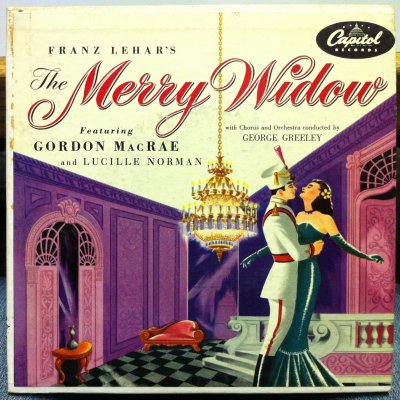
The Merry Widow
Franz Lehár · 1952
Album cover
The Merry Widow
Franz Lehár · 1952
La Veuve Joyeuse
Franz Lehár · 1953
The Merry Widow
Franz Lehár · 1953
The Merry Widow, Orchestral Medley / One Night In Venice, Orchestral Medley
Franz Lehár · 1953
Die Lustige Witwe
Franz Lehár · 1954
Paganini
Franz Lehár · 1954
Querschnitte Durch Seine Beliebtesten Operetten
Franz Lehár · 1954
The Merry Widow / White Horse Inn
Franz Lehár · 1954
Meister Der Operette
Franz Lehár · 1955
Dalok És Kettősök
Franz Lehár · 1956
Das Land Des Lächelns (Operetten-Querschnitt)
Franz Lehár · 1956
Meister Der Operette: Franz Léhar
Franz Lehár · 1956
Paganini (Operetten-Querschnitt)
Franz Lehár · 1956
Soirée Bei Franz Lehár
Franz Lehár · 1956
The Merry Widow / Gold And Silver
Franz Lehár · 1956
Das Land Des Lächelns - Querschnitt Durch Die Operette
Franz Lehár · 1957
Glada Änkan - Greven Av Luxemburg
Franz Lehár · 1957
La Veuve Joyeuse
Franz Lehár · 1957
Le Pays Du Sourire / L'Auberge Du Cheval Blanc
Franz Lehár · 1957
Le Pays Du Sourire - Opérette Romantique En 3 Actes - Version Abrégée
Franz Lehár · 1957
Schön Ist Die Welt
Franz Lehár · 1957
Das Land Des Lächelns (Operettenquerschnitt)
Franz Lehár · 1958
Der Graf Von Luxemburg
Franz Lehár · 1958
Eva
Franz Lehár · 1958
Giuditta
Franz Lehár · 1958
Giuditta (Complete Operetta)
Franz Lehár · 1958
Giuditta Highlights
Franz Lehár · 1958
La Veuve Joyeuse
Franz Lehár · 1958
Le Comte De Luxembourg
Franz Lehár · 1958
Le Pays Du Sourire (Extraits En Français)
Franz Lehár · 1958
The Merry Widow - Complete
Franz Lehár · 1958
Un Soir À Vienne Avec Franz Lehar
Franz Lehár · 1958
Der Graf Von Luxemburg (Querschnitt)
Franz Lehár · 1959
El Conde De Luxemburgo
Franz Lehár · 1959
Le Pays Du Sourire (Opérette Romantique En 3 Actes)
Franz Lehár · 1959
The Merry Widow - Highlights
Franz Lehár · 1959
The Merry Widow Waltz And Other Music Of Lehár And Strauss
Franz Lehár · 1959
The Waltzes Of Franz Lehar
Franz Lehár · 1959
Die Lustige Witwe (Operetten-Querschnitt) / Und Der Himmel Hängt Voller Geigen
Franz Lehár · 1960
La Viuda Alegre
Franz Lehár · 1960
The Music Of The Merry Widow
Franz Lehár · 1960
Das Land Des Lächelns (Ein Großer Operettenquerschnitt Von Franz Lehár)
Franz Lehár · 1961
Das Land Des Lächelns Und Paganini
Franz Lehár · 1961
Die Lustige Witwe Querschnitt
Franz Lehár · 1961
Paganini (Querschnitt)
Franz Lehár · 1961
Schön Ist Die Welt (Operettenquerschnitt)
Franz Lehár · 1961
The Merry Widow / The Count Of Luxemburg
Franz Lehár · 1961
Die Lustige Witwe
Franz Lehár · 1962
Paganini (Operettenquerschnitt)
Franz Lehár · 1962
The Merry Widow (Highlights)
Franz Lehár · 1962
The Merry Widow (Abridged)
Franz Lehár · 1963
Count Of Luxembourg Excerpts
Franz Lehár · 1964
Der Zarewitsch
Franz Lehár · 1964
La Veuve Joyeuse
Franz Lehár · 1964
The Merry Widow
Franz Lehár · 1964
The Merry Widow
Franz Lehár · 1964

Credits

Die Lustige Witwe
Composer · —
Die Lustige Witwe
Composer · —
Die Lustige Witwe
Writer · —
Die Lustige Witwe
Composer · —
Die Lustige Witwe / Der Graf Von Luxemburg (Querschnitte)
Composer · —
Die Lustige Witwe · Giuditta
Writer · —
Die Lustige Witwe - Grosser Operettenquerschnitt
Composer · —
Die Lustige Witwe (Großer Querschnitt)
Composer · —
Die Lustige Witwe - Highlights
Composer · —
Die Lustige Witwe (Operetten-Querschnitt)
Composer · —
Die Lustige Witwe Querschnitt
Composer · —
Die Lustige Witwe (Querschnitt)
Composer · —
Die Lustige Witwe - Querschnitt
Composer · —
Die Lustige Witwe - Querschnitt
Composer · —
Die Lustige Witwe (Querschnitt Durch Die Operette)
Composer · —
Die Lustige Witwe. Querschnitt Durch Die Operette
Composer · —
"Die Lustige Witwe" - 'S Flüstern's Geigen, Lippen Schweigen / Lied Vom Dummen Reiter: Du Dummer, Dummer Reitersmann
Composer · —
Die Lustige Witwe - The Merry Widow
Composer · —
Die Lustige Witwe (The Merry Widow)
Composer · —
Die Lustige Witwe = The Merry Widow = La Veuve Joyeuse / Ouvertüren
Composer · —
Die Lustige Witwe Und Paganini (Grosser Querschnitt)
Composer · —
Die Lustige Witwe • Zigeunerliebe • Eva • Paganini • Der Zarewitsch • Friederike • Das Land Des Lächelns • Schön Ist Die Welt • Giuditta (extracts)
Conductor · —
Die Schönsten Operetten - Das Land Des Lächelns • Schwarzwaldmädel • Frau Luna • Gräfin Mariza
Composer · —
Die Schönsten Operetten-Melodien
Composer · —
Dokument Einer Freundschaft
Composer · —
Du Är Min Hela Värld / Av Äppelblommor Jag Binder En Krans
Composer · —
Du Bist Die Welt Für Mich / Gern Hab' Ich Die Frau'n Geküsst
Writer · —
Du Bist Meine Sonne / Freunde, Das Leben Ist Lebenswert
Composer · —
Du Bist Meine Sonne / Freunde, Das Leben Ist Lebenswert
Composer · —
Du Bist Meine Sonne / Freunde, Das Leben Ist Lebenswert
Conductor · —
Edgar Et Ses Fantômes: La Musique Du Spectacle
Composer · —
Ein Abend In Wien
Composer · —
Eine Stimme Eine Legende
Composer · —
Ein Silvesterkonzert
Composer · —
El Conde De Luxemburgo
Writer · —
El Conde De Luxemburgo
Writer · —
El Conde De Luxemburgo / El Conde De Luxemburgo
Composer · —
Entrésång / Viljasången
Composer · —
Erna Sack Sings Strauss And Lehar
Composer · —
Ernst Mosch Und Seine Egerländer Musikanten Spielen Robert Stolz Und Franz Lehár
Composer · —
Eva
Writer · —
Eva
Composer · —
Eva / Valzer Delle Sirene
Composer · —
Eva Waltzes / Vilja Song / Gold And Silver Waltz
Composer · —
Ewig Junge Operette
Composer · —
Ewig Junge Operette (Ein Feuerwerk Unvergänglicher Melodien)
Composer · —
Festkonzert Zum 100. Geburtstag Franz Lehar
Composer · —
Franz Lehar's The Merry Widow
Composer · —
Franz Lehar's Welterfolge
Composer · —
Frasquita
Composer · —
Frasquita
Composer · —
Frasquita Serenade / Kreisler Serenade
Composer · —
Freunde, Das Leben Ist Lebenswert
Writer · —
Freunde, Das Leben Ist Lebenswert
Composer · —
Freunde, Das Leben Ist Lebenswert / Dein Ist Mein Ganzes Herz
Composer · —
Gern Hab' Ich Die Frau'n Geküßt
Composer · —
Gipsy Love
Composer · —
Giuditta
Composer · —
Giuditta (Complete Operetta)
Composer · —
Giuditta (Großer Querschnitt)
Composer · —