music.nwby NeuraWeb Global Inc.
~13.0M artists · ~39.4M recordings indexed
Narrow to
FB
Person

Franz Berwald

Albums
73
Members
0
Active
1796–1868
Origin
Sweden
Biography

Franz Adolf Berwald (born in Stockholm on July 23, 1796 and died there on April 3, 1868) was a Swedish Romantic composer who was generally ignored during his lifetime and had to make his living as an orthopedic surgeon and, later, as the manager of a saw mill and glass factory. He is now considered the finest Swedish composer of the 19th century, indeed probably the finest Swedish composer of any century. Berwald came from a family with four generations of musicians; his father, a violinist in the Royal Opera Orchestra, taught young Berwald the violin from an early age. He soon appeared in concerts. In 1811, Karl XIII (brother of Gustavus III) came to power and reinstated the Royal Chapel; the following year Berwald started working there, as well as playing the violin in the court orchestra and the opera, receiving lessons from Edouard du Puy. He also started composing. The summers were off-season for the orchestra, and Berwald travelled around Scandinavia, Finland and Russia. Of his works from that time, a Septet and a Serenade he still considered worthwhile music in his later years. In 1818 Berwald started publishing the Musikalisk journal, later renamed Journal de musique, a periodical with easy piano pieces and songs by various composers as well as some of his own original work. In 1821, his Violin Concerto in C# minor was premiered by his brother August. It was not well received. Some people in the audience even burst out laughing during the slow movement. His family got into dire economic circumstances after the death of his father in 1825. Berwald tried to get several scholarships, but only got one from the King, which enabled him to study in Berlin, where he worked hard on operas despite not having any chance to put them on the stage. To make a living, Berwald started an orthopedic and physiotherapy clinic in Berlin in 1835, which turned out to be profitable. Some of the orthopedic devices he invented were still in use decades after his death. But he stopped composing during his time in Berlin, resuming only in 1841 with a move to Vienna and marriage to Mathilde Scherer. In 1842 a concert of his tone poems at the Redoutensaal at the Hofburg Imperial Palace received rave reviews, and over the course of the next three years Berwald wrote four Symphonies. The Symphony No. 1 in G minor, "Sérieuse", was the only one of Berwald's four symphonies that was performed in his lifetime. In 1843, it was premiered in Stockholm with his cousin Johan Frederik conducting the Royal Opera House Orchestra. At that same concert, his operetta Jag går i kloster ("I enter a monastery") was also performed, but its success is credited to one of the roles having been sung by Jenny Lind. His Piano Concerto in D, finished in 1855, intended for his piano pupil Hilda Aurora Thegerström, who continued her studies with Antoine François Marmontel and Liszt, did not see the light of day until 1904, when Berwald's grand-daughter Astrid performed it at a Stockholm student concert. Particularly in its brilliant last movement it may be compared favourably to Robert Schumann or Edvard Grieg. Its three movements are played without a break. Berwald's music didn't get much recognition in Sweden during his lifetime, even drawing hostile newspaper reviews, but fared a little better in Germany and Austria. The Mozarteum Salzburg made him an honorary member in 1847. When Berwald got back to Sweden in 1849, he managed a glass works at Sandö in Ångermanland owned by Ludvig Petré, an amateur violinist. During that time Berwald focused his attention on producing chamber music. Franz Berwald ca 1860One of his few operas to be staged in his lifetime, Estrella de Soria, was heartily applauded at its premiere at the Royal Theater in April 1862, and was given four more performances in the same month. Following this success, he wrote Drottningen av Golconda ("The Queen of Golconda"), which would have been premiered in 1864, but was not, due to a change of directorship at the Royal Opera. In 1866, Berwald received the Swedish Order of the Polar Star, in recognition of his musical achievements. The following year, the Stockholm Conservatoire finally appointed Berwald professor of composition, having rejected his applications for this post several times before. At around that time he was also given many important commissions, but he would not live to fulfill them all. Berwald died in Stockholm in 1868 of pneumonia and was interred there in the Norra begravningsplatsen (Northern Cemetery). The second movement of the Symphony No. 1 in G minor was played at his funeral. Ten years after Berwald's death, his Symphony No. 4 in E-flat major, "Naïve", was premiered in 1878, with the originally planned Paris 1848 premiere having been cancelled because of the political unrest of that time. But this gap between composition and first performance was relatively short compared to what befell the Symphony No. 2 in D major, "Capriceuse" and Symphony No. 3 in C major, "Singulière". Those two pieces were not premiered until 1914 and 1905 respectively. Eduard Hanslick, writing in his 1869 book Geschichte des Concertwesens in Wien, opined of Berwald, "a man stimulating, witty, prone to bizarrerie, as a composer lacked creative power and fantasy". On the other hand, composers Ludvig Norman, Tor Aulin and Wilhelm Stenhammar worked hard to promote Berwald's music, although despite these musicians' efforts it took a while before Berwald was recognized as Sweden's "most original and modern composer" (to quote the dreaded composer-critic Wilhelm Peterson-Berger, writing in the Stockholm newspaper Dagens Nyheter /"News of the Day"/). In 1911, Carl Nielsen wrote of Berwald, "Neither the media, money nor power can damage or benefit good Art. It will always find some simple, decent artists who forge ahead and produce and stand up for their works. In Sweden, you have the finest example of this: Berwald." More recently, British musicologist Robert Layton wrote (1959) what remains the sole English-language biography of Berwald, as well as discussing Berwald's music in considerable detail elsewhere. One of the examples given by Harold Truscott (in his analysis of Havergal Brian's Gothic Symphony) of composers prior to Brian writing "sonata movements which do not order their events on the usual plan" is Franz Berwald, "a storehouse of them ... but he never did unusual things in any way that impaired sonata style. They were always logical, though surprising, and helped, rather than hindered, the sonata shape and expression."

Discography
Sinfonie Nr. 2 C-Dur, Sinfonie Nr. 3 Es-Dur
Franz Berwald · 1956
Klavierquintett Nr.1 C-Moll / Klavierquintett Nr.2 A-Dur
Franz Berwald · 1962
L'Oeuvre De Franz Berwald Volume 3
Franz Berwald · 1962
L'Oeuvre De Franz Berwald Volume 4
Franz Berwald · 1962
Symphony In G Minor "Sérieuse" / Symphony In C Major "Singulière"
Franz Berwald · 1962
Sinfonie Singulière ∙ Symphony In E Flat
Franz Berwald · 1968
Piano Concerto
Franz Berwald · 1972
Claude Debussy: Preludium till En fauns eftermiddag / Två nocturner: Nuages / Fêtes / Franz Berwald: Violinkonsert Ciss-moll, opus 2
Franz Berwald · 1975
Piano Quintet No. 1 In C Minor / Piano Quintet No. 2 In A Major
Franz Berwald · 1975
The Four Symphonies / Piano Concerto / Violin Concerto / Overtures And Tone Poems
Franz Berwald · 1977
Pianokonsert - Violinkonsert - Älvalek - Allvarliga Och Muntra Infall
Franz Berwald · 1978
String Quartet in G-Minor / E-Minor
Franz Berwald · 1979
Sinfonie Singulière / Sinfonie Sérieuse
Franz Berwald · 1982
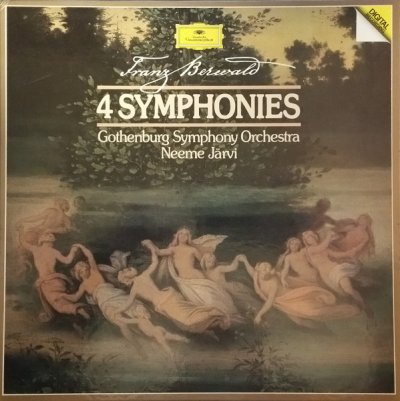
Album cover
4 Symphonies
Franz Berwald · 1985
Kammermusik
Franz Berwald · 1986
Musikalische Spezialitäten 1987. = Musical Specialities 1987. (Unternehmer Als Komponisten = Entrepreneurs As Composers)
Franz Berwald · 1987
String Quartets In A Minor & E Flat Major
Franz Berwald · 1988
Lidholm: Kontakion / Kuss: Lyric Poem
Franz Berwald · 1990
Sinfonie No. 4, Sinfonie Singulière
Franz Berwald · 1991
Piano Trios Vol. 2
Franz Berwald · 1993
Symphony no. 1 “Sinfonie Sérieuse” / Symphony no. 4
Franz Berwald · 1993
Symphony No. 1 “Sinfonie Sérieuse” / Symphony No. 4
Franz Berwald · 1993
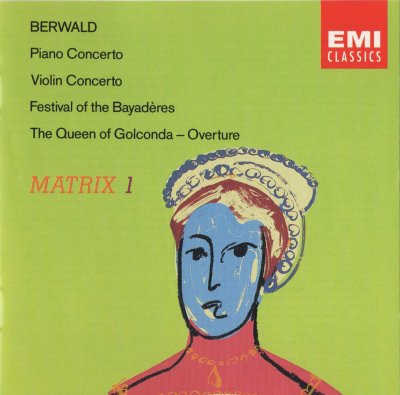
Piano Concerto / Violin Concerto / Festival of the Bayadères / The Queen of Golconda - Overture
Franz Berwald · 1994
Piano Concerto / Violin Concerto / Festival Of The Bayadères / The Queen Of Golconda - Overture
Franz Berwald · 1994
Piano Trios Nos. 1 - 3
Franz Berwald · 1994
Sinfonie singulière / Sinfonie sérieuse / Elfenspiel
Franz Berwald · 1994
Symphonies no. 3 "Singuliere" and no. 4
Franz Berwald · 1994
Sinfonie Singulière • Symfoni I Ess-dur • Pianokonserten
Franz Berwald · 1995
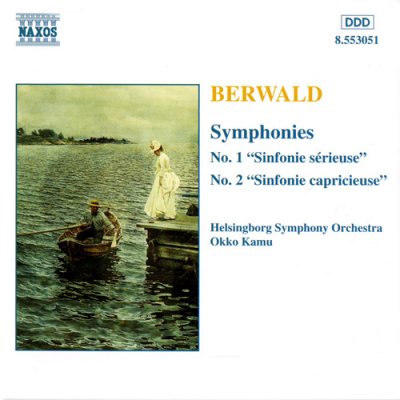
Symphonies, No. 1 "Sinfonie Sérieuse" No. 2 "Sinfonie Capricieuse"
Franz Berwald · 1995
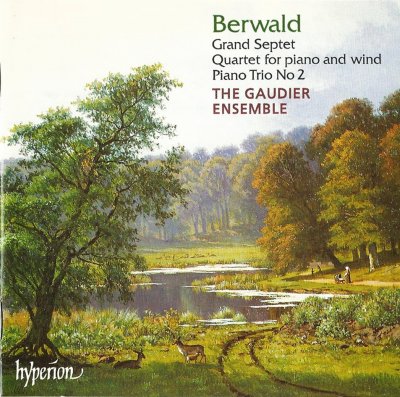
Grand Septet / Quartet for Piano and Wind / Piano Trio no. 2
Franz Berwald · 1996
Hummel: Septet in D minor, op. 74 / Berwald: Grand Septet in B flat
Franz Berwald · 1996
Piano Quintets (complete)
Franz Berwald · 1996
Symphonies and Overtures
Franz Berwald · 1996
Symphonies And Overtures
Franz Berwald · 1996
Symphonies no. 1 "Sinfonie sériuse" / no. 2 "Sinfonie capricieuse"
Franz Berwald · 1996
Symphonies: No. 3 "Sinfonie singulière" / No. 4 in E-flat major / Piano Concerto in D major
Franz Berwald · 1996
Symphonies nos. 1-4
Franz Berwald · 1996
Symphonies Nos. 1 - 4
Franz Berwald · 1996
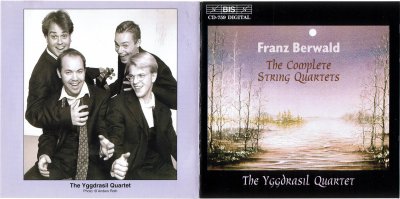
The Complete String Quartets
Franz Berwald · 1996
The Complete String Quartets
Franz Berwald · 1996
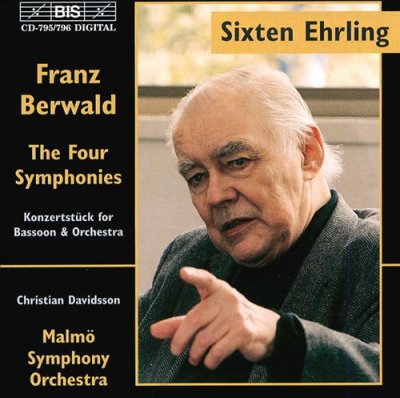
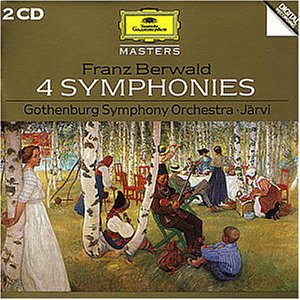
Album cover
The Four Symphonies / Konzertstück for Bassoon & Orchestra
Franz Berwald · 1996
Pianokvintetter Nr 1 & 2 / Två Satser För Pianokvintett
Franz Berwald · 1997
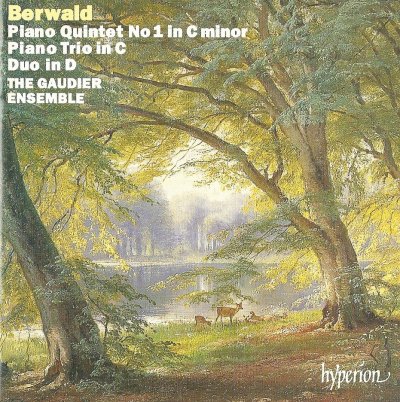
Piano Quintet no. 1 in C minor / Piano Trio in C / Duo in D
Franz Berwald · 1997
Septet in B-flat major / Serenade / Piano Quartet in E-flat major
Franz Berwald · 1997
Septet In B Flat Major / Serenade / Piano Quartet In E Flat Major
Franz Berwald · 1997
Symphonies: No. 3 In C Major 'Sinfonie Singulière' / No. 4 In E Flat Major
Franz Berwald · 1997
Symphonie No. 4 »Tragische« / Symphonien Nos. 3 »Singulière« & 4
Franz Berwald · 1998
4 Symphonies / Orchestral Works
Franz Berwald · 1999
Swedish Romantic Violin Concertos
Franz Berwald · 1999
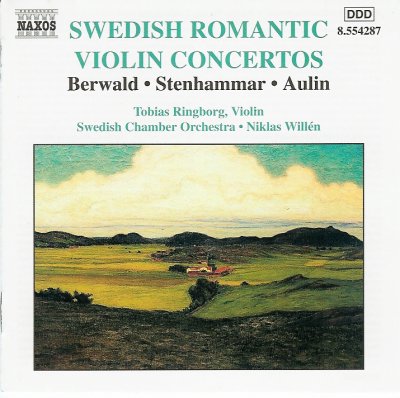
Album cover
Swedish Romantic Violin Concertos
Franz Berwald · 1999
Abegg Trio Series, Vol. 18
Franz Berwald · 2000
Complete Duos
Franz Berwald · 2000
Piano Trios nos. 1-3
Franz Berwald · 2000
Piano Trios, Vol. 2
Franz Berwald · 2000
Samtliga Duos
Franz Berwald · 2000
Symphonien Nr 1 & 2
Franz Berwald · 2001
Piano Concertos
Franz Berwald · 2002
Symphonies, Volume 1 (Sinfonie Singulière (No. 3) ∙ Sinfonie Naïve (No. 4) ∙ Elfenspiel)
Franz Berwald · 2002
The Battle of Leipzig / Concerto for Two Violins / Theme & Variations for Violin & Orchestra / Excerpts from The Queen of Golconda and Estrella de Doria
Franz Berwald · 2002
Symphonies: No. 3 in C major "Sinfonie singulière" / No. 4 in E-flat major
Franz Berwald · 2005

Credits

Album cover
4 Symphonies
Composer · 1985
Franz Berwald (1796-1868)
Composer · —
Grand Septet / 'Stor' Septet
Composer · —
Kammermusik
Composer · —
Klavierquintett Nr.1 C-Moll / Klavierquintett Nr.2 A-Dur
Composer · —
L'Oeuvre De Franz Berwald Volume 3
Composer · —
L'Oeuvre De Franz Berwald Volume 4
Composer · —
Piano Concerto
Composer · —
Piano Concerto / Violin Concerto / Festival Of The Bayadères / The Queen Of Golconda - Overture
Composer · —
Pianokonsert - Violinkonsert - Älvalek - Allvarliga Och Muntra Infall
Composer · —
Pianokvintetter Nr 1 & 2 / Två Satser För Pianokvintett
Composer · —
Piano Quintet No. 1 In C Minor / Piano Quintet No. 2 In A Major
Composer · —
Piano Trios Nos. 1 - 3
Composer · —
Piano Trios Vol. 2
Composer · —
Romantische Klaviertrios
Composer · —
Samtliga Duos
Composer · —
Septet In B Flat Major / Serenade / Piano Quartet In E Flat Major
Composer · —
Septet In D Minor, Op. 74 For Piano, Flute, Oboe, Horn, Viola, Cello And Double Bass • Grand Septet In B Flat For Clarinet, Bassoon, Horn, Violin, Viola, Cello And Double Bass
Composer · —
Sinfonie No. 4, Sinfonie Singulière
Composer · —
Sinfonie Nr. 2 C-Dur, Sinfonie Nr. 3 Es-Dur
Composer · —
Sinfonie Singulière / Sinfonie Sérieuse
Composer · —
Sinfonie Singulière / Sinfonie Sérieuse / Elfenspiel
Composer · —
Sinfonie Singulière • Symfoni I Ess-dur • Pianokonserten
Composer · —
Sinfonie Singulière ∙ Symphony In E Flat
Composer · —
Stråkkvartett G-moll (1818), Stråkkvartett A-moll (1849)
Composer · —
String Quartet In D Minor, Op. 56 "Voces Intimae" / String Quartet No. 2 In A Minor
Composer · —
String Quartets In A Minor & E Flat Major
Composer · —
Svit Ur Sisyfos / Ur Resa Till Amerika / Sinfonie Capricieuse
Composer · —
Swedish Romantic Violin Concertos
Composer · —
Symphonien Nr 1 & 2
Composer · —
Symphonies And Overtures
Composer · —
Symphonies, No. 1 "Sinfonie Sérieuse" No. 2 "Sinfonie Capricieuse"
Composer · —
Symphonies: No. 3 In C Major 'Sinfonie Singulière' / No. 4 In E Flat Major
Composer · —
Symphonies Nos. 1 - 4
Composer · —
Symphonies, Volume 1 (Sinfonie Singulière (No. 3) ∙ Sinfonie Naïve (No. 4) ∙ Elfenspiel)
Composer · —
Symphony In G Minor "Sérieuse" / Symphony In C Major "Singulière"
Composer · —
Symphony No. 1 “Sinfonie Sérieuse” / Symphony No. 4
Composer · —
The Complete String Quartets
Composer · —
The Four Symphonies / Piano Concerto / Violin Concerto / Overtures And Tone Poems
Composer · —
The Romantic Piano Concerto, Vol. 7
Composer · —
Trio Nr. 1, Ess-Dur / Trio Nr.3, D-Moll
Composer · —
Wind Quintet, Op. 43, Septet For Strings & Winds
Composer · —