Emerson, Lake & Palmer
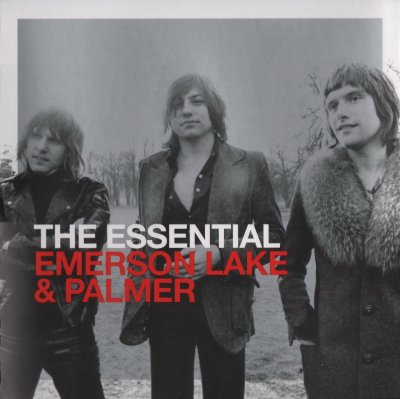
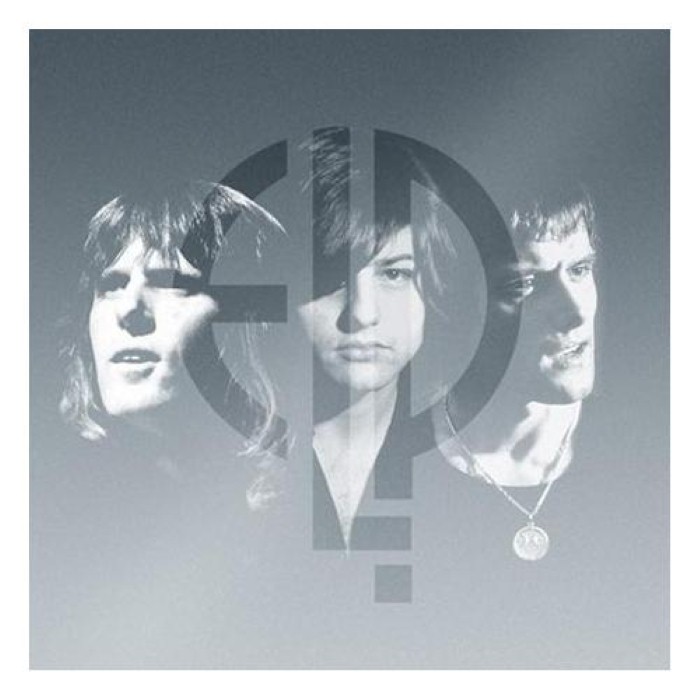
Emerson, Lake & Palmer (short ELP) were progressive rock's first supergroup. Greeted by the rock press and the public as something akin to conquering heroes, they succeeded in broadening the audience for progressive rock from hundreds of thousands into tens of millions of listeners, creating a major radio phenomenon as well. Their flamboyance on record and in the studio echoed the best work of the heavy metal bands of the era, proving that classical rockers could compete for that arena-scale audience. Over and above their own commercial success, the trio also paved the way for the success of such bands as Yes, who would become their chief rivals for much of the 1970s.
Keyboardist Keith Emerson planted the seeds of the group in late 1969 when his band the Nice shared a bill at the Fillmore West with King Crimson, an up-and-coming band that featured lead singer and bassist Greg Lake. Emerson and Lake first discussed the possibility of collaborating at that point, but only after the Crimson lineup began disintegrating during their first U.S. tour did he finally opt to leave the group (after agreeing to sing on the forthcoming Crimson album). Upon officially teaming in 1970, Emerson and Lake auditioned several drummers, including Mitch Mitchell, before they approached Carl Palmer, a former member of the Crazy World of Arthur Brown who later hooked up with bandmate Vincent Crane in an experimental band called Atomic Rooster. The trio's first rehearsals mostly picked up from the Nice's and King Crimson's repertoires, including such well-known numbers as "Rondo" and "21st Century Schizoid Man.
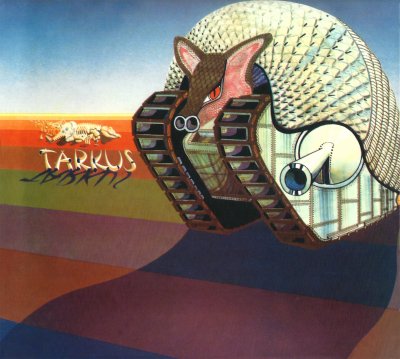
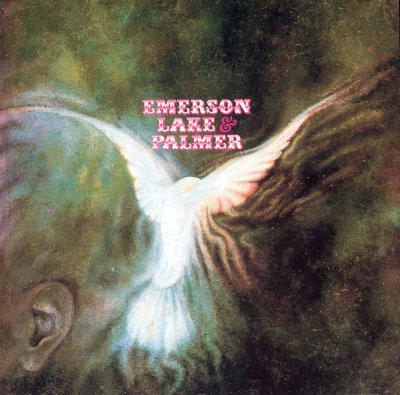
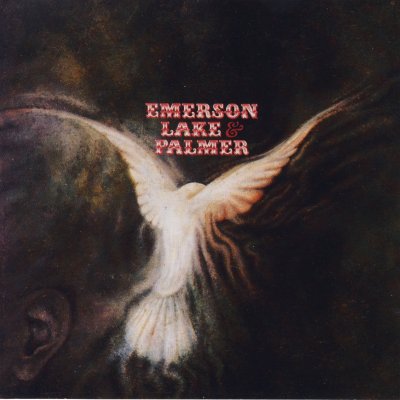
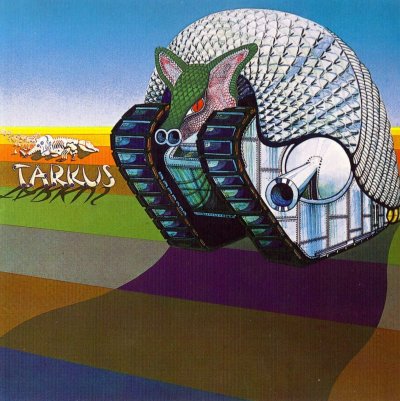
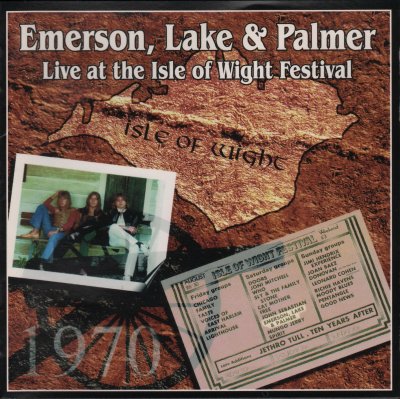
" In August of 1970, even as they were working on the songs that would ultimately comprise their first album, ELP played its first show at the Plymouth Guildhall, just ahead of the Isle of Wight Festival in August of 1970. The group's self-titled debut album was finished the following month and released in November; an instant success, it rose to the Top Five in England and the Top 20 in America. The single "Lucky Man" also was a hit, and their stage act rapidly became the stuff of legend. The recording of the second ELP album, 1971's Tarkus, tested their cohesiveness while stretching their sound in new directions.
Emerson was interested in further exploiting the range of the Moog synthesizer, and had conceived of an extended suite built around an opening eruption of sound, while Palmer had come up with an unusual drum pattern that he was eager to use. When they tried to present their ideas to Lake, who had assumed the mantle of producer with the first album, however, he couldn't really grasp the piece. He balked, and arguments ensued, and for a time it looked as though there might be no second album. The group eventually agreed to disagree about the proposed track: "Tarkus" became the title of the new album, and ultimately defined the ELP sound as most people understood it -- the song was loud and bombastic, somewhat gloomy in its lyrical tone, and exultant in its instrumental power.
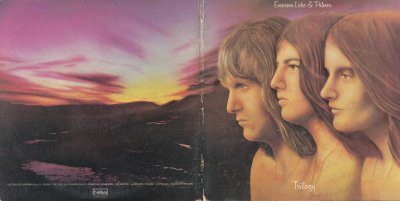
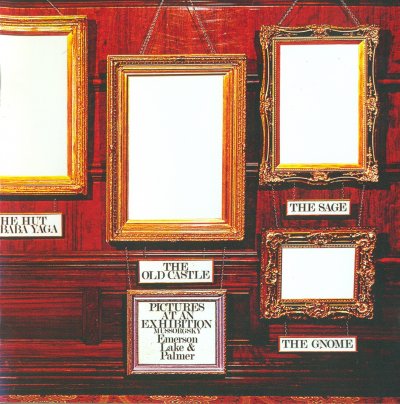
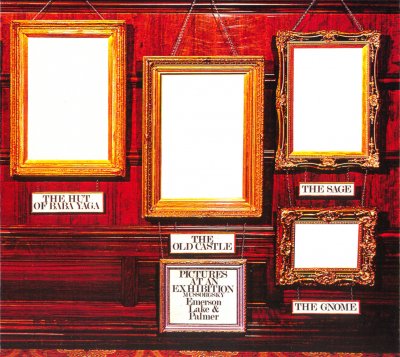
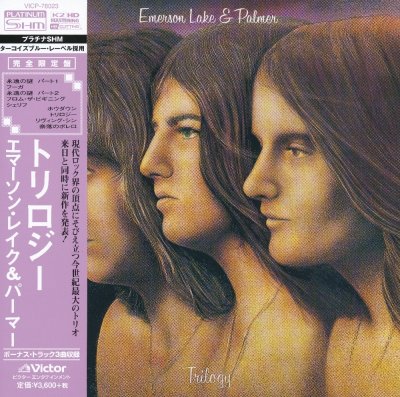
A descendant of "The Three Fates" and "Tank" from the first album, "Tarkus" was a much denser piece of music, featuring not only multiple overdubs of instruments but textures that ultimately proved very difficult to re-create on-stage. After Tarkus hit the number one spot on the English charts and reached the Top Ten in America, their March 21, 1971, concert at Newcastle City Hall -- featuring the group's adaptation of Mussorgsky's "Pictures at an Exhibition" -- was recorded for release, and became another major hit. It was eight months before ELP's next record, Trilogy, was released in July of 1972. In the interim, they toured extensively, and made it their business to cultivate the college audience that took most naturally to their work.
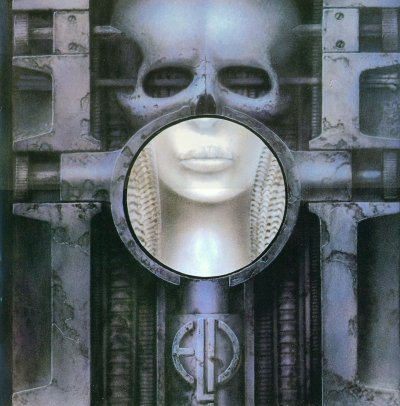
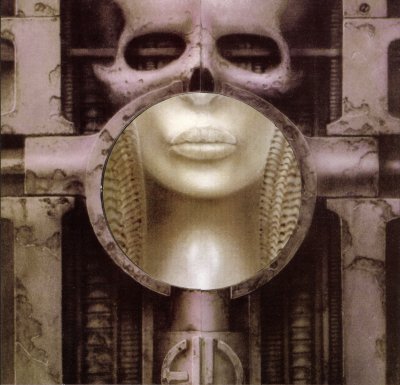
With Trilogy, the partnership was back fully in balance, with each member taking an equal share of musical responsibility. Moreover, Lake never sang better, nor did the group ever sound more comfortable and laid-back; among the eight very solid numbers in a classical-rock vein, there was tucked a track that became virtually the band's signature tune, a version of Aaron Copland's Hoedown. Such was the group's credibility that when it came time to record a version of the first movement of Alberto Ginastera's Piano Concerto No. 1 and the publisher denied them permission, they approached the composer himself, who fully approved and applauded the track that became "Tocatta" on Brain Salad Surgery, released in 1973 on their own record label, Manticore (named for one of the mythological creatures portrayed in "Tarkus"). Through Manticore, ELP also released material by Pete Sinfield and the Italian progressive rock band PFM; Sinfield's presence as a composer with Lake on Brain Salad Surgery helped strengthen one of the group's lingering weaknesses, its lyrics -- where Lake's use of language had always tended toward the pleasant but simplistic, Sinfield, a veteran of King Crimson, provided lyrical complexity nearly as daunting as the best of the group's music.
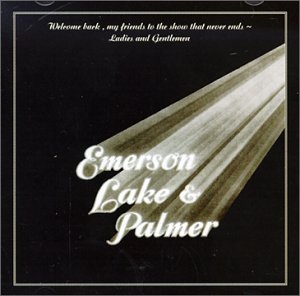
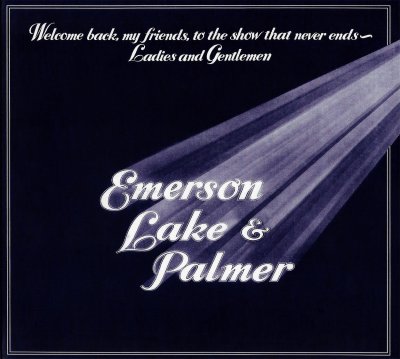
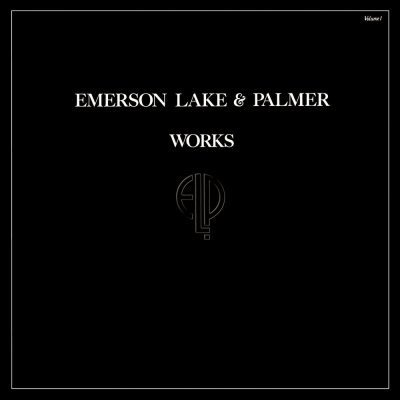
In the wake of this string of successes, ELP released a triple live album, Welcome Back My Friends to the Show That Never Ends, in August of 1974, but their streak came to a halt with Works, an album that also marked the dissolution of the group sound. At the time, each member was feeling constrained by the presence of the others, and their inclination was to release a trio of solo albums; cooler heads prevailed, however, and they reasoned that none of their solo works would sell remotely as well as an ELP album. The result was Works, a double album released in March of 1977. The album consisted of three solo sides and a fourth side on which the group did two extended collaborative efforts, "Pirates" and "Fanfare for the Common Man.
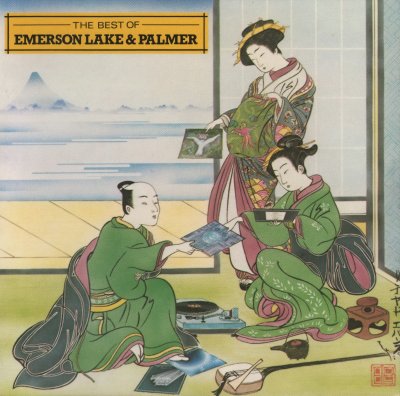
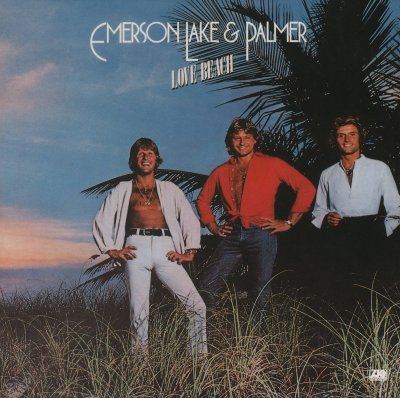
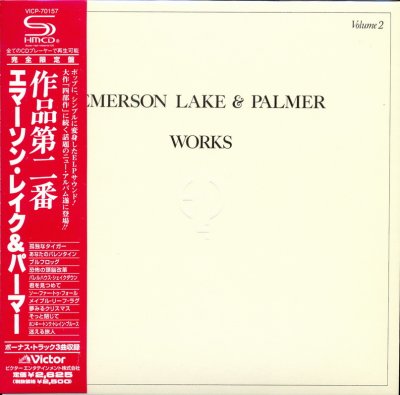
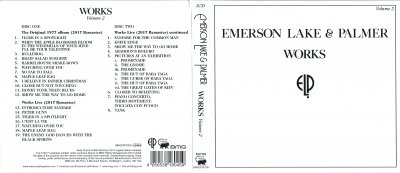
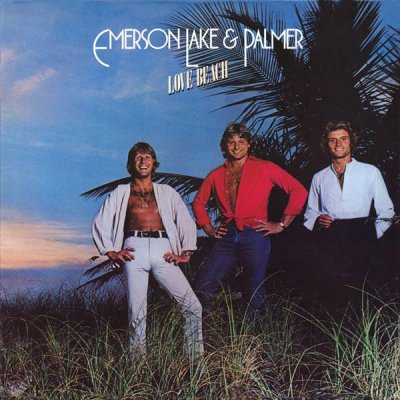
". The record fared poorly, and the group was never the same: Works destroyed ELP's unity, and their main motivation for recording seemed only to be their contractual obligations. Worse still, they'd squandered valuable time with work on the double album, time during which the public's taste was changing -- the progressive bands were coming in for special criticism, and the notion of extended suites, conceptual rock albums, and classical-rock fusion now seemed hopelessly ponderous and pretentious as the rise of punk rock and disco seemed to undermine any notion of intellectualism in rock. Works, Vol. 2, released in November of 1977, was nothing more than a collection of obscure B-sides and odd tracks dating back four years, while their next album of new material, Love Beach, was later described by the bandmembers themselves as nothing more than a matter of going through the motions.
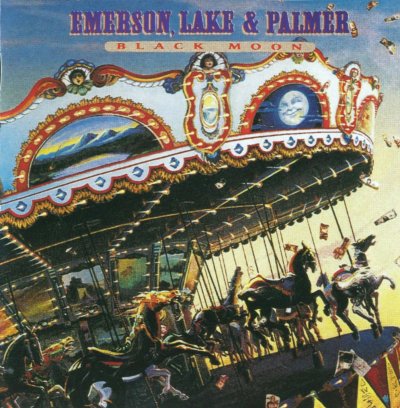
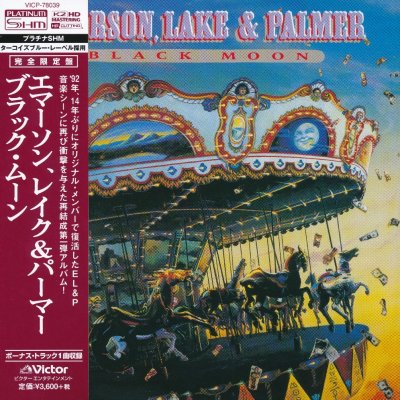
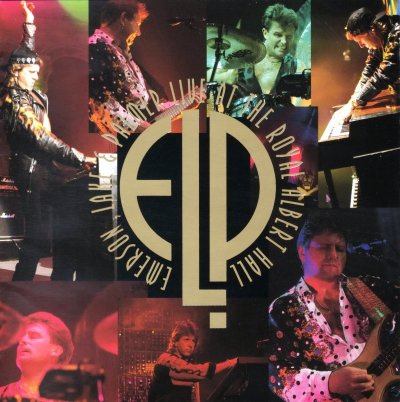
ELP split up in 1979: Lake embarked on a moderately successful solo career, Emerson took to composing film scores and recorded the occasional solo project, and after a stint with the band P.M., Palmer joined the pop supergroup Asia. In the mid-'80s, Emerson and Lake got together with drummer Cozy Powell as the short-lived Emerson, Lake & Powell, complete with a self-titled 1985 album. In 1991, Emerson, Lake & Palmer reunited for an album called Black Moon, followed by a fairly successful tour. In 1993, they released Live at Royal Albert Hall.
Their attempt at another new album, In the Hot Seat, was doomed to failure by Emerson's development of a repetitive stress disorder in one hand, which required surgery and restricted the group's ability to record or perform.
The Groove is music.nw’s own measure of renown — not an opinion, a fact computed from the record. It weighs reach (how many people engaged) against acclaim (how highly they rated it), balanced so a handful of votes can’t outshout a lasting favourite.
Computed the NeuraWeb way, across the whole record. The same yardstick for everyone — which is why the little-known can out-Groove the famous in their own corner.
How Emerson, Lake & Palmer moved
Genre belongs to the record, not to the artist. Every album’s Groove is shared out across the genres it actually is — by how the raters tagged it — so nobody is 100% one thing. Stack that by decade and a career draws itself.
Discography
Credits