Egberto Gismonti
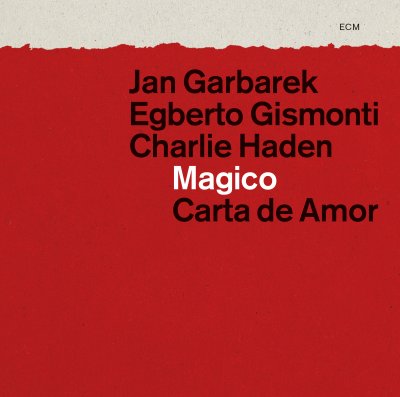
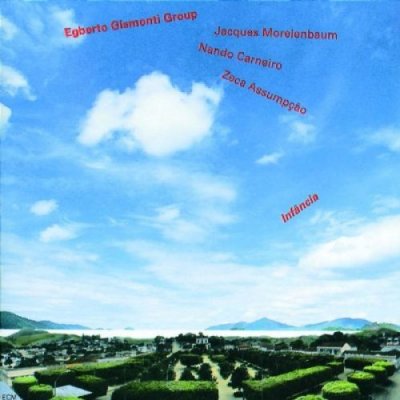
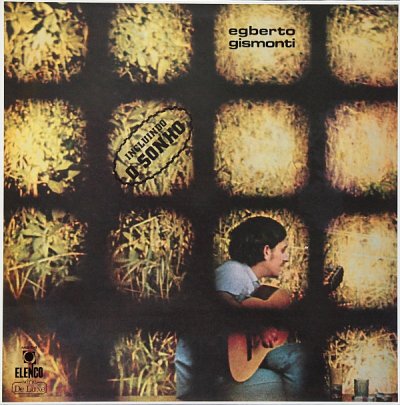
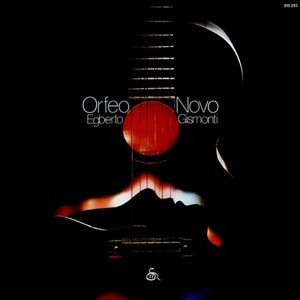
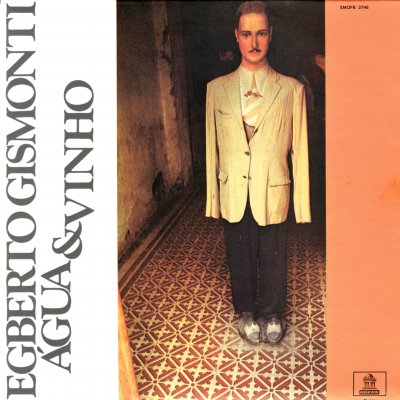
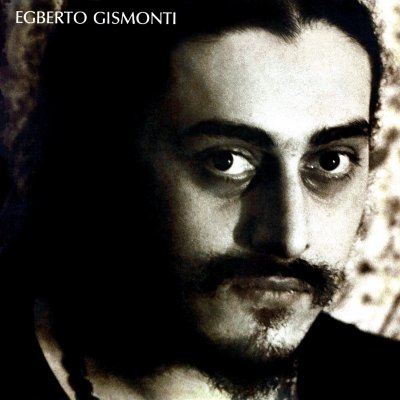
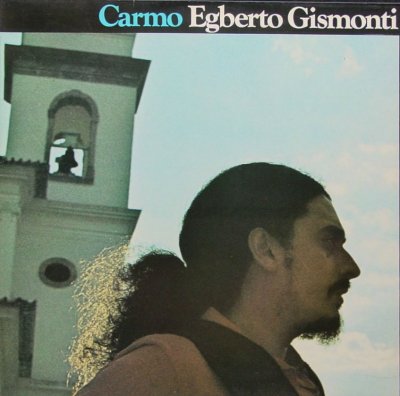
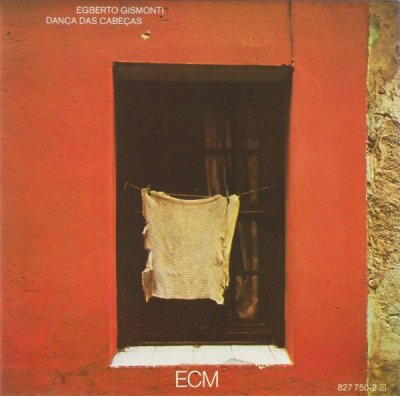
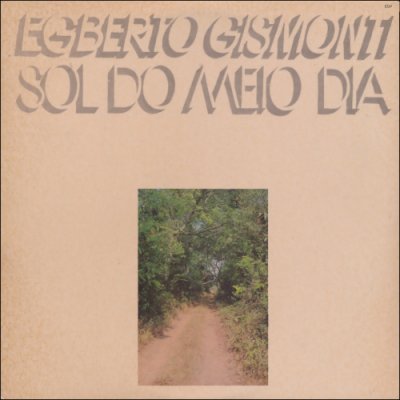
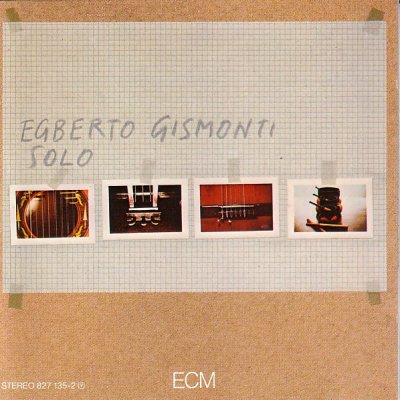
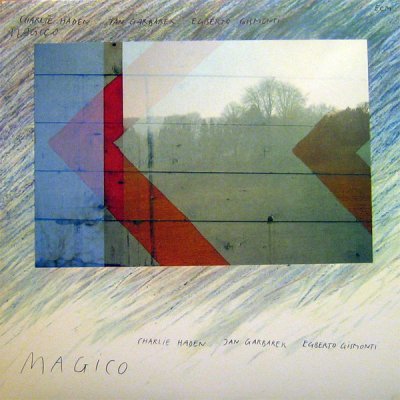
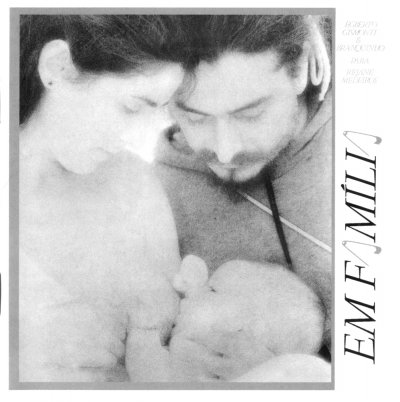
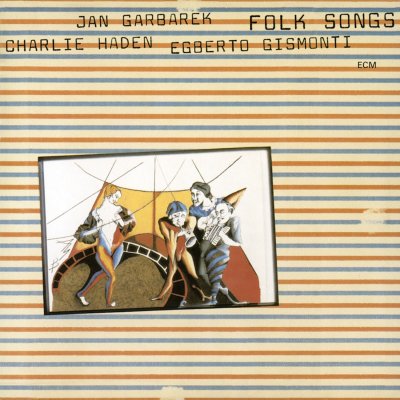
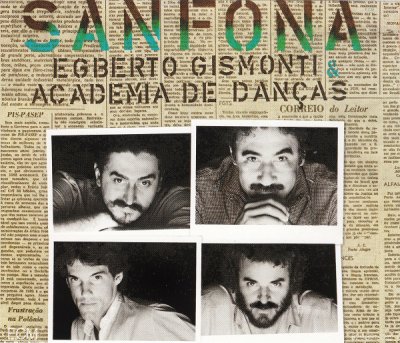
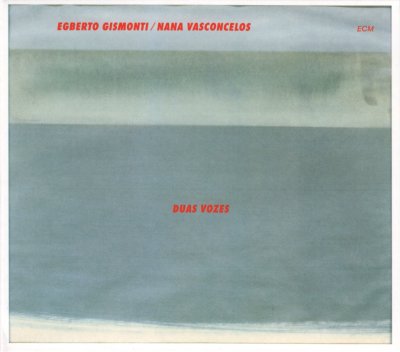
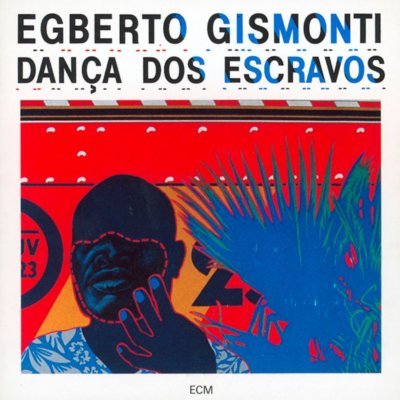
Egberto Amin Gismonti (born December 5, 1947 in Carmo, Rio de Janeiro, Brazil) is a Brazilian composer, guitarist and pianist. Egberto Gismonti is world-renowned as a multi-instrumentalist and composer. He was profoundly influenced by Brazilian master Heitor Villa-Lobos, his works reflecting the musical diversity of Brazil. From the Amazon Indians' batuque to the Carioca samba and choro, through the Northeastern frevo, baião, and forró, Gismonti captures the true essence of the Brazilian soul in a way that is primitive, yet sophisticated, and reflects it through his personal vision, elaborated by years of classic training and literacy in a wealth of musical languages in which jazz plays a significant role. Arvore From a musical family, in which his grandfather and his uncle Edgar were bandleaders, he started to take piano and theory classes at five. At that time, he also started to learn the flute and the clarinet, eventually taking the violão (acoustic guitar) in his teens. Following the piano classical tradition because of his father, he embraced the guitar to please his Italian mother, who was very fond of serenatas. Trying to transpose the piano's polyphonic quality for the guitar, he ended several years later with three custom-made instruments (ten-, 12-, and 14-stringed) and a personally developed two-hand technique. At eight, he started to study piano with Brazilian masters Jacques Klein and Aurélio Silveira for a 15-year apprenticeship. Establishing himself in Nova Friburgo, a small town near Rio, for one year and four months, he attended the Nova Friburgo Music Conservatory. Awarded with a scholarship to study classical music in Vienna, Austria, at 20, he refused it in order to delve deeper in the popular side. In October 1968, his composition "O Sonho," arranged by him for a 100-piece orchestra, was presented at the third International Song Festival (FIC), promoted by TV Globo, Rio, by the group Os Três Morais. This song, with its uncanny orchestration, provoked enthusiasm around and was recorded 18 different times by several international artists. Soon after in that year, he left Brazil for France, where he became the conductor and orchestrator for the French singer Marie Laforêt in an association that lasted for one and a half years. It was instrumental for him to meet and became a pupil of the great masters Jean Barraqué (1928-1973), a disciple of Anton Webern, and Nadia Boulanger (1887-1979), a former consultant to Ygor Stravinsky. The additional importance of these two icons upon Gismonti's career was to stress the unique richness of his country's background and urge him to pursue a singular expression rooted in the cabocla and mestiça tradition. This would cause him to return to Brazil in 1971. His first LP, Egberto Gismonti, was already released in 1969 through Elenco. There, he sang his own songs and had a partnership with the bossa nova composer Paulo Sérgio Vale. Also in 1969, he presented himself at the San Remo Festival in Italy. In 1970, he toured through Europe, recording two singles in France, one LP in Italy, one in Brazil (Sonho 70), and one LP in Germany (Orfeu Novo). His song "Mercador de Serpentes" was presented at the fifth FIC in 1970. Returning to Brazil in 1971, he settled in Teresópolis, another small town close to Rio. He played in several venues in Brazil and his music was included on the soundtracks of the movies A Penúltima Donzela (Fernando Amaral, 1969), Confissões de Frei Abóbora (Brás Chediak, 1971), and Em Família (Paulo Porto, 1971). In 1972, he recorded Água e Vinho (in partnership with poet Geraldo Carneiro) and in 1973, Egberto Gismonti and Adademia de Danças, all three LPs through EMI/Odeon, the latter of which was the turning point when he began to stress his instrumental work. After its recording, the producer said it made no sense at all. He received a note from EMI/Odeon saying that, due to Brazil's economic difficulties, that would be the last album of Gismonti's career: it was an album outside of any category, with 25-minute tracks, expensively produced with synths and orchestra. This album was awarded with the Golden Record in Brazil. From 1972 to 1991, he would record 19 albums for EMI/Odeon. In 1974, he accepted an invitation to play at a festival in Berlin, Germany, and asked Hermeto Pascoal and Naná Vasconcelos to join him in his presentation. He then met ECM's CEO, Manfred Eicher. Returning to Brazil, he received a letter from ECM in 1975, inviting him to record with them. Not knowing what would be the importance of that label, he postponed the response until the end of 1976. Then he accepted the invitation, imagining he'd record with the all-star Brazilian group he was performing with by then: drummer/percussionist Robertinho Silva, bassist Luis Alves, and saxophonist/flutist Nivaldo Ornelas. But the Brazilian military government had imposed a high fee for all leaving Brazilians at about 7,000 dollars. Being that cipher prohibitive for anyone in that group but him, he decided to record solo. Fearing that challenge, he was wandering through Norway when he met a Brazilian actor who was his friend. Invited to his home, he met Brazilian percussionist Naná Vasconcelos there. Having to record the album in three days, he decided to have Vasconcelos into it, and asked by him to describe the album's concept, he explained that both of them had a common history, and he proposed Vasconcelos use that album for telling it. It was the history of two boys wandering through a dense, humid forest, full of insects and animals, keeping a 180-feet distance from each other. He knew Vasconcelos would accept without hesitation, and he did. His LP Dança das Cabeças with Vasconcelos received several contradictory international awards reflecting Brazilian cultural richness: in England, it was awarded as a pop record; in the U.S., as folklore music; in Germany, as classical music. Either way, it changed both artists' lives: Vasconcelos immediately became a disputed international artist, touring worldwide; Gismonti returned to Brazil and decided to research Amazon folklore. In the heart of the Amazon forest, Alto Xingu, he tried to make contact with the Yawaiapitì tribe, playing his flute for two weeks until head chief Sapaim invited him to his home. They shared no common language other than music and Gismonti spent about a month living and learning with them, upon the condition of spreading the forest people's values. Two years later, with saxophonist Jan Garbarek, percussionist Colin Walcott, and guitarist Ralph Towner, he recorded Sol do Meio-Dia. His LP Solo, released that next year, sold 100,000 copies in the U.S. In 1981, with Garbarek and bassist Charlie Haden, he recorded the LP Magico. The same year, the trio toured Europe, including a concert at the Berlin Jazz Festival, and recorded a second Magico album, entitled Folksongs. In 1981, Gismonti again toured with Haden and Garbarek, performing throughout Europe. Also in that year, he recorded with his all-star group Academia de Danças (drummer Nenê, saxophonist/flutist Mauro Senise, and bassist Zeca Assunção) the double album Sanfona. With Vasconcelos, he recorded Duas Vozes in 1985. In 1989, he recorded Dança dos Escravos and in 1990, following the release of Dança das Cabeças, Gismonti toured the United States with his group, which included cellist Jaquinho Morelembaum, flutist/saxophonist Nivaldo Ornellas, and Edu Mello E Souza on keyboards. Also in 1990, he recorded Infância, accompanied by Nando Carneiro (guitar/keyboards), Zeca Assumpção (bass), and cellist Jaquinho Morelembaum. With the same group, he recorded in 1993 Música de Sobrevivência, an album inspired by the writings of the Brazilian poet Manoel de Barros, who reflects in his work the Brazilian duality of the cultivated Portuguese tradition and the massive illiteracy disseminated in that country, which, notwithstanding, deeply influences the official language. In 1995, he recorded with the State Symphonic Orchestra of Lithuania the CD Meeting Point. In 1996, Gismonti recorded with Nando Carneiro and Zeca Assumpção for the CD Zig Zag. As a businessman, he owns the successful label Carmo, which has several joint ventures with ECM. He also performed an almost impossible task: He bought the rights for all of his phonograms through EMI/Odeon for worldwide publishing, with the exception of Brazil. However, music continues to be his main focus. In 2009, Gismonti released the two-disc Saudacoes which featured one disc of his seven part composition, "Sertões Veredas -- Tributo à Miscigenação," and a second disc of guitar duets with his son Alexandre Gismonti.
Discography

Credits